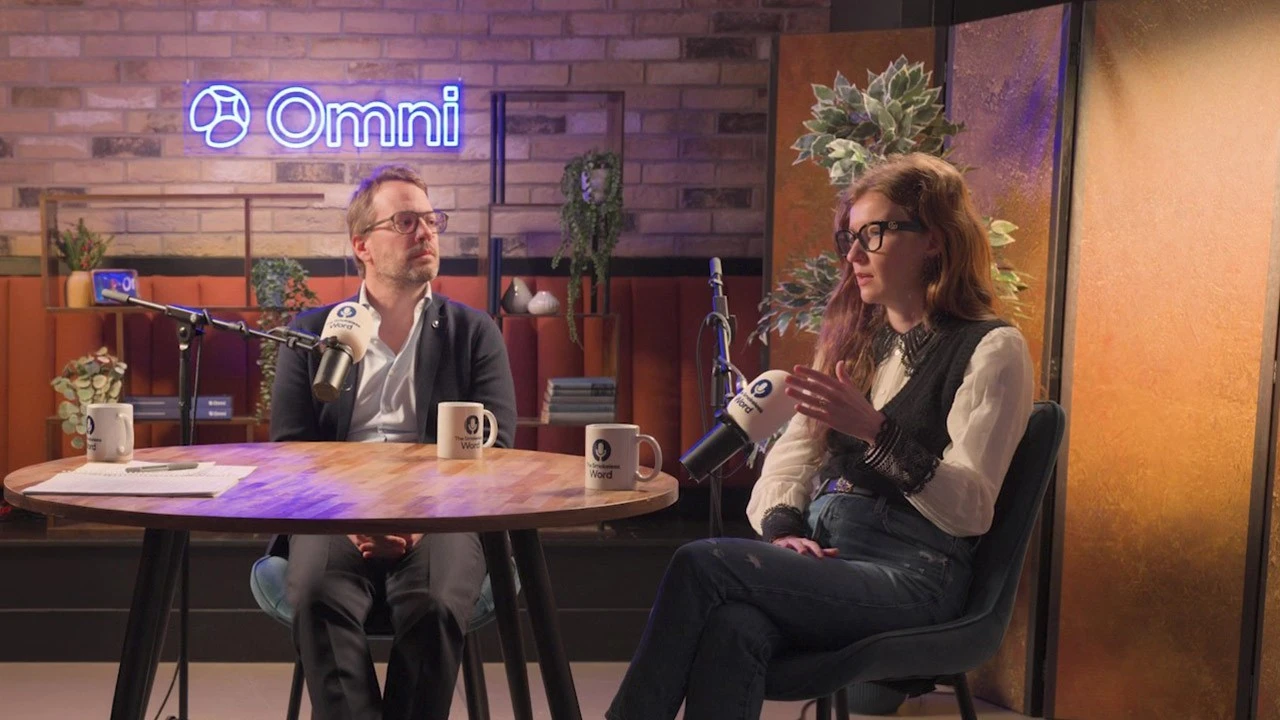

Episode 25: Pippa Roden and Thibault de Lary de Latour
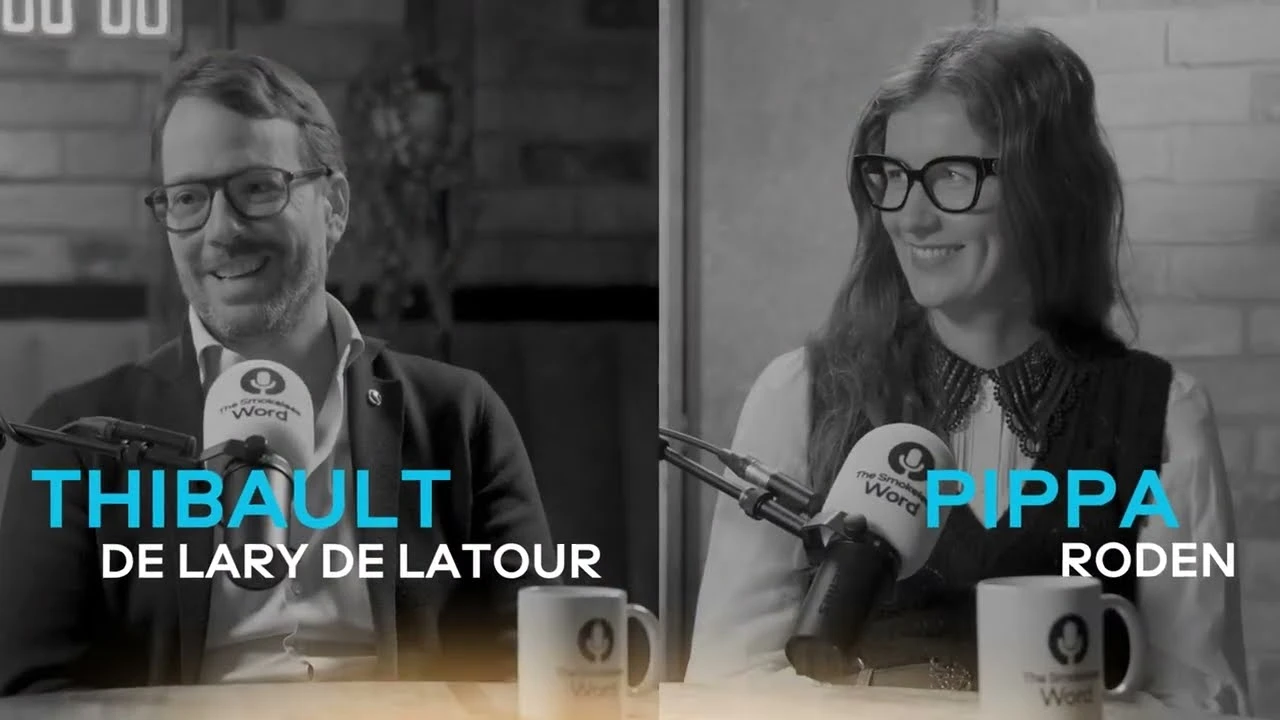
Pippa Roden
Trust is earned, not asked for,
Thibault de Lary de Latour
every single day.
Kingsley Wheaton
Why do we struggle to see smart regulation emerge?
Pippa Roden
There is a very big difference between paper and practice.
Thibault de Lary de Latour
Quit or die's policies have not been effective. Omni is a manifesto for change and a mandate for action.
Kingsley Wheaton
If smokeless transformation was a football match, we're in minute four.
Pippa Roden
We have got something to say. We need to do it.
Kingsley Wheaton
Welcome to The Smokeless Word. Today, I'm thrilled to be joined by two BAT colleagues: Pippa Rodden, Head of Regional Communications for Europe and Americas, and Thibaut de Lary de latour, Regional Head of External Affairs for Europe and Americas. Pipper, Thibaut, and I will talk about their journeys to BAT, how we embed consistency but not blanket uniformity across 88 markets, and why Omni is more than a time-bound, single-purpose campaign, but rather a dynamic, all-encompassing platform. This podcast is intended for regulators, scientists, policymakers, and investors only. The views expressed in this podcast are the personal opinions of the speaker only. Any references to products having a reduced risk or reduced harm are based on the weight of evidence and assume no continued smoking. This material is not intended for U.S. audiences. Okay, welcome, Pippa, Thibaut , to the Smokeless Word podcast studio. What what do you think of it?
Pippa Roden
It's quite interesting to see behind the curtain in many ways. For a start, I can confirm that the wall is in fact brick.
Kingsley Wheaton
Yep, yep. This one is
Pippa Roden
always a question when I saw it, but and it's and it's incredibly high tech, really.
Kingsley Wheaton
Yeah, yeah, yeah, yeah.
Thibault de Lary de Latour
Very nice place. Very happy to be here. I mean, it's brilliant. Thank you for inviting us.
Kingsley Wheaton
Maybe look without doing sort of formal introductions, Pippa. You you run, you know, the communications arm for one of our regions. Just just tell the the audience the sort of geography, the span that you have for that.
Pippa Roden
So we technically call it the Americas and Europe, which I like to joke keeps people on their toes because it's not including the U.S. So it's Canada, Central South America, and then Europe itself. And in terms of of the what, I suppose, like the communications efforts of the how. We you know I think we work toe to toe very closely together, but my job, together with our colleagues across the region, is to think we've got something to say. How do we say it? How does that come across? How does that get heard?
Kingsley Wheaton
I mean, it's a lot of countries. How many countries would that be? Must be
Pippa Roden
88
Kingsley Wheaton
88 countries!
Pippa Roden
Yes. So that's just a little patch.
Kingsley Wheaton
It's just a small patch. So if that's the comms piece, then Thibault, you have to worry about the the regulatory landscape in 88 different countries.
Thibault de Lary de Latour
Absolutely, I would say that our functions are very interdependent. Right, she would translate regulatory complexities into a narrative that will resonate with the external world. And from my side, I'm making sure that our regulation are embracing harm reduction and helping new categories to penetrate the market with a bigger acceptance, and it's also about building relationship with with stakeholders.
Kingsley Wheaton
I mean, there must be you know with 88 countries there must be something going on almost every day. I mean, you must wake up
Thibault de Lary de Latour
every single day, every no dull day, no
Kingsley Wheaton
Bit of bit of resilience needed absolutely to deal with that. Anyway, and look, I also read Thibault that you have. I hope I'm right. A 2.6 golf handicap. Is that?
Thibault de Lary de Latour
2.7
Kingsley Wheaton
2.7, okay, that's quite impressive, isn't it? Have you ever been much lower than that?
Thibault de Lary de Latour
No, it was the lowest. I would say that have not been able to play that much since I'm based in London.
Kingsley Wheaton
Because you've got 88 countries to worry about.
Thibault de Lary de Latour
Exactly, I've been quite busy recently, right? So, but yeah, this is definitely one of my passions, so
Kingsley Wheaton
Do you ever did you ever harbour a sort of you know go professional? Were you were you ever?
Thibault de Lary de Latour
No, I was far from that level. I wish I would have been able to be at some point, but no, it's pure pleasure spending time with friends, traveling, playing golf, finding good destinations, enjoying enjoying time, and it's a great sport.
Kingsley Wheaton
Brilliant, brilliant. So look, the two of you work together very closely. How just maybe, Pippa, if you could sort of explain a you know a day in the life of or a week in the how how do you interact and how how does that communication and regulatory piece come together in the region.
Pippa Roden
I suppose if we take a step back and we think about the overarching purpose of both of our sub-functions, you could say that external affairs defines the what, communications defines the how.
Kingsley Wheaton
Right. Okay.
Pippa Roden
And the only way that it properly works is if we come together early on, because if you've got a what and you've never thought about the how, it's that old adage: if a tree falls over in a forest and no one is there to hear it, does it make a sound? At the same time, if you're just constantly talking about what and it has no meaning, it's noise. So I think for us, a day in the. Includes. I mean, we share an office. We've traveled together, we're on several calls together. I mean, we we really spend a lot of time.
Kingsley Wheaton
You ever get frustrated with each other? You ever have little you have a little spats?
Pippa Roden
100%
Thibault de Lary de Latour
No
Kingsley Wheaton
It's interesting. Two sides different answers there.
Pippa Roden
100% yes, come on!
Thibault de Lary de Latour
We have to deal with that. Yes, of course.
Kingsley Wheaton
You have to deal with that.
Pippa Roden
I annoy you more than anyone. I think.
Kingsley Wheaton
Well, that's good. A bit of creative tension, and let me let me just go back for both of you to your sort of joining BAT journeys, if I may, Pippa. If I can start with you, that decision to join, you know, you know what pejoratively the world might call Big Tobacco. How difficult was that? What What did you think about? What were friends and family saying as you as you embarked on that on that journey?
Pippa Roden
I mean, I think for me, before I joined BAT, I was already working in the in the world of corporate affairs and external affairs for maybe contentious industries, if we want to use that phrase. So I was agency side. I was doing some work for alcohol, palm oil, sugar. So I suppose, in some respects, the the decision it wasn't totally new to me. I think that the the difference was it was sort of that that sense of you're really embracing it now. You know, this is going to be your. It's going to be the name on the CV. It's going to be the name that you represent. But it was a pretty easy decision. I mean, I I think it was my over. By the time I joined, I joined five years ago. The transformation was well and truly public. It was something that the company was already making inroads for. It wasn't that complicated, to be honest.
Kingsley Wheaton
And to you know, when you when you tell perhaps what I might call the sort of second layer of friends what you do, is is there surprise? You know, what one of the things I hear a lot when people come in, meet me sometimes. You know, well, you're not quite what I expected. You know, well that for me that's one thing, but for you, they must think that sometimes that you're you're working for BAT is is an unusual choice.
Pippa Roden
Yes, I think they're often. I mean, the fact that my husband also works in cigars
Kingsley Wheaton
Right, okay, you got the got the full house in the family.
Pippa Roden
Ah, absolutely, yeah, yeah. So I think occasionally they're a bit like, oh, okay. But I think it's funny enough. People who know me, obviously, I've talked about it a lot. They get it. I have found experiences of you know you're on holiday or you're in a you're at a party something else, and you'll occasionally get something from someone saying, "How do you sleep at night? Or I have been asked that question on several occasions. That I think the first couple of times that happens can be a bit jarring, but now I mean for me it's always an opportunity to absolutely embrace and explain what we're trying to do, what what we believe the positive impact that that can have is. And increasingly, not everyone, but increasingly I think after you have that conversation. There is at least that sort of, you know, that little that little head nod that indicates exactly. I might not have changed my opinion, but I've thought about it.
Kingsley Wheaton
I've thought about that's yeah, that's interesting. I mean, talking about thinking about it, Thibault. I don't know whether I got the number right, but you were a very early employee of Juul, number 47, I wrote, but I'm not sure if that's true. Something around that. For the for the listeners who don't know, Juul was the was was the mega sort of meteorite style vapor product that that went you know really really big in the U.S. and then peaked and then came down. How how was that experience? You know, joining Juul, being such an early employee, and also what you sort of went through-the sort of roller coaster, I suppose.
Thibault de Lary de Latour
So I was-I was part of the first employee for the EMEA region. It was very exciting. I was coming from the pharma industry. I would-I would say that when I told my family, "I'm going to leave the pharma industry and move into the disruptive industry, Juul, what are you going to do? I'm gonna sell vaping products. Really? What is that? Why are you doing? Are you crazy? You have a fantastic job in in pharma. Why would you Why would you go there? So, but I feel that transformation has always been at the centre of my my career. It's it's been really a drive to me, and I found it very exciting. The time I joined Juul, they had to create a function for the EMEA region. was very exciting for me to leverage my past experience in pharma, but also in politics for 10 years, working with government and European institutions. But it's been a journey. I mean, when I joined the company, we had to launch 14 markets in one year, I had to hire a team of 20 people. I could not hire anyone from the tobacco industry at the time, so very different profiles, different horizon. So it was it was really a great journey, and and with very mission driven, eliminating all cigarette in the world. People were really empowered with the mission of Juul, but it's been a lot of excitement. Very horizontally managed, very fast tracked when it comes to making decisions, appetite for risk. So it's been an incredible experience.
Kingsley Wheaton
And how long were you there for?
Thibault de Lary de Latour
A bit more than two years.
Kingsley Wheaton
A bit more than two years. And look, a very early boss of mine said, you know, you should always respect the competition, and I and I believe in that. So it's not a question of sort of critique, but what what learnings, what what sort of maybe what might we learn from some of the missteps that they may have made along the way that sort of was part and parcel of that Juul story.
Thibault de Lary de Latour
I would say that Juul was was pretty performing quite well in the United States. It was it was driving Europe and the strategy with Europe. I think that we probably went too fast, launching 14 market in a very short time frame, hiring more than 1000 employees in one more than one year. I mean, at some time when the pace is too fast, you sort of lose the drive, right? And when you want to do everything at the same time, you may end up doing some mistake, right? So I think that there was it was full of good intention, but probably too fast. And I think we also were not expecting the level of pressure that regulation have in Europe.
Kingsley Wheaton
Yes, yes.
Thibault de Lary de Latour
So that was also a very, very interesting challenge.
Kingsley Wheaton
And of course, you know, all of a sudden you're dealing, you know, with multi-market regulation, aren't you? And and the U.S. of course is vast, but you know, the regulation in Belgium, in in Germany, in Italy, in Croatia, or whatever it may be, you know these are all independent variables, aren't they? And just just before I go back to Pippa, tell us a bit about you know your time in the you know working within the European Parliament. You know what what what are your takeouts of that? That must have been illuminating at times, frustrating. It must have been all sorts of things. I would think that experience.
Thibault de Lary de Latour
The European Parliament was a was a fantastic experience for many reasons. There, there are pros and cons, but I would start with the pros. Yeah, I would say this is an international environment.
Kingsley Wheaton
Very international, right?
Thibault de Lary de Latour
Very international. Brussels is very international. 27 nationalities. It's fantastic. It's like a bigger Erasmus for people who are in in in in were working actually. So it was a fantastic experience. I think the way that that people would regulate or would work in the European Parliament is the same way as you would find in any end market when it comes to national parliament. There there is not big many big discrepancies the way they work, but I think there is also a fairly big and a fairly big level of bureaucracy when it comes to the European institution, even with the European Parliament. So this is where I felt at some point, and after 10 years working with government, Parliament, European Parliament, it was probably a time for me to make a switch and move to the private sector to see how it looks like. I would say I have no regret. I would never go back to.
Kingsley Wheaton
You'd never go back. Well, there we go. Watch this space, Pippa. Talking about backgrounds, if I could just take you back to your maybe not your early well parts of your early life. Born in Hong Kong,
Pippa Roden
Indeed.
Kingsley Wheaton
Lived and worked in Shanghai, if I'm right. Speak Mandarin, is that or
Pippa Roden
Yeah, did it at university. I think it's fair to say I do.
Kingsley Wheaton
Yeah, that's great. Do Do you use it regularly, or is it is it something you have to stay conversant in?
Pippa Roden
So I mean, across the Americas and Europe, sadly not so much. But I I definitely you know, I do my my apps. I try to read books, that kind of thing, to keep it somewhere in my brain.
Kingsley Wheaton
Sure, sure.
Pippa Roden
But I invested a hell of a lot of time, sort of learning to read, write, and speak. So I like to think that it's in my brain somewhere. And supposedly, when I'm very stressed, I sleep talking Chinese.
Kingsley Wheaton
If we send you over to sort of, you know, Beijing for a sort of Omni launch in China, we could have you fronting it all in in Mandarin on stage. Would that would that would that work?
Pippa Roden
I mean, you have to remember that when I lived in China, things like e-cigarettes and nicotine pouches didn't exist. Of course. So actually, there is an actual gap in my in my knowledge of language vocabulary. Yeah, yeah, yeah. Because it's new, right? I was there. I predated that, but no. I mean, I lived there. I remember one of the as part when you study a language, you move abroad for a year. I lived and worked in Shanghai. I worked in manufacturing whilst I was there, and I remember getting off the plane and getting into the taxi first time moving, and realizing that I could I could ask the cab driver to marry me at the top of a mountain, but I couldn't tell him to turn left, turn right, and stop. And it's a silly thing, but for me, I suppose it's that sense of and how does that affect what you do in your day to day? There is a very big difference between paper and practice, and you know you really have to try and meet people where they are. And practically apply it to reality because it was an humbling experience, to say the least.
Kingsley Wheaton
And if you, you know, if you meet someone who is evidently a sort of Mandarin speaker, and then suddenly start volunteering fairly fluent Mandarin, do they do they get the surprise of their life as you as you sort of start speaking?
Pippa Roden
Yeah, a little bit. Yeah, yeah definitely
Kingsley Wheaton
kind of like maybe wouldn't expect that.
Pippa Roden
Yeah, yeah, 100%
Kingsley Wheaton
And is some you know that that sort of Hong Kong, Shanghai piece? Is that is there some part of you that's sort of for forever Asia?
Pippa Roden
I think so. I mean, I think you know if I look at it realistically, my father's Australian, my mother's British, born and raised in Hong Kong, spent a third of my life not in the UK, for example. So when people say where, like, where are you from? It's an inherently existential question for me. Yeah, like you know, it's not as simple as that. But I think Asia will always hold a piece of my heart. It was formative years for me, and it's an awesome continent.
Kingsley Wheaton
Yeah,
Pippa Roden
for sure.
Kingsley Wheaton
Truly, a sort of you know world citizen. Just wanted to think. Then you know, moving on to your current region. You know, we discussed it earlier. All of America's minus U.S., as you said, Europe. You know, that's a very large communication playing field. How do you have to flex and adapt communication style to marketplaces and cultures.
Pippa Roden
I mean, I think it was probably one of the the thing I spent the most time thinking about when I took on the role. And for me, I think the the where we land up on this is you have to be incredibly clear about your non negotiables. For us as a company, that is our strategy, that is the science, that is our standards, and then you have to have the flexibility to allow markets to do what works for them for the rest. And I think through that through that lens, people often mistake or mistakenly think that consistency is the same as uniformity. It's not. It's coherence, and I think that that if if you're clear on that, you understand that as as we've seen from what we did with Omni, right? Like while it's always good to look for for what makes you uniform rather than unique? You have to have your red lines. You build your guardrails rather than give people scripts.
Kingsley Wheaton
And surely, even things like I don't know, you know, the world of digital and social becomes more and more important. But even that is sort of developing at different paces. I would think across the region, more advancement in some areas than the other. We're probably a bit more analog in other areas. So, is there a sort of a mix and channel and content imperative in there as well?
Pippa Roden
Yeah, I mean, also there are just some completely different channels, right? Like, you know, we'll use X in some parts of Europe that's not so big in other parts of the Americas, for example. But I think that if you take a zoom out, again it comes back to this notion of, at least through my lens, where are we consistent? Where are there those similarities? What's our baseline? Let's define that, and that then empowers the markets to have the flex. To, you know, it's not my job to say you've got to be doing this on Twitter rather than Telegram, for example, like I'm micromanaging at that point.
Kingsley Wheaton
You're already proving your old school by calling it Twitter, weren't you? There, do you know what I mean? You know, as the life moves on. I know, but I think what you're saying is sort of, I love that point about consistency versus uniformity, and and sort of key messages and being clear what we're trying to say, how how does that then feed Thibault into the into the regulatory? I mean, what you know, maybe for the audience, maybe sort of trying to explain what are we trying to achieve from a regulatory point of view. Are we making progress? I should think the viewers are probably interested, and and and perhaps where where are we making less progress, and why?
Thibault de Lary de Latour
I think it's all about finding the good balance between global consistence and local relevance.
Kingsley Wheaton
Right, right, right.
Thibault de Lary de Latour
I think we need to stay true to our values at BAT, but also offer offer a certain level of flexibility to the teams to own the narrative, right, and adapt the narrative with the realities of the market, right? But but I think that all in all, I think our objective is to make sure that we can secure regulation that will be sustainable for a reduced risk product in the future, and have smoking rate decline over time. We see some very positive trends in Europe. You've seen Sweden very close to be smoke-free. We have the UK, for instance. We have New Zealand. So we have some emerging trends demonstrating that policies that are embracing reduced risk product have been have been impactful so far. So so I think that the approach is to make sure that we can have consistency. Across the acceptance on these categories, but also in terms of the way they are framed and regulated, we can see some discrepancies here and there. Some time between Europe and the Americas, Europe being already framed with the EU 27 regulation in place, which which gives a framework since more than 12 years to end markets. So there is a level of information already from a regulator standpoint about how things are regulated, what it means, what the differentiation is with a traditional tobacco product. In the Americas, I would say that the level of knowledge or awareness about about new categories is probably not at the pace where we are in Europe for for some reason. I think there is sometimes a tendency to equalize and find a very quick pathway and just equalize tobacco and reduced risk together. But but I think that anyway we are making progress. We need to resilience is is is everything.
Kingsley Wheaton
Sure, and I mean, is it clear to you? And I suppose this is the $64,000 question. Is it clear that where we're able to activate, you know, an innovative generation of you know smokeless products, that the smoking rate of that population falls faster than before they arrived?
Thibault de Lary de Latour
Falling faster? I don't know. Falling, yes, certainly. I think we see some market that have adopted recently some some regulation embracing reduced risk product. There are some good trends. The time will tell us, but we've seen some other market that are clear demonstration that it has definitely worked. Sweden is one of them.
Kingsley Wheaton
Yeah, and what's the, just for the viewers, roughly what would be the adult smoking rate in Sweden?
Thibault de Lary de Latour
Sweden will be close to 5%
Kingsley Wheaton
5% and in Europe,
Thibault de Lary de Latour
average 24%
Kingsley Wheaton
24, 25%
Thibault de Lary de Latour
Yeah, exactly,
Kingsley Wheaton
5x the smoking rate.
Thibault de Lary de Latour
Absolutely.
Kingsley Wheaton
Sweden, of course, has a has a legacy smokeless product in in snus, doesn't it? So they've been what 100 years, probably, you know, reaching this point. But it is quite a significant bellwether, isn't it, for the world, Sweden?
Thibault de Lary de Latour
Oh, this is this is a fantastic case study for the world. I mean, on top of providing a narrative that resonates, we need to also provide proof of concept to the outside world. And Sweden is a very good proof of concept.
Kingsley Wheaton
Yeah, but aren't you know? Look, let me let me be slightly. Aren't people a bit fed up us talking about Sweden all the time? You know, that's like is that the only example we have? Is there another Sweden emerging? Is there another another cab coming off the ranks?
Thibault de Lary de Latour
I guess this is why Pippa and I are keeping working very hard to have have other other Swedish examples of a time, and I'm very confident that this is going to happen. And we see some emerging trends with Greece, with New Zealand, with with some market is slopping up. So I mean we need to keep on fighting. We need to keep on fighting with narrative. We need to be true to our values and believe in the mission, and we will get there.
Kingsley Wheaton
I said at a leadership meeting. Wow, must be seven or eight years ago when I was running Next Generation Products. I said, if if Smokeless Transformation was a football match, we're in minute four. You know, and I think that's a good point. This is tectonic plate stuff, isn't it? You know, this is there's an awful lot to be done. But let's let let let's bring it more here and now, Pippa. You said to me, I thought rather famously last year. You said '25 was the best year I've had. I'm slightly paraphrasing. I think there was an in BAT after that that statement, but I'm gonna I'm gonna take best year I've had. Why was that? And has 2026 started even better?
Pippa Roden
I mean, I think at least through the lens of BAT 2025 was was a great year for us. Like we launched Omni, we launched it in over 19 markets across our patch, and it was at least personally, through the lens of my professional career, absolutely awesome to have this red thread, very obvious red thread that went everywhere, and it was-I mean, just from an operational perspective, it was so fun working hand in hand with our colleagues and having them work hand in hand with each other, all of it together, like a bit of a community, to deliver a consistent message that flexed it where it needed to, as we talked earlier, and it shows that it can work. In my opinion, at least, it shows that you can have.
Kingsley Wheaton
What was the highlight? Would you say what you know of those 19 big launches? Stockholm, Mexico. You know, I don't know what.
Pippa Roden
It's the question I hoped you wouldn't ask.
Kingsley Wheaton
Well, I'm afraid I've got a quick fire round coming soon, so you know you can't escape.
Pippa Roden
There were many, many positives for many different reasons. I think that the fact that that for for our launch in Sweden it really was a proper cross region initiative was great because for me it I think it. Shows the power of what happens when you come together and you really work as a team, no matter where you sit geographically.
Kingsley Wheaton
We had stakeholders from all over the region, didn't we?
Pippa Roden
Yeah, yeah, we were I think over 23 markets.
Kingsley Wheaton
It's incredible
Pippa Roden
from across the patch. Ranging from the Americas and Europe.
Kingsley Wheaton
Okay, well now you've upset our Mexican team. Well, Mexico was very good. Wasn't didn't have the first Omni-Bot in Mexico.
Pippa Roden
It did.
Kingsley Wheaton
It's quite quite impressive, isn't it? So it's it's it's growing. And more recently this year we've been out in Turkey in Ankara. That was what mid February something like that. Yeah, exciting. How are you feeling about the year, Thibault?
Thibault de Lary de Latour
Yeah, it's going well. I mean, I guess it's been extremely busy, really kicking up everywhere. I mean, never a dull day, as I said. We have new surprises every day, so so we we never get bored. But I would say at the start, a lot a lot of things happening here and there in Europe, in the Americas when it comes to regulation, so we have a constant dynamic with how things are progressing, how things are moving, how we need to anticipate the changes and the upcoming challenges and risks. But beginning of the year has been a bit.
Kingsley Wheaton
I think we we landed a you know there was a Montenegro came in with a regulation for Modern Oral at the start of the year-that was another market, wasn't it? That was
Thibault de Lary de Latour
Yeah. It was one more market. We have a 20 plus now end markets with more regulation in place. Yeah, I think this is this is really a big priority for the region to to have this category regulated in as many market as possible. Yeah, we need to anticipate also the future change that we will see in a EU environment with a regulation that will be revised soon, and make sure that we can embed this category into a regulatory framework that will be balanced. But yes, I think our mission is to really keep on delivering on MO, expanding MO to more markets, expanding awareness about the category, which is still a fairly new category in a lot of a lot of markets.
Kingsley Wheaton
Yeah, just for everyone, the audience. Mo modern oral. That's just how we refer to it. So let me take you back to the Omni Pippa. I think you were you were there September the 17th, 2024, when we launched it, I sort of look back and think it's become something bigger than perhaps we we even imagined. Do you think that that is the case? And when you get asked by people, because I get asked, you know, well, what is Omni? What what what is it? How how do you answer that question?
Pippa Roden
I mean, I think more broadly, when one of the challenges that that I think we had with launching Omni was really beginning to explain to people, this isn't a campaign; it's a platform. A platform lives, it breathes, it evolves with time, and it evolves what is what is happening outside of it, right? And I think that that was a real key point of difference for us, and something that we have
Kingsley Wheaton
dynamic, really a dynamic platform.
Pippa Roden
Yeah, and it and you know it's a it's an all-encompassing word, but then it was also our license to engage in the conversation where the conversation was happening. You know, I think that if you take a step back and you look around, like some of the conversations are about the science. Are these things in fact less risky than smoking? Some of it is about the societal impacts. With Omni, it enabled us to embrace those conversations, all of them at once, or one of them at one time, whatever that might be. So I suppose that for me is has been like a big step in the right direction. So when you when you explain to people what Omni is, you also I personally always think about who it is I'm talking to, yeah, and what has preceded the conversation and what might come after to be able to flex into the subject matter that is relevant to them. Does that sort of make sense?
Kingsley Wheaton
No, absolutely. I was just thinking. I mean, I was I was I was sort of drifting into science and evidence because I think that's the heartland, and that becomes really really important for the regulator. And it's sort of a question for both of you. I'll start with you, Pippa. Why do regulators policymakers find it find it difficult to absorb that evidence. You know, sometimes I feel we're sort of dogged by ideology politics. You know, sort of dogma politics. You know, is it just a question of chipping away with the weight of evidence arguments? You know, what what do we need to do to get that that message across?
Pippa Roden
I think for me, one of the key points is about being very clear when you're talking about science on the difference between advocacy and explanation. I think that we live and breathe this industry, and we live and breathe a lot of the topics because it's it's what we spend most of our working oh sorry waking day doing. But if you take a step back and you're a regulator, you're thinking about 100 different things in your day.
Kingsley Wheaton
True, True, yeah, interesting.
Pippa Roden
Not exclusively this. So I think through that lens, yes, it is going to be a chipping away, consistent. You know, evidence takes time to build, but that's also us being aware of the fact that sometimes we just need to slow it down and explain all of the different things that are going on because it's not that simple.
Kingsley Wheaton
But do you think, and I'll come back to you, Thibault, in a moment. Do you think, you know, the sort of old adage, the conventional wisdom was, you know, when and if BAT was the mouthpiece, you know, first-party communication. It wasn't believed because there was a well. You just would say that, wouldn't you? And yet, my sense is over the last 18 months that when we do chip away, when we do present the science and evidence, humbly, factually, you know, actually, it does start to you know change minds. It does sow the seeds of doubt. Do you do you think that that that is indeed the case?
Pippa Roden
Yeah, absolutely. And I also think that you know we've got to be honest. At least in my world, trust is earned, not asked for.
Kingsley Wheaton
Of course.
Pippa Roden
So if we don't go out there with the evidence. If we are obviously, you always have to be self-aware and rigorous in what you're presenting, right? Like you know, I think that's probably something that that that because of the scrutiny, it's something that underpins everything, right? But if we don't do it, no one's going to do it for us.
Kingsley Wheaton
Yeah, yeah, you know,
Pippa Roden
and we we have got something to say. We have these products. We do do our own science, and there is science that exists. We need to do it.
Kingsley Wheaton
Yeah, you know, I always think you know, we were chatting earlier when we about this podcast, you know, and look, there's a it's deliberately meant to be a conversation, as long as you said the communication is done in the right way, and that and that trust has to be earned. So, Thibault, let me come to you sort of finally before I wrap up with the dreaded quickfire round, science, evidence, regulators. You know, making decisions. What? Why do you know? Why do we struggle to see smart regulation emerge. Why? Why? Why? Why is the evidence? You know, why? Why do I sense that sometimes ideology is more important than than than the evidence in front of them?
Thibault de Lary de Latour
Yeah, I like to relate on Omni. I would say that Omni is a manifesto for change and a mandate for action.
Kingsley Wheaton
Ah, yes, yes excellent point that
Thibault de Lary de Latour
I think as long as you trigger curiosity with external stakeholders about what Omni is you're already making substantial progress. Then going back to your question, I think that when it comes to the narrative, the narrative is not just about saying nice words or putting facts. It's more than that. It's also having proof of concept. I was relating to the emerging trends that we're seeing in a lot of market have been progressing very well in terms of smoking rate, but it's also a lot about debunking misconceptions. You would see a lot of people that we are interacting in the outside world that would still believe that nicotine is carcinogenic, for instance. It's a highly addictive product, but nicotine is not carcinogenic. So I think there there is still a very long way for us to keep on raising awareness, informing our stakeholders, demonstrating with proof of concept that this is working. Quit or die policies have have not been effective. I mean prohibition has not been working. We've seen that some market and have decided to restrict categories on flavours or ban categories have enormous ramp up in terms of illicit. We see that some people are still getting access to their product anyway. The
Kingsley Wheaton
The illicit products, exactly the less well stewarded products, because because that's the illicit market. It's also about product quality and access, isn't it?
Thibault de Lary de Latour
Absolutely. So so I think that if we want to get the narrative right, if we want to keep on convincing and making progress, I mean we we need to we need to debunk the misconception and demonstrate that proof of concept are there.
Kingsley Wheaton
Yeah, and I think that idea of smart regulation is, you know, is hugely important, and and I suppose, you know, where where you where you know a lot of that answer was about unintended consequences, right? Which it may be theoretically that you you want to do this, but if you push too hard, you just you just create this. I can't remember the latest figures. I think Australia is 80% of the entire nicotine market is now illicit. Australia, 80%! You know, it's just unthinkable. So I think it sort of behooves the regulator to find that that plausible middle ground for regulation, which is sensible, achieves its policy aims, and doesn't backfire. Okay. On that note, should we do quick fire? Are you ready? Straight, you know, sit back, Pippa. I'm going to start with you.
Pippa Roden
Great. Okay.
Kingsley Wheaton
Technically, not everybody does this. You're supposed to pick one of the two things I offer you. So hedging is not not desperately encouraged. But let's see how we go. All right, Pippa, Michelin star or sandwiches?
Pippa Roden
Michelin star.
Kingsley Wheaton
Okay, Thibault, Burgundy or Bordeaux?
Thibault de Lary de Latour
Bordeaux.
Kingsley Wheaton
Bordeaux. Pippa. Skiing or sunshine?
Pippa Roden
Sunshine.
Kingsley Wheaton
Ah, particularly after your recent visit. Yes, indeed. Thibault, football or rugby?
Thibault de Lary de Latour
Rugby.
Kingsley Wheaton
You see, I was hoping you would say that. Wheatabix or cornflakes?
Pippa Roden
Wheatabix. really? Yeah, yeah. I'm partial to a Wheatbix.
Kingsley Wheaton
Very good. Okay, this one is not going to help your creds in the region, Thibault. Germany or Mexico?
Thibault de Lary de Latour
Oh, that's a tough one. Mexico for the sun.
Kingsley Wheaton
Mexico for the sun. I think that was a very diplomatic answer, wasn't it? Pippa, broadsheet or social media?
Pippa Roden
Broadsheet, I'm old school.
Kingsley Wheaton
Okay, here we go. One for the golfer in you, driving or putting?
Thibault de Lary de Latour
Driving.
Kingsley Wheaton
Driving. Why is that?
Thibault de Lary de Latour
I want to smash it.
Kingsley Wheaton
You want to smash it? Don't we all want to smash it? Okay, Pippa. Finally, Saturday or Sunday?
Pippa Roden
Saturday, best day of the week.
Kingsley Wheaton
Best day of the week. Very good. Well, look, thank you both ever so much for joining me in the Smokeless Word studio. It's been a fantastic discussion. I've learned a lot as well through the discussions, and I really, really appreciate you joining us here. And we look forward to the episode being made available to all of our viewers. Thank you ever so much.
Thibault de Lary de Latour
Thank you.
Pippa Roden
Thanks for having us.
Two of BAT’s leading communications experts, Pippa Roden, Head of Corporate Comms: Planning & Deployment, and Thibault de Lary de Latour, Head of External Engagement for the Americas and Europe, join us to explore the synergy between messaging and regulatory strategy.
From the launch of Omni™ to the challenge of debunking nicotine myths, they share how their teams collaborate to cut through the noise, drive progress and earn trust in complex regulatory landscapes. They also discuss the global journeys that shaped their careers, who will emerge as the next global leader in tobacco harm reduction, and why we’re still only at minute four of the smokeless transition.
Join Kingsley, Pippa and Thibault for a deep dive into how BAT is communicating its transformation, and transforming how it communicates.
Exclusive access to the Omni™ Newsletter
Join the conversation shaping A Better Tomorrow™. Sign up to receive exclusive access to the Omni™ Newsletter and future Omni™ updates.
Signing up to the Omni™ Newsletter does not constitute consent to receive marketing communications.