
Episode 24: The Rewind
Kingsley Wheaton
I was ready because it was a journey into the unknown.
Ian Dale
Right. Well, let's let's watch a little clip.
Boris Johnson
I was Napoleon at Notting Hill. I could just get on and do.
Nike Örbrink
And I think more policymakers should be open to changing their mind.
Will Greenwood
There's a good decision. There's a bad decision. There's no decision. The one that kills you is no decision in life.
Zac Brown
I feel like I ran a marathon.
Ian Dale
You've done more than 20 episodes now. How does the podcast feel now?
Kingsley Wheaton
I don't think we actually envisaged it being quite what it became.
Kingsley Wheaton
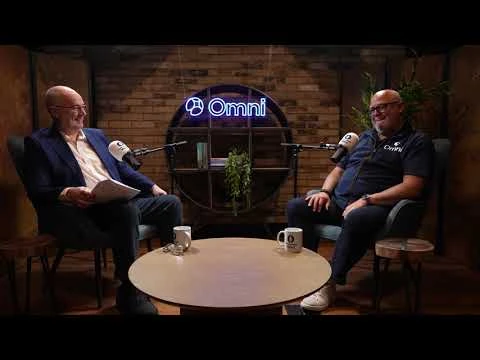
Hello, and welcome to the Smokeless Word, the rewind. I'm Kingsley Wheaton, BAT's chief corporate officer, and if you're a regular listener, you'll know that I'm usually the one asking the questions. Not today, however. I'm going to step out of the interviewer's chair and into the interviewee's seat for our 26 highlights episode. Where I get interviewed about Omni, why we started the Smokeless Word, and some of the highlights so far. This podcast was born out of something bigger, Omni, BAT's manifesto for change, and today I'm joined by someone who was in the room when it all started. He's one of Britain's best-known political broadcasters. He hosted the Omni launch in London back in September '24, and now he's here to turn the tables on me. This podcast is intended for regulators, scientists, policymakers, and investors only. The views expressed in this podcast are the personal opinions of the speaker only. Any references to products having a reduced risk or reduced harm are based on the weight of evidence and assume no continued smoking. This material is not intended for U.S. audiences. Ian, welcome to the Smokeless Word Studio. Do you like it?
Ian Dale
Well, it's home from home for me, isn't it? Being in the studio.
Kingsley Wheaton
Yeah, absolutely.
Ian Dale
I mean, I host six podcasts, so I'm quite used to podcast studios.
Kingsley Wheaton
Is it six podcasts?
Ian Dale
Well, yeah, it's it's declining now, but it's quite enough, isn't it?
Kingsley Wheaton
What's the most watched podcast?
Ian Dale
I do a podcast called Where Politics meets History with the historian Tessa Dunlop, and we we talk about the news events of the week, and then try and relate them to events that have happened in history. So a little bit different from this.
Kingsley Wheaton
Yeah, yeah. I I I must. That sounds fascinating. Must watch it.
Ian Dale
Now I was I I hosted the event where you launched Omni.
Kingsley Wheaton
Yes, and
Ian Dale
it was quite something, wasn't it? I mean, there was. I've rarely been in a room where I've really felt a sense of ambition for a project. And sometimes when you launch something, there's a lot of pizzazz at the launch event, and then it sort of peters out. That hasn't happened here, has it?
Kingsley Wheaton
No, it's been a. It's it's been a tremendous success. I mean, little did I know. I think you know. I think it was the 17th of September, 2024
Ian Dale
Is it that long ago?
Kingsley Wheaton
Yeah, it's getting on for two years ago. You know, little did I know. I mean, of course, we all you know you always have expectations in business, and you know, there's no doubt those expectations have been met. But I think in many many ways, it's sort of surpassed our even our ambition, the engagement with it's been fantastic. It's also spawned what I've called sort of, you know, child of Omni, which even the Smokeless Word is a sort of Omni child, because our offer that day was to you know review the evidence and join the conversation, and therefore this is a legitimate platform for a conversation. So, I think what it did, just to sum up, is you know we'd always been trying to get our message out there, but it turned it all in one direction and gave it a focal point, and it meant that all of our effort and all of our energy and all of our investment, whether that be financial or human, was turned on one spot, and I think it's like almost like a sort of laser beam, and I and I think that's what's happened. So look, still a long way to go, but it's been it's been a wonderful journey.
Ian Dale
But do you feel it's changed the dial? Because I suppose when you launch a campaign like this, because it kind of been a cheap thing to do,
Kingsley Wheaton
sure,
Ian Dale
you've got aims for it. Have those aims been met?
Kingsley Wheaton
Yeah, I think I think it has. However, you know when I look at what it achieves, there are outputs and there are outcomes. I tend to think of outcomes being necessarily longer term. You know, is the world convinced of the tobacco harm reduction case? Not as much as we would like. And there's notable examples. You know, we we we had a minister of finance in Islamabad from Pakistan on our stage, you know, supporting us in Omni. We've had, you know, 1, 2, 3, politicians on the smokeless word on this platform. We've rolled out an inter-regional Omni in Stockholm, where people came from as far away as Argentina and Turkey to attend. So yeah, I think it is. But I always said it was a job of, you know, of years, not months.
Ian Dale
Well, and it has to be, doesn't it? Because if for somebody coming into this from the outside who just sees Omni for the first time and thinks, well, what's that all about? And then you say, oh, well, it's BAT. We want we want to create a smokeless society. You think, what? I mean, that that goes against the the entire history of the company in some ways.
Kingsley Wheaton
Correct. Yeah. No, it is it is a it is a kind of paradox, and quite a lot of what we have to do is a paradox. You know, we whenever we're out there, we always say we want more regulation, not less. And people are kind of like surprised. Why would why would you want that? I actually think you know it's quite interesting. In you can go back to the 50s and find early technical drawings of what might have been a vapour product. You know, it's a bit like Leonardo's helicopter. You know, it just wasn't buildable. Reynolds, our American company, launched a heat not burn product in 1988. I think what happened is that innovation and technology, and mostly miniaturization, caught up with the challenge. Like like so many things in life, technology delivers the solution.
Ian Dale
How does the podcast fit into this? Because often corporate podcasts do not work. They, they, you look on YouTube and they get like 20 views. But I mean, you've really developed an audience here.
Kingsley Wheaton
Yeah, yeah. Look, I'll be honest with you. It was a, it, it was a, it was a bit of a chance at the beginning. We thought we'd give it a go. I don't quite know how we would have, you know, backed out of it if it hadn't worked. But we thought it was worth giving a go. And actually, to be honest with you, interestingly, when when when my colleagues first came with the idea, even the name helped me. I just loved the idea of the Smokeless Word. I just thought it was clever, and you know, we've done quite a good job on some of the branding. And then we and we gave it a go, and I don't think we actually envisaged it being quite what it became. I think we thought it was going to become a content factory for excerpts. So we would run more like Omni shorts, you know, or Omni bite-sized little clips of people, and then actually, to our surprise, people started watching it, and it sort of built, and you know, there's some things we've kept quite, you know, as regular features, the setting, you know, the the way I tend to run it, and it just seems to have worked.
Ian Dale
But have you enjoyed it personally? Because sometimes, sometimes, or should we say sometimes, people in business don't adapt to the media world very well. It's like very few business people who go into politics are a success. But you, you seem to actually genuinely enjoy it.
Kingsley Wheaton
I, I enjoy the aftermath.
Ian Dale
Once it's in the can?
Kingsley Wheaton
Yeah, in the can. I enjoy the product. I mean, sometimes the most I've ever filmed is four in one day, and that was right here actually in this studio.
Ian Dale
Oh, you're such an amateur. I've done seven. We've done . In one day. How long did that
Kingsley Wheaton
Seven in one day?
Ian Dale
Seven, in one day.
Kingsley Wheaton
How long did that take you? 12 hours or something?
Ian Dale
No, no, because we we tend to be a little bit looser on editing, and we just do it as live, and you just bat them off.
Kingsley Wheaton
Yeah, I mean it's well, you know, you are the pro, Ian.
Ian Dale
Yeah, no, you've you've got a bigger audience for this than I do.
Kingsley Wheaton
Well, I mean, yeah, I enjoy it. Actually, a few things to to say about it. One is, I I I get I'm very nervous about it, and and I always say that to people. And it doesn't matter when I'm doing the podcast or going down the line on a TV interview. And I suppose that's natural. It's just adrenaline, isn't it? So,
Ian Dale
Which guest has made you most nervous?
Kingsley Wheaton
Probably Boris.
Ian Dale
I knew you were going to say that.
Kingsley Wheaton
Just just because of his.
Ian Dale
You know. Because I've interviewed him many times. Yeah. And the thing with Boris, I don't know whether he did this with you. I mean, I guess it's sort of maybe it was slightly more relaxed. But I was interviewing him when he was Mayor of London, when he was Prime, when he was about to be Prime Minister, and the thing with Boris is he never looks you in the eye during an interview. He looks all around the studio except for where you are, because he knows it's more difficult for you to interrupt him if he looks if he's not looking at you. Interesting, and he'll go on like two minute monologs, and at some point you have to say, Boris, the idea of an interview is that I ask you a question and you answer it and then I come back to yes, great man, great man. Did he do any of that?
Kingsley Wheaton
Yeah, he did. And I came out. It was funny. I came out just here, and I think I remarked to one of the team. I said, I think that's the hardest one I've ever done, and they said it's funny. Everyone in media says that, and I think I said so about like, well, you could have told me before we did it, or something like that. So yeah, nervous for that one. I also do a lot of prep. I mean, this always surprises people. You know, the final I get research papers given to me and stuff, but the final questions that I ask, I prep myself.
Ian Dale
Do you?
Kingsley Wheaton
Yeah, I do.
Ian Dale
I do absolutely no preparation whatsoever. You were because I mean I find the more prep I do, the more stilted the conversation becomes because I think oh I've got to ask that question. It's like I don't have a script on my radio show. Yeah, sure. I just talk. Whereas if I was on the BBC, I would have lots of producers. They would prepare questions, and if you've. A list of questions you ask 1, 2, 3, 4, 5, and it becomes less of a conversation. But I've I've watched you do it, and you've got the skill of making it not sound stilted. It's actually quite natural.
Kingsley Wheaton
Yeah, I think probably partly because I've written. And by the way, when I say I've written them myself, I haven't. You know, I've just sat there and I'm right. I'm going to ask this a bit like I would do organically, and I also jump quite a few. If I feel it's getting a bit dull, I just skip on. What I just wanted to ask you then. So what if what about if there's a subject matter that's really you don't know much about, or would would that cause you to yeah research it?
Ian Dale
If you're interviewing a specialist on something, say a scientist. Yeah, I mean, I know nothing about any scientific subject at all, and you don't want to ask stupid questions. So, yeah, in those circumstances, you do. But if I'm if I'm interviewing a politician,
Kingsley Wheaton
yeah, sure.
Ian Dale
Now they're probably going to know more about the subject that we're talking about if they're a minister than I will. That's true. And I often wonder why they don't turn stupid questions back on the interviewer more than they do, because you think, well, why don't you do that? Yeah. So it does depend on the interview, but if I'm doing a podcast interview, I do an interviww podcast call Ian Dale All Talk. I want that to be a natural conversation. So I won't have any notes on my knee or anything. But obviously, with you, I need notes.
Kingsley Wheaton
Yeah. Well, there we go. Well, I'll think of that next time I'm listening to your. I tend to listen to your my drive home. I have. This will sound weird to you. Somewhere between LBC and Radio X with Johnny Vaughan. You know, it's funny, isn't it?
Ian Dale
Well Johnny Vaughan is. Well, he's just a force of nature.
Kingsley Wheaton
Unbelievable, Unbelievable.
Ian Dale
He often comes into our newsroom. Does it? Is it? He'll come. He'll yeah. He'll because he he listens to my show as well after he finishes his, and he comes up with ideas for my show. I've got a great text question for you, Ian.
Kingsley Wheaton
Unbelievable
Ian Dale
he's a great man.
Kingsley Wheaton
It's funny. I started, I think I first started watching him. He did the Big Breakfast, I think, for a while. He did, Denise Van Halen. That's right, and then he did Capital, didn't he? I I went to one of his phone ins one day. The question was, Ian, what would you do if you had infinite money? And they got me on the line because they liked my answer, and I said I'd have a brand new pair of socks every day. You know, because it's like something about when you put the socks on for the first time.
Ian Dale
Can I tell you, my former colleague Steve Allen? That's what he does.
Kingsley Wheaton
Really?
Ian Dale
Yeah, every day a different pair of socks, and he just throws them away. I think.
Kingsley Wheaton
Wow. Okay. Which
Ian Dale
I'm not quite sure what the psychology behind that is.
Kingsley Wheaton
Probably best not to ask. Do send my regards to Johnny because I find him very funny, and I I listen to his four till seven show on the drive home the last hour of it usually, and he he entertains me enormously.
Ian Dale
So later on, we're going to look at some individual clips of some of the interviews that you did. But here are some of your best bits.
Kingsley Wheaton
Thank you, Ian.
Welcome to the Smokeless Word.
Boris Johnson
One thing you are paid to do as a leader is lead, and you know you cannot just that. You have to have a direction.
Will Greenwood
Leadership isn't imposed; it's granted. The followers grant you the power to lead in times of stress.
Tony Abbott
Hard times produce strong men. Strong men produce good times. Good time produce weak men. Weak men produce hard times. Right.
Gavin Esler
The way you don't cut through is by putting more in the deluge. You cut through by doing something.
Pascale Meulemeester
You know you have to be in the game to change the game.
Nike Örbrink
So I think a good way of of forming policies should be differing tobacco depending on the the harm it causes the person. In for example, how to tax it, how to regulate advertising. Advertising.
Theo Foukkare
We are literally seeing the biggest transfer out of the legal to the illegal market. It's now being called as the largest policy failure in history.
Kingsley Wheaton
I think to the heart of your question, if I underestimated anything, is I thought it would be easier than it would be. You know, I thought big global company, plenty of access to capital, big firepower, consumer understanding, route to market. I suppose deep down, it just shows how difficult transformation is.
Christian Sandström
It is, you know, it is, and one should be humble about it.
Zak Brown
We're rebuilding this great iconic brand, so we we think about yesterday, but we're all about tomorrow, a better tomorrow.
Kingsley Wheaton
It's quite moving watching it.
Ian Dale
See, I thought the the most interesting part there was when you were sort of musing about the the maybe the challenges of being in a big company, and it's you thought it would be easy, and it wasn't. And I think that the great thing that you've got here is a mixture of well-known guests, so that attracts the punters. You've got experts, and you've got you as the business voice, and you felt free to give your opinions while asking searching questions, and that to me makes a perfect podcast.
Kingsley Wheaton
Thank you. It's very kind of you to hear from you. I'll take that as a compliment.
Ian Dale
And you've got a good guest list there, yeah, and it's not really what one would expect from a tobacco company podcast, is it? To have some of those names on a podcast. I mean, how did you get Boris Johnson to come and do this?
Kingsley Wheaton
Yeah, yeah. It's interesting from from the very beginning, and actually, you know, I think Boris kindly agreed to do it largely because of some connections. I mean, that's how life can be. So, look, I think to answer your question, we're trying to do four things. We're trying to build reach of the, you know, of of our impact, of our voice, build followership. We're trying to counter exclusion because many people don't want us to be in the conversation, and and whatever you may think of us and our past, our history.
Ian Dale
Who doesn't want you to be in the conversation?
Kingsley Wheaton
Oh, there's plenty of people who don't want us to be in the conversation.
Ian Dale
I don't mean individuals, but what sort of groups?
Kingsley Wheaton
Well, the World Health Organization wouldn't want us in the conversation.
Ian Dale
Well, they surely ought to be welcoming what you're doing.
Kingsley Wheaton
No, because they still they haven't accepted tobacco harm reduction and smokeless nicotine as a as an idea. They're still, you know, hubbed in, you know, quit or die. You know, I always borrow slightly. I think it's a sort of Blairite term. You know, I always argue there is a third way. You know, it's not just smoke or don't smoke. The third thing is to give actually industry-specific messaging, that's the slightly more applied stuff. You know, technical, which is is useful from time to time, and therefore the guest list kind of comes in in four ways. You've got experts, you've got internal colleagues of mine, you've got politicians, regulators, policymakers, and the final one is the world of elite achievement, leadership, sport, high performance. You know, and that's roughly how how it's been made up.
Ian Dale
You've done more than 20 episodes now. How how does the podcast feel now compared to the first episode? How has it developed and changed?
Kingsley Wheaton
That's a great question, Ian.
Ian Dale
Apart from your brilliant presenting skills, obviously.
Kingsley Wheaton
Thank you so much. Actually, this is quite an interesting. As you asked me, I'll tell you what I was thinking instinctively. I was thinking, it feels almost exactly the same. Oh, that's quite interesting. I mean, that's perhaps that's perhaps that's good in a way. You know, is its consistency? We've changed the seating a couple of times. We've been brave enough to do that, so you'll notice.
Ian Dale
Well, you normally sit here, don't you?
Kingsley Wheaton
Yeah, you're in my studio. Actually, when we started doing it, was a high desk. I'll come back to that later with bar stools. No, no, no. It was okay, but then we did this one the first time we had this format.
Ian Dale
Have you ever felt comfortable on a bar stool?
Kingsley Wheaton
Well, I not on this particular bar stool certainly, and I'll explain I think later why that was interesting. But we changed to this format for Zach Brown, and I I loved it. I thought it was really good. So yeah, it's it feels quite similar every time actually, which I suppose in a way is good.
Ian Dale
And what's been the reaction within the company? I mean, from just like ordinary employees who've watched it. But I mean, sometimes these things can be risky. Now I know you're a board member, sure. But what reaction have you had from your fellow board members?
Kingsley Wheaton
It's a very interesting question, Ian. Look, I think there's been all sorts of reactions. I think at the beginning people were intrigued, but they didn't quite know what it was going to be, and I don't think I knew quite what it was going to be. I think it's, of course, you know, seeing is believing. BAT is quite a didactic company, so as it starts to work, you know, people go, "Well, that's cool". I get a lot of a lot of people internally write to me, and they say, "Oh, I just watched the last episode; it was great. You know, I really like that, and actually, not always the most obvious episodes, you know, there was a lot of appreciation for Gavin Essler just because of the subject matter, and then of course when when you get the big guests, which I would never do big guests all the time, but doing two former prime ministers of you know big big leading countries back to back, you know, people I think were just like, "Wow, how did you, how did you, how did you achieve that? It was Keith Weed, he was the CMO at Unilever, said to me, "I found out very quickly the best way to communicate internally was to communicate externally, and I thought it was quite a good adage actually. And so I think, yeah, I think you know when we have a good episode and a good guest, you know, BAT walks maybe you know a touch taller.
Ian Dale
And I think also you're so right about the big names because sometimes it's not the big names that attract the most people. On my All Talk podcast, I've done 366 episodes of that over the years, and still one of the most popular episodes was when I talked to my best friend,
Kingsley Wheaton
really,
Ian Dale
who nobody's heard of. I thought is American. Nobody's heard of, and they just love the fact that we talked about our friendship.
Kingsley Wheaton
Yeah, yeah.
Ian Dale
And you don't get that very often, and it's so it's not always the obvious ones. No, I mean, okay, if you interview Boris Johnson. You kind of know that's going to be a bit box office, yeah, but you might have somebody that you've come across in BAT who's got maybe a fairly lowly position that actually has got a bit of bit of spark, a bit of character that people absolutely love to hear from.
Kingsley Wheaton
Yeah, that's right. Interestingly, of all we put these trailers out, and of all the trailers, the one that to this day has had the most reach, and it was astonishing, was myself and the head of communications in the back of the taxi on the way up to here, where we were
Ian Dale
Kind of carpool karaoke
Kingsley Wheaton
That's right. Yeah, wasn't it? Wasn't it like? So I'm actually thinking there may be a version called you know Omni Taxi or Omni Cab or something, where we do a mini Smokeless Word in the back of a cab for 10 minutes, you know, because it went went very very well. Another thing we did recently, we had some internal guests. It hasn't aired yet, but I did. It was first time I ever interviewed two people at the same time. You'll be well used to that, Ian. But that that was another level of complexity.
Ian Dale
So it can go wrong, can't it?
Kingsley Wheaton
Yeah, it's quite sort of. I I found again it made my. You know, I was saying to you when we met this morning. We even filmed two people. It's the first time I've done that. I was saying to you this morning. I find it quite hard work preparing, but with two, even interviewing was even harder because you're trying to bring them both in, give them airtime. That episode, I think, you know, was was released fairly recently, so it seemed to work out okay.
Ian Dale
Right? Shall we go through some of the highlights of the the guests that you've had, so people can see who you've had, and maybe they can go back and listen to them or watch them? Yeah. When I first saw the name Rory Sutherland, I thought it was the former Irish European Commissioner, but this is not the former Irish European Commissioner. This is the Vice Chairman of Ogilvy, the big advertising agency and PR company. He was your first guest.
Kingsley Wheaton
He was.
Ian Dale
Now looking back, now were you were you ready for it?
Kingsley Wheaton
I suppose I was. You know, would I do things? Probably, yeah. But yeah, I was ready because it was a journey into the unknown.
Ian Dale
Right. Well, let's let's watch a little clip.
Rory Sutherland
The pilot lands. I think we're at Gatwick, and he says very clever phrase. I've got some bad news and some good news. The bad news is there's a plane blocking our gate, so we won't be able to get you an air bridge today. But the good news is the bus will take you all the way to the passport control, so you won't have far to walk with your bags. And suddenly, the bus journey was inordinately less painful than it would have been without that information, because we was comparing bus with airbridge, and we see the bus as the poor man's airbridge.
Ian Dale
Now, was there an analogy there that he was trying to make?
Kingsley Wheaton
I think deep down he's a behavioural scientist, isn't he? And he's also got a big interest, and he's written in the Spectator about vaping. So I think the story it just made me laugh because I mean, you know, you and I will have spent quite a number of times, you know, landing somewhere and you get the bus, feel like that's the poor man's
Ian Dale
The moment of dread.
Kingsley Wheaton
That's right, you know. Whereas I just thought it was a fascinating story that the pilot had turned it round, and you know, Rory was brilliant. What one thing about the Rory episode it is the longest we've ever filmed for. It was an hour and forty-seven minutes, and there was one thing we did differently after the first one, which we sat on the bar stools that were here anyway, and I'm quite a big guy, and Roy's quite a big guy, and these were not very big barstools, and they were by about an hour in. I don't, I thought, I don't know if I can keep this up. So the change we made for the second filming was, I've got quite nice barstools, not nothing glamorous at home around the breakfast table, so my breakfast table bar stools became the bar stools after episode one because of the Rory experience.
Ian Dale
Can I just say I'm so glad we're not on Bar stools.
Kingsley Wheaton
Yes, yes, exactly. Yes, well you might like my Bar stools. You never know, but the bar stalls have been relegated into these new Aqua chairs.
Ian Dale
Right, As. second clip is Nike Örbrink. Now she is head of the Christian Democrats in Stockholm City Hall. So let's just have a listen to what she had to say.
Nike Örbrink
Yeah. For a long time in Sweden, the focus in in tobacco policies has been to reduce the use of tobacco. I think that's a wrong way of looking at it. I think people will always use tobacco in the same way as people will always drink alcohol, for example. So the yeah, the aim of the policies should be to reduce the harm of it. So in Sweden, we have the Swedish snus, nicotine pouches. I don't know the English word for nicotine pouches
Kingsley Wheaton
Yeah, nicotine pouches. That was absolutely right. Yeah, yeah.
Nike Örbrink
So it's very strong. It's a very strong cultural signal for Sweden. We've used it for I don't know 100 years, 60 years. Yeah, long, long time. It's a way. It's a. It's rooted in our tradition and culture, and it's better than smoking. It's not good. But it's better than smoking.
Ian Dale
Loving the Romanian communist set you had there.
Kingsley Wheaton
Yeah, that was not that was not our finest hour when it comes to sets. Well, I call them our outside broadcasts, which is probably an old-fashioned term, isn't it? But you know, we've got better at that as time's gone on.
Ian Dale
She was talking about snus, which I'd never heard of until I shared that event for you to launch Omni. I'd never heard of snus. Now I was thinking at the time, well, why don't we have that in this country?
Kingsley Wheaton
Yeah, yeah. Well, well, well. Okay, let me let me a couple of thoughts. Snus is banned, banned.
Ian Dale
Oh, it's banned in the EU?
Kingsley Wheaton
Banned in the EU. When Sweden acceded to the EU, it's so important to them culturally that they carved out an exception, and so you have you know the lowest lung cancer rates in Europe and I think the world you know or certainly close to it in Sweden, the highest use of smokeless products, the lowest smoking rate in the world, the evidence seems to me to be, you know, crystal clear. That's a good thing to do. And for me, you know, I actually found it quite emotional to to be in Stockholm, which for us is sort of the heartland of THR, to meet Nike, who's who's by politician standards very young, but so energetic and so like on her subject matter, and very proud of the Swedish experience. You know, it was it was it was absolutely incredible. Interesting thing about Nike. Little little side story is she's a big pub quizzer, so you wouldn't think that you know a Swede in Stockholm. But there was an Irish bar in Stockholm, and she told me, I think it's every Sunday. Her and her brother have a team. She did tell me the team name. Go and do pub quizzing. She's also, I think, she told me a big Chelsea fan because her father lived in Chelsea when she was there.
Ian Dale
Had I known that, we wouldn't have been doing this well today.
Kingsley Wheaton
Yes, there we go. In I also have a lot of Arsenal fans who I work very closely. One of whom might be my boss, so he might not like to hear that either.
Ian Dale
No, don't mention Arsenal to me as a West Ham fan. Right, to lower the mood. Let's move on to now. I'm going to pronounce this wrong. Valerie Mras,
Kingsley Wheaton
Valerie Mras. Mras, I think
Ian Dale
Senior Vice President of vapour brands at Reynolds America. Now that's your American company,
Kingsley Wheaton
Ccorrect? Absolutely right.
Ian Dale
Let's just have a listen to her.
Valerie Mras
I think the other thing that helps to really give people the environment to thrive is inspiring a culture of curiosity, because without curiosity, without the hunger, without the drive, you know, no one's going to be able to to fly high, right? Everyone's going to kind of just stay where they are, and I think that's one of the things that you know. If I could give any advice to anyone who's coming in the organization and wants to be successful, it's you have to stay curious, you have to stay hungry. No one's going to give you all the answers. No one's going to tell you everything you need to be doing. If I had a roadmap for my job, I mean.
Kingsley Wheaton
Yeah, we'd hand it over to AI.
Ian Dale
it's sometimes quite difficult, isn't it, when you're interviewing a colleague or somebody internally within the company to make it feel you've got to make it feel open. It can't be exclusive, and it can't just be internal company conversations, can it? How do you how do you make sure it doesn't come across like that?
Kingsley Wheaton
Yeah, and and you also don't want it to look easy, do you? You know, I mean, I don't mean what I mean is you don't give it easy questions. You know, when when we had Dr. James Murphy on, our our scientific,
Ian Dale
He's a great man. I remember him from the launch.
Kingsley Wheaton
Wonderful,
Ian Dale
Really. One of the few scientists I've ever met who can actually engage me because I know nothing about science, but he's got this knack of explaining it in a way that even ignoramuses like me can understand.
Kingsley Wheaton
Yeah, he's a great communicator. I think I think you know he's from Belfast, isn't he originally? I think he's got you know, I don't know if you can say a touch of the Blarney in Northern Ireland, probably you know, but but you know what I mean. He's got his great raconteur. So when I spoke to him, you know, I think I even said at one point, you know, we're not going to avoid the difficult questions. And he talked about, I remember it. You know, the the the the chemical reaction when a cigarette burns is one of the most complicated chemical reactions on earth. He says that in the episode. I mean, I was like, gobsmacked. You know, 7000 chemicals are created when you burn a cigarette, of which 150 are toxicants.
Ian Dale
Could you possibly name them all for us?
Kingsley Wheaton
James might be able to. Val was wonderful. I mean, you know, I was very determined to have, you know, the US is our largest market in the world. It's very, very significant part of BAT, very proud of it. So to have an American leader that day was terrific, and you know the conversation with Val about business leadership, you know it was it was a really good early start to the internal roster of guests.
Ian Dale
Talking business leadership, you've had quite a few outside business. Leaders on one of whom is Zach Brown, the chief executive of McLaren Racing. Let's have a little listen to him.
Kingsley Wheaton
Okay, double constructors champion, Lando world champion. I mean, what I mean, how does how does it feel? I mean, you must
Zak Brown
Tiring. Tiring, I feel like I ran a marathon, and you have no idea the even in your own self how much energy it takes and then you like cross the finish line not that I ever ran a marathon but you cross the finish line and then you're just you're done.
Ian Dale
Now he he clearly just from that clip you can feel the energy from him can't you and I mean, he he arrived at that interview on the back of an extraordinary few weeks for McLaren. I mean, that energy that he sort of transmitted to you, you clearly picked up on that.
Kingsley Wheaton
Yeah, it was not because it was Zak and not because it was McLaren. It's one of my favourites, partly because the you know he'd flown in from Abu Dhabi, hadn't even been back to Woking, where the headquarters is. I think he'd come to me, and I was so grateful off six or seven, you know, breakfast radio interviews. You know, even by Zak's standard, he looked shattered. You know, but in a good way. I mean, he was happy. They were, you know, and I don't know. Zak would have to answer this, but I felt he quite enjoyed it because
Ian Dale
you could tell he did.
Kingsley Wheaton
Yeah, I didn't really want to talk to him about Sunday and the race, and I wanted to talk about our journey together. So it was like what no one had asked him in the morning. We first met in '18, just before we did the partnership deal. He looked at me and he said, "Kings, we're going to be world champions in five years". I thought that's a bit of that's a bit of Hutzpar, isn't it? You know, but he's a bit like that, you know. And they they didn't do it in five; they did it in six. But one year was COVID. But what was more important to me was not that he said they were going to be is that he had a plan, and he outlined that day. I think it was a six or seven point plan, which he's delivered all the things which allowed them to become world world champions. Incredible.
Ian Dale
You know what they say about three degrees of separation, right? Well, he is the successor to Jonathan Neale. Yes, that's what you knew. Yeah, who I was at primary school with. He was my best friend at primary school, and I haven't seen him since secondary school.
Kingsley Wheaton
Well, maybe as a result of this podcast, he.
Ian Dale
Well, I wonder if he'll be watching.
Kingsley Wheaton
One little thing about Zak. I don't know if you know this. It's quite a well-known story, but he he got his break into what you might call motorsport by winning the Wheel of Fortune.
Ian Dale
No,
Kingsley Wheaton
yeah, he won the Wheel of Fortune. There's a clip on the TV where he win, you know, the American show in probably what the 80s, I suppose. Am I being fair to say? Yeah, he was 13,14, years old, and he won. I think he won two Omega watches, and he pawned them, and he bought his first go kart. And that's how
Ian Dale
That's amazing, isn't it? Because I mean, that is well, certainly used to be one of the biggest shows on American TV.
Kingsley Wheaton
Absolutely, absolutely, I always find it incredible. That's how, that's how Zak started.
Ian Dale
Now, here's a quiz question for you. You and I are, I think, roughly the same age. You might be a bit younger than me. Who was the host of the Wheel of Fortune in Britain in the 1960s
Kingsley Wheaton
In the 1960s wasn't there a later reincarnation?
Ian Dale
There was some back in the. I can't remember who.
Kingsley Wheaton
Bob Holness?
Ian Dale
No, it was David Nixon. Do you remember him?
Kingsley Wheaton
David Nixon.
Ian Dale
He was a really big name in television in the big shows.
Kingsley Wheaton
What was it? ITV. Yeah, incredible, isn't it? We've lost those game shows, haven't we? Somewhere.
Ian Dale
Yeah, there's nothing. I don't think there's. I mean, Michael McIntyre on The Wheel. I'm not quite sure that really works.
Kingsley Wheaton
They're quite heavily produced.
Ian Dale
Anyway, we are going way off the subject. We are, but it's quite a quite. So let's get back. Let's get back on track. The final clip in this section. We're going to play Boris Johnson.
Kingsley Wheaton
Boris Johnson, oh, the Boris one. Okay.
Boris Johnson
The Prime Minister is is there not just to serve the people, or not just at the the behest of the of the people who voted for his government. He's there because of his backbenchers or her backbenchers. Yeah, and certainly in the Tory system, those backbenchers really do control things. So, so to an extent that I hadn't really bargained for or understood, you had to spend, you should spend an awful lot of time trying to appease them, flatter them, say what geniuses they is that they are.
Kingsley Wheaton
Would you would you do more of that if you had your time again?
Boris Johnson
I would, I would. You would really stuff that up, yeah.
Ian Dale
Did Did you have a tie on there?
Kingsley Wheaton
No, I was wearing. I think I was wearing a Gillette or a jacket. I don't wear a jacket very often.
Ian Dale
It looks as if you're dressed up for Boris Johnson, which is yeah.
Kingsley Wheaton
Well, it was one of the first things when he when he when he got out of his car and the you know the the sort of security detail arrived and he got out of the car and ever so charming as he as he is I suppose and he said I got dressed up for you today I put a tie on you know and it's like sort of he did have a tie on
Ian Dale
Hadn't bothered to do his hair but there we go but I thought that that was really interesting because you. Got him in a reflective mood, and that's not an easy thing to do. Yeah, maybe it was because he knew you weren't going to have a go at him for politics. But what he said there about keeping people on side, I haven't heard him say that before. No, and how there's a lesson here, isn't there, in business as well, in that you are on the board of a company that employs or how many people?
Kingsley Wheaton
45,000.
Ian Dale
45,000 people. I don't know how many people report to you directly, but you you are the leader of that team, just as he was leader of his team and he clearly didn't take his people along with him. Sure. How do you take people along with you?
Kingsley Wheaton
Well, it's very interesting. Just just reflect on that quickly. I think it was the, I think it was the Mirror or the a newspaper ran that storyline the very next day because he hadn't said it before about having the backbenchers offside. I think a lot of it, you know, is just good leadership, isn't it? Ian, it's about being, you know, supporting people, helping people, empowering people, motivating, giving direction, setting agenda, feedback-you know-it's-it's-it's-it's-it's people skills. That's how you bring a team with you. Empathy, you know, warmth, understanding-not to be confused with being soft and you know not being. I I think I've always believed in business that compassion and performance are fair bedfellows. You know, you can be, you can be both. I also think, by the way, to get the stuff out of people, I'll tell you a little story about another journalist who you know, who I did a lot of down the line work with, was Ian King. Oh yes, and I had dinner with him, and we discovered that we had both had a mutual North Devon past, and he started life on the North Devon Journal Herald because he was at school in North Devon and I was at school in North Devon. We only got to that because I asked him loads of questions, and that's my view. And I think even the big search firm Egon Zehnder have curiosity as one of their peak sort of performance criteria. Just ask loads of questions, and you do that all the time. And that's your. But eventually, you get to some common ground. And I think with Boris, just ask loads of questions. He did make me laugh. My favourite moment was was his Cassis du Dijon story, which was this European ECJ case about the internal market and whether blackcurrant liqueur had to be identical in all of its you know instances or manifestly similar.
Ian Dale
Tony Abbott is a fascinating character, Prime Minister of Australia for two or three years.
Kingsley Wheaton
Two or three, that's right.
Ian Dale
A man of decided conviction, I would say.
Kingsley Wheaton
He is
Ian Dale
Quite controversial.
Kingsley Wheaton
Quite controversial.
Ian Dale
Let's hear what he had to say.
Tony Abbott
Go back to the 1970s. The tax on cigarettes was roughly a third of the of the cost of a packet. Today, the tax on cigarettes is roughly three quarters. Correct. Of the of the cost of a packet, and over the last decade, the tax has tripled. I guess what's happened is that when you've got the legal product, which costs say 50 bucks a packet, there suddenly becomes an enormous incentive for people to bring in an illegal product at say 20 bucks a packet. I mean, if the legal product was say 30 bucks a packet,
Kingsley Wheaton
probably worked.
Tony Abbott
That would probably work, but at some point in time, the tax became so oppressive, so quasi prohibitionist that we got prohibition style issues.
Ian Dale
Now, you know the illicit trade inside out. I don't mean anything by that, by the way. Yeah, no, that's right. Yeah, yeah, yeah, yeah, yeah. Did he say anything on that that surprised you?
Kingsley Wheaton
I think the strength. I mean, you know, that I'd forgotten that ending there. You know that it's so oppressive that you end up getting effective prohibition. Two things stood out with Tony, and I'll do the I'll do the first one that stood out last. First one was the conversation about his life. I'm quite interested in about allegory. You know, I think the the Smokeless Word is is allegorical, right? It it creates metaphor for what BAT is trying to do. Transformation being at the center of it, and Tony was in Australia, went up to Oxford, became an Oxford blue in boxing, went back to Australia to become a priest. You know, went to Michigan. You know, and I just was listening to this story, thinking, and then became a politician, and I thought that was remarkable. And the other thing about him was, he strode in, big statesman-like handshake immediately gave me that book that was in the clip Australia the history, and not only that, immediately sat down and wrote an inscription in it, and I just thought that was I thought that was classy.
Ian Dale
I think he's a very underestimated politician. He wasn't prime minister for very long, but I've only met him on one occasion. But he has presence, doesn't he? You know, real gravitas. He's somebody that if he walks in the room, people turn their heads, and there are many politicians that that doesn't happen with. But no, not to be underestimated.
Kingsley Wheaton
Quite right.
Ian Dale
Now somebody else, not to be underestimated.
Kingsley Wheaton
Where we going next?
Ian Dale
We're going to Will Greenwood.
Kingsley Wheaton
Oh, Will Greenwood! Yes, yes, yes.
Ian Dale
Rugby World Cup winner. I say that because I've been told that because I don't, I know nothing about rugby. Nothing about rugby. Nothing outside of us. Nothing outside and many other things too. Believe it or not. Okay. So let's hear a little bit of Will Greenwood.
Will Greenwood
Always say the road of life is paved with flat squirrels that couldn't make a decision. Just get off the road. Just don't stand still.
Kingsley Wheaton
Get out of the way.
Will Greenwood
Then again, I always talk about there's three decisions you make on a rugby field. There's a good decision. There's a bad decision. There's no decision. We all love good decisions in life. In hindsight, you go, "That was a great decision. We actually don't mind bad decisions. You mitigate the cost of failure. You realize it's a bad, but you execute as well as you can, and then you bail out and you get out. The one that kills you is no decision in life. In any walk of life, just being unclear, lacking clarity, no strategy, standing still.
Ian Dale
See, I absolutely love that.
Kingsley Wheaton
Yeah,
Ian Dale
He's got that slight northern accent. Right. Well, I'm a blunt northerner. You can trust me because I've got a northern accent, and there are some politicians like that. Lisa Smart, the Liberal Democrats, who is the living reincarnation of Victoria Wood, right? Okay, and there, there are one or two others, some Labor backbenchers in the new intake who, like that. He oozes charisma, he oozes leadership, and he's so right in what he says about making decisions. You look at, I mean, my world in politics: the bad prime ministers are the ones who can't make decisions. Gordon Brown, Theresa May, I have to say, Keir Starmer falls or fell into that that category. He none none of them. They would have these red boxes every evening, and they would write on the papers, delay decision. That is no way to lead, is it? Even if you make the wrong decision, sometimes it's better than making no decision.
Kingsley Wheaton
Yeah, and and and that conversation was born out of a moment that I reminded. He wrote, I think he's written 15 years for the Telegraph. He's written an extraordinary amount of words for the Telegraph with his rugby column every week, and he wrote one about there's this moment when they win the World Cup, where he he goes onto what they call a table. So he sort of literally goes on all fours and puts his head down, and of course the team are just cracking up because they you know I think they all like to sort of take the mick out. It's like Will, what were you doing at that moment? And what he was doing was getting out of the way because Mike Cat was here, Will Greenwood was here. Matt Dawson had to do one thing. I've heard of him. That's right. Pass it back. There you go. Pass it. Pass it to Mike Cat, as the story tells, and then kick it off the field, and they won the World Cup. And you know, in that split second in a noisy stadium, Will's point was: as Matt looks up, he didn't want to see two similarly looking people, so it was get out of the way, make Mike Cap the target, and I just thought that was incredible. The other thing about the Will Greenwood episode, and there's some you know he talks about, I couldn't believe it. He was like, you know, I realized pretty early on that I was never going to be a number one. You know, I'm just a great number two. You know, give me a plan, I'll make it happen. But I'm never going to be it. And I thought that was like for a World Cup winner. And the other one was
Ian Dale
Just on that. Before you go on, self knowledge is so important, isn't it? Whether you're in business, politics, or whatever. And I don't know about you, but I I reckon that I only worked out what I was really good at and what I was really bad at at about the age of 50, which is probably a little bit too late in some ways. But what about what about you?
Kingsley Wheaton
Yeah, I I think I'm constantly working it out. If you know what I mean, you you you know, and I actually think that kind of self development gene, if that's not too poncey a phrase, you know, it's important, right? I think also with, and again, I don't want to get too much into the world of technology and AI, but as the context shifts around you, you have to be chameleon-like in your ability to move on. The other thing I thought was remarkable about that, just on Will, was when I asked him that England team, you know, what was the purpose? What was the vision? You know, do you want to be the best team in the world? You know, to win the World Cup, you can imagine on a flip chart. And he looked at me again in that you know slightly disarming northern lilt and said, "No, just win the next game." I thought that was just remarkable. You know, just just win the next game.
Ian Dale
You see that that episode, I think, is a brilliant example of one where if I saw Will Greenwood, somebody that I didn't know, obviously he's very famous, and I think, oh, I won't bother with that episode because I don't know him. I reckon if I'd listened to the first minute, you'd have got me to listen to the whole thing. Think so, and that's why you shouldn't prejudge an episode. Absolutely, even if you've never heard of the person, yes, give it a go, and if you don't like it, okay, don't continue. But that's one. I mean, if people haven't listened to or watched that, go back because it looks really good.
Kingsley Wheaton
It's also interesting. It's also how we measure it, Ian. Just for the viewers, we we measure number of episode completions or partial completions for those people. So anyone it doesn't do 30 seconds probably just clicked on it by accident. But once people get to 30 seconds, do they watch half of it or all of it? And actually, that you know we were discussing this earlier. It's not always the people or the episodes that you think that have the best engagement performance.
Ian Dale
Absolutely. Well, let's finish off our clip sequence with Gavin Esler. Oh, Gavin! Which people will remember from Newsnight.
Kingsley Wheaton
Yeah, of course.
Ian Dale
And during all the Brexit shenanigans, he developed a reputation as basically Remainer in chief. And I, the first time I was ever interviewed on Newsnight, it was Gavin Esler interviewing? This was back in 2006 and I hadn't got on the so-called A list of Conservative candidates, and I they wanted me to go on to talk about it. And given that I hadn't got on it, they were expecting me to be all bitter and twisted, which I was. But I I knew that this was a tight-rope I had to walk, and if I'd said a word out of place, that was me and politics finished. And he was so gracious because he knew that if I went too far, he could ruin my career. And I'll never forget how he treated me in that interview. And we had some, shall we say, fairly robust ups and downs doing all the Brexit debates, but he now comes on my program quite a lot, and he's interviewed me at literary festivals, and he's a very great man, I think.
Kingsley Wheaton
Very great man. And just a little postscript to your story: it's interesting that I met him through somebody who I won't mention, but it doesn't matter, who was an ardent Brexiteer, and they're firm friends, so that speaks how
Ian Dale
That's how it should be. Of course, we we we live in too many silos at the moment where we don't sort of break out of our comfort zones. Yeah. Anyway, let's let's hear what he has to say,
Kingsley Wheaton
Gavin. Yeah. Where would you get the truth? How how would one get the truth?
Gavin Esler
Interesting. The great Ronald Reagan once said, "Trust but verify. Of course. But the trouble is that's why we're so attention poor because we we haven't got enough time to verify. So if somebody says something, there there may be things that you're really interested in and you will try and verify it and you'll look at both sides and so on. But there are other things that people you know we just turn off. So when we hear in the United States that there may be a link between Tylenol and autism, and autism was discovered more than 100 years ago, and Tylenol was manufactured, I think, in the 1940s or 50s. Right, seems a bit unlikely to me, and there's no, you know, but that kind of narrative goes around the world, and it's very, very difficult because what it means is that we all have to be our own editors now.
Ian Dale
that that is such a good point, isn't it? Because I I find one of the most challenging parts of doing my job interviewing people is to know when they're basically bullshitting me, or they're coming, they're making a claim which I can't possibly know whether it's true or not. So how far do I go in questioning them on it, because I mean, may well be true. But if there's a if there's a doubt in your mind, you you've kind of got to question it, even though you you can't Google it. While well, actually, if they're if they're on Zoom, you can Google it while they're on. And I have done that. But that's a reflection of the society that we live in nowadays, isn't it? Where people can make any claim, however spurious, and there will be people out there that believe it?
Kingsley Wheaton
I think it is. I just think it's the most remarkable subject matter, and I mean, Gavin is incredible. He's written 10 books, Gavin, and you know, so smart. Five of them are fiction, and five of them are non-fiction. You know, and it's just like, you know, but that conversation, I've got to know Gavin quite well. That conversation was born out of a conversation I had with my wife, and I don't think even you know this here. My wife is Russian, so trust but verify is you know certainly her mantra.
Ian Dale
I'm trying to remember the Russian for Govaru
Kingsley Wheaton
ni Povaru or Govaru something like that. It was a Reagan thing, wasn't he? Borrowed from Gorbachev, Gorby, I suppose. And she asked me one day. She said, particularly with all that's going on, and I don't want to make this, you know, sort of about geopolitics. Where do I get the truth? I was like, it's just just such a great question, isn't it? You know, you can have a you can have a podcast on that would run forever.
Ian Dale
Well, and of course, many Russian citizens nowadays are asking that very.
Kingsley Wheaton
They are asking that question, and and by the way, I don't necessarily know that if the answer to it is you know a hodgepodge of Western media, you're also getting the truth. Easier either, and I said to I think you know read a read a decent British broadsheet, maybe the Times,
Ian Dale
listen to LBC 712 that Monday evenings. Yeah, that's right. Yeah, you can see
Kingsley Wheaton
in all his usual podcast channels. Maybe the Economist, you know, maybe maybe the Kommersant if you want a Russian view, you know, as you're Russian, you know, and sort of triangulate. But it's a lot of work, isn't it, for somebody? And and the other, I mean, there's always a funny story. You ask Gavin. He's, I mean, Gavin's it's remarkable actually. So humble. He's interviewed, I think Thatcher a couple of times. Certainly Clinton. Don't know about Reagan. But if when you ask him who his favourite interviewee was, it's a surprising answer because the answer is Dolly, Dolly Parton.
Ian Dale
I I would pay money to interview Dolly Parton.
Kingsley Wheaton
Yeah, yeah. He tells a wonderful story. We'll have to see whether this gets broadcast, Ian. But apparently, Gavin was at Dollywood for seven hours with her, and of course, Gavin, being Gavin, ever so ever so graciously said, you know, how do you, how do you, how do you live with, how do you like the idea of, you know, the sort of dumb blonde label? He was quite explicit, and she turned around and said, "Well, Mr. Esler, I think you'll find I'm neither dumb nor blonde,
Ian Dale
which is a very Dolly Parton answer. It's
Kingsley Wheaton
magic, magic.
Ian Dale
No, you you always want moments like that, and it's when you because that would have been outside Gavin's comfort zone doing that interview because that's not the sort of thing he was really doing.
Kingsley Wheaton
Cajole maybe with the word. I had a couple of goes to get him on it, and then eventually he. I mean, you're right. It's correct. Actually,
Ian Dale
I remember years ago I interviewed Joan Collins one week, and then Joan Rivers, the next, each an hour long, and that was way outside my comfort zone. And I worked out with Joan Rivers that my role was to basically bat the ball over the net for her to volley back. And you can't compete. I mean, I think I can be a funny guy from time to time, but you're not going to be able to compete with Joan Rivers, so don't even try. Right, we're going to we're nearly reaching the end now, but I've got a few quick fire questions for you. What's been the most surprising moment in in the podcast so far?
Kingsley Wheaton
Interestingly, not not what you might think. Actually, I think it was episode five. We haven't talked about it today, but Andrew Stephenson, former Tory Party chair, former Minister for Health. You know, we met outside. Turned out we were we were alumni of the same university. That was kind of weird, and probably helped us. You know, again, be curious. You know, find out about people. And I just remember sitting there thinking, this is getting quite good now. You know, we've got a former minister of health on the podcast, and that wasn't surprising so much as a moment where I was like, maybe this is starting to do what it needs to do. I remember thinking that quite vividly.
Ian Dale
Which guest challenged your thinking the most?
Kingsley Wheaton
Oh, it's always the sector-specific ones. So Derek Yack, former WHO luminary frame, wrote the Framework Convention on Tobacco Control, which is sort of the you know the anti-tobacco manifesto of the world, really. And Donato Raponi, the head of EU taxation, just because the conversations get quite applied, and you go for having a nice chat with Zak Brown or whatever it may be, and suddenly you're into hardcore.
Ian Dale
You know, head of EU taxation. Now, I would find that quite a challenging one.
Kingsley Wheaton
Yeah, I mean, a very charming man. He's, he, you know, but yeah, it was. I mean, you know, and unfortunately, as you know
Ian Dale
Are you an expert in this subject, Kingsley?
Kingsley Wheaton
Well, I am an economist., I am an economist. I mean, well, let me put it another way. I'm not an economist. That's not fair, is it? I studied economics at university, but yeah, those ones where it's pretty deep, you know, Laffer curve, good for substitution, elasticity. You know, you kind of have to gen up.
Ian Dale
A shudder just went down the back of my spine.
Kingsley Wheaton
Yeah, I'll stop there.
Ian Dale
Right. Which episode had the best behind-the-scenes story? Because I don't know whether you've had this experience, but there are some people that you interview where you have an image of them before they come in to the green room, and some of the people who you think are going to be really gregarious are monosyllabic, and it's really difficult to make polite conversation with them. This is Michael Heseltine, right, who I could not get to say anything of interest at all before the interview. I do a show at the Edinburgh Fringe each year, and he was a guest last year. And I had interviewed him a few times before, so I vaguely knew him. He walks on the stage, and it's the smell of grease paint, the the lights action, and he's 92 years old, and it was if it was as if we were going back to the mid 1980s He shone. It was one of the best interviews I've ever done.
Kingsley Wheaton
I've got to watch that
Ian Dale
So I mean, have you had sort of moments like that where you've thought, oh my god? This is going to be a challenging one.
Kingsley Wheaton
No, I haven't actually. Everybody does it differently. Some people love a little warm up outside. We have half an hour. We have a coffee and you know talk about. And some people like, right? Come on in. Let's go. Let's get straight into it. There are differences. I think you know drama. You know Zak Brown flying in from Abu Dhabi turning up here, almost like almost with the world championship in his hands. That was quite cool, you know the sort of the sort of ceremony of Boris arriving. You know the the security detail, which I suppose Prime Ministers have, don't they? The cars and Boris and Boris was funny because the of all the things that you would think he would start talking about, he was fascinated by my name, he was like, "Oh, Kingsley, Kingsley, that's an unusual name. You know, where does that come from? You know. And then he literally did listen to me for about a minute as I explained how that came about. One other thing I will always say is that there's a moment, Ian. You might, I'm sure you recognize this. In almost every podcast, there's a moment where I feel the temperature in the room drops by about a degree because you've just hit an emotional point, and I can see it in their eyes. And I start feeling a bit emotional, and the hairs maybe you know, and it's just like you've hit, and you think that's probably good TV or that's good podcast at that moment, and it happens you know rarely, but it happens in most of them at least once.
Ian Dale
Have you ever got emotional doing a podcast?
Kingsley Wheaton
I have., Yeah, yeah. I filmed one in South Africa. It was with a famous rugby player, two times World Cup winner, and he was telling the story about his debut for the for the South African Test team. You know, massive, isn't it? In the in the in in the tunnel, going out and Siya Kolisi, who's the captain, you know, famous, you know, massive player, world rugby, you know, gave him a big hug. You see, he now runs away from Siya because the hugs are too powerful. They sort of break his ribs. And I said, what did Siya say to you before you went on the pit? And we think rugby being sort of big, bold, brash, burly, you know. And he said something to the words of the effect of "You're the best fullback in South Africa, and this is the bit that really got me. He said, "And I love you, man. And I was just like, "Wow, you know, that's like it wasn't like he didn't give him a slap round the faces. You know, it was like I love you, man, and that was what he needed. And I understood at that moment the power of situational leadership. You know, everyone needs different things to motivate them. That was that. That was a moment that almost got me again. That was quite a touching moment. It
Ian Dale
Almost got me, and I don't. No, I get it.
Kingsley Wheaton
You don't normally get got.
Ian Dale
I mean, I do. I get emotional all the time. There was once. Do you remember the murder of Lee Rigby?
Kingsley Wheaton
I do. I do. The soldier.
Ian Dale
Two days after that, I I was live on air, and my producer put something, a statement from the Ministry of Defence, on my screen. Now, normally, I would skim read it before I read it out, but it was obviously quite urgent. So I read it out, and I got to the point where it said, "And he had two children. Oh, and I just, I can feel it. Yeah, you can feel it out. I mean, as you said it, I couldn't speak for about. Well, it must have been. It can't be be more than six seconds because after seven seconds, if there's silence, our emergency tape kicks in. And I remember when I gathered myself, and I wasn't crying, but I couldn't speak. And I gathered myself, and I and I said, "I'm so sorry. I should not have done that. I'm here to report the news, not get emotional about it. And my text screen went mental.
Kingsley Wheaton
Really,
Ian Dale
People saying we were reacting in exactly the same way. Please do not apologise. And I worked out then that I should never get embarrassed about being emotional on the radio and podcasts because inevitably, if you're having a long conversation with somebody, emotions do come into it. It can happen, and that's the power of podcasts, isn't it?
Kingsley Wheaton
Exactly right. Exactly right. No, I I totally agree, and I'm not surprised your text screen went mental, Ian.
Ian Dale
So I got two more. Yeah. Say quick fire. Quick fire. These quick fire. What's the one clip you'd sent to somebody sent to somebody who's never heard of the Ssmokless Word?
Kingsley Wheaton
It's a cheesy answer, isn't it? I mean, probably one of the people with a bit more fame, and that's that's got nothing to do with because I think they're a better episode. I just think that people would know of them. Perhaps be you know you always worry when you send something to people that they're just going to file it under D for delete. So you know I suppose having the Boris or the Tony Abbott or the Zak, you know, it's it's got maybe you've got a better chance of them engaging with it for the future.
Ian Dale
Of all the ones we've done today, I would say
Kingsley Wheaton
The Will Greenwood one. It's that was that was very it was very special.
Ian Dale
And which episode are you most proud of?
Kingsley Wheaton
That's very interesting question. Most proud of. It's a slight cop out. You must get fed up of the media-trained politicians who don't answer your question and pivot back to their key messages and everything. Do you?
Ian Dale
Yeah, and I basically I've got to the point in my life now where I don't have to grease up to them, and I tell them exactly what I think of them if they do that, because my job is to reflect what my listeners are thinking, and I know when the listeners are thinking, they're talking bullshit.
Kingsley Wheaton
Yeah, yeah, yeah, yeah, yeah. Well, maybe I mean you you did hold out an olive branch for me to come on your show one day, Ian, and we've we've never we've never done that. We should we should we should get back to that. I think in answer your question, this is kind of because I I in their way, I like them all. I think probably Rory, just because it was the first. You know, it's been downhill Yeah, it's been downhill from there. You know, I crossed the podcast Rubicon with Rory. How about that?
Ian Dale
Right. Let's wrap up now. Where where does the Smokeless Word go from here? Oh, where does Omni go from here? Because it's been going two years now.
Kingsley Wheaton
Yeah, yeah.
Ian Dale
I mean, is it something that you're going to continue with, expand, or has it served its purpose?
Kingsley Wheaton
No, no. I am very, very excited. Let me do smokeless word first. I think that consistency is important in authenticity, but I don't think that means you can't not innovate. So I think the guest roster will be exciting going forward. We're also going to have guest presenters or new presenters. So Dr. James Murphy, who we spoke about, either will have or is about to you know be the host of the Smokeless Word, so that that changes it up. And Omni, no, we've got exciting plans. We, I think of Omni as a product, and therefore it has releases. The one you saw was Omni 1.0. We've been through Omni 1.1, 1.2. Later this year, I'm very excited, Ian, and we're going to launch Omni 2.0, which will be a major upgrade. I think it's got 11 new chapters, new science, new evidence, and look, the journey of of our transformation is is like you know tectonic plate stuff. So it will be around for a long time to come, and probably hopefully even after after me.
Ian Dale
Well, talking of after you, in five years' time, are you still going to be in the boardroom, or do you think you might have transitioned to being a full-time podcast host? Well, because you clearly love it.
Kingsley Wheaton
I haven't had any offers yet. No, look, it's incredible. I celebrate three, decades with BAT this year, and that's
Ian Dale
quite something, isn't it? And in a sense, in in today's business economy, that's unusual.
Kingsley Wheaton
Yeah, and it's funny; it's not that unusual in BAT, which I think speaks to the quality of us as a company. So look, I as you as I think you can see, and I've got you know chocolate rock full of energy. You know, I think there's at least another 5, 10, good years in me, and and we'll and we'll keep pushing because I think it's that important.
Ian Dale
Well, that's a very positive way for me to hand the presenting baton back to you.
Kingsley Wheaton
Thank you, thank you very much. As Boris said, every what did he say? Every Tory backbencher thinks they've got the prime minister's baton in their knapsack. So now I will take the baton back. And Ian, thank you so much. It's been such a pleasure. Thank you.
Ian Dale
Enjoyed it.
These transcripts are AI-generated and may contain errors or inaccuracies and should not be relied upon.
Kingsley Wheaton, BAT’s Chief Corporate Officer and host of The Smokeless Word, is usually the one asking the questions. Not this time.
In the inaugural episode of The Smokeless Word: The Rewind, the tables are turned as broadcaster and journalist Iain Dale steps into the interviewer’s chair. The pair discuss The Smokeless Word behind-the-scenes, Kingsley's favourite moments and the most important lessons he's learnt from the podcast so far.
From Boris Johnson on the inner workings of Westminster to Tony Abbott on taxation and regulation, Rory Sutherland on why great innovation is often disarmingly simple, Nike Örbrink on Sweden’s approach to THR, and Will Greenwood on decision-making, join Kingsley and Iain as they look back on the ideas, challenges and moments that have defined the series.