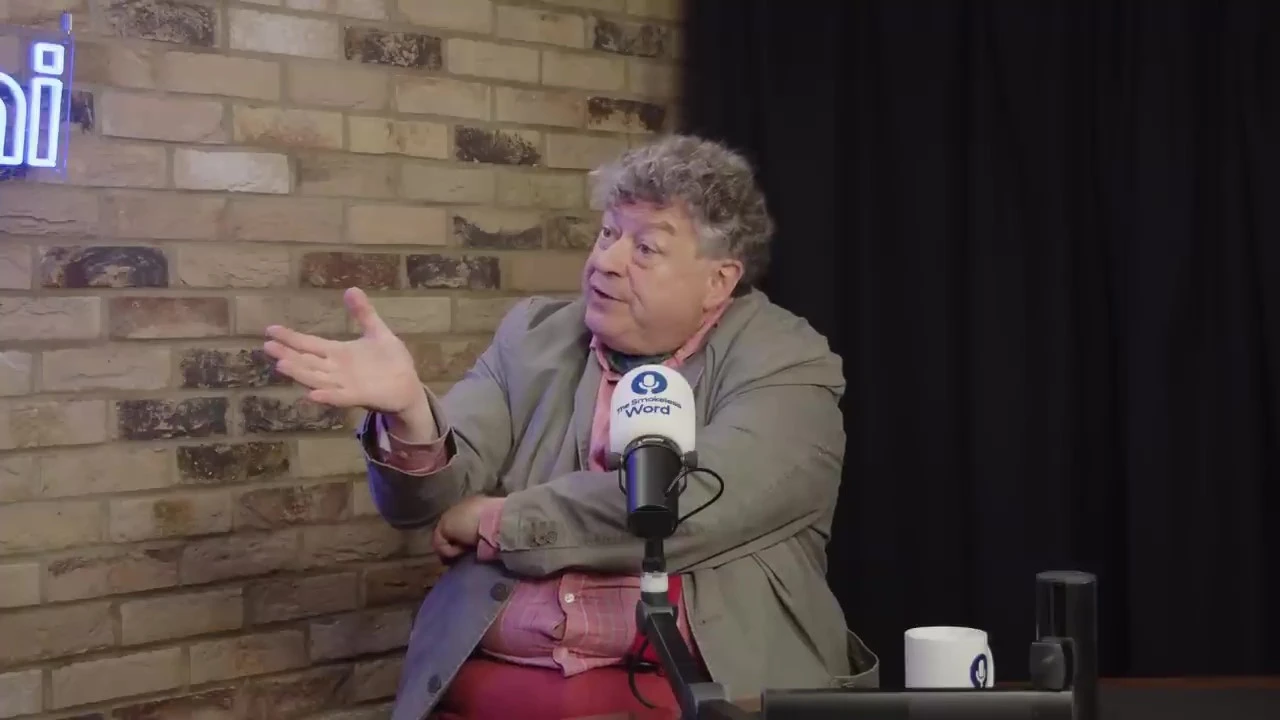

Episode 1: Rory Sutherland
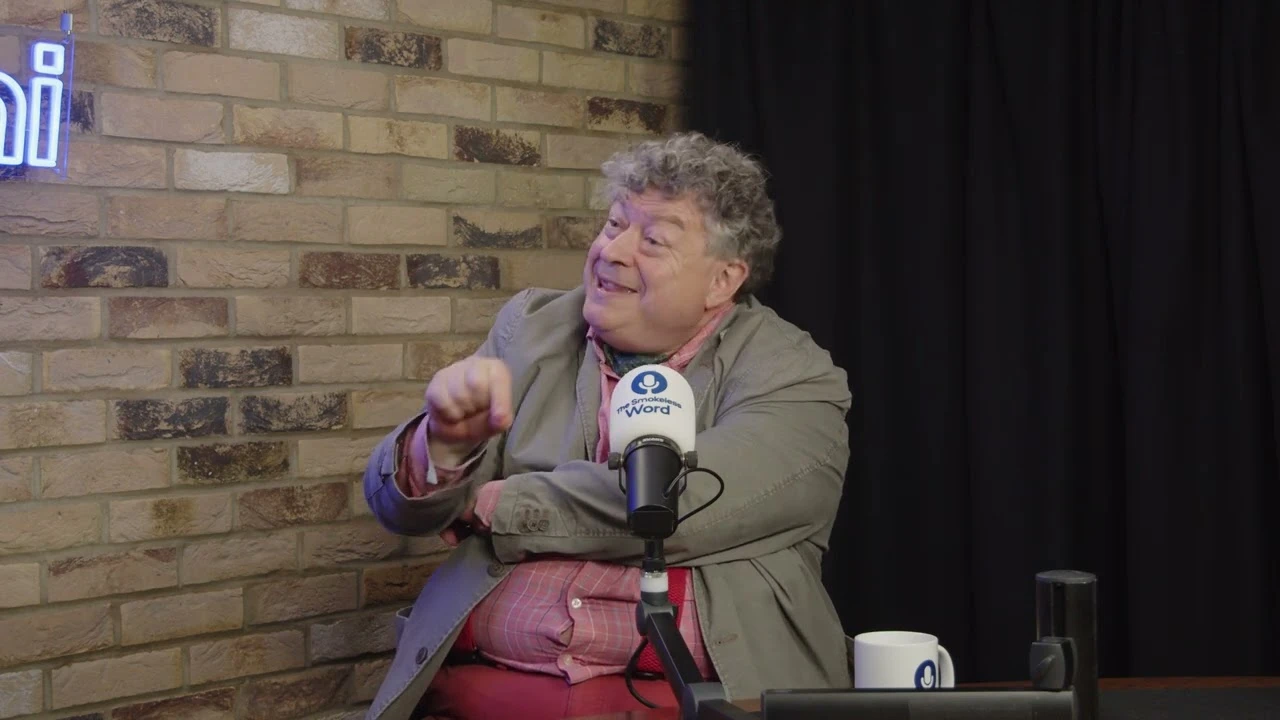
Kingsley Wheaton
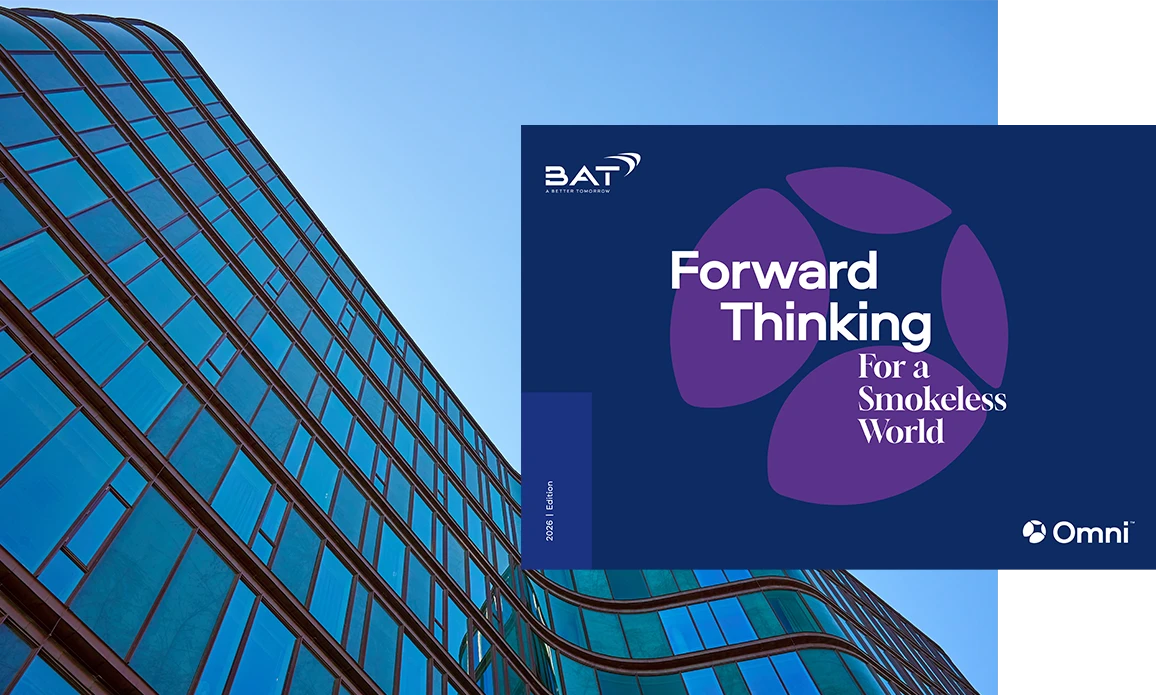
Hello and welcome everyone to the smokeless word with me. Kingsley Wheaton, chief corporate officer at BAT. This is the very first episode of our new podcast inspired by bats transition to a smokeless world. You may have heard of the Omni. Our ambition is for it to be a platform for thoughtful conversation rooted in evidence, a kind of manifesto, if you like, for change and a mandate for action. We launched the Omni in September last year, and I've got a copy of it here. It's a robust scientific resource that holds 260 independent peer reviewed studies all in one place, and this podcast will explore a lot of the themes that are in Omni with leaders from the worlds of business and politics and also some familiar faces. All of our guests will explore themes of transformation, collaboration, bold action and bold decision making. Hopefully it will inspire you to make your own bold decisions in your own personal transformation journey. Today, Rory and I will talk about marketing electric cars and why he's grateful to have the option to vape. Please note that comments by guests do not necessarily reflect the views of bat. A full disclaimer is in the podcast description. This podcast is intended for regulators, scientists, policymakers, public health, media and investors. Exclusively. The views expressed in this podcast are the personal opinions of the speaker. Only any references to having reduced risk or reduced harm are based on the weight of the evidence and assume no continued smoking. This material is not intended for us audiences. And I'm delighted to welcome to a smokeless word podcast. Rory Sutherland, deputy chairman of Ogilvy, spectator columnist, and I think now social media star, Rory, welcome and thank you for joining us.
Rory Sutherland
Pleasure. I wouldn't have missed this for the world. It's an area that really intrigues me.
Kingsley Wheaton
Wonderful to have you here. Just, can I just talk about Tiktok? Because that's going to be a new phenomenon for you. 250,000 followers. Talk to me about how that started and how it's going.
Rory Sutherland
To be honest. I think it's one of those cases where, because you're not expecting to see a fat, 59 year old man on the platform, I think that's partly what contributes to the success. It's that element of optimize for surprise. It happened actually thanks to a young film student during covid. I obviously recorded a lot of podcasts. There was quite a lot of material of me speaking previously online, and this young aspiring film student, very talented guy, just started taking clips of me and basically tiktokizing them, adding subtitles that so the kids can watch them at school with the volume turned down. And the first thing I knew about it really was when I started getting mobbed by school children on the street. And my children, my own children, didn't really know how to react. I think they were half gratified, half horrified, to be absolutely honest. But it's, it's actually a interesting demonstration of the power of the medium, because I'm literally, you know, I will get, you know, selfie requests if I'm in a San Antonio supermarket.
Kingsley Wheaton
Rory I wanted to ask you, you wrote a story about, I think it was a spectator column. You talked about turning up. You said to the person in question, Why are the lights out?
Rory Sutherland
This was actually on, I think the A 40 or the a 449, right? It interested me as a marketer, because it suddenly illustrated to me the fact that as businesses, we get absolutely paranoid about costs, but you don't suffer the same punishment for opportunity costs and marketing, I think, which is generally about opportunities, not about costs, by definition, generally, then gets poorly served. So the example was, it was about eight o'clock in the evening. It was dark, and we're driving along the A 40, and there's the place, I mean, it looked, you know, looked less welcoming than the Bates Motel. Okay? All the lights were off. The shell sign was off, you know, the petrol prices were off, completely shrouded in darkness, and we wanted to buy milk, because my wife annoyingly has this lactose nonsense anyway. But I said, Look, it can't be closed. My wife said, Look, this is closed. It can't be closed because, if you think about it, I've been here on Christmas Day, there's no way that a place that's open on Christmas Day would be shut at eight o'clock in the evening. So let's drive in anyway. So we went down the off ramp. Sure enough, the whole place was open. We were the only customers, unsurprisingly, because everybody else on the road would have assumed it was shut. And by the way, the last words of, I think, William Sainsbury, who founded Sainsbury's. The last dying words were, make sure the stores remain well. Are kept well lit. Okay? And so I go up to the guy, and as I said, we're the only customers. We've got a whole service station to ourselves, practically, because the road is the signage is often the last. Lights are off on the road, it looks as if you're closed. Now, I was expecting, you know, with a marketer's instinct, the guy to go, we haven't turned the lights on. And I expected him to run over to some sort of Frankenstein, like, switch on the back wall and turn it all on. And he went, Yeah, I think, I think the guy who ended the last shift probably forgot to turn them on when he left. And I was there going, Well, go on, turn them okay. So literally, this was costing them at least in fuel sales. It was probably costing them 1000 pounds an hour. Okay. It lost revenue, okay, but there was no particular sense of urgency around this. Now, if that same guy had been caught on CCTV nicking a lion bar at two o'clock in the morning, okay, they would have been hell to pay, because that's a cost, okay. He would have lost his job. The whole thing would have been considered deeply serious, you know. You know, cost reduction is, of course, quantifiable and immediate, whereas what was so strange to me was that this guy who was effectively costing them, you know, a few 100 pounds an hour in lost revenue, the failure to market yourself never causes as much pain and angst and urgency as an unnecessary item of expense, but actually they should be treated as equivalent.
Kingsley Wheaton
And do you think is there something about incentive and reward in that story? Do you think, yeah,
Rory Sutherland
if you think about it, it's the difference, I suppose, between the concept of sins of commission and sins of omission, okay, which is doing something bad is considered much, much more severe and much more career damaging than failing to do something good. So fundamentally, I think you have a bias in business decision making, which is that you get into huge trouble for incurring any kind of unnecessary cost, whereas no one gets bollocked for missing an opportunity, and therefore no one gets bollocked for a failure to experiment. No one gets bollocked for not trying something different, and there's a natural trade off between efficiency and innovation. There's wonderful Canadian writer called Blair ens who coined the phrase inoficiency, which is a phrase, a kind of portmanteau word that captures the fact that at some level, in any properly organized organization, the urge to pursue efficiency at all costs comes with a hidden cost, which is that it not only becomes impossible to innovate, because innovation generally, in the short term, will incur some sort of additional cost. There's that also, I don't think you can get lucky. I mean, I talk occasionally in my talks about the bees, the fact that there's a trade off in animal foraging, in algorithm design, in insect behavior, between explore and exploit and the modern corporation dominated it is by finance, overweights exploit and underweights explore. In other words, the bees that don't obey the waggle dance, of which there seem to be about 20% although it varies enormously, okay, if you're just doing very narrow double entry bookkeeping, most of their journeys appear to be a waste of time. The value of those bees is one time in 101 time in a 500 they come back with something much more valuable than pollen, which is information about where a lot more pollen is to be found. And so the natural tendency to, I mean, by the way, it's wrong even to consider that a trade off. It's not a trade off. They're two complementary parts of the same benign system in effect. So yeah, I would argue that modern business, with its preoccupation with short term returns. There's, you know, at some level, you know, initially it's very, very good for the people doing exploits to become better at it. I'm not disputing that. But eventually you run out of road, and you become trapped in a local maximum. And you also become less resilient, because you never discover anything new. You become over optimized on the past.
Kingsley Wheaton
I shall take the idea Rory of waggle dancing bees back to the BAT ranch. I was also, I think it was part of your mad fest stuff. You were talking about an easy jet pilot, where the plane came to one of those, you know, infernal bus gates, as I call them, and then you twisted that, I think, in a good way.
Rory Sutherland
This was a glorious bit of alchemy in that the pilot lands. I think we're at Gatwick. And he says, very clever phrase. I've got some bad news and some good news. The bad news is, there's a plane blocking our gate, so we won't be able to get you an air bridge today, but the good news is the bus will take you all the way to the passport control so you won't have far to walk with your bags, and suddenly the bus journey was inordinately less painful than it would have been without that information, because we was comparing bus with air bridge and. And we see the bus as the poor man's air bridge. A lot of these false comparisons really fascinate me. It always fascinated me when people said, Yeah, I don't think zoom calls as good as a face to face meeting. And you kind of go, yeah. I mean, obviously in the moment, it's not going to be quite as good. Okay. On the other hand, what percentage of your zoom calls would have really happened in the real world anyway, yeah, okay, it's not an apples for apples comparison, because, you know, you have a zoom call with three people on three continents, where, in the pre zoom age, that meeting would have taken six months to arrange and would have involved sort of 12,000 pounds in travel costs and hotel stays. Okay, as it happens. It happens immediately over. Zoom, so this, this kind of very, very false comparison thing, always fascinates me. Electric cars fascinate me, by the way, but yes, yes, in every respect, really, the electric motor is better than the petrol engine, except for range and refueling time. Yeah. And yet, we've become fixated on one relatively trivial negative. Okay, now the way I reframe that it's just actually in this week's spectator, is, let's imagine, and there's a great mental trick, which is just always invert. Warren Buffett and Charlie Munger used to obsess about this. Okay, let's imagine we had a world in which all cars were electric, okay? And we were all familiar with it. We charged at home, and sometimes we charged on the road, and we drove around electric cars, and then a rogue German engineer just develops the internal combustion engine. Okay, now imagine him trying to sell that concept. Okay, so you have to go, Okay, so let me get this right. You know, Jurgen, you fill the car with about 20 gallons of an extraordinary inflammable and explosive substance, then you pipe it into a load of cylinders, and then you have a series of controlled explosions which drive a crankshaft. What's this thing? It's a gearbox. Why do you need a gearbox? Well, it only really works at a certain range of revs. You only get proper torque, so we need a gear box. Okay, so that's another 47 moving parts that we didn't have with the electric motor. Okay, so you can presumably refuel this car at home. It can be ridiculous. No one's gonna keep 20,000 gallons of gasoline under their house. Be an absolute disaster. Okay, so it's quieter, no, the electric car, no. Acceleration is better. No. Okay, it's smoother. No, it's simpler. No, okay, right, okay, so let's get this straight. Where actually is the benefit to this insanely complicated device? Well, you can go a bit further without recharging. Okay, now framed like that, if you went, if you had an all electric car world and you tried to sell people on gasoline, okay, the guy with the gasoline engine would have basically be sectioned, okay. And yet, we have this kind of status quo bias, which is when we compare new with old, we will sometimes fixate massively on the negative range, okay? And completely blind ourselves to the fact that actually, I mean the electric motor, okay, the electric motor is basically 80% efficient. Okay, a gasoline engine is 20% efficient, right? Okay. You notice this, by the way, very funny. When you have an electric car and it snows because you drive around and there's still snow on your bonnet, okay? Whereas, of course, in any petrol engine car, it melts as soon as you drive sort of 10 miles, massively efficient.
Also an electric car, if you think about it, can run on fuel generated energy generated in any way, coal, oil, okay, nuclear, solar, wind, anything you can use to generate electricity, you can basically drive an electric car with. By contrast, you'd have to say to this guy who's designed the petrol engine, so, so we can actually produce petrol out of wind power? Can we? No, no. But it is, in fairness, it is readily available in dangerous offshore locations and in totalitarian regimes. You know, don't worry, we'll have no trouble getting the oil. Okay. Do you think that the failure to create more enforced charging solutions has slowed down EV transfer, or should we just allow the free market to do its own thing? There's a mischievous thought I've occasionally had, which is that you might have had faster EV adoption if the government had tried to ban them rather than trying to encourage because if you look at it, there are two, two things which interest me, are vaping Okay, and non alcohol or low alcohol beer. And they both happen from the bottom up. Okay. Now, in a sense, you know, the low alcohol, no alcohol, beer thing was almost like a fantasy for both Public Health England, as then was, and for the Department of Transport, okay, it partly solves the problem, I think, of drunk driving to a degree, and it all Undoubtedly, it probably has health benefits because. Particularly to people in the British round system, where you were kind of forced to drink at the rate of the fastest drinker in the group, which was never a great thing. And what's so fascinating about it is the fact that it actually was without any government encouragement. It just suddenly happened spontaneously. The same goes for vaping. The really valuable role of government, I think is, in some cases, not all. I'm not a fanatical libertarian nutter. Just okay, but it's sometimes it's just to stand back and get out of the way. Yeah, because what fascinated me about vaping was the incredibly strong instinct to ban it. And I was kind of going look, the healthiest instinct here is the very least is wait and see okay? Because the balance of probabilities is that this is harm reduction, at least Okay. Therefore, if this is the biggest news in smoking cessation in 20, 3040, years, if you know, by the way, like electric vehicles, partly driven by battery technology? Yes, absolutely, absolutely, partly made possible by battery technology. We should at least give it a fair watching brief trial and see what happens. And you know, I took up vaping because it stopped me lapsing after seven years as being a non smoker, it stopped me lapsing back into becoming a smoker again. And to me, it was a sort of salvation, really. And it struck me as absolutely extraordinary that people who were, you know, basically well intentioned, I think not always. Sometimes there was money at stake, but some people who are well intentioned, combined with some other people who probably had a degree of financial self interest. Because it's worth noting, by the way, that charities have a degree of financial self interest along with commercial organizations. You know, it's not a it's not an entirely white and white blameless field in that in that way. So the other important thing about vaping was that it probably provided a rescue financially for a group of people, as well as medically or in terms of health. Sure, it just struck me, by the way, I was totally open minded. I was prepared for people to come and tell me, No, actually, it's more dangerous. But my argument was the fact that people would have a knee jerk reaction to this with so little evidence to the contrary, kind of worried me, and that was my one little influential thing, which was going to David Halpin, who, at the time, led the government's behavioral insights team, and saying the Nudge Unit, The Nudge Unit, it was always known. This is potentially okay, yes, it's harm reduction, not perfection, okay, I'll acknowledge that. Okay. That's assuming there aren't benefits to nicotine consumption, which we can take up separately. There might be okay. You know, alcohol is undoubtedly a question where you have to do a cost benefit analysis. Benefit Analysis. I mean, the costs are immense, okay, but a lot of people seem to enjoy it. It aids sociability. There are some benefits to drug consumption, okay? Paul Dolan is great on this, but is harm reduction, I accepted the fact that it was, it was, you know, sub optimal, in the sense that everybody quitting spontaneously would have been preferable. But, I mean, you have to deal with the law of the possible, and quite often the great is the enemy of the good. You know that the idea of complete perfection and willpower and so forth is, you know? Yes, okay, your fantasy of what people should be doing, usually, by the way, formulated by people who not only were non smokers, but probably had never smoked. My dad, okay, you know, because that was getting more as fewer and fewer middle class people had ever smoked. Okay, you at least had people who are ex smokers, who some sometimes fanatical, sometimes sympathetic, but they had at least had experienced what it was like to quit. You ended up with a kind of new breed of people who had generally no, no concept of the difficulty of quitting. And so persuading David Halpin, I simply said, look, I mean, I'm open minded on this. I'm prepared to listen to good scientific evidence that there are significant downsides, but if you can encourage the government to effectively adopt light touch for the first few years, we can at least discover what the benefits and costs are and what the potential this has to help, particularly poorer people quit. And occasionally, you go outside, I was in a poor part of South Wales the other day, and you go outside the local shop, and there, you know, about 500 of those little stickers from the bottom of disposable vapes that are stuck on the bin outside. And I suddenly looked at those, my first reaction was, gosh, this is a bit of a blight. And I realized every one of those stickers was a packet of combustible cigarettes, not smoked. Yeah, yeah. Okay, yeah, yeah.
Kingsley Wheaton
And not cigarette butts.
Rory Sutherland
I mean. My view was I wasn't, I know. I mean, I suppose, as a vaper myself, and as someone who is very grateful for the option to vape, I was a little bit, you know, I wasn't completely impartial. But what struck me that the complete knee jerk reaction against it, the idea that this was a setback, actually, probably also came from a lot of middle class people who didn't have many smokers in their milieu. I might also add that okay, because the people involved, the chattering classes tend to, you know, generally, would tend to have a fairly sort of middle class milieu who'd all quit smoking 10 years ago or never smoked. And so they probably saw vaping, because their own particular social set tended to be non smokers. They possibly saw it as a kind of reversal, okay, whereas, if you'd actually been in any culture where there were still a significant number of smokers, you really could see the potential benefits, but you were reflecting on, you know, so we then ask, you know, we asked the vapors to go outside and enjoy their vape with the smokers who they're trying to get away from. I think, yeah, I had a row with Ogilvy about that, which is they said, no, no, we're going to ban vaping. I said, why can you have a vaping room in the office? Actually, there's no legal prevention on this. It's bullshit. Okay? People say it's illegal. It's not just thought I make that point. Okay? But I said, Look, by forcing the vapors to go outside and stand with the smokers. You're exposing people to temptation. It's, as I said, it's like holding a meeting of Alcoholics Anonymous in a pub. Okay, you wouldn't do that, would you? You know, my name is Rory, and I'm an alcoholic. Part of the usual is it, you can't do that, right? I said, forcing the vapors to go and stand outside next to the smokers strikes me as totally barbaric.
Kingsley Wheaton
Doesn't seem logical. So, you know, I think you said, you know, what was the quote logic, logic gets in the way of magic or something in alchemy. I mean, I'm just trying to understand, you know, we think
Rory Sutherland
We take that example of the of the ride in the bus from the plane to the airport, that is, in a sense, indistinguishable from magic. Why is it so hard for the evidential logic to make its way into regulation and policy making. In defense, if you worked in the you know, effectively tobacco, anti smoking industry lobby, whatever it is, for a length of time, your natural tendency would be to resist doing a 90 degree pivot. Okay? It also probably, if you'd spent years and years promoting self control and self discipline, the idea that a completely different solution arrives, effectively from left field, and worse still, arguably, from a series of private companies, profit making companies probably didn't cheer you up that much, I mean, but it is, you know, very similar to low alcohol, no alcohol, beer, and that it seemed to be a kind of bottom up movement which and behavioral change, which happened slowly but spontaneously, without any particular government encouragement. The really important thing was that there wasn't government complete discouragement, least of all a bam, okay. Weirdly, it always interests me. But let's say you'd made them available on prescription, and the packaging would have been medicalized, which nearly happened. I don't think that would have worked. I personally defend the flavors, by the way, which I'm a little bit suspicious when people always resort to the argument about, think about the kids. Okay? Because it's a kind of. It's a little bit of a kind of, let's, let's play that usual trump card again. Okay, and so that was the argument against flavors. My argument in favor of flavors is that, if you're used to vaping raspberry, it achieved something quite miraculous, which is, if you tried a real cigarette, you didn't like the taste. Okay, so actually, the flavor thing was quite decisive in effectively weaning people off, you know, the appeal of combustible cigarettes.
Kingsley Wheaton
And you have to, you know, you raise a fascinating point. I talk about narrowing the compromise bridge. You know were diet coke to taste awful, I guess no one would use it. So yes, our job is to make satisfaction as proximate to smoking, but because you're not burning it, you might have to add something back through flow.
Rory Sutherland
A lot of companies had invested, okay, billions in non electronic smoking cessation technologies like patches, and they effectively saw the whole thing, basically their whole investment going up in smoke, ironically, okay, and it's worth noting that some of the antipathy, and I always notice the times appears to occasionally get on its high horse, I suspect from the tone of the articles, not entirely of its own spontaneous volition, okay, without getting any further on a kind of anti vaping campaign. I was, I was quite influenced and encouraged by, for example, people like Matt Ridley, who was a big pro vaping enthusiast, partly because he's an evolutionary scientist by background and understands the kind of evolutionary nature of innovation that things, combinations, technologies have sex, in this case, the battery and the liquid, right? You get a kind of weird, kind of genetic combination of two technologies which produce something altogether new and wonderful. And I think Matt's background in evolutionary biology, he's always very kind to me, always credits me as the guy behind the vaping revolution. I don't deserve that, that degree of credit, but I did do my little bit in saying, Please, can we just wait and see? Because this knee jerk reaction is simply ridiculous, but the spectator, actually, my, you know, which I write for, was resolutely pro vaping. Yes, you know, I'm proud of that. It was actually the only publication to support the north in the American Civil War. Interestingly, interesting little detail, The Guardian supported the Confederates. Well, there we go. There we go.
Kingsley Wheaton
You heard it here first, everybody, I want to talk about, you know, you talk about the knowing and doing gap, knowing and doing, you know,
Rory Sutherland
That was a peculiar thing, which is a thing here we react to stories, not statistics, in a kind of way. And it was always fascinating that I think the statistic was that for a long time, as a French doctor, you are no less likely to smoke than any other random member of the population, right? Okay, so even though you presumably knew the statistics and you knew the facts, it is amazing how information doesn't necessarily translate into behavior for all kinds of reasons, and how we present information fundamentally changes how people react to it. So I find it just really, really intriguing. So part of the battle for any kind of adoption of a new technology is probably marketing is just as kind of fat tailed as innovation is, in other words, 10 20% of what you do makes 80% of the difference. And I think that just as we accept that innovation should be a process which is funded in advance, where we accept a certain degree of failure and a certain degree of iteration, okay, I think we should, we should basically accord the same indulgence to marketing, yeah? Because, to some level, it's fine. It's finding the magical thing. Yeah, that just changes the game.
Kingsley Wheaton
But it's interesting, isn't it? I'm taken Rory by, you know, back to the logic and magic, you know, one, one side of what you you put across is, you know, the facts, the logic, you know. You know, if the facts change, my opinion changes, you know. And the other side is the magic, you know. It somehow seems to me to get this story across. We've got to, we've got to fuse those two, those two worlds.
Rory Sutherland
I mean, if you medicalized vapes, okay? Or logically, there would be nothing wrong with doing that. It all works. Yes, you know, you can get access to vaping, but it's not the same as going into your local corner shop and going, I'll have a strawberry razz or whatever it is, okay? And, you know the I mean, by the way, I mean, this is why you have to work with large companies. You know, just as you know, McDonald's could be instrumental in getting people to eat more healthily, okay? You know, tobacco firms have cracked the distribution, and without the distribution, it fundamentally doesn't quite work, because it's not something which people tend to buy in advance. You know, if your battery runs out, if you run out, the danger of lapsing back to combustibles is quite high. So actually, you know, I absolutely, you know, I work in advertising, but I'm absolutely not blind to the vital importance of distribution, physical availability of products. And then, of course, you know. So, so we see the tension again, don't we greater availability potential of youth, access problems, you know, packaging and labeling, you know. So how do we I had a great idea, by the way, which is, you should sell vapes in pubs, right? Pubs? Okay, there's, there's a big problem with pubs, which is they can't make any money. Pubs have a very, very strong incentive not to sell to people under age, because you lose your license. Okay? So you've taken care of that whole youth access thing, and you've built extra traffic for pubs because you're a beleaguered business.
Kingsley Wheaton
I mean, we're on more than public records saying that we would absolutely support retail licensing. You know, my 17 year old son can't walk in and buy a bottle of whiskey. And we've known for a long time that, you know, I'm just just wondering why ideas like, you know, this is my point about smart regulation. I think, why don't these ideas get better traction?
Rory Sutherland
The problem you have is that and Paul Dolan, who I quoted earlier, has written a brilliant book called beliefism, which is about how people tend to effectively take sides based on opinions, which then makes those opinions more polarized and more bifurcated. Okay, so basically, instead of going my view on vaping, I like to think, although, let's face it, we're never this objective was, for crying out loud, let's at least see what happens. Okay? You know, perfectly reasonable empirical position people tended to always fall on one side or the other. Okay? And you know that extent to which we signal certain things about ourselves by our opinions. We use our opinions as kind of ornaments, almost in sort of, you know, social signaling is quite often actually quite deleterious to good decision making. And what then happens is, you frame things as neither or
Kingsley Wheaton
Look, I've got one final question on, on the industry, you know, I have a view one day, you know, BAT, 125 years old, you know, we might just sell our last, our last cigarette. That, of course, that wouldn't be the end of nicotine. Would it? We were talking earlier, weren't we about, you know, nicotine and its presence and insecticide. And
Rory Sutherland
it's natural, of course, because plants produce it as an insecticide. So we would have been ingesting nicotine in some shape or form in broccoli or vegetable above ground plants, I think,
Kingsley Wheaton
tomatoes, for 1000s of years. And of course, the combustible cigarette in there is a reasonably modern invention.
Rory Sutherland
If you think about it, if you forced the entire population to give up coffee overnight, you'd see some consequences, both positive and negative. People might have higher quality sleep. People might also fall asleep at the wheel and crash their cars. I don't know what. Yeah, there are all kinds of consequences that would result. We have had a world which, in 50 years, has gone from fairly heavy nicotine consumption to very low nicotine consumption, almost certainly the vast majority of consequences of that are positive. But it wouldn't strike me as implausible that it's slightly changed. So it was Terence Conran, I think, Terence Conran who always argued that you used to have, if you had a dinner party, you had a dinner with load of people, even if only three of the eight people around the table smoked in the 1980s basically, after the meal had finished, people would bring out those cafeteria things, and the smokers would carry on smoking, and the conversation would go on for another hour. I noticed now that when a dinner party ends, the stuffs in the dishwasher and people are getting their coats within about 20 minutes of, you know, 20 minutes of finishing their coffee. Now, okay, you know, I would love it if there's a totally benign way of actually substituting for that hour of kind of French style conversation sit there with a gallows crap on about philosophy and a swipey sweater. Okay, all I'm saying is, I'm sure that, on balance, this is a great thing, yes, but there's usually a price.
Kingsley Wheaton
Yeah, there's usually a price, all right. Final one, best idea you've had, but wrong timing.
Rory Sutherland
Yeah, I'll tell you a funny story. The best idea I had that never happened, wrong time. Okay, when I was about 14 at school, we got a computer, which, at the time, cost about 5000 pounds. Okay, it was probably less powerful than the remote control in your was it? Do you remember research machine, research, machine research, machine ZX, something around, yeah, probably machine code, and it was weird and wonderful stuff. Me, I couldn't code, but I had a mate who could, okay, in let me get this year right. This would have been 1982
Kingsley Wheaton
very early.
Rory Sutherland
No, no, 1981
Kingsley Wheaton
Yeah, I was gonna say 81
Rory Sutherland
We invented the game snake. Wow. Okay, wow, so we came up with this idea of basically a snake that are longer and longer, and two of you had to drive around each other and try and track each other. In what was fascinating, this is almost impossible to realize is that it became an absolute school craze, okay, this game, not for one millisecond did it occur to any of us that you could make any money out of that. Not for one we done it. It was fun. We built it ourselves. It was this whole kind of home brew culture in computing, which is, you make, made your own stuff for your own amusement, of course. And what was so strange, literally, it was on every Nokia phone for about five years. So literally, this mate of mine and my brother basically came with snake spontaeously.
Kingsley Wheaton
And never monetized it.
Rory Sutherland
It started as a way of just writing on the screen. And of course, what we did is we started writing in big type on the screen. So you'd write, piss, okay, and then run out of the classroom. And it was really, really funny, because the school teacher would come in and it said, we actually got, we actually got discovered. Halfway through doing this, the math teacher came in and said, I think it's called MI5, not PI5. And then we realized, with this drawing thing, you could then, effectively, you know, pimp it a bit. Yeah. So it was actually the game snake, not for one, I think millisecond. No, did it occur to anybody that that might be patentable, protectable, or anything of the kind?
Kingsley Wheaton
Well, there we go.
Rory Sutherland
Never mind.
Kingsley Wheaton
Rory Sutherland, thank you ever so
Rory Sutherland
Always a pleasure.
Kingsley Wheaton
Thank you very much indeed. Absolutely brilliant that was the first episode of the smokeless word podcast. Thank you all for listening. I hope you've enjoyed this conversation with Rory, which has been absolutely fantastic, and look forward to seeing you at the next podcast of a smokeless word Thank you very much.
These transcripts are AI-generated and may contain errors or inaccuracies and should not be relied upon.
In the debut episode of The Smokeless Word, BAT’s Chief Corporate Officer, Kingsley Wheaton, welcomes Rory Sutherland, Vice Chairman of Ogilvy.
Together, they explore why businesses fear costs yet overlook missed opportunities, how electric cars could have become more prevalent sooner if governments had attempted to ban them, and Rory’s personal journey with vaping, including why he’s grateful for the option to vape and why he believes forcing vapers outside with smokers is, in his view, “totally barbaric”.
Join Kingsley and Rory for a conversation that challenges assumptions and sets the tone for a podcast about transformation, collaboration, and bold decision-making.
Exclusive access to the Omni™ Newsletter
Join the conversation shaping A Better Tomorrow™. Sign up to receive exclusive access to the Omni™ Newsletter and future Omni™ updates.
Signing up to the Omni™ Newsletter does not constitute consent to receive marketing communications.