
Episode 16 - Tony Abbott
Tony Abbott
Human nature doesn't change, and evils which we think have been subdued re-emerge in slightly different form.
Kingsley Wheaton
Today's Australia. Do you think there is ideological excess?
Tony Abbott
The welfare state is too big. The administrative state is too big. We have neglected some of the fundamentals.
Kingsley Wheaton
Just turning to the current situation. Nearly three quarters of all cigarettes sold are now illegal. Excise revenues have declined by ten billion. It's a very serious number.
Tony Abbott
We've got law and order problem, a public health problem, and we've got a fiscal problem. Yeah, we remain the best country on earth to live. But I don't think we are at our best.
Kingsley Wheaton
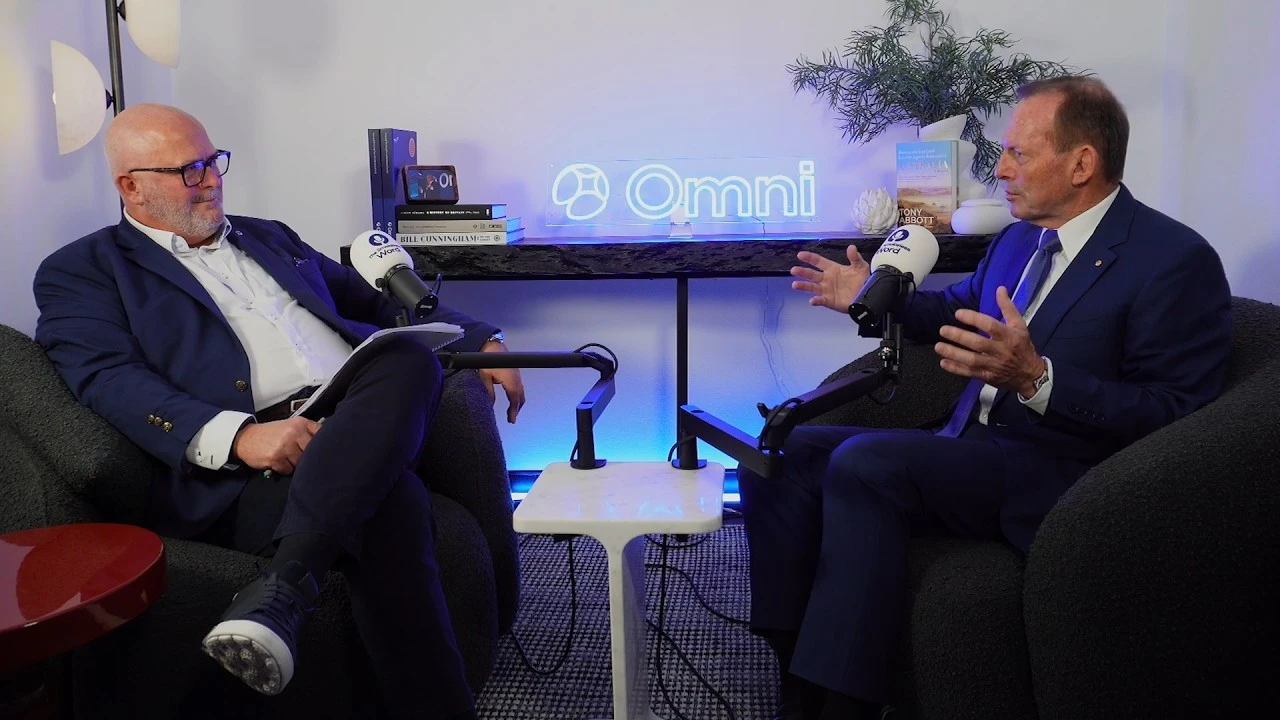
Welcome to another edition of the smokeless word live from Sydney. Today, I'm honored to be joined by honorary Tony Abbott, AC, the twenty eighth Prime Minister of Australia. Tony adheres to break down the nation's current trajectory, delving into his new book, Australia A History, and why he believes the nation is currently performing below its potential. Why the Prime Minister is more the chairman of the board rather than the chief executive and the growing fiscal, social and law and order issues caused by high excise duty. Tony's answer, taxes should come down and enforcement must go up. This podcast is intended for regulators, scientists, policymakers, and investors only. The views expressed in this podcast are the personal opinions of the speaker only. Any references to products having a reduced risk or reduced harm are based on the weight of evidence and assume no continued smoking. This material is not intended for US audiences. Tony, welcome to the Smokeless Word studio. Here we are in Sydney. Do you like it?
Tony Abbott
It's good. Smokeless. All right.
Kingsley Wheaton
Smokeless. All right. Yeah. Your book, your book's there. We'll talk a bit about your book. Um, I also understand you're no stranger to podcasting yourself. You have Australia's Future.
Tony Abbott
Yeah. Look, Kingsley, I do a fortnightly podcast with my friend Dan Wild of the Institute of Public Affairs. We tend to talk about current affairs, but obviously I bring what I hope is a slightly deeper perspective, given that I'm no longer an active participant, but I certainly have a lot of memory and I suppose, uh, quite a few, I guess, uh, experiences and hopefully the learnings that experience brings to draw on.
Kingsley Wheaton
And has it been the success you hoped for, or is it more catharsis and kind of purpose?
Tony Abbott
Well, look, uh, uh, they used to say that John Laws, one of our most famous broadcasters, now no longer with us going on, John Laws was like going to confession. If you were a member of the New South Wales Labor Party, you'd go on John Laws and treat it as a confessional, as it were. Maybe podcasts serve something of the same function.
Kingsley Wheaton
Same thing. Well, talking about experience, a bit of research. I'm fascinated by your life story. I don't know whether this is fair. You refer to it as a firebrand student. We'll come back to that. A master's at Oxford, Double Blue in boxing, training as a Jesuit priest.
Tony Abbott
Not as a Jesuit. Ah, but I did train for the priesthood for three years.
Kingsley Wheaton
For the priesthood? Yeah, okay, but the Catholic church.
Tony Abbott
Yeah.
Kingsley Wheaton
At least. Um, can you just tell me a bit more about all of that and sort of how formative was that journey to, to what became later?
Tony Abbott
Look, in a nutshell, I had wonderful parents. I grew up in a very happy household. I went to excellent schools where first the nuns and then the Jesuits, I think gave me a very good formation as well as an excellent education. Um, I imbibed very much this idea that the Jesuits were big on in those days, at least, that we should be men for others. Right? I went off to Sydney University. I swiftly enough fell in with the followers of the late, great B.A. Santamaria, who was one of our greatest political intellectuals. He was a bit of a fence straddler in the sense that he was culturally Labor, but he was, I suppose, intellectually, particularly as it went. As time went by, more conservative, but certainly a conservative with a strong social conscience. Anyway, under the influence of, of of his movement, I got very involved in student politics, became president of the SRC, played a lot of rugby as well. I was lucky enough to win a Rhodes Scholarship to go to Oxford. An absolutely wonderful, wonderful time. Mixing with some of the smartest youngsters in the English speaking world and beyond. Um. Came back to Australia. I thought I had to get this priesthood thing out of my system by giving it a go and seeing how it worked out. Yeah. Eventually, after three years, I worked out that I was a square peg in a round hole. So I went back to the journalism that I'd already been doing part time was was very happy in journalism. And one day I was having lunch with John Howard at that stage, a frontbencher in opposition, having been leader before, John said, look, there are a few jobs going? Would you be interested? I said sure. Within forty eight hours, I was press secretary to the then leader of the opposition, John Hewson. And I had an up and down relationship, but I very much respected his extraordinary policy, courage and creativity. He then lost the nineteen ninety three election. At the time, then Prime Minister Paul Keating was very much pushing for Australia to become a republic. I thought this was a really, really bad idea. a. I thought it was constitutional vandalism, but b. I thought it was really a rejection of our history. And I think countries need to, as it were, own and build on their history as opposed to reject it and start again. So I became the executive director of a body called Australians for Constitutional Monarchy about twelve months later. Again, John Howard entered my life. I was on holidays in January nineteen ninety four. I was getting a bit bored as you do. After a week or so on the beach, I called my office. They said, John Howard's been trying to get hold of you. Yeah. No mobile phones in those days. So I rang John and he said, look, there's a preselection coming up. Yeah, I think you might have quite a good chance. Why don't you throw your hat into the ring, which I did, and I beat the two more favoured candidates and found myself in Parliament. And I guess I'd like to say I lived happily ever after. I certainly lived happily for the next twenty five years.
Kingsley Wheaton
Yeah, well, we'll talk a lot about that. Let us take you back. Rugby, rugby league, rugby union,
Tony Abbott
Union!
Kingsley Wheaton
Rugby union. Okay. I didn't dare ask an Australian that question. Um. And when you arrive at which college at Oxford? Was it the?
Tony Abbott
Queen's College
Kingsley Wheaton
When you were. I mean, were you well travelled or was that like a massive. Or was that like a brain explosion heading to the UK and going to Oxford
Tony Abbott
I'd been born in Britain, only two years old when I. When my mum and dad. Mum and dad were Australians doing the London thing where they met and got married. Okay, um. I was born in Britain, as was my, my my next in line sister family came back to Australia. So so I suppose I didn't feel in any way a stranger in Britain, I can remember. I come over on the cheapest possible ticket and the Yugoslav airlines as it then was. Yeah. Didn't seem to be able to manage, I suppose, inclement weather. So they dumped us in Brussels and said, here's a ticket. Yeah, get yourself to London. So the plane from Brussels to Heathrow flew quite low up the Thames Valley. Yeah. And I can remember looking out of the window and seeing Big Ben, Towers of London, Saint Paul's, the Houses of Parliament. And I got quite emotional because even though I had never been to Britain as an adult. Yes, I did have this strong, I suppose, folk attachment, cultural attachment to what I still regard as the mother culture. And so for me, Oxford was, as I said, it wasn't a culture shock, although it was in a sense, an intellectual shock. Yeah. Um, I mean, my delusions of academic grandeur lasted probably for about two minutes into the first tutorial. And my delusions of adequacy perhaps lasted about a week until I had to read out my first essay, which was well and truly dissected by my tutor
Kingsley Wheaton
Any, um, any political contemporaries who you made friends with at the time, or is that sort of.
Tony Abbott
No, not not really. I mean, I did I did serve a term on the Oxford University Student Union, right. I was recruited by a very good mate of mine who was at that stage the vice president. Okay. To act as the welfare officer because the welfare officer had resigned. Ah, that actually was the term in which the Argentines invaded the Falklands. So I must confess, I was a bit more interested in the welfare of the Falkland Islanders than I was in the welfare of my fellow students at the time.
Kingsley Wheaton
Um, it's an interesting segue. Talking about Britain, I read in the book. I think he said something like, uh, I, I admire leaders who pursued economic reform, strengthened institutions and resisted ideological excess. I sort of wondered who you were referring to when there must be more than one, but there must be some world leaders.
Tony Abbott
Well, look, I grew up in the heyday of Reagan and Thatcher and John Paul II, and in the nineteen in the mid nineteen seventies when I first went to university. Um, it was, if you like, the last hurrah of the old Soviet Union. Yeah. Um, the Vietnam War was lost. Uh, communist regimes were taking over in parts of Africa. Um, it was easy to be pessimistic, but then Thatcher got elected. Reagan got elected. John Paul II came in. Um, the winds of change started to blow through Eastern Europe. Um, Britain won the Falklands War. Reagan, I suppose, uh, outcompeted the Soviets and, and all of a sudden history had ended, as it were, in nineteen eighty nine with the. Yeah. Um, supposed, uh, permanent triumph of liberal democratic capitalism. If only we had known then what we now know that history never ends. Human nature doesn't change. And evils which we think have been subdued re-emerge in slightly different form. Yeah.
Kingsley Wheaton
And how was that? I mean, I was I was a young ish child in the early eighties. How was those Thatcher eighties? Was it sort of as vibrant and optimistic as as the history books?
Tony Abbott
No, no, look, it it only became so towards the end. I got to Oxford in October of nineteen eighty one. The Thatcher government was in all sorts of trouble at that time. Every other day you'd pick up the Times or the telly, and you'd read that this factory had closed, or that factory had closed with a thousand redundancies or two thousand redundancies. Unemployment, I think hit three million, something like that. Yeah. Yeah. And, and so it was a pretty economically bleak time. What Thatcher was trying to do was to wean the British people off subsidies of business subsidies. Um, trying to get public finances in order. Um, and I have to say at the time she was pretty reluctant to spend that much money on the armed forces. But then out of the blue or apparently out of the blue, the Argies lunged at the Falklands. And that transformed Thatcher from, you know, the old Thatcher Thatcher milk snatcher thing to, I suppose, a modern day Odysseus. Yeah. Yeah. Now I need to reread Charles Moore's magisterial biography of Thatcher. But when I did read it when it was first published, I seem to recall he talks about the initial twenty four hours or so where even Thatcher herself was close to despair. But there was a senior naval commander who assured her that retaking the Falklands was possible. Right? And from that moment, uh, the iron literally entered her, her body and soul, and she became one of the most inspirational leaders of modern times.
Kingsley Wheaton
It's quite a story. Um, I just want to talk also about the book. Um, and I'm paraphrasing, forgive me, but part of the bedrock of Australian democracy, you say gradualism is grounded in some British attributes. I think rule of law, tradition, legal norms, sound governance. I was sort of taken by that, probably probably as a Brit, you just talk a little bit more about the importance of those in the formulation of Australia.
Tony Abbott
Well, um, the interesting thing about the First Fleet, which was the foundation of modern Australia, the two books that they brought with them were Blackstone's Commentaries on the Laws of England and, of course, the Bible. Right. And Governor Phillip was at one level coming to establish a penal colony. But in his own mind, he was coming to establish what could easily be a great nation. I mean, it's interesting that Phillip says in his diaries, his journals, um, there can be no slavery in a free land and therefore no slaves. Um, the first civil case, uh, in this colony involved a convict couple, the Kables, who sued the captain of the transport on which they had come because the captain appears to have pilfered their belongings. Right. Now, in those days, if you were a convict, you couldn't bring an action in the British court. But here in Australia, under the regime of Governor Phillip, this was this was permitted. And very quickly, the convicts were writing back to their rallies in England, saying that we're actually got the most fantastic life here. And it was so much the case that the colonies, the colony was flourishing and fragrant that towards the end of Governor Macquarie's time, we're talking now about the late eighteen tens. The government in London decided that transportation was losing its terror. And they sent a guy called Commissioner Bigge out here to report on Macquarie's administration. Now. Bigge was in part praising and in part critical of Macquarie's administration. And the instructions to the subsequent governors were, um. You couldn't pardon as many convicts as Macquarie had. You couldn't spend as much on, uh, munificent public works. Um, you couldn't give the convicts tickets of leave to go off and effectively go and get jobs in the normal economy. And to some extent they did crack down. But you know, governors Brisbane governor, Darling, they were they were very pragmatic men. And they could see what was working here. And what was working here was that, um, people who had really stuffed up their life in Britain were coming here and making a new life for themselves. Now, not all of them, uh, made the necessary changes, but most of them did. It's interesting. One example who did the cover portrait for the book, George Edward Peacock. He was a London lawyer who was sentenced to death for forgery in the early eighteen thirties. He came out here because he was educated. He was immediately enlisted into the administration of the Port Macquarie Prison while a prisoner himself. Within months, his wife and child had joined him in Australia. The wife and child did not like much living in Port Macquarie in those days. Port Macquarie was not as pleasant as it is now. So they wanted to go to Sydney. Peacock got a transfer from the jail at Port Macquarie to the South Head weather station, where he was responsible, amongst other things, for most of the early records that we have on on Sydney's weather, right. Self-trained as an artist, he was given a conditional pardon in the eighteen forties and was then lost to history. But just on what we know, this is an incredible redemption story. And for for probably one hundred and twenty thousand of the one hundred and sixty thousand convicts that were transported from Britain, this really was, uh, a new life in the fullest sense.
Kingsley Wheaton
Fascinating stories. Um, I want to go back to resisting ideological excess, and I want to ask you about today's Australia. Do you think there is ideological excess?
Tony Abbott
Well, Australia and Britain to this day are very, very similar societies. We have the same strengths. We have the same weaknesses. We have largely the same problems. And at the moment, in modern Australia and in modern Britain, economic stagnation, social fragmentation, strategic peril. Um, the welfare state is too big. Uh, the administrative state is too big. Uh, we have neglected some of the fundamentals. I mean, in the end, you cannot have a strong society without a strong economy to sustain it. And you cannot have a cohesive society without some kind of binding affections, uh, sense of solidarity and so on. And I guess we've never really been united by ethnic solidarity because if you go back to early Australia, Um, the, uh, I suppose antipathies of the English and the Irish and the Scottish were very much present. They did tend to melt away more quickly here than in Britain. Um, given that we all had to pull together in a strange land, but, but certainly, um, we did have some tensions, uh, as late as the First World War. Um, under the, I suppose, impact of the Easter uprising, uh, there was, I suppose, considerable sectarian animosity in Australia didn't stop Catholics, Irish Catholic Australians volunteering in equal numbers to, uh, British, Protestant Australians, uh, for the first AIF but nevertheless, there was a degree of, of that going back, um, I think by the sixties and seventies we had a very strong civic patriotism in this country. The post-war migrants were expected to integrate immediately, to assimilate quickly. And in ninety nine point nine percent of cases, they did. I think it's been different over the last couple of decades, partly because our migration intake has grown in per capita terms and it's become much more diverse. Um, I mean, these days, Britain would be about our fourth or fifth largest source of migrants. Whereas until the nineteen seventies, it was by far our largest source of migrants. Sure. The the other change is that given, um, modern communications and given modern transport, it's possible for migrants almost to live in two countries at once. I mean, you might be physically present in Australia, but you're still listening to Pakistani media or, um, you know, uh, Shanghai media.
Kingsley Wheaton
I saw a lot of Chinese TV last night on the hotel.
Tony Abbott
And look, in a democracy like ours, you can't stop people from doing that. Yeah, sure. But I think it, it, it does restrain what would otherwise be the natural forces driving integration and ultimately assimilation. That said, uh, we remain a wonderful country. I would insist that we remain the best country on earth to live, but I don't think we are at our best. And I do think we need to lift our game in all of these areas in terms of social cohesion. There's got to be much stronger sense, uh, Much, much more stress on the things that unite us as opposed to anything that divides us economically. We've got to end the net zero madness, which is slowly destroying our natural advantages and ultimately our prosperity. And we've got to address the strategic peril. And that means, um, spending much more on our armed forces. It means strengthening our alliances, uh, not straining them, which we are at the moment. And while I don't doubt the sincerity in the patriotism of the current government, I don't think they're doing a good job and I can't see that changing.
Kingsley Wheaton
I just I just want to twist off script a little bit. Really. You made me think that one of the other things that's changed is, is the twenty four hour news cycle, social media, where's the truth? Do you think that has inhibited sort of determined, determined ideology politics. You think another Thatcher, another Reagan is possible when you're scrutinized all the time. Within. Within seconds.
Tony Abbott
Look, eventually we will have a new generation of leaders who we admire and respect. Um, we might have to go through some pretty hard times before that happens. Um, I mean, that old line about, um, um, hard times reduce strong men. Strong men produce good times. Good times produce weak men. Weak men produce hard times. I mean, interesting, you know, it's pretty hard to feel inspired and uplifted. Uh, it's hard to see much strength, determination or purpose other than, you know, when, um, Yeats's terms, you know, were - The best lack all conviction, while the worst are full of passionate intensity.
Kingsley Wheaton
You wrote in your book. I was just fast forwarding. Um, I think I quote - better times are usually only a few good decisions and the emergence of a couple of leaders away. I thought it was a remarkable sentence. And I suppose that's what you're driving at. I mean, your contention would be they will emerge.
Tony Abbott
Look, if we abandoned the net zero climate cult, if we sorted out our immigration system, if we rolled back the thicket of industrial and environmental regulation that is holding back our most creative people, it would swiftly make a big difference. I mean, to go back to the Thatcher, uh, period, I mean, the Britain of nineteen eighty one, uh, was was very much in the doldrums, um, quite anxious and okay, there was the extraordinary circumstance of the successful Falklands War. But the Britain of the mid eighties was very dynamic, very vibrant. Um and really notwithstanding the ups and downs of the Major years, um for much for much of the Blair period as well, Britain remained very vibrant and very optimistic. Um, so look, uh, there are cycles, there are waxing and waning. Uh, there are flood tides and ebb tides in the lives of nations, just as there are in the natural world.
Kingsley Wheaton
Very good. I want to turn to sort of a section a bit on leadership, really. Um, we take you back to that. That day, nineteen ninety four, we entered Parliament. Did you did you think you'd be Prime Minister?
Tony Abbott
Look, uh, the short answer is no. Once I became a minister in the Howard government, as is invariably the case. I was asked by journalists, do you think you could be party leader one day? Or do you have the Field Marshal's baton in your knapsack, which is the phrase people often use to which I would normally respond? I have too many unpopular views on too many unfashionable subjects ever to be the party leader, and I really only became the leader by accident, right? The then leader, the then and future leader Malcolm Turnbull, was trying to persuade, against its better instincts, the coalition to adopt what was effectively Labor's energy and climate policy. Right. And I thought I having looked at this, um, in the last year or so of the Howard government, having looked at the issue and having mulled over it intensively over the first couple of years of our time in opposition, I'd come to the view that this whole emissions obsession was a dreadful, dreadful mistake. I'm not saying emissions are entirely irrelevant. I'm not saying that we shouldn't try to reduce them if it's not going to cause too much difficulty. But but focusing entirely on this was a dreadful mistake anyway. Um, Malcolm Turnbull wanted us to effectively embrace the Rudd government's energy and emissions policy. There was a party room meltdown. I imagined that when Malcolm's leadership became terminal, they would turn to the person who the polls said was the most popular of our frontbenchers. And it wasn't me. It was Joe Hockey who ultimately became my treasurer. But Joe. The night before the leadership ballot or the leadership showdown in the party room basically decided he was an agnostic on whether or not we should embrace Labor's emissions trading scheme. And I thought to myself, well, look, someone has got to stand up as the candidate who is against the emissions trading scheme, and I won the leadership ballot by one vote.
Kingsley Wheaton
One vote out of how many?
Tony Abbott
What's the total vote? Look, I think it was about one hundred. Yeah. And I won by a single vote. I then did something at the urging of my good friend, sadly no longer with us, Kevin Andrews. Andrews said to me, um, in order to put this matter to bed without any shadow of doubt or contention, why not have a formal ballot? Yeah. After you assume the leadership on whether or not to support Labor's emissions trading scheme, and to the best of my knowledge, it's the only time the Liberal National Coalition Party sorry, the Liberal Party has ever had a formal ballot on anything other than the leadership, and it was something like seventy to twenty against supporting Labor's emissions trading scheme. So that resolved that issue. Yeah. Um certainly for my time, I think for all time. Yeah. And while the Liberal Party, as John Howard famously said, is a broad church, the one thing you can normally unite in opposition over is winning an election. Yeah. Whether you're left wing or right wing, by Liberal Party standards, the one thing you want to do is to get into office. So I was lucky enough to lead a very united opposition. Once we won, it was a bit different because while everyone in the Liberal and National Party room wanted to win the election. There was some quite divergent ideas on what a coalition government should look like, right? I wanted to lead a coalition government that was very much of the centre, right? Yeah. Some preferred a more progressive and inverted commas style. And given the inevitable difficulties that a first term government faces, and given the absolute passion that my predecessor, Malcolm Turnbull, had to become prime minister, and the fact that he was let's be absolutely candid, he was a in his own way, a very capable person. He was able to, I suppose, ride those waves of, um, discordance, um, to become PM after two years. But in the two years of the Abbott government, um, a lot was achieved and certainly the twenty fourteen budget was the last time any Australian government has sought to bring about significant structural economic reform. If those reforms had been implemented, our economic situation today would be much stronger than it is. Even without, uh, full implementation of those reforms, um, by the end of the Abbott Turnbull Morrison years, the budget was back into balance. And the economy was, at least by comparison to the other Anglosphere countries, pretty strong. Unfortunately, it's really gone downhill badly since then.
Kingsley Wheaton
How were those early days? I know it's not quite the same. I think even Tony Blair reflected in his autobiography that, you know, New Labour was and it was different. They weren't ready for government. But you know, those that first day, first weeks as PM suddenly were you prepared for it?
Tony Abbott
I think I was as prepared as anyone can be. I mean, I'd been a staffer, a senior staffer in opposition for three years. Um, I thought I knew everything there was to know about being a member of Parliament. I discovered I was on a steep learning curve. Likewise, once I'd got the hang of being a member of Parliament, I thought being a minister would be pretty easy. Again, I discovered I was on a steep learning curve, um, going from being, uh, a frontbencher, even one with a decade of senior ministerial experience to being the party leader is a big step up. Okay. And then of course, becoming the prime minister is an even further step up. I mean, I guess the thing that There were two things that hit me in the early weeks of my time as Prime Minister. The first is that the Prime Minister is not the CEO in a sense. He's more the chairman of the board. And you've got to manage all of these divisional CEOs. In other words, your ministers and they in turn have got to manage their public servants. And and so there are these multiple layers of of management. And you really need for a successful government, uh, at least a half a dozen ministers in the key portfolios who absolutely take charge. Yeah. And all too often, I think this has been particularly true in Britain in recent times. The public servants, the civil servants have been in charge. Partly that's because of ministerial churn, and that's a function of the revolving door prime ministership, sure. But also, sadly, because there aren't all that many people in the parliament with the intellectual self-confidence to stand up to senior civil servants who will often try to intimidate their ministers subtly or unsubtly. Yeah. And who can often bamboozle, um, inadequate ministers with pseudo facts and factoids of one sort or another. The other thing that the public service can do to you is that they can bury you in activity. Yeah. And you think you're very important charging around the country, opening an envelope here and opening an envelope there. Um, but you're not actually running anything. You're running on someone else's agenda. So that was the first thing that hit me. Yeah. Um, the fact that I was more the chairman of a board? Yes. Uh, needing to ensure that all of the divisional managers were, um, up to the job. Yeah. And as best as best I could bring that about. Given that you can't, at least in Britain, you can put people into the House of Lords and make them make them ministers. We don't have that that ability here. Yeah. Um the other issue, the other thing, you know, opposition is probably ninety percent politics and ten percent substance, ninety percent theatre and ten percent substance. Government is or at least should be ten percent theatre and ninety percent substance. And what really hit me very early on was that the decisions that you make or fail to make now can critically determine what a government might be able to do in ten or twenty years time, for instance. Amazing. Um, if you decide that all your coal fired power stations are going to close. Uh, and put in place, uh, a schedule for that. You might find that you've got no twenty four sevenths electricity. Yeah. Down the track. Yeah. If you fail to decide what the next generation of strategic deterrent is, you might find ten or twenty years down the track. You don't have one. Yeah. I mean, you know, let's think of some historical figures. I mean, Stanley Baldwin bestrode British politics like a colossus. Yeah. At the time. But because history said he failed to anticipate adequately the rise of Nazi Germany and failed to rearm. He is now regarded as a quite a suspect figure, if you like. Not one of the giants of British history.
Kingsley Wheaton
I wanted to ask about foreign affairs. It was just more an interesting question. You know, I see. Say when our Prime Minister gets elected, you know, within all happens very quickly, doesn't it? Within a day or two, they're on an aeroplane. There might be a G7 meeting or United Nations or something, you know? Suddenly, you know, Australia's one thing, suddenly you're in this international theatre is that is that nerve wracking? Do you feel like the new kid on the block or not really?
Tony Abbott
Look. Yes and no. Uh, again, opposition is. Ostensibly all about winning an election. Government is all about trying to make change for the better. Yeah. Uh, so the focus in opposition, as I said, it's, it's domestic politics, uh, in government, the focus has to be global as well as simply domestic. Although if you get the domestic stuff wrong, you'll soon lose your clout in international affairs, too. I was probably lucky in that I was a pretty keen student of history in my younger years. And even though once you get into Parliament, your focus is your electorate, your portfolio. Um, local domestic politics. You don't forget the history. And as Churchill once enjoined his listeners, study history, study history, for therein lie all the secrets of statecraft. And I guess, yeah, that study of history stood me in good stead when I found myself in the top job.
Kingsley Wheaton
Top job! Okay, I'd like to another theme, a word that came up again and again and again, only in my summary notes. Deregulation. I think I'm walking into a fairly obvious question, but you know. Do you think a small estate is better than a big state? I don't know if that I don't. Yeah. I'll be interested to get your views on that. I don't know if it's quite as obvious as perhaps the question sounds.
Tony Abbott
Well it depends. I mean, obviously if you're in total war, you're going to have a massive state. Yeah. Because every muscle and sinew of the body politic of the nation needs to be mobilized to victory. Um, but in normal times, um, the job of the state is, is more to facilitate than to create. And, and one of the points I often made in opposition and in government is that governments don't create wealth. People and businesses create wealth. And this idea that you can tax and subsidize and regulate your way to prosperity is complete BS. Unfortunately, governments of the left, particularly the green left, which is what we tend to get these days in the Anglosphere. They don't get that, but in the end, they're not really interested in prosperity. Um, prosperity is that's a bourgeois indulgence, right? Yeah. They're interested in ideology. And the green left at heart don't much like people, and they certainly don't like the most successful societies the world has thus far seen, namely the Anglosphere countries. Scratch a green left MP and he or she doesn't like the Anglo-Celtic core culture, doesn't like the Judeo-Christian fundamental ethos of our countries. And this is why, in practice, if not always in theory. Um, green left governments do enormous damage to the economy and to society, because at heart, they're not interested in a strong economy, and they're not interested in preserving what's best in our Anglo culture.
Kingsley Wheaton
What's the. I find it very difficult because I find the idea of, you know, prosperity, growth, you know, societal. I don't know what you call it earlier connection so irresistible. So what's the what's the wellspring of not being interested in prosperity? Where does it come from? Because it feels rather inhumane, doesn't it, when you boil it down like that?
Tony Abbott
Well, this is a really good question. And all sorts of people have pondered it without coming up with a satisfactory answer.
Kingsley Wheaton
Probably not going to answer it here.
Tony Abbott
Maybe it's a political version of original sin. Yeah. I mean, I think, uh, close to the heart of, of, of it in societies like ours is a sense of guilt that we have all this that others don't have, and the thought that maybe we only have all this because somehow the system hasn't been fair or somehow we've ripped off others. And this is all some giant act of atonement, or a political and economic version of sackcloth and ashes.
Kingsley Wheaton
Interesting. Look, I don't want to get too, let's say, BAT Party political. Just turning to the current situation in Australia, we're very worried about the illicit tobacco market, the excise system. Nearly three quarters of all cigarettes sold are now illegal. Excise revenues have declined by ten billion Aussie. It's a very serious number. I read in the papers that you abolished the preventative health Agency to save twenty two billion dollars. So I guess if you found a way to quickly get ten billion dollars back, even if I'm half wrong or right, five billion. Why? Why would it be so difficult to see the logic and the facts of that? Is that ideology getting in the way of a good idea?
Tony Abbott
Well, look, um, as a former health minister, I've got to say that, uh, I certainly wanted to see smoking rates decline. And historically, they've gone down from roughly forty percent fifty years ago to about ten percent today. And part of that has been increased regulation of cigarette marketing. Yep. And, uh, increased price of tobacco products. Yep. Um, again, if you go back to the nineteen seventies, uh, the tax on cigarettes was roughly a third of the of the cost of a packet. Yeah. Today the tax on cigarettes is roughly three quarters
Kingsley Wheaton
correct
Tony Abbott
of the of the cost of a packet. And over the last decade the taxes has tripled. And I guess what's happened is that, um, when you've got the legal product which costs say fifty bucks a packet, um, there suddenly becomes an enormous incentive for people to bring in an illegal product at say, twenty bucks a packet. I mean, if the legal product was, say, thirty bucks a packet,
Kingsley Wheaton
probably work.
Tony Abbott
Um, that would probably work. But at some point in time, um, the tax became so oppressive, so quasi prohibitionist that we got prohibition style issues. Yeah. Um, organized crime moving in, uh, to cater for a significant social desire. And so at the moment, we've got, um, a law and order problem. We've got a public health problem because, uh, the black market product is, is, is, uh, much less scrupulously produced
Kingsley Wheaton
and smoking rates are going up.
Tony Abbott
And we've got a fiscal problem. So we've got three big problems now. Now, um, I'm not saying massively reduce the tax, uh, because I don't think there's one simple answer here, but certainly, uh, the taxes should come down and the enforcement should go up because what we don't want is to allow the understandable desire that about ten percent of the population have for a smoke are to become just a wonderful opportunity for criminals to exploit human nature.
Kingsley Wheaton
Yeah. How how, you know, we, we you all understand the difficulty of our industry engaging with politicians. Um, you know, the W.H.O. Framework Convention on Tobacco Control. Any advice for us on on how to, you know, genuinely, authentically influence change for the better from our vantage point?
Tony Abbott
Well, look, I suppose there are some lessons possibly from from the alcohol industry. I mean. My understanding, uh, as a former health minister is that every cigarette is bad for your health, whereas, um, not every drink is bad for your health.
Kingsley Wheaton
The infamous J curve, I think is called,
Tony Abbott
Which, you know, um, so in an ideal world, people wouldn't smoke. Uh, in the real world. Uh, a lot of people find tobacco, uh, incredibly relaxing. So ideally, no one should smoke. But the truth is, a lot of people in very stressful positions find smoking helps. I mean, just about every soldier in wartime smoked, um, some of my fire brigade colleagues smoke. Um, I guess it means they've always got some matches on them. If we need if we need to put in a backup, if we need to put in a back burner or something like that. But but but look, it's a, it's a legal product. Yeah. Uh, some people find that it's helpful to them. Uh, notwithstanding the long term health impacts, uh, the alcohol industry, I guess, uh, survives and even flourishes, um, because it accepts that under the wrong circumstances, there are health risks and it does its best to encourage the responsible use of alcohol in it.
Kingsley Wheaton
Yeah, it's a good point. And I think, you know, you know, I think the responsible drinking position from alcohol is something we can't do because you're absolutely right. You know, one cigarette we would be very clear about that. In my first corporate affairs job in BAT, when plain packaging came in under a Labour government, you know, your government carried on with it here. In fact, we think we fought quite an interesting legal case. Um you know, but but certainly Australia was a poster child of tobacco control. That mantle I think has been ceded to, to your close neighbour and ally in New Zealand. Right. Um who have done a lot more work with vapour and what I would call more progressive policies, you know, you know, how regretful is it that Australia has lost that mantle, which I think it. Whether I liked it or not, quite richly deserved. And then we have this massive illicit market going on.
Tony Abbott
Well, policy, which creates a huge black market and a business opportunity for organised crime is obviously deeply substandard policy. And and it needs to change and it needs to change fast. Um, exactly what is the right combination of law enforcement, uh, of financial changes and of product changes? I am not really qualified to say, yeah. Um, but this is where I guess people who've got a stake in the system need to try to be creative.
Kingsley Wheaton
Yeah. I mean, Chris Minns, the head of New South Wales, said that they pulled off the remarkable feat, I think, of doubling the excise and halving the revenue which um, so yeah, simple view as an economist, if you sort of vaguely reverse that, maybe, maybe that would do it. Let's leave it there. I do have a final question about about Tony Abbott's future, if I, if I may. Um, and I've got a quick fire round if that's alright. Quite good fun. Um you're bursting with energy and insight. I've enjoyed our conversation and dare I say, a lot of wisdom. Is there any any ambition left in Tony Abbott's political life?
Tony Abbott
Well, I was taught to be ambitious for the higher things. Yeah. Not to be ambitious for a higher job, so to speak. Look, um, since I left Parliament, I have done my best to not be, um, you know, Mr. rent-a-comment, so to speak. Uh, I've tried not to make life difficult for my successors. I've tried to be, uh, someone who makes the prime ministership look better rather than worse. Um, that said, I think the Bondi massacre was, um, a big alarm bell for our country. And I do think, um, in the aftermath of the Bondi massacre, um, people who care for our country need to be more active in its defence and sustenance. So, uh, I do want to step up a bit more, right? Uh, whether that's simply doing more and better what I'm currently doing, which is writing, speaking, and where requested, helping my former colleagues or whether it's something else, uh, who knows?
Kingsley Wheaton
Well, it's been brilliant talking. Can I end with a quick fire round? I'm going to give you two options. You technically, you're supposed to choose one of them. Occasionally, guests try and wriggle off the hook, so we'll give it a go, shall we? Wine or beer?
Tony Abbott
Beer.
Kingsley Wheaton
Okay. Cricket or Aussie rules?
Tony Abbott
neither
Kingsley Wheaton
I probably should have said rugby union or boxing. sun or snow?
Tony Abbott
Oh sun, sun
Kingsley Wheaton
Europe or America.
Tony Abbott
I pick Britain.
Kingsley Wheaton
Okay, go with that Michelin star or home cooking?
Tony Abbott
My wife's cooking.
Kingsley Wheaton
You're very good. A good walk or a good read?
Tony Abbott
Both.
Kingsley Wheaton
Both. Okay. Time alone or time with friends?
Tony Abbott
Both.
Kingsley Wheaton
Okay. And Vegemite or Marmite?
Tony Abbott
Neither.
Kingsley Wheaton
Neither. Okay. Tony, thank you so much. I've enjoyed the conversation. Thank you. I think, for having me. Um, both commitment and boldness to join the Smokeless Word. I've really enjoyed our conversation and you'd always be a very warm welcome guest of ours in the UK and in London. Thank you.
Tony Abbott
Thank you Kingsley. It's been good.
Kingsley Wheaton
Brilliant. Thank you.
These transcripts are AI-generated and may contain errors or inaccuracies and should not be relied upon.
The Smokeless Word goes down under with Tony Abbott, former prime minister and a colossus of Australian politics.
Tony recounts a storied career that saw him trade the boxing ring for the seminary only to pivot into politics and eventually ascend to The Lodge.
From ideological excess to the illicit trade crisis, Tony delivers a statesman’s perspective on the Australia of today and why, in his opinion, the country is currently not at its best.
Join Kingsley and Tony for an unflinching look at Australia’s past and present, and the possibilities still ahead.