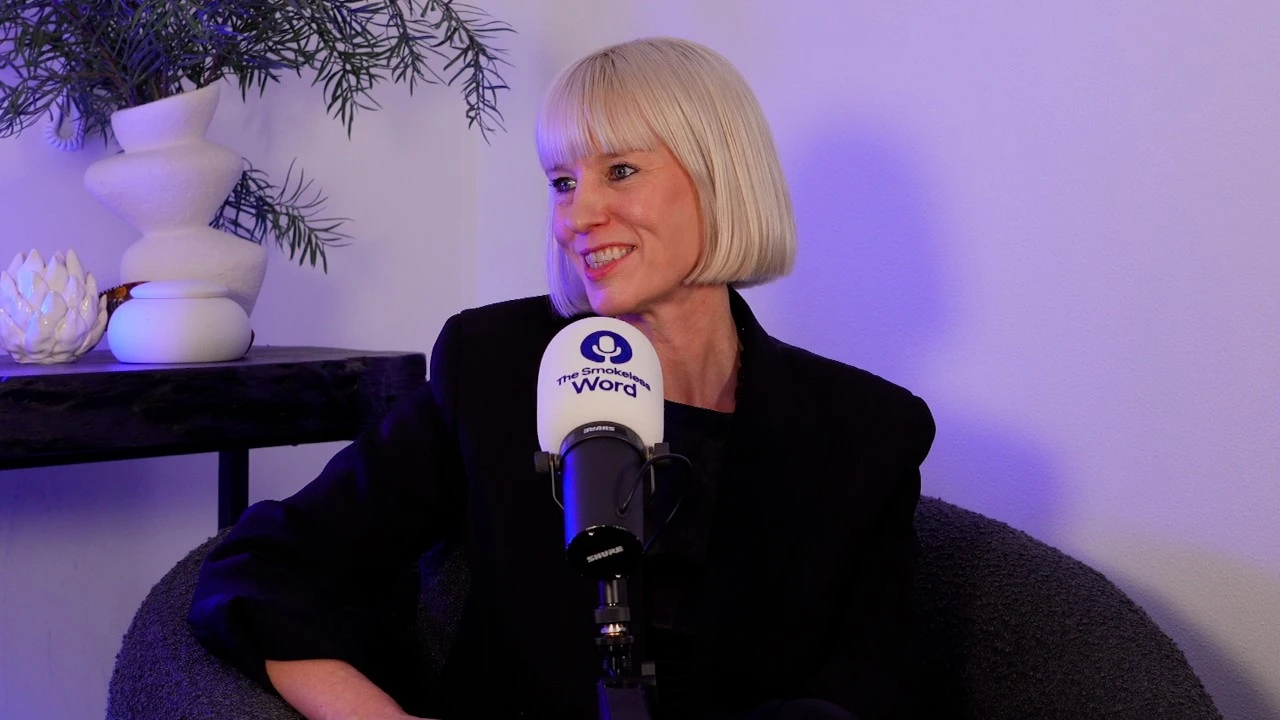

Episode 18: Pascale Meulemeester
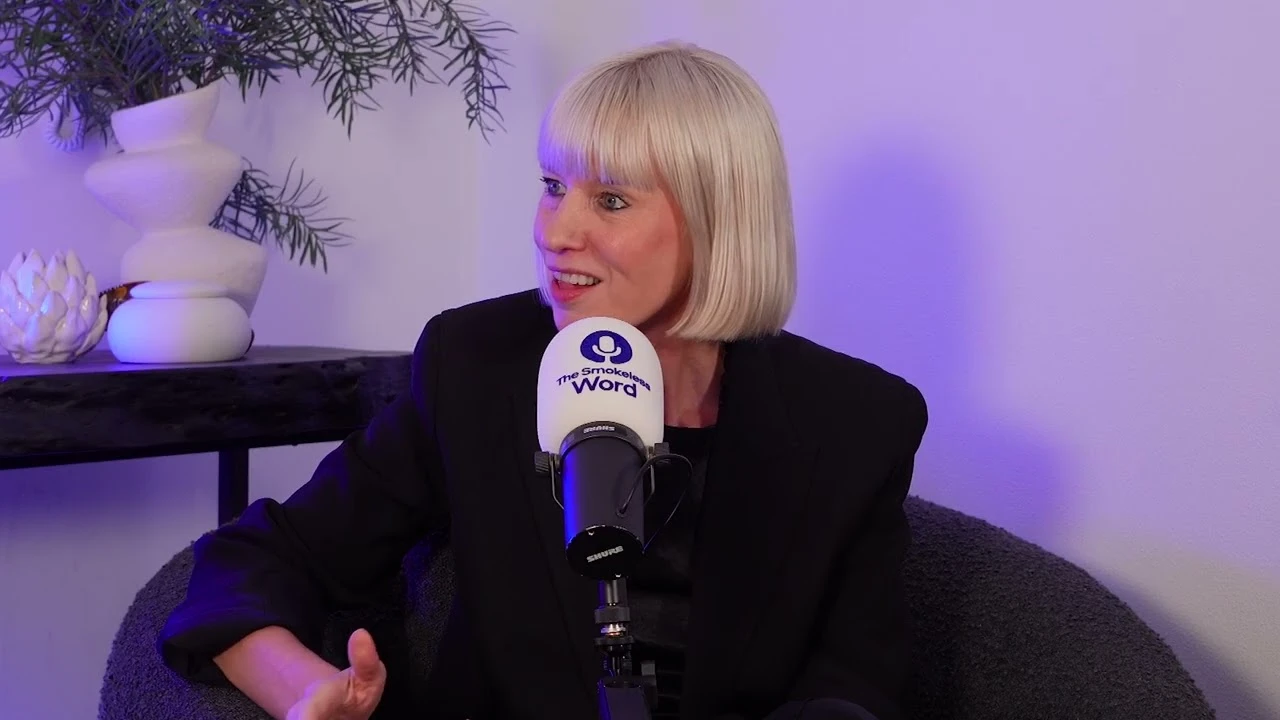
Pascale Meulemeester
78% of the world population lives in Asia Pacific. 25 out of the 33 mega cities. So imagine the potential. They run at different speeds, different level of maturity, different regulatory frameworks. The region is volatile by nature. We need to plan for that, right?
Kingsley Wheaton
Let's turn to Australia, because there's a bit of a thorn in the side, massive illicit crisis here. Do you see a way through all of that?
Pascale Meulemeester
You can react to it in two ways. You can say it doesn't exist, or you can face the facts and say it's there, and this is what we're going to do about it. You have to be in the game to change the game.
Kingsley Wheaton
Welcome to the Smokeless Word. Live from Sydney today, I'm joined by Pascal Meulemeester BAT's, new Regional Director for Asia Pacific, Middle East and Africa, a region that covers a startling 78% of the world's population. Pascale and I will talk about her fascinating journey from the world of cocoa to joining BAT in our transformation journey the importance of ownership, whether that be as a business or as an individual, and the diverse case-studies across the region, from Pakistan and South Africa to right here in Australia, please enjoy this episode. This podcast is intended for regulators, scientists, policymakers and investors only. The views expressed in this podcast are the personal opinions of the speaker only. Any references to products having a reduced risk or reduced harm are based on the weight of evidence and assume no continued smoking. This material is not intended for U.S. audiences. Pascale, welcome to the Smokeless Word studio. And what do you what do you think? Here we are in Sydney.
Pascale Meulemeester
Oh, a lovely setting. And thanks for inviting me Kingsley.
Kingsley Wheaton
Not at all. Thanks. Thanks for joining us. It's brilliant you could be you know, the next guest on the Smokeless Word. You joined us, I think in October last year, took over your new region in January. Can you just talk, you know, the viewers, the audience, through your your career so far, and all things that you did leading up to BAT?
Pascale Meulemeester
Yeah, love to I mean, look, I'm born and raised in a very small town in Belgium, in an entrepreneurial family that's probably already the first stepping stone to be here. And then I started my career at Mars, which was a great opportunity to learn how to build brands at scale and build an operating model. But more importantly, it also really shaped me as a as a leader, because back then, already we started to think, you know, that the world we want to see tomorrow starts today, and that has been the bedrock ever since. And then moved on to other markets with a growth problem, quite complex, turnarounds, first time in Asia, 13 years ago, then in Singapore, then moved to Japan, came back to Europe, first UK and Ireland then moved, took the responsibility to take on all of Europe, doing things differently, really looking at the business end to end and yeah, shaping it up into a more leaner, simpler organization to win In the market. I think what mostly the more pivotal points in time was the advice I got throughout my career to to move to a country, to lead a business full on in a culture that is very different from my own. And that led me to Japan. So Japan really, that really transformed me as a leader, as a as a person. I think one thing I've learned there is that, yeah, the same, basically, culture eats strategy for breakfast. So that was I'm very grateful for that experience, and it's something I've been taking with me ever since.
Kingsley Wheaton
And how long were you living and working in Japan for? four years, yeah, that must have been just an incredible experience. It's an eye opening experience.
Pascale Meulemeester
About four years
Kingsley Wheaton
Four years, yeah, that must have been just an incredible experience. It's an eye opening experience.
Pascale Meulemeester
I mean things for me, I would come there when I was running my global business unit. Before, you know, you go there three times a year, you do a business review, you spend some time with the team, but it was only living there. I really got to know that this was a completely different planet,
Kingsley Wheaton
yeah, yeah, yeah. And people say that, don't they that it's like one of the most different places in order to sort of understand, and I suppose, therefore lead in.
Pascale Meulemeester
Yeah, I mean, I think it's the bench of the world from a quality perspective, have the most sophisticated consumer base leading on trends. I mean, consumers are very demanding, so you can launch something amazing, but to keep consumer interested and create that desire over a longer period of time, I think that's the art,. Yeah, and to deliver on that every single day as a team, I think. But that's, that's what you know, is the extraordinarity of it, and it was an amazing experience.
Kingsley Wheaton
What do you look back on as sort of the biggest thing you achieved in Japan? What? What would you say, you know, was Pascale's Japan achievement?
Pascale Meulemeester
Well, leaving a self driving team that you know was confident that were believing in themselves, that were shaping the future, being, you know, having shifted from a challenger to a leadership perspective, innovating through sustainability. Something that was thought as a trend, something you know, that people moved on from. But we refused to think that way, because a new Japanese consumer really wanted to pay more for products that were sustainable, but more importantly, we're delivering value for them. So we really went against the tide and against the conventional thought making new waves. And as a result, actually, you know, the new wave was, that was the team.
Kingsley Wheaton
Brilliant. And just to go back to the Mars bit that was on the confectionery side?
Pascale Meulemeester
On the confectionery side, and a little bit of a segue, also in the food business, okay, yeah, which was, which was great, because we were thinking about multi-category moving into new demand spaces. And so I did a bit of work also in looking at new category development, okay, which is very similar as to what we do at BAT.
Kingsley Wheaton
That will stand you in good stead, talking about food. Let's just talk about, you know, Pascale, the person I think you have this great passion for cooking. Just just talk a bit about that and cookings role in your life.
Pascale Meulemeester
I guess it was because I was born and raised in a food business. My parents, you know, I was always there. I was one of those maybe weird kids that would get up at 5am on a Saturday morning to be to be in the kitchen and to help out and to help the business. And I really grew a passion for cooking, but I also love the story. So the way how I schedule my holidays is look at whatever I want to eat, and I travel towards it, but also to meet the people who actually make it, who cook it, or, you know, for example, in whether it's in Japan or in Mexico or wherever I am, you know, I would meet the people who create the products. When I cook myself. I like to keep it as simple as possible, let the ingredients speak. But then I would make a journey of finding those ingredients, whether it's a very famous or a small batch type of sake, special rice, nice beef. And then I think the art of cooking is to do as little as possible, to not temper the original flavor. Keep it simple.
Kingsley Wheaton
Let the ingredients do the talking. Quite a serious approach to cooking. What would be your, what would be your sort of best dish? What would be, you know, if you had to cook your signature dish, what would, what would that be?
Pascale Meulemeester
Look, I'm a Belgian, right? So, and, you know, my parents had a butcher shop and a deli, right? So it would be a very nice steak. Yeah, some french fries on the side and nice Bearnaise. Or a peppercorn sauce, and that's what you would get if you Yeah, you come and join me for dinner.
Kingsley Wheaton
Sounds absolutely perfect. Absolutely perfect. Well, let's move on from steak, frites. Let's talk about Asia, Middle East, Africa, your region, vast, enormous. You know, we've had our ups and downs there. I think that's been, that's been well described. How do you see the region turnaround growth, both what's your what's your current thinking?
Pascale Meulemeester
Look, I mean, it's no secret that this region had many headwinds recently, however, for any CPG company, so consumer package good company, Asia Pacific, Middle East, Africa is all about growth, yeah. So what I see is growth. I think we have a massive opportunity. Yes, we do have a few challenges, but I'm ready to take that on with with the team. And we have a lot of I see a lot of reasons to believe Kingsley. I mean, first of all, I mean 78% of the world population lives in Asia Pacific. 78% already today, in terms of population, 25 out of the 33 mega cities, so above 10 million inhabitants are in this region. So imagine the potential, potential is huge.
Kingsley Wheaton
Yeah, and how you thinking about, I suppose, when you know, when you talk about growth, you probably thinking about the top-line, you know, how would you approach that? What's, what's the sort of Pascale view of growth?
Pascale Meulemeester
Look, first of all, I have a huge passion of growing businesses, brands and talent. And I mean to me, the top line has to follow with the bottom line, right. So I mean that that is what sustainable profitable growth is. And coming back to that, I think this, this is, this is the opportunity to deliver sustainable, profitable growth in a consistent way. The region is volatile by nature, yeah, yeah. I mean naturally. I mean we have a lot of volatility, politically, economically, but also, you know, in terms of natural disasters. We have floods, we I mean, every single day something is happening. We need to plan for that, right? And I think this getting to a consistent rhythm of growth. I think that's the key, yeah. Which means you have to have a lot of sources of growth and balance them well. You can't depend, or, you know, on just a few of them, right?
Kingsley Wheaton
Yeah, and which, you know, across all of your patch, I'm, you know, got to know you a bit already. You're enthusiastic, passionate, but any areas that particularly excite you, any for early stage, those early foundations of growth?
Pascale Meulemeester
Yeah, look, I think what I was really, really excited with was what I saw in my recent trips to South Africa and Pakistan, right? Yeah, of course, I'm very familiar with Japan, and not saying that there's no opportunities there, but I saw that the transformation is already so much in motion in South Africa and Pakistan, and I didn't expect it, yeah
Kingsley Wheaton
Perhaps not countries you would expect, right?
Pascale Meulemeester
Exactly. Our distribution coverage is beyond my expectations. It's something I could only dream of when I was in the chocolate world, yeah, yeah. But it's also digital already at the core of it, yeah, yeah. So both organized trade, where you would expect it, but also the unorganized trade. So traditional trade, where you have millions of outlets, and we are connected to them digitally. We're already multi-category there. We're having meaningful dialogs with consumers at scale. And I thought that was truly just, I mean, extraordinary.
Kingsley Wheaton
Do you think that, you know, as a as a tobacco company in a sort of controversial industry, you know, I think we've always thought of ourselves as a consumer goods company. I don't know if the world always. Do you think some of our trade capabilities, our retail capabilities are more advanced than you might have expected.
Pascale Meulemeester
Yeah, I did actually, if I look at it, and the distribution coverage on the trade side, which I see, is actually ahead,
Kingsley Wheaton
yeah, ahead of what, yeah, what you might have experienced previously or more than you expected BAT to have when you came in?
Pascale Meulemeester
Yeah, and obviously we were serving the same trade, right? So back in the day, as chocolate was in front of the counter, and from a tobacco it's typically behind, behind the counter, behind the counter, so there's a lot of crossover there, but the mere coverage and the depth and the quality of the penetration the coverage, but also the connectivity. I think BAT is quite ahead.
Kingsley Wheaton
Very interesting. And talking about sort of being ahead and expectations you've been with us now, what six months, half a year, something like that. You know, some things will have been in line. Some things will be different to what you expect. How is BAT different to that BAT you you walked into on October the first last year.
Pascale Meulemeester
Look, I mean, it was a big decision for me to leave the role of chocolate and cocoa after 23, plus years, but I haven't regretted it ever since it was better than my expectations. I do feel we have an opportunity to and I think as everybody, we all, we all can learn, right? So what I can bring, and what I will bring with the team is to make that shift from thinking category to how consumers are using nicotine and beyond in their daily lives, really thinking about those demand moments? Yeah, sure. And I think that will that is a fundamental shift, and potentially learning that you can take from CPG world and chocolate world, if you like.
Kingsley Wheaton
And you know, some people, some viewers, might be thinking, hang on a minute. You know, I know your story isn't just about chocolate, but cocoa, on the one hand, nicotine, you know. Are there any parallels? Are there any learnings, you know, you know, tell me a bit about how you see those two parts of your career, if you like,
Pascale Meulemeester
Actually, they're, they're very, very transferable, right? So, I mean, they both share both chocolate, cocoa and nicotine, tobacco industry, and have very complex supply chains. And the learning, I think, from from cocoa is that you really that is transferable into tobacco is you need to think long term, and it's imperative to build supply, I mean resilient supply chains for the future. That requires transparency, planning, and it's very simple, no cocoa, no chocolate; no leaf, no nicotine, and it's all about farmer progression, creating, you know, and lifting farmers out of poverty, diversifying incomes, traceability of supply chain, to ensure a better tomorrow, but also to diversify and manage risk in the supply chain for your business, but also to innovate. And there also see a lot of potential and learnings and crossovers. For example, in cocoa the beans itself is part of a cocoa pod, and it's only 30% of the total cocoa pod. You would throw away 70% before imagine, right? And there's a lot of learning there, and capturing the juice of the cacao, you know, using the byproducts and creating new innovation.
Kingsley Wheaton
What would you do with that other 70% what was, what was that
Pascale Meulemeester
It was thrown away, right? Okay, yeah, it wasn't. It wasn't valorised at all. I mean, you would see some local sales because it was fresh, so short shelf life locally, but 70% of the whole cocoa pod was thrown away
Kingsley Wheaton
And now that's that's changed?
Pascale Meulemeester
So we were able to valorise that cacao juice, but also looking into the peel called cascara and create a side of flour to be used in baking. And I think that's the same. Also with tobacco, there's so many possibilities when you think about, you know, obviously traditional use of leaf, but also extraction, think about the possibilities into new categories, and these are all ways to diversify the income to create a better livelihood for farmers.
Kingsley Wheaton
Sure. I just want to sort of take you back to, you know, when you were thinking about joining BAT, big decision, big kind of change in your career. How did you think about that? You probably had friends and family who are queuing up with advice, you know, and whatever you know, how did you How do you reconcile that decision to make that switch to BAT?
Pascale Meulemeester
It was a very deliberate one. Typically, we should sell chocolate. People say, hey, oh, wow, it's chocolate. First instant people smile at you, right? So. And then, when I decided to join the industry, tobacco industry. BAT was like, oh, yeah, so. But it was a very deliberate one, and the biggest motivator was for me, the ability and the opportunity to create a Better Tomorrow. That truly resonated a lot with me to to help build a multi-category business, and therefore, and thereby a Smokeless World, but also recognizing that it's a transition, right, and not all markets move at the same speed. And I saw, actually, I see a lot of potential in there, and I love bringing out the full potential out of people, and helping to unlock that transformation by doing what I love doing is to grow talent, I thought was very aligned to my leadership mission, and also my passion for for innovation, trends and all that. So I think, yeah, I think it hits the sweet spot for me so and and it's just you don't find an industry or a company that has been around for 120 years with such a footprint, iconic brands that you know is at such a pivotal moment in time, transforming an entire industry. And I keep on saying that to my team, those that have been around like yourself for a very long time, you know it's a tremendous experience to be part of that. And I knew I couldn't miss out on it. I want to you know, you have to be in the game to change the game. That's why I'm here.
Kingsley Wheaton
Yeah, it's more more more passion. Now you have to be honest to this question for the viewers you know, you're you're one of the most you know, BAT has promoted a lot from within over the years. You're probably one of the the if the most senior you know external hires, how's that? How's that process of onboarding and assimilation gone? How have. Found it.
Pascale Meulemeester
Yeah, look, I think I'm very grateful for BAT to have allowed me to spend time in the headquarters first before traveling in the region. I find BAT's culture is incredibly strong. It's one family and therefore, you know, there's no process or playbook on how to get stuff done, right. And that's nice, because that that is testament to a strong culture. But of course, as a new joiner, you need to find your way around and build relationships. And I had the opportunity to spend the first three months with yourself, with the colleagues, but also get to know everybody in the in Globe House before actually immercing myself in the region. And that was word gold, right? And was very welcoming. People were very, you know, open, want to help again. It's full alignment behind the transformation, the passion for it. And, you know, the opportunity, what if, for all of our regions are on fire, right? I think that's everybody's super helpful. And then, of course, you know, having had the opportunity to then go deep and visit all the countries, meet with my team, I think so far, the onboarding has been very, very good.
Kingsley Wheaton
And what about, there's a bit more personal, you know, massive geographical patch. You know, you must be on an airplane all the time. And you know, how do you cope with the travel that jet lag, you know, personal tips, how, how do you maintain some level of well being, you know, in that, in that environment,
Pascale Meulemeester
Yeah, look, I'm a big believer in food, right? And the role of food in that. And sleep, eat-well, feel-well, sleep-well, feel-well, right type of thing. So, so I'm very mindful of that. I try to keep a good rhythm of what I eat, when I eat, and make sure I have enough sleep. Luckily, I'm still a good sleeper.
Kingsley Wheaton
Are you a gym bunny, you know, gym, working out or
Pascale Meulemeester
I love cycling, okay? I love swimming outdoors when, when I have the time, like this weekend, I was home for literally 48 hours, so I swam three times. Yeah, so, but you even though, if you don't feel like you have to do it right, absolutely, yeah, yeah. And there's a few rituals I have. I drink a ginger shot every morning. When, when I'm in, you know, obviously in Asia, you know, Misu soup in the morning. I really believe in, you know, food as medicine, good food in Vietnam, you know, yeah.
Kingsley Wheaton
Well, yeah, it's music to my ears. If it's all about sleeping well and eating well, then, then I should be happy as well. Let me just, I want to take something back to something you just said. You talked about three regions, you know, I think you said all being on fire. You know, I get, you know, firing on all cylinders. You know, Asia, Middle East, Africa, what's, what's the role of its performance? You know, for the enterprise, where does it fit in?
Pascale Meulemeester
We are. We should be a growth region, as I mentioned, for any other company. This, this is where the population is and where the growth will be. So our role is to be a growth engine for the company. But we can't bet on one single country or a few countries. So I see opportunities across the patch, whether it's Middle East and Africa, Japan and but also here in the Southeast Asia at the same time, you know, we have I see opportunities in both the developing markets as the developed markets. Yeah, yeah. They run at different speeds, different level of maturity, different regulatory frameworks. We have already countries like Japan, where 44% of our industry has transformed to smokeless products, and it's accelerating as we speak. We're just scratching the surface there. At the same time, we're very early days and other patches predominantly still traditional business, but we already have some green shoots of great success and early, early pockets of success on multi categories and but of course, we need to pivot our portfolio with those countries. You still have a big affordability gap in a lot of those areas, and so we need to design to it. And that's that's not, not only in our industry, in tobacco industry, but in any industry, and chocolate and cocoa is exactly the same. You know, I'm from Europe. Up from Belgium. Typically, Belgium has five and a half kilos of chocolate per year, per capita. Do you know what it is in China, per capita?
Kingsley Wheaton
Well, I was gonna, it's got to be a lot less or a lot more. So I'm going to go for two kilos, really.
Pascale Meulemeester
100 to 200 grams
Kingsley Wheaton
Yeah, wow. So 50, 50x different
Pascale Meulemeester
But growing, yeah. The translation of that, I think, is, is not necessarily a chocolate slab or tablet. What like, we know it, but it's beverages. It's used in baked goods, in mooncakes, in India, it's in home baking. You know, in Japan, it's, Japan is the highest and around 2.1 kilos, it's the highest in Asia. Gifting, okay?
Kingsley Wheaton
Belgium, what would be the, what would be the highest consumer of chocolate in the world, per capita?
Pascale Meulemeester
Swiss, 11 kilos,
Kingsley Wheaton
Double.Belgium. Wow, that's impressive, isn't it?
Pascale Meulemeester
Yeah, UK, 8.5
Kingsley Wheaton
Yeah, but not as good quality as what the Belgians eat
Pascale Meulemeester
Depends what you grew up with, right?
Kingsley Wheaton
Yeah, that's true, yeah. Well, I spent a bit of my childhood in Belgium, so I've always enjoyed Belgian chocolate. Thank you. Yeah, yeah. And I just wanted to, there's more a comment, actually, you know, sometimes I get asked, you know, is it true that the transformation is just in developed markets, you know? And I always say, No, you know, we have a developing market story, you know. And you quoted Pakistan, you quoted South Africa. And I think there's some exciting opportunities to, you know, build transformational businesses in places where perhaps people don't expect to see it. And that's leadership. And I just wanted to, sort of, just wanted to, sort of pivot, if you like, to your leadership. What's your, I know leadership. You talk about leadership a lot. You know, it's in what is your style of leadership? How would you describe Pascale as a leader?
Pascale Meulemeester
Look, I mean, I'm, I'm a very straightforward person, right? So in the for me, it's all about empowering the front line, right? Local first, make sure that the people closest to the consumer are empowered to make the decisions. That's that's because they know best. Yeah, I will not hire the best people and tell them what to do. I want them to tell me what they want to do. It's the other way around.
Kingsley Wheaton
Yeah? And if you go, if I go a little deeper, let me push you on that. You know, what does that actually mean in terms of how you lead? What? What are you looking for from yourself, from others? What sort of environment does that create?
Pascale Meulemeester
Yeah, look, I mean, the biggest quality I always look for in people is ownership, right? Ownership, the attitude, I mean, skills you can learn, right? But is that that ownership to to run your country, you know, to make a difference, for consumers to be obsessed about it, to know consumers want and because ultimately, it's the consumer that pays the bills, right? Yeah, and consumers are boss, you know. So what is that consumer desire, right? So it starts with, I think that that curiosity, that ownership for for the business, for the people, it's very important. And so that's one thing. So ownership, curiosity and you know, people I can trust.
Kingsley Wheaton
What do you mean by trust? It's a big word trust, isn't it? Yes. What do you mean by trust?
Pascale Meulemeester
I think to succeed in any transformation, it needs to be rooted and grounded in a purpose, and that doesn't mean that only you run a business towards the transformation, but very often you need to transform yourself, right? Interesting, yeah. So it means that you need to create also not only for yourself your team, but the people around you in a psychologically safe environment that allows people to go to that space, to speak up, you know, to take that ownership, to feel empowered to make those decisions, and that comes with building trust and being incredibly deliberate about it. Just tackling, basically tackling the elephant in the room, and, you know, putting the stuff on the table that everybody thinks, facing the facts, facing the facts, deal with it, deal with it in a, you know, in a transparent, no nonsense way. And that's me. I will never sugarcoat it and but that's the only way how we can get on with it.
Kingsley Wheaton
Yeah. And do you think, you know, as you look to get the best out. People, and perhaps in some ways, I think, forgotten how to how to teams get the best out of their leader. Is there this sort of unwritten leadership contract? Is that, you know, between the people to get the best out of out of each other and teams?
Pascale Meulemeester
It all starts with transparency, right, having meaningful dialogs. I remember the conversation we had earlier this week. I think, you know, there's, there's no, there's no tool, process or system for it. You know, it's about, you know, staying in touch with, with your team, right? With with your talents, giving them a call no matter what, but also going down different levels within the organization. Talk to your people, right? Ask for the insights, you know, how do you see the future of the company? How would you transform your business, your function? Get those insights and get them involved. Co-create, and I think that's very, very important to because they are the next generation.
Kingsley Wheaton
Very exciting. Well, look, that was a brilliant segue, just just before I switch gears to Australia, because we do have a unique opportunity to Australia. You know, fast forward five years. You know, what's the what are you and I talking about? You know, over dinner when we meet up in five years time, what did, what did your region achieve? What will you be most excited about?
Pascale Meulemeester
Look, it's gonna feel amazing. We're gonna be back to a consistent, profitable growth, winning growth culture, and most importantly, you know, self-driving, confident team that has shaped and will continue to shape the future.
Kingsley Wheaton
I liked, I liked there, how your opening line was, how it would feel. It would feel amazing, you know? I mean, I would guess, if something felt amazing or felt fantastic, you would be winning, right? So that's the winning and growing. It's, I love the way you answered the question. Let's turn to Australia, because there's a bit of a bit of a thorn in the side. Massive illicit crisis here. Tobacco control, policy out of control, excise taxes out of all proportion, heading towards what three out of every four cigarette sticks sold, you know, on the illicit market. You know, do you see, you know, a way through all of that?
Pascale Meulemeester
Well, look, I mean, although well intended, the Tobacco Bill and the tobacco control in Australia got out of control. I think it's incredibly frustrating to see that. And you cannot just cut supply by making it unaffordable, right? We need to tackle demand. Demand is still there. You need to offer solutions and create an orderly marketplace. And I think also, if it Well, again, the intent, you know, was a good intent. However, if it doesn't work, because nicotine usage, both combustible business as well as vaping, only, illegal market is growing so and if it doesn't work, we need to find another solution. And I think Prime Minister of Australia has a perfect opportunity to pivot to still land on the intention. We need to change strategy here.
Kingsley Wheaton
Yeah. And I think the Australian Treasury from peak is losing 10 billion, maybe more Aussie dollars every year. You know being, you know it's not as if your background is not in industries with regulation or with an element of controversy, but are you surprised about sort of the ideology of decision making versus facing the facts, as you said earlier, and facing the facts and then making decisions based on those facts.
Pascale Meulemeester
Look, if I can draw a parallel back to cocoa, it's also no secret that cocoa faced a lot of challenges in origin countries like in West Africa and as a direct result of farmer poverty, we had child labour issues in the supply chain. You can react to it in two ways. You can say it doesn't exist, or you can face the facts and say it's there, and this is what we're going to do about it. And I think going back to Australia, we there is an opportunity for the Government to recognize, and I think we're getting there with all the work. And I think the recognition is there. Now need to pivot. If that's not happening in 2030 the full tobacco market the industry will. Be 100% illicit.
Kingsley Wheaton
Yeah, yeah. And then, you know, then the world's changed completely. Does it surprise you that, you know, we tend to think of countries a bit pair wise, you know, Australia, New Zealand. New Zealand is so much more progressive in terms of tobacco transformation. Think it has the second lowest smoking rates, certainly in the developed world, after Sweden. You know, as a newcomer to the industry, surprised by that dichotomy of, say, Australia versus New Zealand?
Pascale Meulemeester
Yeah, I was very surprised. So it's not, you wouldn't expect it from Australia, and especially there's such a great example next-door, very you know, obviously all the alternative smokeless solutions are are accessible. We see nicotine incidents going down. It's obviously working. So why not get inspired by others, whether it's New Zealand or Sweden, other examples. So and I would wish there would be a lot more openness around that, right? So that was actually quite a surprise, because ultimately, we all share the same ambition, right, to create a Smokeless World and a Better Tomorrow for society. That's the greater that's a greater goal, right? Yeah, we all strive for, and every single country should strive for.
Kingsley Wheaton
And I think, you know, I think the world's the world's wrestling, isn't it slightly with, with what I would call weight of the evidence, which I think is on our side, and then waiting for the final epidemiological answer. Now, the longer you wait, you don't implement the solutions. And you know, governments, policymakers over the world, you know, have had to take decisions based on incomplete information. That is management, that is that is leadership. Well, I hope that we arrive at a solution that's a win, win, in Australia, I know how important that is to the broader Asia, Middle East Africa, growth story as well. So let's hope that all falls into place. Can we do a quick, quick fire round just to bring it to a conclusion? Simple, I'll give you two choices. You're supposed to choose one or the other. You're not. Some guests try and wriggle out of the choice. Let's see how we get on. All right. So look very simple, Europe or Asia?
Pascale Meulemeester
Asia
Kingsley Wheaton
White or red?
Pascale Meulemeester
White!
Kingsley Wheaton
Home cooking or Michelin star?
Pascale Meulemeester
home cooking!
Kingsley Wheaton
sun or snow?
Pascale Meulemeester
snow
Kingsley Wheaton
Okay, long walk or roaring fire?
Pascale Meulemeester
Long Walk,
Kingsley Wheaton
Okay, time to think or time to do.
Pascale Meulemeester
Time to think
Kingsley Wheaton
Week or weekend,
Pascale Meulemeester
week
Kingsley Wheaton
Very good. I think I might have got seven out of seven there in terms of second guessing. I was a little bit stumped on home cooking, on Michelin star, just because I know how much you love food and they're both appealing.
Pascale Meulemeester
Yeah. look, it's an evolution, right? So probably a few years ago would have been a different answer. Now, traveling the world 80% of my time, I really appreciate a very good home-cooked meal,
Kingsley Wheaton
Or maybe your home cooking is Michelin star. Maybe that's also the thing. Look, it's about time we brought this to an end. Pascale, thank you so much before we finish, because I know that there's, you know, a region behind you probably roaring you on. Have you got one final message for for everyone in in the APMEA region, and actually, to be honest, for the for the broader BAT as well,
Pascale Meulemeester
let's go for growth. And ultimately, it's about growing together and Building a Better Tomorrow.
Kingsley Wheaton
Excellent. Well, look, it's been a pleasure to get to know you. I've got to know you even better in this conversation. Thank you for coming on the Smokeless Word, and I wish you all the best with you know the growth challenges and bringing your passion for the business to life. Thank you very much.
Pascale Meulemeester
Thanks. Kingsley
These transcripts are AI-generated and may contain errors or inaccuracies and should not be relied upon.
Different speeds. Different maturities. Different rules.
That’s the reality of Asia Pacific, Middle East and Africa (APMEA) - a region that houses 78% of the global population and 25/33 of the world's megacities.
In this episode, Kingsley is joined by BAT's new Regional Director APMEA, Pascale Meulemeester, for a fascinating deep dive into one of the world's most complex regions.
Drawing on over 20 years in confectionery, Pascale reflects on the surprising similarities between cocoa and tobacco supply chains and why she chose to switch to the latter industry at a pivotal, transformational moment in its history.
Exclusive access to the Omni™ Newsletter
Join the conversation shaping A Better Tomorrow™. Sign up to receive exclusive access to the Omni™ Newsletter and future Omni™ updates.
Signing up to the Omni™ Newsletter does not constitute consent to receive marketing communications.