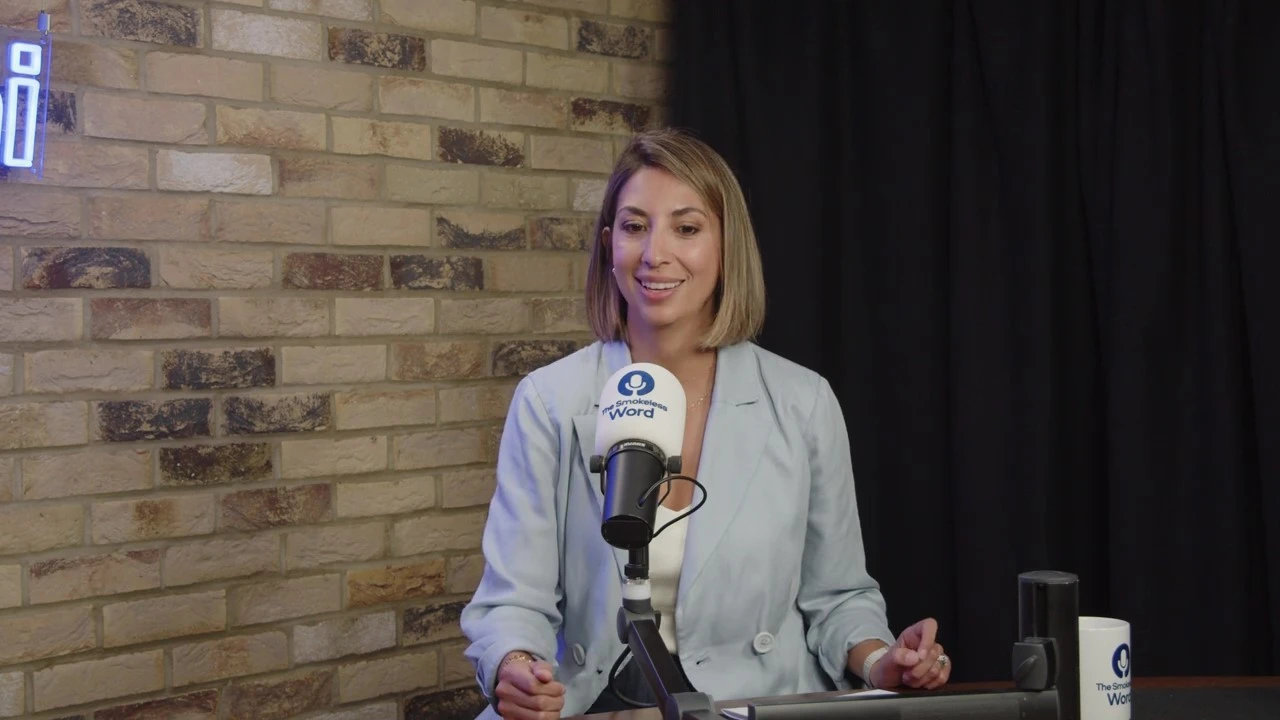

Episode 2: Valerie Mras
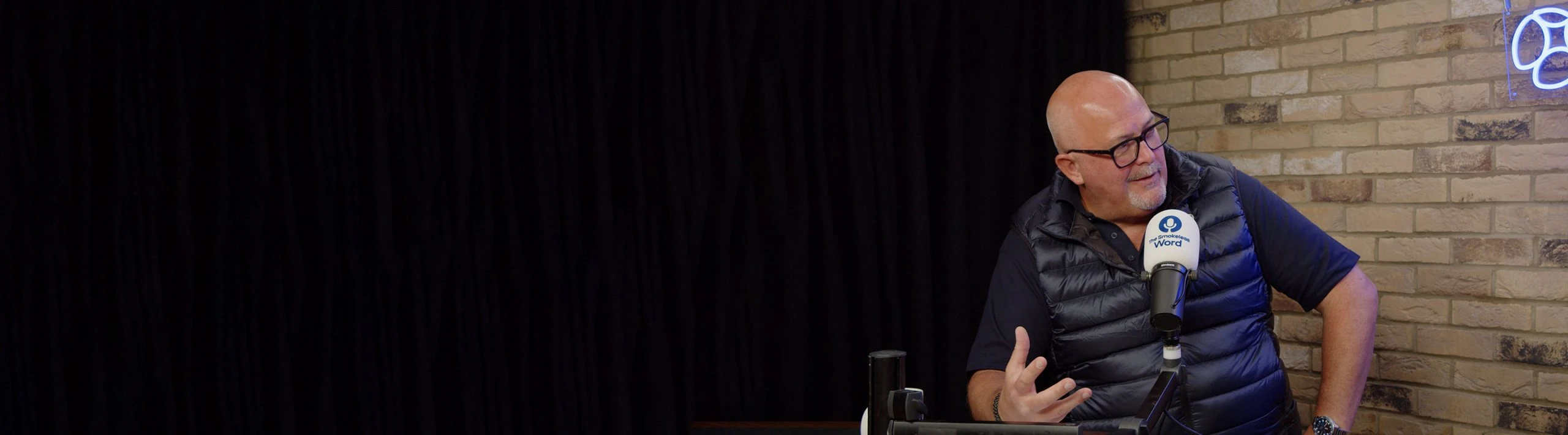
Kingsley Wheaton
This podcast is intended for regulators, scientists, policymakers, public health, media and investors. Exclusively. The views expressed in this podcast are the personal opinions of the speaker. Only any references to having reduced risk or reduced harm are based on the weight of the evidence and assume no continued smoking. This material is not intended for us audiences. Hello everyone, and welcome to this episode of the smokeless word. I'm delighted to be joined today by Val morrice, the senior vice president for our vapor business at Reynolds. That's bats, American subsidiary business who's come all the way over from Winston Salem to be here today. Val a huge, warm welcome to you.
Valerie Mras
Thank you so much for having me here today. I'm so excited. No, not always
Kingsley Wheaton
great to have you here. How was the trip over?
Valerie Mras
Everything? All right, all good. It's always good to come back to London. I'm you know, lived here for a few years.
Kingsley Wheaton
You joined Reynolds, I think, in 2008 October, 2008 etched in your in your memory, you joined, I think, as a sales rep, for those who are watching this and don't know, that sort of entry level rung of Reynolds, 17 years later, Senior Vice President for vapor, just tell me about how you, you know, cross the Rubicon, if you like, and made the decision to join Reynolds at that time. Yeah.
Valerie Mras
I mean, at that time, I was fresh out of undergrad, so I was trying to make a decision on where I wanted to go. My mom, super successful sales woman, you know, I thought this, I can do this. I can let me jump into the sales side. And I really wanted to look for an established organization that had some powerful brands behind it. I already had a love of marketing prior to joining the organization. When I was in college, I worked for an ad agency and a production studio, so I knew that I loved the idea of marketing. I just never worked on the sales side, so I wanted to enter into there. And I, you know, took my first step with Reynolds. I never joined the organization thinking that I would be here 17 years later. That is not something that you start, right? And every all of your career advice that you see out there today says you need to leave organizations to move up, you need to be able to do all of those things. But I think what my career proves is that you don't have to do that. You can actually progress in your career in one place, so long as the the organization is set up right, and that you work hard and stay curious and continue to move on. I've been afforded some amazing opportunities here, for sure.
Kingsley Wheaton
And how long did you spend in that, in that first, I mean, I know a little bit about, you know, those, those roles, you know, you're going in and out of retail outlets, sort of customer management, a lot of drive time. You're on your own a lot. How long were you in the role? And it must have been quite challenging for a first job.
Valerie Mras
It it was, and I think some of the things that I learned in that I carry on today. So I started in the Phoenix area. So thankfully, it was a little bit more of an urban center, and I wasn't necessarily out in the rural areas, but it is literally opening doors in and out of convenience stores, building relationships with people who may not necessarily want to talk to you every single day that you walk through those doors. And in that time, I also was able to speak to adult nicotine users. So part of my job was building relationships, not only with customers, but with consumers as well, one conversation at a time over time, I was able to also learn more about the brands and be able to become an expert in them, which is really what drove my love for the brands that we have today. But it's not easy, right? You get a lot of rejection, not only from customers, but from consumers. I got it as well. You have to learn to be resilient and be able to overcome that and grow a little bit of some thick skin. So that's those are some hard lessons to learn when you're, you know, 23 years old, starting with the organization, and there was a lot of thinking time on the road, a lot of driving in between, and learning to be a self starter.
Kingsley Wheaton
Yeah. And how long were you in the field? How long before you got the sort of call to head office? So it's
Valerie Mras
about two and a half years in the entry level sales job, and then I did about a year in the kind of more national account sales side, 2008
Kingsley Wheaton
that was, that was before any smokeless products in the Reynolds portfolio. There would have been some oral products, probably the more traditional oral products. So over those four or five years, as Reynolds built up to launch views, I suppose view solar, for the first time, you saw a lot of change in those early few years. How did that feel when you were, you know, down at the sort of customer management end of things?
Valerie Mras
Yeah, I mean, I think so on the Vuse solo. I'll come back to that, because I was actually part of that first launch, which was really exciting. It's a full circle moment for me. But, you know, the beginning, transforming tobacco was essentially what Reynolds was anchoring to and and we all believed it right. We all knew that this was what we were doing. And so these are legacy brands that we've had. These are the brands that carry so much history and heritage. But we know that this isn't where it ends. And so from the very beginning of my career, it's been about transforming tobacco. Camel crush was actually launched the year that I joined. And so I got to come in on the heels of that, which is also just a proof point for innovation, even if it was within the FMC category,
Kingsley Wheaton
you know, I know you're a, you know, a massive love, lover of marketing, before we get into sort of marketing at Reynolds, and some of the challenges just talking about marketing, your sort of, you know, beliefs, your your ideology, your philosophy, how do you how do you think about marketing as a as an overarching theme?
Valerie Mras
I mean, I it's, it's tough to categorize as one thing, right? So what are the things that I love most about marketing? I think it's that sometimes, when you feel like you found the answer, it's not the answer for long, right? It's always moving. It's always evolving. And it really is where strategy and creativity come together to try to solve problems. And then on top of that, I get to layer on some creative storytelling, which is really exciting. Who doesn't love solving a puzzle and then having to rebuild it all over again? And I think that's what makes it most exciting, excuse me, is that we don't ever have the answer for long we have, we have a good strategy that we land, but there's consumers are always evolving, right? As a human species, we've always evolved, and so having to keep up with where consumers are, and meeting them where they are, and trying to find the right balance of staying true to who you are yet evolving with consumers, I think, is one of the ultimate challenges. That's super exciting. Yeah, I
Kingsley Wheaton
love that definition. What did you say? Where strategy and creativity meet to solve problems? One of the best definitions of marketing. I think I've heard particular moments in your career that you're super proud of where strategy and creativity has come together in that way. Any any particular highlights?
Valerie Mras
Yeah, I mean, I've had quite a few highlights. I think I've had a lot of roles, and every single one of them defines you a little bit along the way, there was this one kind of product category that I worked on. It didn't necessarily see the light of day. We didn't necessarily launch it, but it was probably one of the moments where I was able to define the strategy that we had for that specific product. I was able to drive the creative direction of that. And I was, you know, I was a pretty Junior individual at that time, kind of leading this one specific category. Now it wasn't the right time to launch that product, and it never saw the light of day, but being able to do those two things. And then on top of that was lead my very first cross functional team, which is a very intimidating thing to do when you're very early on in your career. And I remember stepping into a room telling an entire group of very seasoned professionals, and I said to them, I have no idea how to bring this product to market. The only thing I know is that I need to trust you to help me get there. And what I can promise to do is to be the largest advocate that you have within the marketing function to push this forward. And that team was incredible. I mean, so that was also one of the lessons in empowerment, because there's no way I could have done it on my own.
Kingsley Wheaton
Yeah, incredible, incredible. I just want to go back to that. You said something that really interested me just now. You were talking about transforming tobacco, and I think you said we just knew that that was the right thing to do, or we just knew that that's what we had to do. Can you just just talk about that? Because that hints at purpose, I think, rather than strategy, if you like,
Valerie Mras
Yeah, I think we've always been an organization that believes in tobacco harm reduction. This has been kind of one of the key pillars of the organization, which is why we tested so many of these different products. And you know, you think back to some of the history of the Reynolds organization, and, you know, things like Eclipse and Premiere, right? This is always like back in the 80s, yeah, but it's always been innovation is always Innovation, Science, purpose LED. Innovation has always been at the core of the Reynolds organization. And we knew that coming in, right? We felt it, and we've always, I think, as an organization, stood behind what that means.
Kingsley Wheaton
Now, you know, Senior Vice President for vapor, well over a billion dollars of net sales revenue. You know, that's a that's a big brand in anyone's book. I think thanks for reminding me of the pressure. No, no, that's fine. That's fine. I mean, some of our CPG peers talk about billion dollar brands, don't I mean, we ours is ours is below excise, right? So that's a net industry take. But I wanted to think about the responsibilities that that go with that. And how do you think about responsibly leading views forward, and particularly the responsible marketing of vuse in a in an industry that's sometimes perceived as controversial.
Valerie Mras
You know, I think responsible marketing has to be at the core. So many times we see within these spaces, within these categories, that there are these fly by night, opportunistic brands and products that come in, but we're not in it for the short haul, right? We're in it for the long haul. You know that we've been building the views brand for a very long time, and so at its very core, it's about sustainability of the business moving forward, and ensuring that we can continue to provide this portfolio of potentially reduce risk products to. Consumers, because if we can't do that, if that gets cut short, because we are doing things irresponsibly, then we've done a complete disservice and have not delivered on what we said as a foundation of transforming tobacco before and building a smokeless world now.
Kingsley Wheaton
Yeah, I was again taken talking about team leadership when you moved into that role. I don't know how you described it. Was it the other thing you said scary, did you but it was kind of like, you know, it was quite, quite quite a nervy moment. How do you think about leadership? What is, what does great leadership look like to you?
Valerie Mras
Yeah, I think leadership. I mean, at least my leadership. So I've had a lot of tests of leadership, a few of them, I think probably one of my more defining was when I moved into this role in London, because I had to take on a team in a global environment. And in that moment, by the way, I had to work with cultures, individuals from very different backgrounds that I'd never worked with before. Here I was thinking, I'm this very diverse individual. I'm a Mexican American woman, I'm a Latina. I do all of these things, and I move here, and I am just American, just an American. I am nothing else, but I take on this team, and it's from all corners of the world. I've never met them in person. I have to try to build a culture and relationships with people in a virtual environment. And that was really a test of, how do I motivate and really help to drive people to be their best in a place when I can't rely on the things that I've relied on every single day, which is to build these relationships face to face. So really learning how to foster team culture, a positive team culture, where everyone feels motivated, right? And that was some lessons in empowerment and trust. I think people need to feel like they have the space to be able to thrive but also fail safely. And that's one of the things that I think I hold very near and dear to my heart, is making sure that there is an empowerment, there is a sense of of I can do this, I can drive it. And with that comes great responsibility, right? Either people are going to fly really high or they're going to fall really hard, and you have to be ready as a leader to pick up the pieces when someone falls, to be able to drive.
Kingsley Wheaton
And how do you, how do you, how do you resist that, what you know, I call that sort of stepping in moment, you know,
Valerie Mras
you can, I don't resist it all the time.
Kingsley Wheaton
You can sort of see that you know, the plates metaphorically falling to the floor, you know. And yet you want them to learn, you know. So how do you calibrate that kind of step in, step out,
Valerie Mras
really difficult balance. And like I said, I don't get it right all the time, but I really try to steer a little bit right. Less, less oversight helicopter, more of steers. Certainly, there are intervention points that come in, and anyone who's reported to me probably says that I did it maybe a little bit more than I like to think. Little bit more than I like to think that I've done it, but it's a really fine balance. And I think the other thing that helps to really give people the environment to thrive is inspiring a culture of curiosity. Because without curiosity, without the hunger, without the drive, you know, no one's going to be able to fly high, right? Everyone's going to kind of just stay where they are. And I think that's one of the things that, you know, if I could give any advice to anyone who's coming in the organization and wants to be successful, it's, you have to stay curious. You have to stay hungry. No one's going to give you all the answers. No one's going to tell you everything you need to be doing. If I had a roadmap for my job? Yeah.
Kingsley Wheaton
I mean, we hand it over to AI, yeah.
Valerie Mras
Now let's go over to kind of your career, some other defining moments on getting to tobacco harm reduction. So this, your career now is completely intertwined and really leading our tobacco harm reduction agenda. How did you get here? How did you know? How do you crystallize that belief in tobacco harm reduction over the course of your career?
Kingsley Wheaton
Yeah, it's been a very interesting journey, you know, for me, 29 years later, you know, we started to take smokeless products, you know, more and more seriously around the turn of the last decade, I suppose so, the sort of first half of my career. I think we all understood that, you know, but as you were saying, We all wanted those ways to enjoy tobacco and nicotine, you know, with potentially less of the harm. I think innovation and technology has sort of caught up with that challenge. I was very fortunate to lead the next generation products division from 2015 that was a jaw droppingly, sort of, you know, nervous moment for me, you know, zero revenue, 100% of bat, you know, in combustible products. I remember the then CEO said something to me, and I don't, I don't know if he was trying to motivate me, you know, or worry me. He says, you know, Kingsley, the thing about bat is it doesn't do small things very well, you know. And I think the message was scale this, you know, give me some give me something to work with, you know. And we were a few people around at the time, Fred Montero, Donato Marina, tranny, were on that journey together, and we had a plan in three years go from zero to. 500 million revenue. And you know, what I learned then was, you know, you sometimes have to win a bit ugly, you know. But it set the stage for what is now 17 and a half percent, three and a half billion pounds of, you know, bat smokeless revenue. So that was exciting. And for me, it just crystallized, you know, to your more sort of ideological part of your question. It crystallized what I always believed in, and that is, you know, I mean, and that is, you know, I'm a libertarian at heart. I believe in the adult freedom to choose. But I understood finally that if we could find a way to transform this industry and leave an enterprise which may well sell its last cigarette one day, you know, that's a real purposeful journey as well, and I think you have to stay, as you were saying, in terms of responsible marketing, you have to stay very true north on these things. You know, we have a vision, build a smokeless world, encourage consumers to switch to better, you know, a better tomorrow. We have to say true north. That's what we're trying to do. And that journey won't be a linear path, you know, we'll have setbacks, and we'll have good days. We have to stay focused on that, on that ambition, and we're an
Valerie Mras
organization, is taking big swings. So thank you for taking a big swing with new categories. I mean, that's, that's, that's one of the key things is, yeah, yeah. You know, it's taking big risks.
Kingsley Wheaton
Well, I didn't want it to be what, you know, what is it? Is it three balls and out or something? Is that in baseball? I'm not sure. So swing big three strikes and you're out. Is it three to strike? Strike three, ball two or something like that? No, you're right, and I think we've got to approach things with some ambition. And you know, if we want to achieve a predominantly smokeless business by 2035 we've got 10 years to go from what, nearly 20% to 50% so we're gonna have to figure out how to do that.
Valerie Mras
You've either hired someone to write your book, or you're writing your book, yeah, and it's about your career, yeah, intertwined with a few personal details, yes. What's the name of the book?
Kingsley Wheaton
Name of my book? Sort of semi autobiographical. Started writing a book a few years ago. Yeah, I've got the chapter outline. It's lying in, probably in a file somewhere. I'm going to call it 5 million miles later. 5 million miles later. And that rough, rough. That's about the amount of miles I've covered traveling the world with bat. So, you know, if you add up, you know, all the plane journeys in what is it, three decades? It's about five. 5 million miles of the earth. We could probably work out how many times around the world that is, or something. So, yeah, for five, well, I might have to change it. It might be six by the time I write it, or five and a half. But something like that. That was quite an interesting take on. Yeah, I'll share the chapter outline with you at some stage. It needs writing. I need some time to write it. Is there something you know that you you've changed your belief, where you've changed your mind, something that you believed in, and something's happened, perhaps, you know, quite recently, in the last few years, where you've changed your mind on that belief.
Valerie Mras
Look, I one of the things that I kind of believed, and I think helped define who I am as a person, was, you know, you work hard, you get there. You work hard, you you get there. But I also have learned over over time that it's not just about the working hard. It's about self advocating for yourself, right? You need to advocate for yourself to continue to grow. And the work without a purpose means nothing. So hard work alone doesn't get you where you need to be going. Doesn't get you where you want to go. And I think I started out my career thinking, if I just go in and I do the work, I'll continue to be able to grow but it takes more than that, so I think, I think that's one of the key things, and I think the other is just, you know, growing up and in a highly Hispanic home sometimes you don't advocate for yourself very much, and that's been a very uncomfortable space to lean into, but it's one of the things that's critical for success, I think,
Kingsley Wheaton
yeah, so sort of shape your own destiny. Yeah, absolutely. Do you believe that we make our own life luck in life? Is that? Is that an attitude?
Valerie Mras
The most part, I do. I think some people may be a little bit more lucky than others, like those who actually won the lottery might be a little bit more lucky than others, but for the most part, I think we create the opportunities in front of us, and it's our job to take them.
Kingsley Wheaton
Yeah, capitalize on Yeah, absolutely, Val.
Valerie Mras
Thank you very, very much. It was so fun. It
Kingsley Wheaton
was great fun, wasn't it? Yeah, and I just want to thank you from coming all the way over from the US. I know you're over for a few other meetings, but taking the time to join us in the smokeless word studio. So that was the latest podcast of the smokeless word with Val morrice, our senior vice president responsible for our entire vapor business in the US and I look forward to seeing you all with our next guest at the next podcast. Take care.
These transcripts are AI-generated and may contain errors or inaccuracies and should not be relied upon.
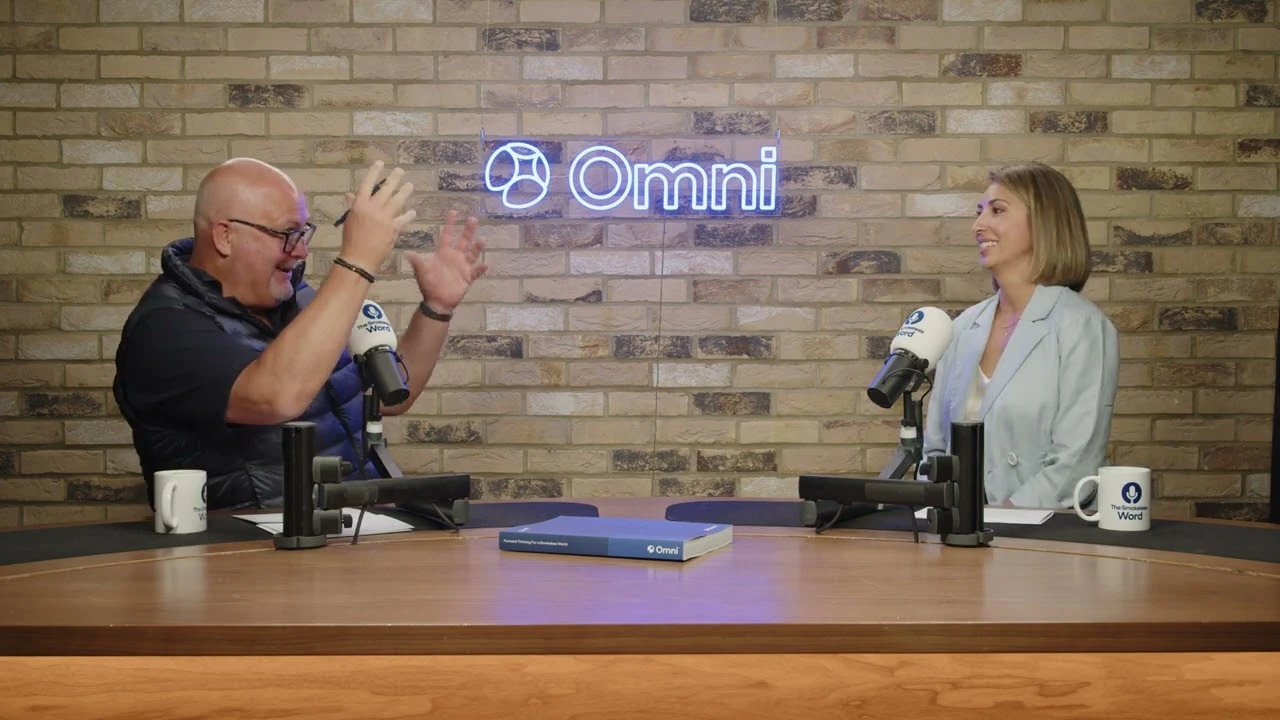
In the second episode of The Smokeless Word, we go behind the brand with Valerie Mras, Senior Vice President of Vapor Brands at Reynolds American. With 17 years of experience, Valerie provides sharp, real-world insight into leading responsibly and driving transformation in a dynamic industry. Together, they explore the power of purposeful marketing, the realities of leading through change, and how established brands can remain relevant while building A Better Tomorrow™.
Join Kinglsey and Valerie for an honest, energising conversation about leadership, innovation, and the people behind the progress.
Please note that "Reynolds" is short for the independent group of companies operating under Reynolds American in the US, which is an independent subsidiary of BAT.
Exclusive access to the Omni™ Newsletter
Join the conversation shaping A Better Tomorrow™. Sign up to receive exclusive access to the Omni™ Newsletter and future Omni™ updates.
Signing up to the Omni™ Newsletter does not constitute consent to receive marketing communications.