
Episode 20 - Jack Rankin
Jack Rankin
We were venal. We were self-interested. It was time to go. One of the things this government, I think, regardless of people's politics, the reason why it's a bit it's stuck in the mud. And what I think is changing in this country is that I think people are waking up to the scale of the challenges.
Kingsley Wheaton
It's the generational sales ban. How does that work? How could it ever work?
Jack Rankin
Well it doesn't.
Kingsley Wheaton
A warm welcome back to The Smokeless Word. Today I'm joined by Jack Rankin, MP for Windsor. Jack and I cover a lot from the Tobacco and Vapes Bill and the generational sales ban to whether the UK is genuinely heading towards a five party system. And we discuss how numbers, quantitative data and evidence should underpin smarter policy making and regulation.
Further to that, we discuss how the Conservative Party, now only with 116 MPs, is getting back on track, starting with first principles. And finally having been third time lucky in his parliamentary quest, how two election losses shaped the Jack Rankin of today. Plenty to get into. Enjoy this fantastic episode.
This podcast is intended for regulators, scientists, policymakers and investors only.
The views expressed in this podcast are the personal opinion of the speaker only.
Any references to products having a reduced risk or reduced harm are based on the weight of the evidence and assume no continued smoking.
This material is not intended for U.S. audiences.
Jack, welcome to the studio. Do you like it? Is it what you expected.
Jack Rankin
Thanks for having me, Kingsley? Well, I'm looking at the books you've got on the back there. And they’re your past guests aren’t they? So I'm learning that. That. Well, next time I'm on here, I need to have my first book written don’t I.
Kingsley Wheaton
You do! Any plans for a for a book?
Jack Rankin
Well, I'm thinking I’m a little bit unusual. As a member of Parliament in that my academic background is mathematics and physics. And one thing that I always believe in and promise is that I try to bring a bit more quantitative skill to the Commons. And I would encourage you. Right. You know, you're a senior member of a business. You will sit on a board when you're making your financial decisions. And you will look at case basis, won't you. And interest rate tests and GDP. And you will have cases. When, the British budget, we're spending 47% of GDP in this country at the state. There's no cases. There's just the base case. And when you watch the five-day debate on the budget, no one talks about numbers. So I try as best as I can to bring a, an analyst mind to it and talk from quantitative skills. So you're more likely to get a spreadsheet from me than a book, is what I’m saying.
Kingsley Wheaton
Why don't you turn that into a book? You could, you know, you could bring the power of numbers in policymaking or something. There's a theme there, isn't there?
Jack Rankin
I'll have a ghostwriter.
Kingsley Wheaton
We’ll, come on, we'll come onto that theme in a bit. Yeah. Just, can I ask you right up front? You're the first sitting politician that I've had on the Smokeless Word. We've had former politicians. One, two, three, three of them. I think it's quite courageous of you. What helped you say yes?
Jack Rankin
Why do you say that?
Kingsley Wheaton
Because, you know, I think it's, we’re sometimes excluded. Because of the business we are. The industry we have not always the easiest to engage with. You know, I've never managed to have a meeting with a Cabinet Minister in the UK in my entire time on the Board, despite being FTSE six, seven. Yeah. I just thought it was. I genuinely thank you and thought it was quite well quite, quite a thing to come on it.
Jack Rankin
Well okay. Let's talk about this a little bit. So I'm a I'm a new MP. I'm a Conservative MP. And my view of of whatever your listeners, certainly your British listeners will have different views about the Conservative Party and our record in office over a significant period of time. Right. And you hear often in British politics this discourse for 14 years, particularly on people on the right who were unhappy with with how we governed in office. And there's no doubt a degree of those criticisms are true. I would always say that that when you judge us on the 14 years, you must also recognize that we had to deal with the COVID pandemic and we had to deal with things like the Ukrainian crisis, both of which were outside of our control. And and clearly they put huge financial pressure onto the state. So when people posed that challenge from the point of view of size of the state, which is something I feel, you know, you must recognize that. But, but but I certainly think we ended up philosophically, off course. Right. And when the Tobacco and Vapes Bill was going through the House of Commons, obviously that's something that it was Labour legislation by the time I got there.
Kingsley Wheaton
Yeah. Not originally of course.
Jack Rankin
But the main, exactly, the main body of it was something that carried over from Sunak’s years. And I wrote an article for The Spectator in which I, I kind of said, you know, we need to change our minds on this and not all of the provisions because some of it is very sensible. But I was talking particularly about the generational sales.
Kingsley Wheaton
The generational sales ban.
Jack Rankin
And I also talked in that article about the Football Governance Act and what I said about the Football Governance Act is like somebody has looked at the British Premier, the English Premier League, which is one of the most successful sporting franchises in the world. In sporting terms, in financial terms, in soft power, and said what we need is a board of ten people in Whitehall to help make decisions for it. Now for someone, for someone coming into Conservative politics, fresh and new. I think this is insane, right? And I said, look.
Kingsley Wheaton
Was there a genesis of good thinking behind that?
Jack Rankin
Probably. Yeah. I mean, I mean, you see it, you know, you see clubs which are taken over by non-scrupulous foreign investors who rinse the club. And the nature of a football club being different to a business is that people like I’m a Man United fan. You know you invest so much in.
Kingsley Wheaton
High five there.
Jack Rankin
So there you go. So so so so you know there's a good reason people want to save historic clubs from from, so so it is understanding. But the point I'm making, Kingsley, is that when my party is on track, it should believe in individual liberty. Yeah, it should believe in personal responsibility. And it should believe in free markets and in so much that we should intervene to deal with public health challenges. Which smoking is indefinitely one. Of course, we should be, you know, we should encourage informed adult choice, and we should in terms of the restrictions that we impose, we should do so in a way, in a proportionate, evidence based way. Right. And one thing I think that is different should be different about Conservative philosophy, different to socialist philosophy is a belief that we understand that human nature is fallen, and we should work with the grain of human nature to change behavior. Right. That's how I think a small c conservatives, classical liberals, should think about public policy now. And when I think about the UK, in fact, we've had incredible success when it comes to smoking addiction.
Kingsley Wheaton
We’re world leading almost.
Jack Rankin
You will you will know the statistics better than I do, it's your day job. But at the beginning of this century, about 30% of adults in the UK smoked. I think I’m right in saying
Kingsley Wheaton
The beginning of this century. 2000. Yeah, yeah.
Jack Rankin
And it's about 10% correct. So there's been a bit of two thirds reduction. Correct. Right. And so no one has banned anything. Right. Correct. And what we have seen actually is the free market deliver. So obviously vaping is incredibly prevalent in the United Kingdom. Now I know that there's a suite of alternatives and vaping is just one of them.
Jack Rankin
But you know the NHS use swap-to-stop schemes which use vaping. I know that two thirds of people who vape whilst using NHS smoking cessation services do stop‡. Okay. So there's been some great free market moves, ones that enhance personal responsibility, ones that are based on education. And we're having lots of success. And when I look at what the back end of the Tobacco and Vapes Bill so not a generational ban but lots of the restrictions on on vaping that I think go beyond what is sensible. So obviously we shouldn't let companies, you know, put Mickey Mouse on the side of a vape or sell them with candy floss flavours. Right.
Kingsley Wheaton
That's irresponsible. That's true.
Jack Rankin
That's irresponsible. And that should be regulated against. Right. But we should be advertising vapes to smokers as a legitimate smoking cessation tool‡. And because they've gone it had, in my opinion, and and not on an evidence based proportionate manner, they risk the benefits of that because I think I'm right to say that 57% of adult smokers in the UK think vaping is maybe just as bad for them as smoking, which is nonsense in any scientific measure.
Kingsley Wheaton
Yeah, that's that's about the right figure. Yeah. Roughly about we always quote about half.
Jack Rankin
So so my view is that this legislation is is is is wrong for those reasons in its own, in its own measures. So I'm not trying to have a libertarian argument about saying that smoking cessation has got nothing to do with the state‡. I'm just saying we should work with the grain of human nature and your business. Like other tobacco or legacy tobacco businesses, if that's the right phrase. But I'm going to call you that.
Kingsley Wheaton
That’s okay, right? Yeah, yeah, yeah.
Jack Rankin
You'd be at your business, right? You were trying to return a capital to your shareholders, at a risk adjusted basis. Right. That's that's that's that's the purpose of a plc.
Kingsley Wheaton
Right.
Jack Rankin
And you know that your revenue in a hundred years time is is is is at risk. So you are going to work with the grain of human nature to help to transform. Right. And that's exactly as I understand it. You know, what you're trying to do. Right. And so for me, if you're trying to if you want public health measures that work with the grain of human nature and personal responsibility, you should be working with people who recognize that that's in their business’s best interests.
And for my money, in the last years, Conservatives have, instead of arguing from first principle public policy or legislation and whatever you want to call it from conservative first principle, which I've tried to do in a in a small way there and having an argument, we've kind of accepted a lot of the left argument and gone. We can't speak to them, we can't speak to them.
And frankly, I think that is somewhere where why we've been, off course, as a centre right political party and I don't think we should concede. And we should be saying we should be arguing for, for for conservative policy and first principles. And that is one of personal responsibility. It's one of free markets, and it's one where the state treads lightly on people's lives.
And in some much that we want to advance shared public health objectives, we should do that with the grain of human nature and do that in an evidence based, proportionate manner.
Kingsley Wheaton
Yeah, I'm going to keep going on this theme. I was going to get around to tobacco and vapes, you know, Tobacco and Vapes Bill was a Tory policy under Rishi. Why why is it so difficult for evidence, logic, rationale, quantitative data to make its way into policy making it particularly in this space as far as we're concerned.
Jack Rankin
So obviously I was not going to win when it came to I was on the bill committee for the Tobacco and Vapes Bill, but I was never going to, you know, win, you know, the win the Government over to my point of view particularly. But I proposed some amendments to that bill. Yeah. And and it wasn't even about general advertising. Okay. So I didn't say you should be able to advertise generally. Generally. Right. But like I suggested an amendment where you could advertise in adult only spaces. So for example, in the smoking shelters of a nightclub. Now, it would seem to me that advertising to an age gated audience there of people who were smoking.
Kingsley Wheaton
With a substitutional product.
Jack Rankin
Substitutional product, would be something that wherever you were on the political spectrum, if you were engaged in scientific evidence based proposals, that would be something you would welcome, in my opinion. Now, it wasn't something that the government chose to engage in. I also advocated that you should be able to advertise it as a smoking cessation product only for existing smoking.
Just and they didn't engage with that. And I think that that is incredibly detrimental for public health, because if 57% of adult smokers believe, as they do today, that vaping is as is, as bad or as worse than smoking, they are not going to use it as a cessation tool. Right. And so that great work we've done, getting from 30 to 10% is going to get sticky and stuck.
So my view that even if you disagree with me on the generational smoking ban, which I think was wrong in terms of individual liberty terms, but I accept that that is an ideological argument from one part of the political spectrum. But even if you but even if you're on the on on the left and you believe in more heavy-handed state control or you maybe more broadly on the right, you know, but believe in public health, right?
You know, you should be encouraging this, right?
Kingsley Wheaton
How do you?
Jack Rankin
In an evidence based way. And. You know, you ask why? I think there was a degree of kind of like moral hysteria about it. Right, because?
Kingsley Wheaton
Dogma, ideology, ish?
Jack Rankin
Let me say I'm going to I'm going to use the word moral histeria. And by that I mean you you do have parents who are super concerned about their children vaping, and they are right to be. And we should not have teens and young adults who've never smoked vaping.
Kingsley Wheaton
Quite right. Absolutely, I fully agree with you.
Jack Rankin
And so and and so the vaping industry or product has been caught up in that.
So even responsible manufacturers, companies, when people perceive vapers, they're perceiving 17 year olds at the bus shelter, you know, puffing away on something that looks like a highlighter. Now, we absolutely should regulate that. We should tax that. We should get on top of that. And one of the reasons, if you get on top of that is to enable these products to do what they should be doing, right.
So you know, so some of the restrictions on there. So for example, I think we should probably, you know, tax it and license it in such a way that we can properly empower and fund proper trade... What the people who come in from a council and look at.
Kingsley Wheaton
Oh, Trading Standards, enforcement. Yeah. Absolutely. Right. Yeah, yeah going to ask about that.
Jack Rankin
So so we should probably put, you know, probably put some, you know, tax and licensing on there so we can fund that. So so but but but we should we should delineate between the two. And I feel that because of that kind of moral hysteria around it, you people are throwing the baby out with the bathwater. And that might result in more adults smoking into the rest of their lives, which is not something that any of us should want.
Kingsley Wheaton
No. And it has I mean, you know, Australia, the smoking rate has inflected back upwards for the first time in generations because the weighted average price has fallen. Yeah. The market. How do I just want to I want to come back to it yet. But I want to ask you how you feel as you're sitting there.
You're on the committee. You're talking logic. You're being rational, and you lose the debate. Do you just go away and, you know, go to the pub and drink some Guinness and get over it? Or do you get frustrated or do you just think, well, that's actually what I signed up to. That's my life. How do you how does it make you feel? Must be very frustrating.
Jack Rankin
Well, look, I could answer that in many ways. You're aware of the numbers in the British Parliament? There are 403, I think I had to say Labour members of Parliament. And there are 116 Conservative members. And that is that is the lowest amount of members of Parliament my party has. I mean, the United Kingdom is a thousand years old. So it's a funny thing to say, but in its modern, its modern history, that's the lowest number of members of parliament the Conservative Party has ever had. We are a historic nadir, and it's not even clear that yet that will recover from that. Okay, so I kind of knew what I was signing up for in that sense.
Like I don't win many votes in the House of Commons. Kingsley it is the nature of the beast? So it's not just this bill where we end up in a in a small minority. But I take the view and the reason I, I've joined Parliament this time, joined my party, is that I believe that we need to renew in an authentically conservative direction.
And the nature of that is that we are there as a new intake of conservative MPs, a ground zero, as it were. So we have a chance to think from first principles about why we're here. Think about the structural problems the British State has, and we also have some time to come up with some of the solutions. So, so and I think that that is helpful for the country actually hopeful for the party, because one of the things this Government, I think regardless of people's politics, the reason why it's it's a bit it's stuck in the mud is because it's not thought deeply about what the structural problems were. And it's not come to office with a plan, and it's then having to respond to the hourly Twitter news cycle. So spending all of this time putting out, yeah, you work in public affairs, the fire of the day stuff and not doing anything of the strategic. What do you want to do in one year, two years, five years.
Kingsley Wheaton
Help me understand? I've asked I've asked a lot of people this question. I can ask it about current Labour incumbents. I could ask you about the Tories, 14 years in opposition. No plan. You know, in business that for me is unthinkable. You know, if we if we're approaching a situation, I tell you what we do. We go to probably a hotel, possibly in your constituency with flip charts, and you don't come out until there's white smoke emerged, with a plan. Yeah. How can any party be in opposition for long and not have a plan?
Jack Rankin
That's a good question. And this is my take.
Kingsley Wheaton
This this is going to be good I think.
Jack Rankin
They. After 14 years, we were wherever your politics were in the British, on the British spectrum, left, right or in between. And most people have no politics, right? Most people considered us to be a mess by the end, but we were chopping and changing leaders, and that included quite violent changes in policy and philosophy. And we were only interested, or certainly had the perception of only being interested to the average member of the public on who was up and who was down and the psychodrama of the day.
Okay. And we didn't behave in, in that world. We didn't behave in, with the principles that people would expect of a disinterested public servant. Right. And people thought we needed to be washed away. We were venal. We were self-interested. It was time to go. And and even people who, broadly sympathetic, knew that we'd run out of ideas, that we'd run out of energy.
And then it was time to change the government. Right. And I think that was broadly true. The Labour Party seemed to think that if they washed away this, like self-interested Tory, you know, venality. If they put the very sensible people in charge and that they listen to the civil servants and everybody played ball and everything would be okay. And a case in point is the, the junior doctors.
So we had the junior doctors on strike in the United Kingdom, in England, particularly for some time, about pay conditions. And some of their arguments frankly, have merit. But there's a finite pot to go around. And they used to say to us in opposition, well, why is the Secretary of State not sitting down and discussing and having a conversation with them and effectively be constructive, be sensible, be moderate, be centrist. And this would come about. And they come in office and the junior doctors are still on strike and you'd be like, oh, it's a bit more difficult this isn't it, because think about the problems of the British state. But it's not just the British state. This is this is true across the West, right? The United Kingdom runs 150 billion pounds fiscal deficit every year.
Yeah. Now and I go back to the numbers thing 150 billion pounds. That's the number that means nothing to anybody. It's like saying the speed of light is three times ten to the eight meters per second. We have we we have no we have no reference points of human beings.
Kingsley Wheaton
Right. 2 million naughts.
Jack Rankin
Exactly right. Well, 150 billion. There are 30 million households in the country. Give or take. Well, 150 billion divided by 30 million is 5000. So the British state spends 5 grand a year, 5,000 pounds a year, every year, more than it has coming in tax for every household in this country. And just think about the households in this country.
Lots of them are people who might be on welfare or might be a minimum wage or might be retired. So think about what that means for the average working household, right? That's what the British state spends a year, every year. That's before the Iran war situation. And what that's going to do to the economy. Well, that's going to do to energy bills.
What that's going to do for the nature of state intervention. We have a 3 trillion pound deficit. That's 100,000 pounds per every household. We spend 120 billion pounds on debt, interest. That's 4,000 pounds per household. Yeah, right. And the reason I say this is.
Kingsley Wheaton
That’s not going well, so far.
Jack Rankin
This is one of the problems we have. We are fiscally borderline insolvent. And this is not just true for the United Kingdon it’s true across the West. The U.S. is a special case because everyone uses the dollar and they've got, but we we're exposed to market conditions. Think about our defence spending. We spend 60 billion pounds a year on defence. Whatever you think of Mr. Trump and his policies, the nature is the world is getting scarier.
Whether you're looking at a fascist invading a democratic country on our continent. Whether you look at the Iran and its behaviour in its near neighbourhood, or whether you just look at geopolitical risk around China, coupled with an uncertain U.S. commitment to NATO and the West. We need to double our defence spending. Yeah, easily. Right. Put that £60 billion on the bill.
Kingsley Wheaton
Yeah, that’s another sixty.
Jack Rankin
Right. You look you look at our demographics of the country. Right. And what that's doing to working-age people to pensioners and the unsustainability of the state pension, adult social care, the rest of it. We have like huge intractable problems. And this is this is without starting to talk about immigration and how it's broken the social contract in this country. And the risk we have around Islamism and integration in this country. And you can see now we have routine terrorist attacks in United Kingdom against a Jewish minority. Right? We've got like real structural problems. The idea you can just come in and just be the sensible people.
Kingsley Wheaton
And just not be you lot.
Jack Rankin
Just not be you and that be solution to some of these problems is is insane.
Kingsley Wheaton
But where where okay. I'm not, I'm getting frustrated with it. You know as some as a as a Brit. Where are the advisors. Where are the people like me maybe who are saying, no, come on, you need a strategy. You need to think about this. And, I mean, there's a thousand people that can help with that.
Jack Rankin
Well , there are a thousand people that can help with that, and I think that actually in opposition with some new Conservative MPs and we had a forest fire last general election, I like to say forest fires are bad, but they can be regenerative. Right. And we're also having the time to think. And we're thinking about these things, we are talking about them in and honesty, which we'd never done in office.
We would never talk about.
Kingsley Wheaton
Took that as a jolt.
Jack Rankin
Yeah. We just got we we just took the view that we'll try to manage these things. You know, when it came to the NHS, what we tried to do is just give it just enough money to not collapse over the winter. And a success in March was the NHS didn't collapse this this winter on our watch. Right. You know, now we're in opposition where you can start to think like, okay, well how do we solve these, some of these intractable problems and how can we do it from first principles?
And what I think is changing in this country is that I think people are waking up to the scale of the challenges. And so in a, in a new five party politics, which we're emerging in the UK, but again, that's not a British thing. You're seeing this around the world. You know, we there is I think there is there is something to be said for us telling the truth and the hard messages from first principles about some of these problems. Because frankly, we don't solve our fiscal situation and our defence problem without huge public spending cuts and a significant reorientation to growth.
And everyone says they're in favour of growth. But the way you get growth is often unpopular, right? Because, for example, it will mean planning reform that makes it easier to build infrastructure in this country and housing. Now, everyone's in favour of that in principle. But when it comes to their constituency or their.
Kingsley Wheaton
NIMBYism.
Jack Rankin
It all goes wrong. So we're going to have to do some things unpopular, but we need to tell people the truth about the state of the country. And I think that is something that will be unique to us because we have a challenger on our right. But they're a populist, and I don't use populist the way that some left-wing politicians do it to.
Some people use it as in detrimental. There's nothing wrong with saying things like popular.
Kingsley Wheaton
Pejorative, right?
Jack Rankin
Yeah, but, but but it's not one that comes from first principle solutions. It's one that comes to pandering to voters. Now we should do things that are popular, but we should do them because the right thing to do, you know, not because that's the case. So I think we should be, you know, we should be authentically ourselves, but we should be tough when it's truthful.
Kingsley Wheaton
Yeah. I want to ask you. I'll come just want to come back to the generational sales ban in a moment. One more question, but the five party system. I asked a former Tory Prime Minister who, you know, was on the show this question, and he and he swerved the question, you know. Five party system. What was Labor's popular share in the general 34%, I think. Or was it something like 33, maybe even 32, you know, massive majority, thin you know. Is first-past-the-post, is simple plurality a busted flush do you think?
Jack Rankin
No, I don't think it is. Okay. The you know, I'm a broadly a small-c conservative but don't change the Constitution because of whatever circumstances are this minute. England is 1100 years old this year, and it's been by anyone's metric. If you look at it over any decent period of time, which is the only way to look at these things in any meaningful way.
It's been it's been one of, if not the most successful policy on earth. Right. So we should, you know, just broadly, people's instincts shouldn't jump to change like constitutional wiring because it doesn't look right at the minute. Right. We are in five party politics at the minute. Are we going to be sustainably in five party politics - question mark. I don't know the answer to that.
I suspect what will happen is how an electoral system, you know, will force the five to compete to a two or to a three or perhaps to regional basis. Right. That that is what the system does. And I think that's the right thing to do. And why do I say that? Well, all governments are coalitions, right? The Conservative Party was in office for 70 years of the last century.
Right. And in almost all, in most of the instances it had a majority in the House of Commons. But but the Conservative Party is a coalition, right? The Conservative Party has two great strengths. And I'm again, I'm not talking about right now. I'm talking broadly. I'm taking a broader view. We've got two great strengths. One is our breadth, right.
So the Conservative Party deliberately sits on a significant portion of the political spectrum the centre, the centre-right and the right. You know, we range from, in historical terms, a Ken Clarke to a Norman Tebbit. And they sat in the cabinet together. Right. And what are we doing there? Well, we're saying that any, any individual stripe of blue doesn't command a plurality support in this country.
But I would contend to you, this is a personal view, people would, would, would query this. That we certainly in England at least are broadly a small-c conservative country. So if the Conservative Party sits across that spectrum, I'm not saying a majority of the public are there, but we we are a choice a majority of the country might consider.
Right? We're in a market pool where we can capture a, you know, significant amount of the British public. We've also had remarkable unity despite that breadth, because people in that coalition, whether Ken Clarke or Norman Tebbit, have all understood they’ve chosen to be part of this broad centre-right coalition, and they've chosen to be in office and wield power, even if they have to compromise on their individual wants.
The left in this country has always been poorer at that. So even when we've been of a majority government, we have been a coalition, right? All governments are coalitions. In a, in a in a PR system, the only thing that happens is the coalitions have done afterwards. So when we present in a first-past-the-post world our coalition to the country with a manifesto, we have put our differences aside and got behind it.
And we have to, to get elected, show that unity. And we've gone we've done our coalition talks already, already, and this is our prospectus. And you might not agree with everything in it, but here you go. If you do it after the fact, everyone junks their things and they get rid of the things they don't want. And then the politicians stitch up their coalition afterwards.
So the question isn't do you have a coalition or not? It's that do the public get to decide after you've made your coalition or before? And I think that's why you should support a first-past-the-post majoritarian system and not a proportional representation system.
Kingsley Wheaton
That’s very interesting. But just just because I think anyone watching this, if I didn't ask what I'm about to ask you, would say, come on, Kingsley, you just give me.
Jack Rankin
You said you weren't gonna ask me any tough questions.
Kingsley Wheaton
But surely the EU European schism which wracked the Tory party from Thatcher to I don't know what I saw a lot of unity in that.
Jack Rankin
Yeah. I Know. And that's where. And that's where we're wrong.
Kingsley Wheaton
Yeah, yeah. Okay. So you're saying it's not that everyone always abandons, for unity, but in general the party is more more capable.
Jack Rankin
Of course it is the, the, the European Union was that was always it was always a tension in our party. And but it's settled now as far as we're concerned. And I think, as far as the British public are concerned. The I think, I think the referendum was something that was always going to happen, by which I mean, for a country, any country, to be a member of a of a multinational organisation like European Union, which is as deep and as meaningful as European Union.
It's not like being a member of the World Health Organization.
Kingsley Wheaton
So that’s serious stuff.
Jack Rankin
You require for it to be sustainable, broad multi-party support, broad intergenerational support and broad regional support. The only way it's sustainable in that case, and that has not been the case for some years. And the reason it hadn't been the case is that the British people had given their consent to, explicitly, to a European Communities Act. Right. You know, the Common Market was something that had broad public support in.
Kingsley Wheaton
Economic union.
Jack Rankin
But what did not have broad support, in fact, it didn't have even majority support, was a super-state, ever closer union. And the intractable logic, indeed, it's written explicitly in the founding document, the European Union. Is that right? This concept of citizenship of a flag is something the United Kingdom never bought into. And as it continued to integrate, that tension was only going to get more and more exposed.
So when people say, oh, you know, Cameron gave in by having a referendum for party political partisan reasons, that might have been case in the short term. Yeah. But he was responding to the, the, the British public broadly never, you know, as one which is what's necessary for, for something of that scale to, to continue with. So so we were just, you know, it was exposed by the referendum and the referendum which forced everybody, yes or no, in or out.
Right. Well, actually, if you said to everybody in the British public that when I just said, right, we European communities and cooperation as sovereign countries on a range of things, including, you know, defence and foreign affairs, people have said yes. Right. You know, overwhelmingly would have said yes. Of course, people have voted leave and remain, you know. Do you want, you know, do you want the British Parliament to effectively become a county council on doing increasingly sovereign European Union, responsible for things like foreign affairs and defence?
Most people have said no. Yeah. And then and so but but by forcing a binary you caused a division actually when there was a broad support for a common entity. Yeah. But but that was never you know, the European Union is a bit like Mr. Farage is polling right. It must go forward. It needs to it needs momentum.
It cannot exist as a steady state. And so it was I was going to cause tension. And actually I think that I think it's been massively misunderstood, Brexit, by people outside the United Kingdom. I see I voted to leave, I see it in these terms. I see the, our neighbours on the European continent are some of our best friends, right it in many different ways.
Right. They're our neighbours and our best friends. And at university I lived in a ten person party house. Okay, and there was huge tensions in that house, right. Because obviously, the nature of a party, a house like that is, you know, you someone's always up the latest, right? You know, someone's always the messiest. Someone's always got the heating on someone's. Yeah. Okay. It's the nature of our studio with ten of us. But it's even worse, right?
And when it comes to the heating, you've got the person who wants it to be warm. You've got the person who's the skintest.
Kingsley Wheaton
Like this room.
Jack Rankin
Okay? Yeah. It's not very warm.
And you argue amongst those things, right. And as far as I was concerned, in the European Union, we were the outlier in that household. Right? So we were always the person who was telling everyone else to turn the music off or, you know, spend less on the heating or whatever it was. Right. And, and we got to a point where I think there was too much friction.
I think what we should have done and the way we should have framed this is, look, friends, we love you to bits and we want to go out with you on Wednesday and let's still go on that joint lads holiday next week under these terms and conditions. But we're going to move in the flat next door.
Let's cooperate where we need to. But really, you nine, who want to go out all night and have the heating on all the time, you guys, you crack on.
Kingsley Wheaton
Go for it.
Jack Rankin
Right? Yeah. And we'll still be the same friendship circle, but we've maybe not got our joint account in the same kind of way. Right? That's how I think it should be. And I think that at that and I think the logic of the European Union is sound. But we could never be we would never be part of it fully.
So it's in the West's interest, in my view, that the European Union is a success. My view is that the United Kingdom's never quite on that same page, but we should be their largest cheerleaders and continue to be friends and allies. But we're not countrymen, and we should have a slightly different role. But obviously they are still treating us.
And some British politicians on the left who lament us leaving. You know, we're still taking a bit of a punishment beating.
Kingsley Wheaton
Well, that's what's going to ask you.
Jack Rankin
And that is, that is, that is in no one's interesting that's not in the UK is interest and it's not the European Union's interest.
Kingsley Wheaton
No, I don't think so. I don't think I think that left. I actually intriguingly, on a personal level, found that harder than the whole referendum. Was the way I felt we were treated afterwards by the European glitterati.
Jack Rankin
You I think you can look at the French and the Germans and you can see every different approach. So it's clear that the French broadly, Macron personally perhaps, you know, feels that the United Kingdom needs to take some kind of punishment beating. And clearly we have to make sure that we clear our debts and the points of tension across the. Yeah, yeah.
Kingsley Wheaton
Just like in your party house moving out. You haven't paid the rent, you know.
Jack Rankin
Absolutely. Right. Yeah, yeah. Of course you have to do that. Right. And there's going to be an ongoing obligations of some description because of ongoing entitlements. Right. And there's going to be points of contention on that. That's true. But like the Germans for example, take a very different approach. We signed this bilateral treaty with them, the Luxembourg, Kensington treaty sorry.
And it's like, okay, where can we work together? Right. And you saw Chancellor Merz in the past few weeks, articulate his frustrations with the European Union of like saying we regulate too much? We tax too much? You know, we need to be more as a continent, more nimble and competitive and particularly on kind of regulatory approach.
So the UK has, for example, when it comes to genetic editing of crops or AI has took a more nimble regulatory approach on new age industries. This is a very sensible thing to do, right? The Germans realise this and and they're they're thinking, okay, how can we best share this? Right. Okay. The Brits are showing, you know, they're using a bit of Anglo-Saxon DNA, which I think they show a bit of respect for.
Maybe we should be a bit more dynamic than this, right. You know, and they get that and they see, okay, well, you've got a dynamic people who want to trade with us. Well, let's trade with them. And we could learn something from it. That's in the interests of Germany. In the United Kingdom. That's the kind of approach you need. Right.
Kingsley Wheaton
Jack, I'm going to, I'm, just in the interest of time, because I know that we've probably got maximum about ten minutes left, and I've got a thousand questions I'm not going around, but I just want to go back to the generational sales ban. Yeah. So I think it's January the 1st, 2009. Is it okay? My son is born in 2008. My son. Right, so?
Jack Rankin
So, he'll never be able to smoke legally in the UK.
Kingsley Wheaton
No other way around. He will actually, he's just made it, 2008. So you know, 20 years time, he's now just turned 18, 23 years time he's going to be a 41 year old. He may well be living in, you know, your constituency, who knows? He's living next to a 40 year old and he can go and buy a packet of smokes.
And the other one can’t, I mean, how does that work? I mean, how could it ever work?
Jack Rankin
Well, it doesn't, does it?
No, I mean, I'm not sure I have a much fuller answer to you then that is because. Because remember, the guy working in the corner shop would be an 18-year-old shop boy. Yeah.
Kingsley Wheaton
And he’s going to ask for ID.
Jack Rankin
Exactly. And he's going to ask and well like for a start how on earth is he going to know if he's 40 or 41 okay.
Is he going to ask like most adults who want to buy cigarettes for for ID because, you know, when you're 18 you can't tell the difference.
Kingsley Wheaton
Can no-one see that in the policy? Is it not just political grandstanding, then. Essentially, on the policy.
Jack Rankin
Well, yes it is. Yeah. It's it's.
Kingsley Wheaton
Not logical.
Jack Rankin
It's not, it's not I think it's virtue signalling of a certain description. But the nature of what was happening in the United Kingdom before this ban was that that had been an academic question. Why? Because we've reduced smoking rates by two thirds in 20 years. Right. So in 20 years, two thirds will be getting 3%, my understanding of a smoke free society is 5%.
So you're effectively saying we were on the route by the time your son was 20? We'll be there to be to to have achieved.
Kingsley Wheaton
We’ll be there. And probably, by the way, I don't know this for sure, but I know in the U.S. and the UK will be similar. That below 25 adult cohort is probably below 5% already. Well Jack's here, let's frame a good regulatory world for this. So let's have a look at this retail licensing. That'd be quite good idea wouldn't it. Licensing for tobacco and nicotine.
Or does that go against your sort of small-c conservative free market.
Jack Rankin
I think you, you want these things to be as frictionless as possible in a sense that you don't want them to be overly excessive. But if it's if it's if it's relatively pain free and easy to do, I think that you should, you know, we should, you know, so with cigarettes when it comes to tax, for example, on cigarettes, my view is that if you smoke, I shouldn't bear the external cost of it.
Kingsley Wheaton
One adult oriented flavours how to how to describe that, you certainly don't want youth access. Probably some product standards, a bit on packaging and labelling. So there's no Mickey Mouse.
Jack Rankin
Yeah, exactly.
Kingsley Wheaton
There you go.
Jack Rankin
And regulating that properly will cost something. But perhaps we should license and tax these things to cover that. That's how I would think about things. And then and then and then, you know, that's to me wipes-its-face. But as soon as you start to tax these things or regulate these things beyond that, you're making the moral choice on behalf of adult consumers. Which is not something you should be doing, in my opinion, in my worldview.
Kingsley Wheaton
You probably don't know this. I don't never quite sure if Jersey's part of the UK, you're very learned. You probably know that. I think it's it's sort of, isn't it. We just started a.
Jack Rankin
It's a crown dependency so effectively.
Kingsley Wheaton
How many of those have we got. We got a lot of those.
Jack Rankin
We've got the Channel Islands right. But they are 2 or 3. But then you've got the Isle of Man as well. So they're effectively, legacies from centuries ago because the King is not. Its sovereignty there is, it's the last of the Duke of Duchy of Normandy, which he runs independently. Okay. So but we, the United Kingdom, look after their foreign affairs and defence, but they're internally, internally entirely self-governing.
Kingsley Wheaton
Yeah. We just did a, it's quite interesting. And I would encourage any policymakers or lawmakers who are watching this. We've just done a facial recognition pilot with Co-op in Jersey, okay. Which is brilliant because Jersey self-contained 300 stores or whatever it is and it's run through technology we use is called YOTI. It's facial recognition. You go in, you look at a screen and we set the bar a bit higher, so you either get a red or green.
The shopkeeper, then will sell you an age-gated product. Brilliant technology, AI in action, solving the world's problems. And this isn't a party-political point, but I've written to the current Minister of Health three times suggesting that we showcased this technology because we think it's a great solution. Zero answer. In fact, more than that, there was a suggestion that my correspondence be published as if somehow, you know, I'd done something wrong by writing to Minister.
Anyway, we'll we'll leave it there. Just on on illicit. Let me ask you very quickly, 35% of the UK's cigarette market is illicit. I think the Exchequer loses about 3.5 billion pounds. Given what you just said about defence spending. Whatever. Don't you think we might need that back? What more can be done and why is it not done?
Jack Rankin
Well, I did a mystery shopper exercise.
Kingsley Wheaton
Yes, I read about that in Windsor I think.
Jack Rankin
In Windsor.
Kingsley Wheaton
Seven vape stores on the high street.
Jack Rankin
Well, I said, I said, look, I know that this is a problem, but I don't think it's a problem in the Windsor parliamentary constituency. You know it, Kingsley. Yeah, I know I represent some incredibly prosperous, beautiful towns and villages around the Great Park. And in the most unexpected, you know, I don't represent inner-city Birmingham say. Sorry to pick on Birmingham.
Right. But, you know, I was like, this is not the social democratic. This happened, absolutely happens right. In all these little vape shops selling illicit products behind the counters. And you can literally go on a Facebook group and ask someone to to meet someone in the car park in 20 minutes and buy fake fags for 3.50 pounds rather than 17.50 pounds .
I mean, right, so you know, the Laffer Curve if you want to call it that.
Kingsley Wheaton
Yes, correct, yes.
Jack Rankin
Well that is well broken on cigarettes. So not only is the State when it goes beyond taxing the externalities, making moral decisions on behalf of informed, consenting adults, it's actually doing itself a disservice itself, which is an insane thing.
Kingsley Wheaton
It should be revenue optimized.
Jack Rankin
It's an insane thing to do.
Kingsley Wheaton
But we've been banging on about this for years. 3.5 billion. Yeah. Right here. Right? Yeah. We'll move on.
Jack Rankin
Yeah. It wouldn't be if I was Chancellor for the Exchequer because.
Kingsley Wheaton
I've got a thousand questions I'm not going to have time to ask. Maybe you'll come back again, if you like what we do. I wanted to talk to you about muscular integration. I wanted to talk to you about your formative years. I wanted to talk about smaller-c social, smaller-c conservatism, social contracts, all sorts of things. I just want to ask you one before I get to the much feared, must, a quick fire around.
Jack Rankin
Okay. All right.
Kingsley Wheaton
I just wanted to ask you, Ashton-under-Lyne you ran for in 17. Warwick and Leamington in 19. Yeah. You learn more from the losses or the wins?
Jack Rankin
They were very different losses. So I grew up in Ashton-under-Lyne.
Kingsley Wheaton
Yeah. That’s right.
Jack Rankin
So, which is where Angela Rayner is the Member of Parliament and and you know Ashton-under-Lyne is, it's post-industrial Greater Manchester. It's, my parents were born at a tough kind of time for for Ashton, you know in the mid 60s, you know. They met at school, they went to a secondary modern school in a tough part of Ashton and, and they got married young and I was on the scene by the time they were 19.
Right. And my first memories were them going to night-school on alternative nights to get the qualifications they needed to set up a small business. That small business, in Windsor terms, in Westminster terms, is nothing. But it did, you know, we went on foreign holidays and I don't mean the Maldives, you know, I mean Lanzarote, right? We had a garden, right?
But it gave me my brother life opportunities they never dreamed of and I can and and I didn't have party politics in my house.
Kingsley Wheaton
And it was always a Labour.
Jack Rankin
Yeah, Labour, Labour place. Yeah, yeah. For a hundred years. And my parents weren't party political. They had some small-c conservative values. Family was important. Country was important you know those kind of things. But you know economic politics was probably quite left-wing. But there was no party politics in the house. But by the time I was 12, 13, 14, you know, I'd learned from them from what I saw, which was with hard work, industry and education, you can improve yours and your family life.
And I found that quite an empowering message. And I compare that to the politics of people like Angela Rayner, who is my member of parliament, where I grew up. They peddle, this is my opinion. The politics of grievance and dependency on working-class people. That keeps them in their place but keeps them voting for their politics. I rejected that, I spent the first date.
Kingsley Wheaton
It’s quite an accusation.
Jack Rankin
Well, there it is. They and I had an argument about this with Angela Rayner in the Strangers Bar a few weeks ago, but a good natured one, a good natured.
Kingsley Wheaton
I’d quite like to have been a fly on the wall or that.
Jack Rankin
A good natured one, over a few beers because she she she she gives as good as she gets.
Kingsley Wheaton
Yeah, I would imagine.
Jack Rankin
And and she didn't take it personally, which some people in politics do. You know, she's got a different perspective and she'll have out with you.
Kingsley Wheaton
She's a vaper as well isn’t she?
Jack Rankin
I think she's just quit.
Kingsley Wheaton
She just quit; I didn’t realise that.
Jack Rankin
But I thought that that might be a make up for her potential leadership campaign.
Kingsley Wheaton
Which may or may not have happened depending on when this is broadcast.
Jack Rankin
Indeed. The prime minister, Angela Rayner. Yeah.
Kingsley Wheaton
You heard it here first everyone.
Jack Rankin
And so and the reason I made this point is when I was 18 obviously I went to university and I didn't want to go back to Ashton-under-Lyne. I came.
Kingsley Wheaton
You must have been, what, 20 when you ran for Ashton-under-Lyne?
Jack Rankin
No, 22, 23 isn't it? Yeah, but I moved to the South East of England and I was cracking on with my.
Kingsley Wheaton
Centrica?
Jack Rankin
Centrica, Yeah, yeah, yeah. Became a commodities trader trading gas, electric, primarily electricity, you know. And I was kind of like doing the next standing on my shoulders, parents and my shoulders for parents of my shoulders, as I was concerned to, to go off into the world.
But then the general election got called in 2017, which if you remember when it started, we, the Conservative Unionist Party, where we were 20, 25 points up in the polls, if you remember. That's right. And it looked like momentarily we could win at Ashton-under-Lyne.
And I always said to my wife then, then girlfriend, now wife. Yeah, we might win. And I'm not sitting here.
Kingsley Wheaton
And winning Ashton without me.
Jack Rankin
And like some, with respect, the CCHQ which is my central office would have just imposed the candidate probably from the South East of England on that constituency. They could have just won. And I said, I'm going to have a go. So I moved back in to I worked in M&A at the time. And those people, you know, those of you who know M&A, you know, and I was was in-house M&A.
So we were either busy on a deal with fallow
Kingsley Wheaton
It’s peaks and troughs.
Jack Rankin
And we were in the trough. So I said to my gaffer I can I have five weeks off. And he was like great, go.
Kingsley Wheaton
You don't often hear the gaffer on the Smokeless Word very often
Jack Rankin
Mancunian. That's for boss. And you'll know that because they always referred to Sir Alex Ferguson as The Gaffer.
Kingsley Wheaton
Right. And also what you don't know, although I probably did tell you is that I'm also a Manc. There you go. I know that's very hard to detect. I was born at Wythenshawe General.
Yeah. My parents lived in Sale, in Hale Stockport. And finally we climbed the dizzying heights of Wilmslow.
Jack Rankin
I was about to say That's Cheshire. Yeah, that's Cheshire to where I'm from and. But yeah. Urban Manchester. And so. So I moved back to a child bedroom for five weeks. And at first obviously it was like, could we do this? Obviously it became quite apparently we were going to win there. But my point is that I had no pressure on me. Right? Because I was just I was.
Kingsley Wheaton
Just didn’t matter.
Jack Rankin
Didn't matter. Yeah, but I was I was going to get beaten, back 10,000, 11,000 something. But you know, that was and it was a meritable result. But there was no pressure. But I got to go to my home and make arguments about first principle conservatism with no pressure on me. And, and, you know, make the argument to somewhere where I was born, where I went to school.
So, you know, I, I learned things from that because because standing from election is necessarily tough. But I wasn't you know, I wasn't I wasn't in a competitive place. So for me there was, there was very little pressure involved and it was all upside. But then I got selected for Warwick and was where I went to university, and that was a marginal seat, which I lost in 2019 by 789, which in given there's about 100,000 people in a constituency, is is a coin.
It's a coin toss. And that was brutal because I put like eighteen, you know, an 18 months of my life into it, you know, physical, mental, emotional, financial, frankly, you know, we moved there and bought a house there. You know, you, you it's kind of one of these all in moments standing in a marginal seat like that. And and then you lost.
Kingsley Wheaton
Were, you broken on election night?
Jack Rankin
Oh yeah. And you just like, you're just a shell of a man? And then, and then, you know, everyone's like, you know, everyone.
Well, the problem. The problem is problem with that election, 19 everyone else won. Right. And the problem with that was then we locked down. Right. So when you just need to like, you.
Kingsley Wheaton
Know, yeah you needed to get back on to another life. Re-inflate.
Jack Rankin
Absolutely. All right. Here you go. Here. Right. Here's a laptop and a team meeting for the best part of two years.
Kingsley Wheaton
It was 8 weeks from the.
Jack Rankin
Was it? It took me. Yeah, exactly. It was like 18 months or two years, you know, and I was I was a bit of a shell for, for a long time. And, but now looking back, like some of my friends who got elected in that election, which is one of the reasons why I was difficult, because it wasn't like, oh, everyone lost, you know, I was the wrong side of that.
You know, they're now ex-MPs. And I obviously then got a much better seat for my party and.
Kingsley Wheaton
Something serendipitous about that.
Jack Rankin
So so looking back, it's good thing. But I think there's a message there about there's a message there about, look, you know, it might be the worst thing that happens to you right now, but, you know, what's the next opportunity?
Kingsley Wheaton
Well, also not quitting, right? I mean, I get the Ashton-upon-Lyne story that, you know, the second one, I mean, I think many people have said, you know, that 18 months, you know, I'm not going to go put myself in. And can I just ask very quickly before quick fire, everyone's waiting for quick fire. Parents must be tremendously proud of Jack Rankin, aren't they?
Jack Rankin
Well, I hope so.
Kingsley Wheaton
And do they tell you that, or is it a bit more, you know, is there like?
Jack Rankin
Well, they know, you know., I mean, I've not got the kind of family where you know me, dad, he's never going to say well done Jack, but he is and I know it. And that's what matters.
Kingsley Wheaton
Isn't it? That's great. That's terrific. All right, quick fire round. You're supposed to choose one of these. I've got one question for you at the end.
Jack Rankin
I'm a politician. I'm not going to. I'm not going to answer binary questions.
Kingsley Wheaton
I'm. I'm very difficult. Everyone swerves it. Come on. I'll do it. Okay. Wine or beer? I think I know that. Well, I don't know if I know the answer to that. Oh.
Jack Rankin
Well, I'm a bit of both, but probably beer.
Kingsley Wheaton
Probably beer okay. Weetabix or Cornflakes.?
Jack Rankin
Weetabix
Kingsley Wheaton
Yeah, I know, I know. Oh, no. You see, I think I know the answer to this. And then I reread it and thought, I'm not sure. Soccer or rugby?
Jack Rankin
Well, I'm not going to call it soccer, but football.
Kingsley Wheaton
Football. Very good. I think I might have done that. I think I was last did this in a South African audience, I might have. You're right. I should say football in the UK, football. Family or work?
Jack Rankin
I don't see them as conflicting. I've got two boys, four and two. And this country is a mess. Okay, so when I go to work and I and I am and I am obviously working some hours in my role, I see myself as as partly, certainly significantly motivated. For their future.
Kingsley Wheaton
For their future. Yeah. That's a good answer. I like that, I don't mind you swerving it when you answer as well as that. TV or a good book?
Jack Rankin
I wish I had time for either, to be honest, but but my preference would be a good book. But I love to buy books, never get to read them. So you know, it's piles and piles and piles. And I say, I say to say to my wife, I'll read them when I retire.
Kingsley Wheaton
Exactly. Time alone or time with friends?
Jack Rankin
I work with other people. Yeah, friends.
Kingsley Wheaton
You strike me as that. Here's a good one. Westminster or constituency?
Jack Rankin
Westminster.
Kingsley Wheaton
What? Because you can have more effect, more impact.
Jack Rankin
I think I I'm committed to being a local vocal constituency MP and that's it. And that's and that's an important thing to be and it's what people want. But ultimately I'm sent by my constituency, represent them in Westminster. Yeah. And and that is where I am serving my constituents best.
Kingsley Wheaton
Very good. Michelin star restaurant or home cooking?
Jack Rankin
Michelin star
Kingsley Wheaton
Sun or snow?
Jack Rankin
Sun.
Kingsley Wheaton
Very good. Jack, one final question for you. You know, fast forward 10, 15 years. You'll be approaching fifty, if we take the second one of those parameters. What are your hopes and dreams for the United Kingdom and what you do? And how do your sons get into adult life with something better ahead of them?
Jack Rankin
We have this debate in a minute about whether Britain is broken. And I’ve articulated why I think the British State is broken, but Britain isn't broken. Britain over any kind of longevity that you care to look at, it's one of the greatest countries on earth. The things that have happened in this, on this island are just immense. And not just for this island, but for the the whole of the Western, the free and the entire world.
We have huge capacity as a people. My hope is that we can fix our politics, because I think if we can fix our politics and fix this day, then where this country can go is is boundless. But to do that, we're going to have to be truthful with the British public about the scale of challenges. And frankly, the unenviable choices that we will have to make that politicians have dodged for structurally of both colours for decades.
But I think if we can do that, we can get this country back on track. And that's the kind of future I want to be part of building for my boys.
Kingsley Wheaton
Brilliant. So Britain is also transforming, as are we? Jack Rankin, thank you for your time. It's wonderful to have you here and good luck with all of those ambitions.
Jack Rankin
Thanks Kingsley. Bye bye.
‡ BAT's vaping products are neither marketed nor licensed for smoking cessation.
These transcripts are AI-generated and may contain errors or inaccuracies and should not be relied upon.
Most politicians talk in circles. Jack Rankin talks in numbers.
A mathematician by training and a commodities trader by career, the Conservative MP for Windsor brings an analytical rigour to Westminster that is as rare as it is refreshing. And in this episode, he's not holding back.
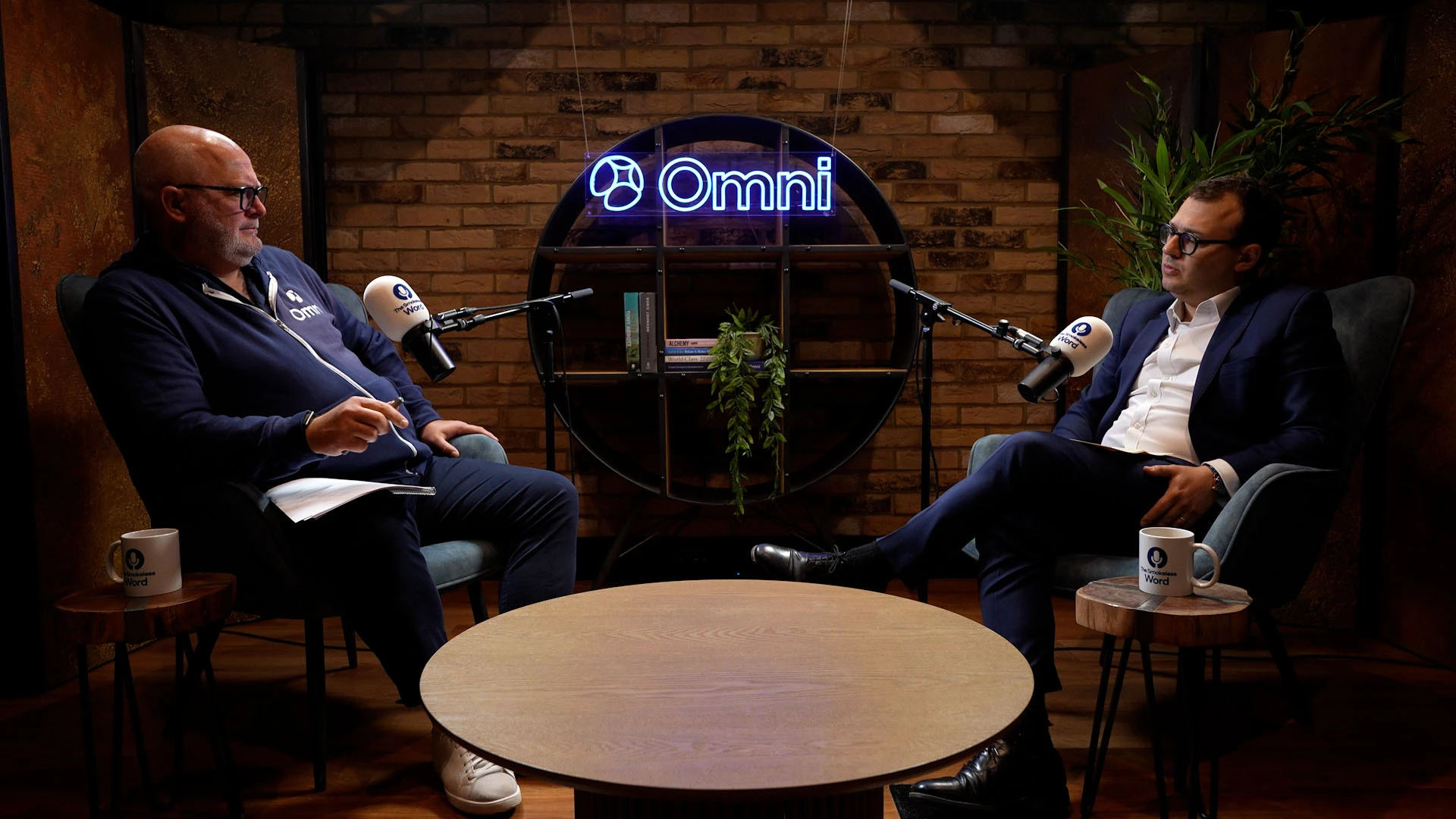
Jack joins Kingsley in The Smokeless Word studio for a wide-ranging conversation that covers far more than just politics.
From the generational smoking ban to the Conservative Party's long road back from its historic election defeat, Jack doesn't shy away from any of it. He's honest about what went wrong and clear-eyed about the scale of the challenges ahead.
Tune in for one of our most engaging and wide-ranging conversations yet.