
Episode 23: Live from the Lab - Elaine Round
Dr Elaine Round
I can really help change public health from inside the industry. 80% of American physicians believe nicotine causes cancer still. We always test the ingredients, that's what comes out of the product. You see drastic differences in what we call biomarkers of tobacco exposure.
Dr James Murphy
What makes a great scientist?
Dr Elaine Round
Curiosity, paying attention to the unexpected.
Dr James Murphy
Welcome back to The Smokeless Word - Live from the Lab. Today, I'm joined by Dr. Elaine Round, Senior Vice President of Scientific and Regulatory Affairs at RJ Reynolds. Elaine and I get into a lot today, from why great scientists pay attention to the unexpected to the rigorous standards smokeless products have to meet, and we step back, look at how far tobacco harm reduction science has genuinely come over the last decade. This podcast is intended for regulators, scientists, policymakers, and investors only. The views expressed in this podcast are the personal opinions of the speaker only. Any references to products having a reduced risk or reduced harm are based on the weight of evidence and assume no continued smoking. This material is not intended for U.S. audiences. Welcome, Elaine, to The Smokeless Word, live from the lab. What do you think of the studio?
Dr Elaine Round
Oh, I love the studio. Yeah, thank you so much for having me, James. It's really a pleasure to be here with you.
Dr James Murphy
No, it's my absolute pleasure. And you know, Elaine, it's great to see you. Good to have you in the show. So, let's get stuck right in if that's all right. So, you're a biologist undergrad by training, specialized in genetics for your PhD at the University of Washington. Did you always want to be a scientist? Why biology? And then why, why genetics?
Dr Elaine Round
I've always been interested in kind of the human body and the biology behind the human body, so whether it was a scientist or medicine, or some, some range in that field, yeah, I've always been interested in that. and I think when I was an undergrad, I worked in a fruit fly lab as my, as my work study program there. So my job was, my job was to clean the old kind of fruit fly discard, like you grow fruit flies in these old glass milk bottles. I don't know if you had those in the UK or not, but these little milk bottles, you grow fruit fly cultures in those, and they were absolutely disgusting at the end. But it was my job to clean all of those. So, so, but what I got to see while I was doing that, I was in and out of cleaning was my advisor was he would sit at the microscope and he would have all these strains of fruit flies around, you know, with different genetic strains of fruit flies, and he would pick one, pick the other, and he would cross them, and at the end, you know, the progeny would come out and he would know the answer to some question, biological question. I thought that was super cool, and I was like, oh, I want to know how to solve that puzzle, so that's what really got me into genetics specifically.
Dr James Murphy
It's great, and you know, we all got to start somewhere, haven't we? You know, the cleaning the milk bottles part, but you know, genetics is, it's such a broad field, isn't it? And you know, can you talk about where, where it's applied, what sort of industries?
Dr Elaine Round
Yeah, I mean, it's, it's certainly come a long way. There's, you know, it started all the way back with probably Gregor Mendel, the monk, in his, in his pea crossings, where he discovered chromosomes, things like that. But, but I think today things are so exciting. There, there's a technology called CRISPR that you can use to go in and specifically change individual bases of DNA that can correct mutations that have occurred that you know can have impacts to human health or or crop production. Yeah, it's I think a really amazing and really interesting field that can then move move health and public health forward.
Dr James Murphy
No, that's great. I'll come back to that later on, actually. But you know, you've done postgraduate research, you published papers, you've spoke at conferences, so I'm going to put you on the spot here in a single sentence. You know, in your mind, what makes a great scientist?
Dr Elaine Round
I think, well, it starts with curiosity. It also is, I think, paying attention to the unexpected. So many great discoveries have been made accidentally along the way, so I think paying attention to that, and then having the discipline to follow through on those findings and discoveries in a disciplined way, structured way.
Dr James Murphy
I think. I think that's a really good insight, because you know we're so evidence-based, aren't we? But you still be open-minded, because if you, if you're not open-minded, you may miss something magical.
Dr Elaine Round
Yeah, yeah, I think so. Yeah.
Dr James Murphy
And so, I want to, I want to then, sort of draw your sort of background, so you're in the University of Washington, you're a postgrad researcher, and then I want you to connect the dots for me, of then, why did you join Reynolds?
Dr Elaine Round
Yeah, well, I wish it was an easy connection of dots, but it's definitely a bit circuitous. So, so when I left the lab, so my graduate work was on these soil nematodes called Caenorhabditis elegans. So they are super cool, by the way.
Dr James Murphy
Rolls off the tongue doesn't it!
Dr Elaine Round
Yeah, not exactly, right? But there are really cool organisms because they're a millimetre long as adults. They're completely clear and the full cell lineage of them, from kind of single cell embryo to to full adult, is known, and you can see all of them under a microscope. So you can actually go in, and you can use a laser, and you can kill individual cells, and you can see what happens in the resulting organism. Anyway, I'm giving you the long version of the story, by the way, so I, but I, while I loved working on them, and, and the, the questions that I was looking into, oddly enough, were around defecation of all things, and worms, well, they like, there's periodicity to it. There's, you know, muscle contractions on all parts of the organism that make defecation happen in worms, which, so, then genetically you can kind of tease that apart by looking for mutations in each part of this pathway. So, so, anyway, there is, there's a lot of kind of neurobiology and endocrine work there, but, but all that to say, as much as I loved working on them, I was also very much loving leaving the lab as well. So, when I, when I finished graduate school, I left the lab, and I wanted to do something a little more applied, because obviously research takes a long time, as you know. So I wanted to do something different, and I, and I went into kind of health education and, and even genetics education. So I moved to North Carolina, and I worked at UNC Greensboro for a little bit, working with some high school curriculum, high school teachers, building curriculum on genetics. I worked with the Science Museum at the time, designing a traveling genetics exhibit, which was fun. And then I thought I wanted to go into genetic counselling at the time, and I was working with some genetic counsellors, and that in that job as well,. But I didn't have any clinical experience at all, so I, I started volunteering with the non-profit women's healthcare clinic in the area, and I loved being there, and I then decided that I was going to quit the other job and just focus full time there. My parents thought I was crazy. I took an entry-level position, like answering phones and scheduling patients and working out patients for providers. Like, what are you doing? How long have you been in school? Like, I just got to go with this, and so all that to say, I thought I was actually going to go to med school at that time, and was preparing to do that, but then one of the providers that I was working with there was running clinical trials out of his private practice, OB-GYN private practice in Winston-Salem, and said, "Hey, you want to join me and help run some of these trials?" And I thought, Oh, yeah, that's great, and I enjoyed it. I loved kind of the patient interaction, I loved kind of the fast pace, I loved the interacting, interacting with patients, collecting blood, you know, collecting data. But then I never got to see any results, and, and I thought, oh, okay, I really am a scientist after all. Yeah, and, and at that time, one of the other providers I was working with her husband, worked at Reynolds, and he said, "Oh, Elaine, there are all these great jobs at Reynolds. Don't, don't go to med school, check these out". There was one job posting that was there, was this beautiful combination of clinical work combined with, you know, science actually doing the science and being able to plan the studies protocols and observe the data at the end and work with kind of the group to interpret the data, and that was exactly what I wanted to do. In addition to that, the job posting was all about tobacco harm reduction, even in 2008 when I joined, and then that to me was really it. I was like, oh, this, like, I get to work on products that are really designed to really help smokers transition away from, from smoking, and it was like this beautiful, you know, combination of the perfect job for me.
Dr James Murphy
No, it's obviously great, but I sort of want to take it back just a little, just one step back, because just imagine from your parents' perspective, you know, you were a life scientist, you'd moved in, started doing all this like clinical work around public health, and then the tobacco industry, and so at a family level, were you getting any pressure from family, friends, and then how did you justify your decision to them?
Dr Elaine Round
I would say family was always very supportive. I did. I've had family members who've died of tobacco-related disease. My parents were smokers. I was the kid who would steal her parents' cigarettes and hide them to try to get them to quit, but, but they were still, they were very supportive. I mean, they believe that choice is important, and that adults have agency to make their own decisions. I, but they also understood the harm reduction side of things, and that that's what I was doing. So, I think family-wise it was great, but I will say, yeah, I got a lot of questions from former colleagues. What are you doing? Why are you doing it, and you know a lot of, a lot of education, but also you know a lot of closed ears, frankly, as well.
Dr James Murphy
And then you know, you were mentioning harm reduction there, and I'll get into that in a second, but I sort of just want to go back to this one to an earlier comment you made about you're doing genetics. You talked about CRISPR modifying plant systems as you, as you entered into Reynolds, entered into the industry. What was your, what was your kind of like ambitions in terms of what you were going to bring to advance the scientific agenda at Reynolds?
Dr Elaine Round
This is a great question, I think, first, you know, I had never researched tobacco ever. So, so initially it was just trying to kind of get my arms around the discipline, the body of research that had already been done, and really trying to understand what, what, what value I could bring. So there was that initially, and but always with that kind of that belief that I could really help change public health from inside the industry. So so that was that's been kind of the under the undercurrent of my entire career in a number of different roles.
Dr James Murphy
I think that's a really important point that you can look at. You can look at a challenge, and then you can sort of walk away from a challenge and say, you know, nothing to do with me. Or you can look at a challenge and say, I actually think I can significantly contribute to that to fix that challenge. Was that sort of, is it fair to say, was that sort of the summary of how you were thinking?
Dr Elaine Round
Well, I think so, but I also think, you know, I came in as an entry-level scientist into Reynolds, so you know, I think initially it's just like, how do I contribute to my group? How do I, how do I best, you know, how do I kind of, how do I run these projects the best that I can, and interact with my colleagues the best that I can and design the best study that I can to try to get, get the best outcomes possible. So I think it was just, it was really about being a good scientist then, and I will say that, you know, one of the one of my biggest surprises in joining the industry is just how, how talented the scientists were that I worked with then, and frankly, as I was reading the literature, and some of the tobacco control literature, what surprised me about it, I mean, you know, just coming in fresh was, you know, I was used to reading papers, I was used to scrutinizing papers, and what I found, not, not in every occasion, but, but more consistently than I anticipated, was I found research by some tobacco control researchers that the conclusions, you know, the data says one thing, and the data is pretty objective, but the conclusions weren't always aligned with the data, and, and, and frankly, sometimes went in an opposite direction, and I was, I was pretty shocked. How can people get stuff like this published? But, but, yeah, it just felt like it was, there was a bit of a double standard.
Dr James Murphy
Yeah, almost, we'll certainly go into that in a moment, in a bit more detail, but, but before we do, I want to sort of bridge now, so you know we had the early days, you started Reynolds, and now today you got this like really senior position in Reynolds in the sort of executive leadership, you're leading the scientific and regulatory affairs. What's it like leading a big team and sort of like, what does your role specifically involve?
Dr Elaine Round
So, my role is right, I lead scientific and regulatory affairs of Reynolds, and we are really the group that interfaces with FDA Center for Tobacco Products, and and we as a group, write, create, submit along with our scientific partners and life sciences are our applications for all of our products. So, so to have a new product be introduced into the market in the U.S., it has to get clearance from FDA before you can do that, so so we're kind of the interface between FDA and and the new product that Reynolds wants to put into market.
Dr James Murphy
Excellent, and you know, one of the things I've been like two decades in the industry, and there's there's somewhat of a dismissive view of our science and evidence. Could you give a bit of a flavour of like what type of science is in a PMTA? Make define what a PMTA is. Okay, sort of scientists in a PMTA, an application, and then sort of like they, how much it costs to pull it together, how long it takes to pull it together, how many people would work on a PMTA, just just to give that that feel of like the breadth and depth of it.
Dr Elaine Round
Okay, sure. Yeah, so a PMTA is a pre-market tobacco product application, and it is essentially it is the application that we would submit for any, I'll say there are a couple of different pathways that you can go through at FDA to to be able to market a new product, but if you, but the PMTA pathway is typically what we would use for things like nicotine pouches or vaping products, any products that are relatively new to the marketplace, like there, there's not, there wasn't a substantial body of those products in the market before what is kind of the preexisting date of February of 2007. So, so, but a PMTA, the requirement for being able to meet the PMTA standard is to demonstrate that your products, your new products, are appropriate for the protection of the public health, and that's a, that's a high bar. So, FDA requires, well, I say requires, there's no specific, there are requirements, I guess, at this point, there is a final rule from FDA that was published, but FDA requires that you submit kind of all the product characteristics, so very detailed information about the products themselves, the chemicals that are either emitted from the product or that that consumers would be exposed to when using the product, the manufacturing consistency of the products, and basically the proof in the pudding is really kind of demonstrating adult benefit of the product versus in it versus risk to either people who don't already use nicotine containing products or or risk to people who might use less risky tobacco nicotine containing products.
Dr James Murphy
It's a really broad body of science, and you have to deal with chemistry, you're into toxicology, you're looking at, you know, use behaviour, clinical studies, population effects. It's like, how do you manage to keep to get your head around this here, but also, how do you, how do you manage to keep abreast of the evolving science?
Dr Elaine Round
Well, the good news is that we have a lot of great scientists on the team, a lot of great regulatory experts on the team that, that all keep up with all of this. So, a, we've got really talented people who, who are doing a lot of good work on it, but it is a lot of data. It is, it's huge, and we, it's, it's multidisciplinary, and each discipline is its own kind of complicated story that contributes to the products being appropriate for the protection of public health.
Dr James Murphy
Very good, and you know, so we talked a little bit there about, you know, use, you as a sort of a scientific, you know, your expertise. I want to get a little bit more into you as a leader, and then, so, what's what's kind of like your leadership style, and how do you like to lead this, this big team of very intelligent technical scientists?
Dr Elaine Round
I'd say my personal leader leadership style is, is, is very collaborative. I do, I think it, we have so many talented people, it's really important to make sure that that that everybody's ideas are heard, and that people are able to bring kind of their thoughts and suggestions to the table, yeah. It is, it is a challenge, though. I mean, it's, it's also creating the environment to make sure people feel like they have the ability to do that, to bring their thoughts and ideas to the table. Yeah, so, so it is very collaborative, but then also, obviously, ideally kind of working with folks to make the right decisions at the right time to kind of continue to move things forward.
Dr James Murphy
Excellent, I really like, you know, you mentioned that word collaboration, and we'll come to that in a moment, because I want to go to the next level now on sort of harm reduction and walk into tobacco harm reduction, and just briefly, could you, could you explain sort of like the principle of harm reduction as a public health policy, maybe that you understand from another area.
Dr Elaine Round
Sure, so I guess in my mind harm reduction is there are things that people, adults will want to do, and I mean, I guess if we talk about smoking, in particular, obviously, their adult smoking has been something that's been happening for many, many years, and and people smoke because they enjoy, they enjoy smoking. There are numerous aspects, I think, of smoking that people enjoy. One of those is, is, is the enjoyment from nicotine, and so you know, in my mind, harm reduction is really giving them products, or obviously we want everybody to, the best thing for everybody to do is to quit smoking altogether, but for those people who are continuing to smoke, but for those people who choose to continue to use nicotine containing products, the idea would be to provide them with those products without kind of the thousands of harmful chemicals that are found in cigarette smoke. Provide them with options to do to give them alternatives that would be that would ideally be less risky for for their health. Any nicotine containing product is not risk free, and but the idea is rather than you could take a prohibitionist stance and eliminate altogether, but I think people are still going to have that desire to use those kinds of products, so let's provide legal, legal products that have been demonstrated to be kind of well made.
Dr James Murphy
No, very good, and you know, in terms of, you know, the broad public health strategy in tobacco, I think there's there's one one body of people who are sort of pro tobacco harm reduction, would like to offer these lower risk products, but there is another body who would like to see no new products. Can you talk about who that other group of stakeholders is, and maybe sort of what would be their motivations for not wanting to have tobacco harm reduction as part of a public health policy.
Dr Elaine Round
Well, I guess that would be the kind of tobacco control group, and it comes in many forms, obviously, but, but to me, those are the people who really just want to see an end to all nicotine containing products that are, that are out there. You know, it is, it is more of a prohibitionist view, and you know, on one level, I can understand how I think the general idea is just to to try to remove the harm completely from from any from any of these types of products. But I think we've seen, and like in the U.S., is a great example right now of how that prohibition doesn't play out very well. I mean, we see a huge illicit vaping market in the U.S. right now of flavoured vaping products. That that at the moment there have been no approved flavoured products beyond tobacco and menthol flavour vaping products, yet there is a huge marketplace out there. 70% estimated of the marketplace is these illicit products, yeah, 70% in the U.S. is illicit. So I think, while I understand kind of the motivations for tobacco control, just, I mean, I think it's really kind of a trying to help people. It is very, in my mind, it's a very paternalistic view of things, and it, and it often creates more problems than it solves.
Dr James Murphy
No, it's really good insight, and you know, you see across Europe, it can be one in every three products is illegal, the minute right up to Australia, where they estimate over 90% of the market is illicit, but we'll come back to that in a moment. But because you're a scientist and I have a scientist here, I'd like to go a little bit deeper on smokeless products relative to smoking, and could you give the kind of a summary of the evidence base of why you believe that smokeless products are lower risk than smoking.
Dr Elaine Round
Sure, maybe I'll start with, well, so we can, I can, we can look at it from kind of the PMTA science angle, but then can also look at it from a real world angle. Frankly, we know that I mean, you know, Sweden just being the prime example, but what we see, and obviously that's played out over many decades. It's been many decades of a traditional smokeless tobacco product called snus use, there, as I know you well know, but it results in the lowest lung cancer rates in, in all of Europe, and, and, and so you see the epidemiology playing out very, very strongly in, in Sweden, with the lower the smoking rate, the lower the smoking-related disease rates, obviously. So that's really kind of the real world evidence that I think we're all aiming for, and I think Sweden also has taxation policies that, that, that have raised taxes on cigarettes and lowered taxes on, you know, snus and nicotine pouch products within the last couple of years, which I think is an additional fantastic incentive. But um, but I think you know what we know from the chemistry, we do chemistry on the emissions, you know, kind of what comes out. Well, first of all, we always test the ingredients that go into the products and the materials, and we steward those very carefully, make sure those are appropriate. Then you test what comes out of the product. You test the chemistry on the vaping aerosol, or kind of on the extract, the chemicals extracted from nicotine pouches, for example, to show that there show the difference, the huge difference that there is between those and cigarette smokes, cigarette smoking, or cigarette smoke. And then, and then on the case, in the case of NRTs, or of nicotine pouches, you know, if you look at the chemistry of nicotine, what comes out of nicotine pouches, then if you look at. You can go this step further, you can do the, you know, the cell-based assays, and you can show that things like the kind of mutation rates that are caused by what comes out of vaping products and nicotine pouches versus cigarettes is drastically different, and in addition to that, the genotoxicity, so you know, the toxicity to the chromosomes themselves and the cytotoxicity, so the toxicity to the cells themselves, all you know, drastically different. Take it the next step further, you know, what does it look like when, when humans switch to these? You can put people in a, in a clinic for five days, bring in adults who smoke, switch them to these products, and you see drastic differences in what we call biomarkers of tobacco exposure, so just you know the levels of them, you know, significantly different after five days after switching to these vaping products, nicotine pouch products, for example. And then of course you can look in the population, you can look at risk, how people perceive risk of the products, you can look at, ideally look at switching rates, and ideally do that in the real world if the products are available, but you can also show in randomized control trials that yes, people will switch to these products, and, and, and together that that all shows kind of ideally the adult benefit of the products.
Dr James Murphy
Very good, and you know, you're almost two decades in the industry as a scientist. You know, what do you think have been the main couple of the big advances that have happened over, over the last, over the last decade that has sort of moved the science forward?
Dr Elaine Round
Well, let me just say it starts with the products, and I think you know when I joined Reynolds, I was working on dissolvable tobacco products, which are these kind of little brown, like pill, the pill-looking things, and like little orbs, and we had little strips and sticks that were ideally giving, providing some sort of enjoyment to adults who wanted to use those. And snus, we, so there was a U.S. version of snus that we were market, is still market as far as Camel snus is concerned. So that's what I was working on, though, when I started, so you know, like e-cigarettes, I think they were, they had been invented by that point, but they weren't kind of widely available, so I think that was just a huge step forward, and being able to apply the science that we had been doing on other products to those, I think was was was key for sure. And then nicotine pouches obviously were not even a concept then either, but so I think I think to me one of the most very important things in tobacco harm reduction is making sure that we have the right products available that are things that consumers are really wanting to use.
Dr James Murphy
Very good, and so I want to, I want to go back to you were talking there about harm reduction as policy and Sweden, and you know, so if tobacco harm reduction is the theory, you know, Sweden proves the theory because you know smokers have switched to lower risk products, and then that played out as a positive, you know, beneficial public health impact. In terms of trying to get balance, are there any gaps that exist in tobacco harm reduction?
Dr Elaine Round
I mean, ideally we have the long-term data on all of these products, like we do for snus, and like we have with the epidemiology for snus in Sweden. You know what, nicotine or vaping products have now been out for, I don't know, fifteen, yeah, almost fifteen years for sure, so yeah, we're starting to get there. So I think I think it'll be the more time that we have to show the, there really is less risk, less and less, less impact on people's health, the better. But to me, kind of the biggest gaps are really kind of misinformation that is out there about nicotine itself. You know, there are 80% of American physicians, 80% that that believe nicotine causes cancer still, and and I've seen similar numbers elsewhere in the world as well. So, yeah, how do we, how do we kind of make sure that the healthcare providers have the right information about, you know, the harms of nicotine, which is again, is not risk-free, but relative to cigarette smoke. Where you know what we know is that nicotine itself doesn't cause cancer, but the, a lot, you know, they're in the 7000 chemicals in cigarette smoke, there are definitely chemicals in there that do cause cancer, and, and that ideally you know what we're trying to do is is provide product solutions that have as few of those as possible.
Dr James Murphy
And there's for me there's two very good points in there, one about the long term data, and then the other about nicotine, and you know for years it was nicotine in cigarettes, so nicotine is conflated with the risks of smoking. Is it possible to reframe nicotine in the world of smokeless products? And if you had the opportunity, how would you like to communicate about nicotine to regulators and policy makers?
Dr Elaine Round
Well, the good news is that I think, I know the regulator that I work with certainly understands the risk continuum of tobacco products. They understand that nicotine does not cause cancer, so, so, and I think there are a lot of regulators around the world that do. I think the UK is a great example of, of, of a reg, or at least NHS has great information on their website, so I think that's, I think that's very hopeful, and you know there is already progress for sure. I mean, we see some folks who have been on the tobacco control side kind of shifting more towards the middle and being open to to harm reduction as a as a way forward, and then the people who used to be on kind of the fence now switching over, and there I think the good news is that that's growing more and more people are understanding, but I think really kind of making headway into kind of healthcare providers that have so many different things that they're trying to pay attention to, they have so many concerns, you know working with our patients, and this is one of those many, many, so how to really escalate that and elevate that to their attention, and also provide them with the right information in a way that they're going to be open to that. I think we're getting there. I just, I just, I think we're kind of on the cusp of that, and that's that's where I really think the biggest impact will be,
Dr James Murphy
When science at its best, it's pure, it's objective. How can we improve our credibility?
Dr Elaine Round
I think, I mean, it's just continuing to do what we're doing and do what we're saying we're doing, you know, I, I think we're committed to the science. We're committed to doing the good science on our products. We're committed to doing, you know, having the quality systems in place, having the validation of our methods in place, just really ticking every single box, make sure that our results are objective, that we're designing the studies and statistically powered, correct way, we're looking at the right endpoints. I mean, I think you're publishing our data, making sure that others have the opportunity to weigh in, presenting at conferences, engaging with our with our colleagues outside of industry. I just, you know, we just can't stop doing that. We have to keep, we have to keep doing that, and, and kind of living up to everything that we are saying that we're doing
Dr James Murphy
Excellent. And you know, so coming, coming to the end of my last couple of questions here, that's all right. And you talked about the word collaboration, and you know, that's in this bipartisan debate of tobacco harm reduction, tobacco control. You know, if you had the opportunity to collaborate, any insights into how you think you know we could make that happen?
Dr Elaine Round
I think listening is really the first key step. I think it's probably so important to try to put our, put each other, put ourselves in each other's shoes, and try to understand the other point of view, and where people are coming from. I think we have the same goals, frankly. I mean, we all want to improve public health. It's, it's, but I do think, I think listening, and then responding. On being responsive to that, listening is key.
Dr James Murphy
It's great insight, and you know, we've talked about your beginning, your genetics, your work for your PhD, joining the industry, leading this great team of super talented scientists, you know, building these wonderful sort of scientific dossiers, you know, and I'm always like so delighted to see you out presenting and publishing your science, so it's been really great speaking to you. But I usually finish off with five quick fire questions, but before I do that, I've been asking you a lot of questions, so I want to give you the opportunity if you have any questions for me.
Dr Elaine Round
Oh, yeah, that's great. Thank you. Thank you. Well, I so appreciate being invited to talk with you on your new podcast. I just love to hear your aspirations for what you're hoping to achieve?
Dr James Murphy
Yeah, no, no, it's.. it's.. it's a great question, and I think you know one of, one of, one of the words we talk about, you know, in BAT and Reynolds, as well as about transformation, and you know, we've been working really hard to transform our portfolio to smokeless products, you know, transform our science to make sure the evidence base is great. I think, I think it's really important as well, and you were talking about communication and listening, there is, I think, there's a variety of different channels, sorry, of how you, you meet people today, you know, and it's all, we'll always go to conferences, we'll always go to scientific meetings, but I think there's a new world where people want to, you know, hear about harm reduction and smokeless products, and I think this is a really new and evolving space for us, and I love transformation. It's, it's, it can be a bit nerve-wracking, a bit stressful sometimes, but I think it's just such a wonderful opportunity for us, you know, to get our message out in a different way. So, I'm very excited for the podcast, and just so delighted that you came and joined me today.
Dr Elaine Round
Thanks.
Dr James Murphy
So, before I finish off, I have these five quick questions. Okay, so your hero?
Dr Elaine Round
My hero. Oh my gosh, I feel like there are heroes all around me every day, so I don't necessarily have one, but I mean, I learned I have admiration for my colleague, like you know, colleagues in a meeting, like little, little, little moments of hero throughout the day.
Dr James Murphy
I think it's great, because, because heroism can be - it doesn't have to be a big, massive thing. Sometimes it can be like quite a small moment, but winning that moment can be super important. A surprising fact that people may not know about you?
Dr Elaine Round
I was an avid ultimate frisbee player when I was in graduate school. Not necessarily good, but
Dr James Murphy
Is it the one where you're running around a football pitch to try to catch it? It's like a lot of fun. You work so hard, you're the hardest working woman I know. What's your favourite thing to do on a day off? Do you have a day off?
Dr Elaine Round
Be outside, frankly. I mean, I love hiking, I love being in the mountains, so yeah, that kind of thing.
Dr James Murphy
Circuit training or yoga? I think I might know the answer to this.
Dr Elaine Round
Both. Yeah, both,
Dr James Murphy
And then just to finish off your favourite book.
Dr Elaine Round
My favourite book. Oh, goodness, that's a tough one, really. Actually, you know, so I guess many books have spoken to me over the years, but you know, sometimes like the good book is either the one that just like you're so sad to put down, or you know, one that kind of you come back to over and over again. For whatever reason, Anna Karenina was one that I, was so hard, it was hard for me to put down, but, but, but I think one that I come to over and over, is actually, is more connected with yoga, and it is Light on Life, which is it's just, well, I do, I am like trying to do more push-ups and do a lot more resistance training these days, which I think I may have shared with you. The kind of yoga, kind of the bringing of kind of stillness and presence is important to me as well, so in that sense that that book helps me do that.
Dr James Murphy
Wonderful, Elaine, it's been such a pleasure having you in the show today. So it is a huge thanks to you, and thank you very much.
Dr Elaine Round
Thank you so much, James. Appreciate you having me.
Dr James Murphy
Thank you.
Dr Elaine Round
It's been fun. Bye.
These transcripts are AI-generated and may contain errors or inaccuracies and should not be relied upon.
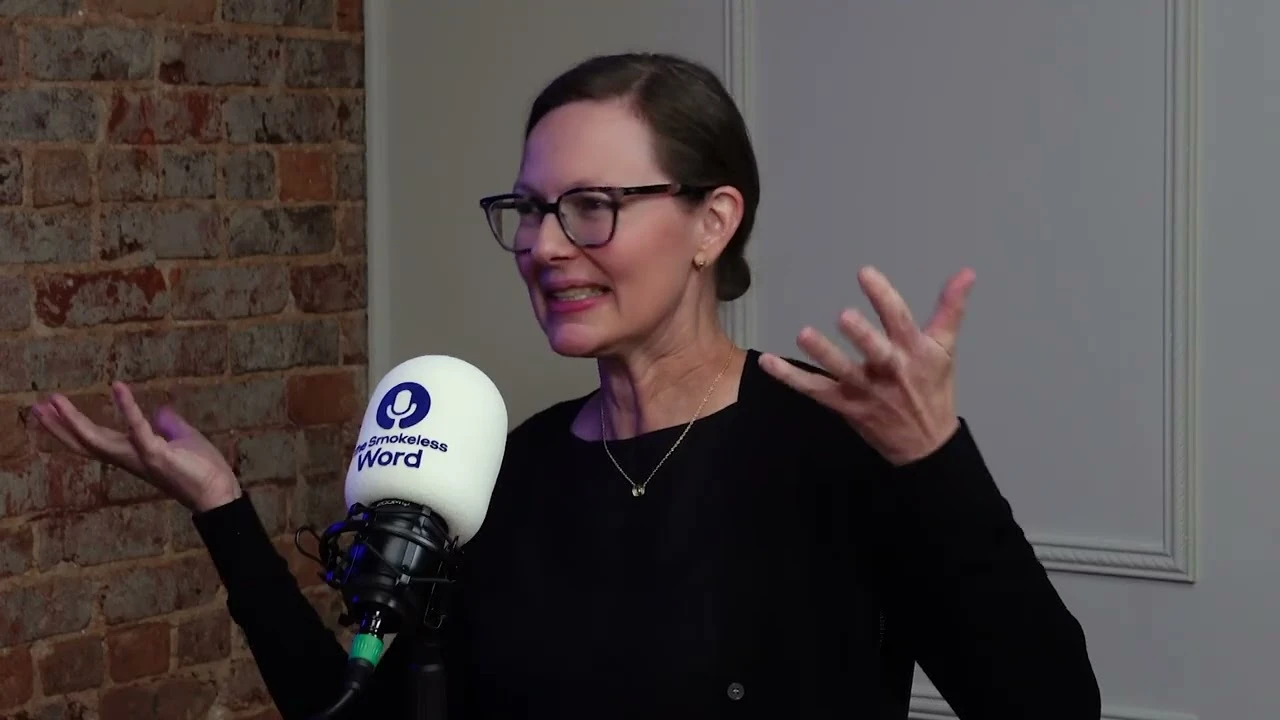
Elaine Round, Senior Vice President of Scientific and Regulatory Affairs at R.J. Reynolds, on her journey into science, tobacco harm reduction and the evidence driving A Smokeless World.
A career in science rarely follows a straight line. For Elaine, it began with genetics research and a fascination with solving biological puzzles, and led to tackling one of public health’s biggest challenges from inside the industry.
In this episode, Elaine joins Dr James Murphy, BAT’s Director of Science and Research, to discuss what it takes to be a great scientist, the misperceptions surrounding nicotine and the science behind tobacco harm reduction. Join James and Elaine for a conversation on the science at the heart of BAT’s transformation.