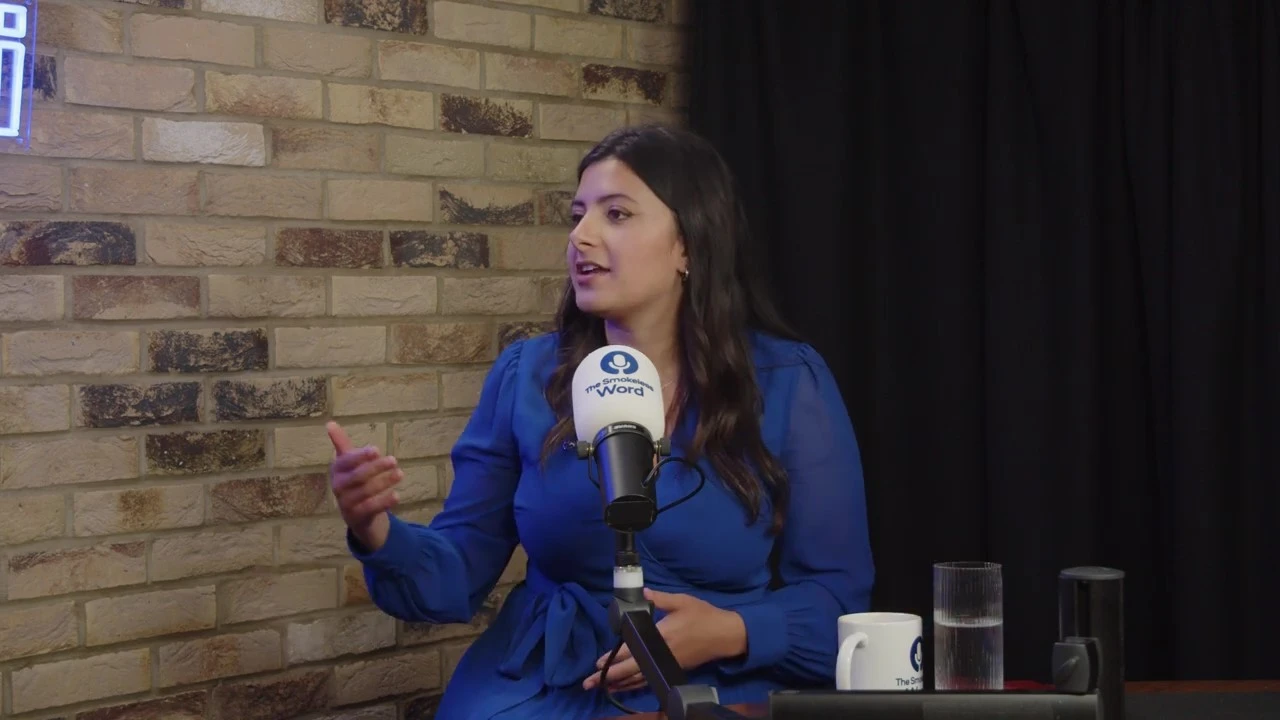

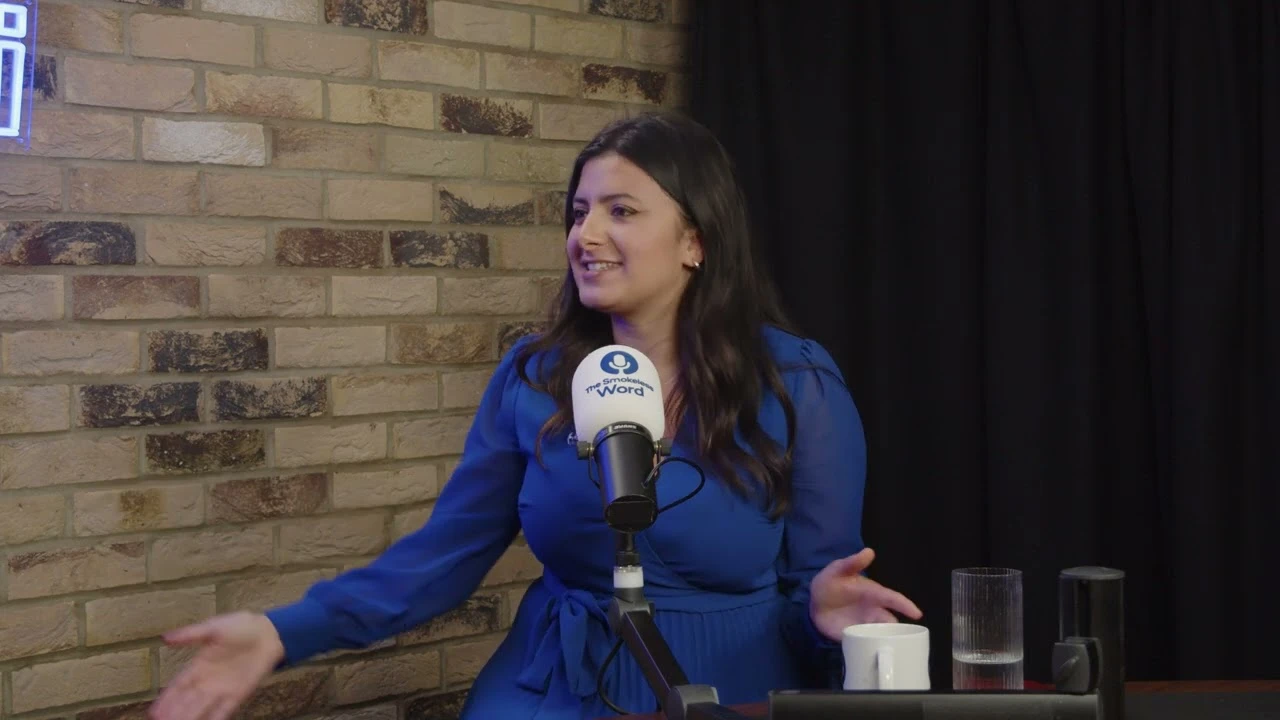
Episode 3: Reem Ibrahim
Kingsley Wheaton
This podcast is intended for regulators, scientists, policymakers, public health, media and investors. Exclusively. The views expressed in this podcast are the personal opinions of the speaker. Only any references to having reduced risk or reduced harm are based on the weight of the evidence and assume no continued smoking. This material is not intended for us audiences. Hello everyone, and welcome to the latest edition of the smokeless word Podcast. I'm delighted to be joined today by Reem Ibrahim in the studio. Reem is Head of Communications at the Institute of Economic Affairs, and she's with me today, and we're going to have a chat about all sorts of things. Reem, welcome. Hello.
Reem Ibrahim
Kingsley, thank you for having me on. How are you doing? Very, very good. It's very lovely weather outside. I'm very happy.
Kingsley Wheaton
Can I take you back a little bit? I think, let's come back to the LSE days in a moment. I think at 16, you started tiktoking. I did free market, you know, liberal stuff. Unusual to take to Tiktok for that sort of thing, you know. How did that go? How did that come about? Talk to me a bit about that. Yes.
Reem Ibrahim
So when I was at school and secondary school, I was at a state comprehensive in the suburb of London, and it was one of those areas that, you know, really were taken up by. I mean, I suppose all young people were by the Corbyn era. You know, this was 22 now, so this was sort of 2016 2017 Corbyn was leader of the Labor Party and incredibly popular amongst the grassroots. This is, you know, really, where momentum was incredibly popular, and I found myself sort of getting engaged and involved. And I thought, You know what, I quite like this Jeremy Corbyn. You know this? Jeremy Corbyn, sounds great. You know, he made one speech about Palestine. I thought, You know what, this guy's absolutely brilliant. And then I in my A levels, sort of studying politics and a bit of economics and history, and really understanding the woes of the Soviet Union and understanding how pernicious a authoritarian regime really can be. And I thought, You know what? Maybe this market stuff isn't too bad. And so I started reading and researching a lot more about it, and that's when I started my Tiktok account. So I realized that all of my peers that were interested in politics were either interested in an incredibly shallow perspective, and that's what I was when I first became interested, or they were just not interested at all. They thought politics didn't affect them, that it wasn't of interest to them, but primarily I was interested in the relationship between the government and the individual. You know, what is it that you can do every day? You can make different decisions every day, and those decisions aren't being made by essential authority. They're being made by you. But there are other decisions that are made by essential authority and are made on your behalf, and you have no say in those perspectives, especially if you don't vote, you have absolutely no say. So I really wanted, it was sort of driven by a desire for my friends to become more interested in politics and at least have an understanding of how much it affected them. I sort of felt, in some ways, a bit of a social justice warrior, you know, kind of, oh, I'm 1617, but I can make a few videos for fun, and they all went really, really viral on Tiktok. You know, I had one that got 4 million views, a couple million, 4 million, a couple of others that got, you know, a couple 100,000 views. And a lot of them, you know, these are pretty young people that were commenting. A lot of it was hate, but about 20% of it was, I've never heard somebody espouse that perspective. And when I first heard the word libertarian, I was in my first year at university, and I felt as though it was sort of a come to Jesus moment, because I had discovered a word that absolutely accurately described what I believed. And I started reading more libertarian literature, especially with, you know, the Austrian School of Economics, people like Frederick Hayek really understanding the fact that the government can never really understand exactly why individuals make different decisions, and therefore the government can never have the knowledge to centrally plan. And so from a moral perspective, I began to believe, well, individuals should absolutely have the freedom to choose to do what they want with their own lives and their own bodies, and fundamentally choose their own path towards freedom and flourishing. But also the outcomes of that are absolutely obvious. I mean, you look at comparisons between different governments, you look at the way in which the Soviet Union harmed so many people. I mean, literally millions of people died at the hands of those regimes, and yet I saw my peers at university glorifying those regimes. And so what I really wanted to do at that point was tackle that, and I realized I created a bit of a platform by that point, very small, only a couple 1000 followers, but the views were there. And in the UK, I realized. There were actually a lot of people, young people my age and younger, some teenagers, that were really understanding a lot of these perspectives. And for the first time in their lives, hearing an alternative to the bureaucratic, large state. They're hearing an alternative to the solution to all of your problems is the government, the government should be doing more. They're, for the first time hearing an alternative to that. And I was glad to somehow have had this fall on my lap and that be able to be me.
Kingsley Wheaton
Let me just quickly go back to your LSE days, you know, not necessarily known as a hotbed for perhaps, how you think, you know, how was that? How was that for you?
Reem Ibrahim
Yes, well, when I started making Tiktok videos, and, you know, the first one that went viral, or sort of particularly viral, 4 million view few. One was when I was in my second year of university, and I remember I had somebody come up to me and say, I really hate you, and just sort of walk off, okay, fair enough, you know. But one thing about about me is that I've always been, you know, quite thick skinned. Probably something to do with my childhood in which you're able to kind of be, you know, my family Moroccan, right? My mum's like, they're very, very strong people that don't care about what other people think. And I think that that principle was instilled in me. And so at university, you know, we hear people talk about the free speech crisis at universities, people being canceled, left, right and center. Really, it's about being principled in what you say, you know, believing what you say. If everything I say, I believe, I'm more than happy to back it up with information, with evidence and with facts and with an emotional narrative that really does prove these ideas. Because I believe this right? I believe that the ideas that I espouse will make the world a better place. And if you believe that wholeheartedly, I believe with every fire break exactly, you might as well go for it, and all of the hate and the distrust and the dislike is water for dogs back of a duck's back, because I don't care what they think. I know what I believe, and I think I've got the evidence and the arguments to prove
Kingsley Wheaton
it very good. Okay, let's turn to tobacco harm reduction. Let's turn to the Omni we put that out last year, forward thinking for a smokeless world. Let's think about that smokeless world. We've got the tobacco and vapes bill. It's going to do things like usher in a generational sales ban. Why is it so difficult to get policy makers to implement what I might call sensible or smart regulation?
Reem Ibrahim
It's really interesting. The UK used to be one of the best countries in the world for tobacco harm reduction. You know, the fact that vaping was so readily available, it was relatively cheap in comparison to to tobacco products, and the government embraced that. And really it's about those the products of combustion. You know, the products of combustion are what are incredibly harmful to the body. It's basically when you sit, when you let when you lit a cigarette on fire, when you lit, when you put on fire tobacco products. And really what this is is talking about whether or not we want to live in a nicotine free world, and that's what a lot of policymakers seem to want, is just looking at the evidence, really, that the UK have shifted, the only country in Europe that actually counts as smoke free, Sweden, they've got a smoking rate of less than 5% they've not achieved that by banning products, by taxing them to the oblivion. They've achieved it by allowing adults to choose up until very recently, the UK understood this, and it seemed to me a political narrative that stopped that one thing that I'm particularly worried about in the tobacco and vapes bill, other than the generational tobacco ban, which I think is a liberal but the fact that ministers will have so much power to regulate the advertisement and packaging, there is so much misinformation out there, and by doing this, the government would then completely rule out The idea that a lot of these companies would even be able to advertise those products.
Kingsley Wheaton
I was in Europe recently. I was in Brussels. You know, the EU's got a smoke free ban by 2040 I think the current smoking rate is 24% it's dropped by 1% in the last decade. They're not going to get there. So my argument was, how do you create the regulatory conditions? And what I find difficult, and I think we find difficult, I think, as a responsible player, is, I think we would understand how to frame that in a really sensible way, to drive that, and yet we're excluded, you know? So there's again, we get back into words like prohibition, exclusion, you know what? Why is why our industry voice is not heard? And how could we, how can we make our industry voice better heard, beyond things like the Omni
Reem Ibrahim
it's so interesting. Actually, the IEA published a paper called not invented here by my colleague, Dr Christopher Snowden, and it kind of gets into this. Why is it that these solutions to these problems are being ignored and in many ways, hated by activists in a green energy. Why is it that, you know, the Green Party and extinction rebellion are all anti nuclear? Why is it that anti obesity campaigners are all anti ozempic And you know, GLP one weight loss jobs, even though it's clearly a fantastic solution to the problem, why is it that loads of you know, how. Housing advocates, or low cost housing advocates, are against housing deregulation and house building. You know, they're against the very solution. It's because it's a solution that wasn't invented here. It wasn't a solution they come up came up with. It was a solution that often came from the industry, purely because they are created by or often created by tobacco industry players. They are disliked. And I think that we really have to take away that emotional argument just looking at the evidence. And fundamentally, these people, these activists, are playing with people's lives. And I really think we need to discuss that a lot more.
Kingsley Wheaton
Well, there was a study, an external study done that, if, I think it said that if Europe, I don't know if UK, was in it, from a sort of geographical point of view, could achieve the smoking rates of Sweden that would save three and a half million lives in the next decade. You know that that feel, and it seems to me, just to sort of wrap it up before a quick bit of quick fire that going back to where we started, that somehow, you know, innovation, liberty, technology, consumer choice, does eventually solve these problems, and rather than intervening, maybe, you know, if tobacco harm reduction could be embraced, actually standing back. I think that's what the Nudge Unit did, yeah, in the first place, studying what Rory was telling me in one of the previous episodes. But the reason
Reem Ibrahim
for it, I would just give an answer to that, is it's rooted in public choice theory. Politicians have an incentive to be seen to be doing good things, and regulation is the perfect way to do that. Doesn't really matter what the outcomes are. If mums net are happy that, you know, the government are banning vapes and restricting and regulating and taxing all of these products they deem as sinful, they look great. You know, Rishi Sunak has a legacy as the prime minister that introduced the legislation that would ban smoking, despite the fact that the black market is opening up, despite the fact that it may not have a real impact on any of those particular individuals, despite the fact that, you know, countries like Australia have had literally fire bombs. People have died over the war, over vapes. Despite all of this, the narrative is that Rishi Sunak is the prime minister that banned all of these things, and a Tory Prime Minister and a Tory Prime Minister, and so he's able to look great from it. That the reason for the answer to your question, why is this even happening? Why are they not following the evidence? It's because they can shift the narrative and make themselves look good, yeah.
Kingsley Wheaton
And of course, that's before we even get on to enforcement. Never mind regulation, you know, which is probably a topic, if you if you'd come on again, quick fire round, is there a belief you've changed your mind on in the last year or two,
Reem Ibrahim
the royal family?
Kingsley Wheaton
Really?
Reem Ibrahim
I love the royal family. Love the royal I sort of instinctively, as you know, when I sort of started getting into libertarianism, was like, no, sorry, these aren't very quick fire answers, but, but I have changed my mind, and I am. I do love the royal family.
Kingsley Wheaton
Okay, very good. And one thing you think people should do more of every day in their daily lives,
Reem Ibrahim
tweet opinions, yeah, well,
Kingsley Wheaton
it's funny because I call it social and new media. You just call it media, right? Yeah. We have to give these oldies. Have to give this label to the new stuff, you know, when it just is the stuff you know. Okay, that was one of them. Okay, here's David Cameron or Margaret Thatcher. Margaret Thatcher, certainly cornflakes or rice krispies, something else wee to mix. Do your cereal really? Eat breakfast? All right, okay, no breakfast coffee, that's very good. And if you could give me one piece of advice going forward, give BAT one piece of advice. What would
Reem Ibrahim
Margaret Thatcher, it be? Give BAT Okay, well, Kingsley, yourself, continue speaking. I think you're an absolutely brilliant communicator. Continue opening your mouth. That's great. You're a great advocate of tobacco harm reduction. But as a whole, I think talking about freedom is really important good. I would say, Yeah, focusing on liberty and JS mill
Kingsley Wheaton
and JS mill. Any questions for me? Quick, quick fire and response from me.
Reem Ibrahim
Well, you obviously have worked in BAT for a very, very long time. I'm not calling you old, but you have worked there a very long time. What would you do if you know when you when you or if you ever leave BAT? What's your alternative career path.
Kingsley Wheaton
It's a great question. I think the more I think about this, and I'm not, you know, I'm not planning on leaving anytime soon, and I hope, you know, bat thinks the same. I'm certainly persuaded by purpose, and I love working with people, so I think it might well be a portfolio blending. You know, I'd love to be advisory in some businesses. I could see myself working for a charity, you know, for not for profit, possibly a governor at a school, yeah? So sort of mixed portfolio of things that have purpose and people at their center.
Reem Ibrahim
I love that. Can I ask you a follow up question? Yeah? Please do, what's your favorite drink?
Kingsley Wheaton
Red wine. Probably red wine, probably red wine or a gin and tonic in the summer. Probably tells you a lot about a person. Reem, thank you so much. Thanks for joining me. Thank you, everybody. That's the latest episode of the smokeless word. Delighted to be joined by Reem Ibrahim, and I look forward to seeing you at the next episode. Please review the evidence and join our Omni conversation. Thank you very much.
These transcripts are AI-generated and may contain errors or inaccuracies and should not be relied upon.
In the third episode of The Smokeless Word, we explore a range of topics, from public health policy and harm reduction to political agendas, with Reem Ibrahim, Communications Officer at the Institute of Economic Affairs (IEA). Reem is a familiar face on our TV screens where she eloquently debates societal issues that impact us all. The episode examines smart regulation, freedom of choice, and why policy should be driven by evidence.
This episode is a must-listen for anyone in public health or policymaking. Join Kingsley and Reem for a lively and frank conversation that challenges traditional political orthodoxies.
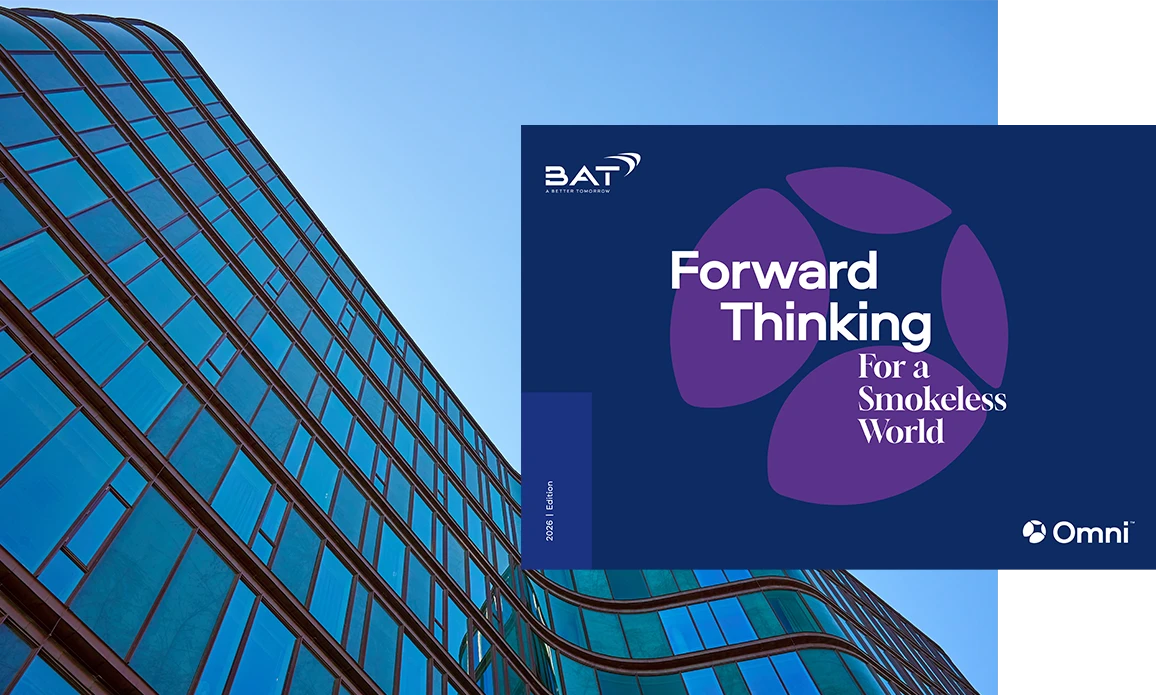
Exclusive access to the Omni™ Newsletter
Join the conversation shaping A Better Tomorrow™. Sign up to receive exclusive access to the Omni™ Newsletter and future Omni™ updates.
Signing up to the Omni™ Newsletter does not constitute consent to receive marketing communications.