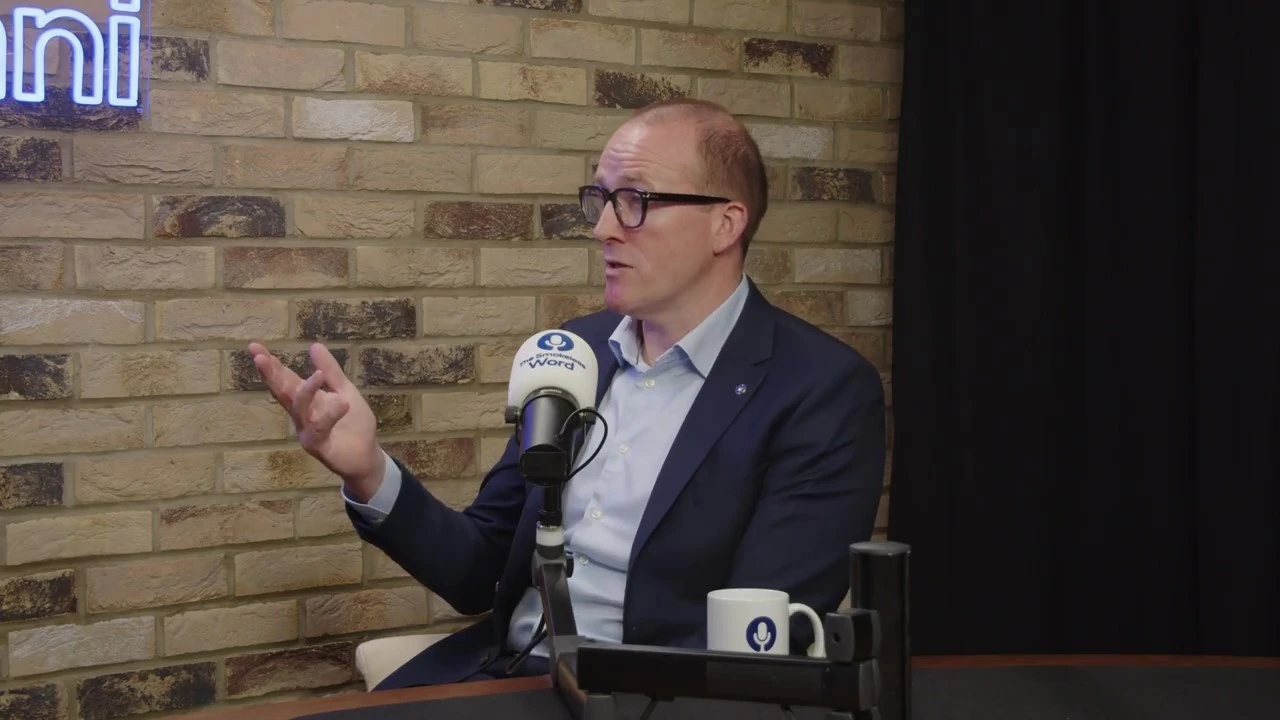

Episode 4: Dr. James Murphy
Kingsley Wheaton
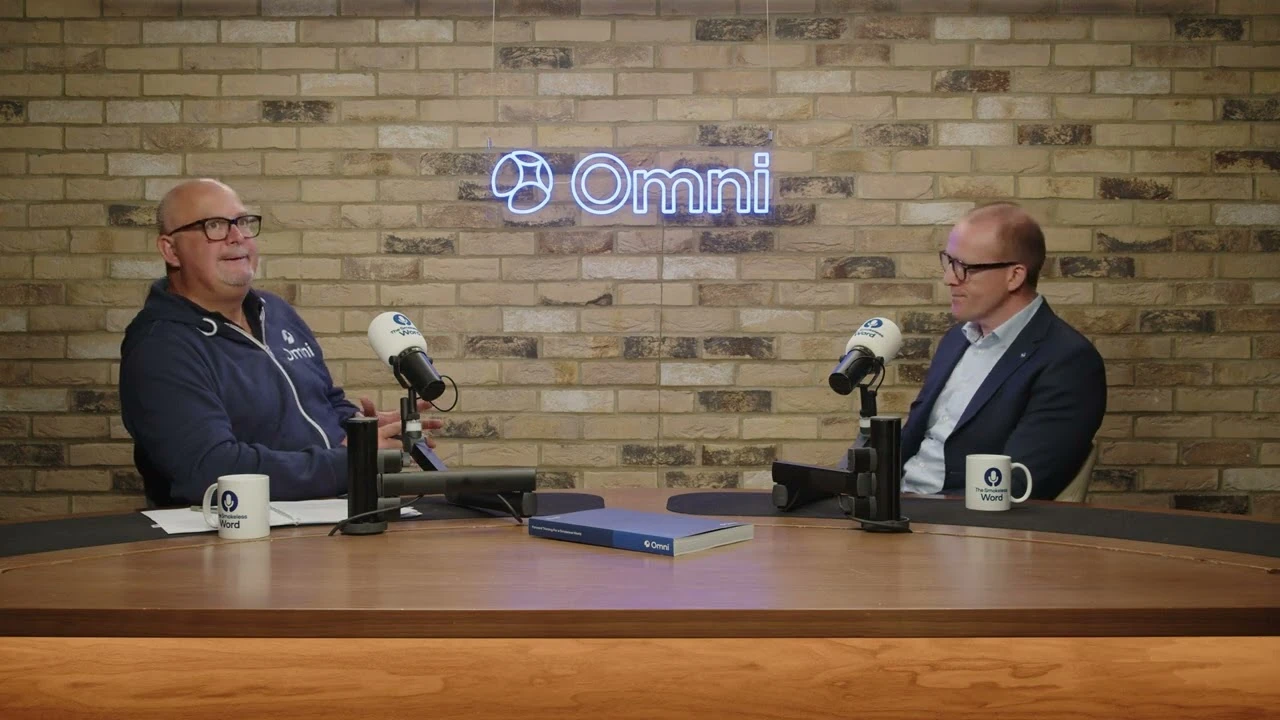
This podcast is intended for regulators, scientists, policy makers and investors. Only the views expressed in this podcast are the personal opinions of the speaker. Only any references to products having a reduced risk or reduced harm are based on the weight of evidence and assume no continued smoking. This material is not intended for us audiences. Welcome to the latest episode of the smokeless word. Today I'm joined by Dr James Murphy, bats, Director of Science and Research, James and I will talk about his career in science. Bats, eight decades of scientific research. We'll talk about the Omni and we'll talk about our mission to build a smokeless world. James, a massive Welcome to the smokeless world studio. What do you think? What do you think of this?
Dr James Murphy
It's, it's obviously amazing. It's, it's wonderful to be here. Kingsley, and if I reflect back 20 years ago that I'd be sitting in a podcast studio with you talking about smokeless products, I would never have believed it. So it's just so wonderful to be here to have a conversation with you today. Well, we
Kingsley Wheaton
probably didn't know about podcasts 20 years ago, so James, let me. Let me take you back to that that day you know that you joined bat must have been a big decision. Just talk me through what went through your mind, you know, why did you choose to join bat?
Dr James Murphy
Yeah, I arrived at a research and development center in Southampton for for an interview, and as I walked into the reception, behind the reception, there was a sign that said, we aspire to be the first company to produce a tobacco product that would, over time, be recognized by public health as reduced risk.
Kingsley Wheaton
That sort of inspired you. That was purposeful
Dr James Murphy
for you, absolutely. I mean, it must be one of the most profound human challenges to work on. So that was the moment where I thought, I want to be part of that journey.
Kingsley Wheaton
And you know, you were reading the sign was that the day you started, or the day you were interviewed, the day I was interviewed, yeah, and how long did you have to wait? I mean, were you sitting there on tenterhooks to see whether you got in or not? Yeah.
Dr James Murphy
Well, I heard quite quickly about it, about a week after, and that was obviously bringing me back from Japan to Europe as well, which I was really interested about.
Kingsley Wheaton
And what was your first job? What was your What was your job title in that first job? Well, actually
Dr James Murphy
joined as a graduate management trainee in research and development.
Kingsley Wheaton
Okay, yeah, that's right, yeah, not making the coffee. No, a first degree in, in Belfast, a doctorate in Edinburgh. Yeah, I'd love to, love to hear more about why Edinburgh and then a postdoc in in Japan. I mean, just, just tell me a little bit about those, those three experiences.
Dr James Murphy
Yeah, so Well, I did my first degree in the Queen's University in Belfast, so chemistry. And I was, I was always so interested in traveling, and I got an opportunity to work in a company, BASF, they were doing printing inks and formulations. So I went to France, in Clermont, and worked as a formulation chemist, you know, working on printing inks for a year. And then I got another opportunity to go up to the Netherlands to work for action Nobel, again, in the printing inks industry. And around that time, I'd been speaking to a lot of the people, I was sort of saying, Well, how do you climb the corporate ladder in the world of science? And they were saying, Well, you really need to get postgraduate education. And you know, Edinburgh was a city I'd always loved, been to quite a few rugby matches there, so I always enjoyed the city. And there's a fabulous chemistry school there. Stormy is one of the top five probably in the UK. Got opportunity to PhD there, and I spent sort of four wonderful years in Edinburgh. Wow.
Kingsley Wheaton
And then from, you know, okay, Belfast to Edinburgh. That's one thing. Edinburgh to Japan, that's a big
Dr James Murphy
step, yeah. So again, there's, I've always had, like, a traveling bug, I think always wanted really push myself. And there was, there was a researcher in Japan, Professor kotohiro Nomura. He had done his postdoc at MIT in a Nobel Prize winning laboratory, and I wrote to him, and I said to him, you know, I'd love to come work with you for a year, we got some funding from the Japanese society of promotional sciences. And my wife and I took two suitcases and we got in a plane and we went to Japan.
Kingsley Wheaton
Fast forward, what, probably eight or 10 years later, I know because we were involved together. You're heavily involved in, you know, trying to make a safer combustible cigarette, yeah, maybe just talk a bit about that and why that kind of came to an end and gave way to tobacco harm reduction and smokeless products.
Dr James Murphy
Yeah, this was an absolute profound moment for the company. The company had been researching. On a variety of technologies to produce this prototype safer cigarette for four decades. And this was going to be the moment we were going to test it. We put it through the lab studies, it was looking good. We put it through the early clinical studies, it was looking good. And then the last stage was to look at disease markers. Okay, we didn't see the change.
Kingsley Wheaton
And the conclusion was that if you're going to combust tobacco, you're not going to combustion. That's the problem, absolutely. And I think you've said before, one of the most complicated chemical reactions known, or
Dr James Murphy
something, yeah, so when a smoker takes a cigarette and lights it, they create smoke, which is the largest chemical reaction known to man.
Kingsley Wheaton
How many? How many chemicals are created, 7500
Dr James Murphy
chemicals, of which about 150
Kingsley Wheaton
are toxic. In a heated tobacco product, probably around about 300 to 500 in a vapor product, probably around 50 to 100 Okay, so it's coming down quite dramatically. And then in a nicotine pouch, in an oral nicotine pouch
Dr James Murphy
it's in, could be from the single digits into the teens,
Kingsley Wheaton
okay, so in a way, that was a that was a transition point where we're searching for a reduced harm combustible cigarette product kind of gave way, and then we started our smokeless product journey.
Dr James Murphy
That was the moment, however difficult it was having disappointed 50,000 Bat employees that the safer cigarette wouldn't work. But that was the moment that then allowed the company to switch into
Kingsley Wheaton
this journey, and today we have 18% if I'm not wrong, of smokeless revenues there, they're about 17 and a half, 18% talk about the, you know, as we were trying to find, you know, reduced harm products, the journey we were on, you know, before smokeless products, and trying to, if you want to put it simply, you know, the search for a safer cigarette. Now, how do we approach that? And what issues did we we? Did we face?
Dr James Murphy
Yeah, it's, it's, it's really important to reflect on on this moment, because they were such formative times for us. You know, you may not know us here, but, but, but we're actually in our eighth decade of research and development in bat, next year in 2026 and back then, when we were trying to make a, you know, a safer cigarette, it required a couple of things. One was a couple of novel technologies, filtration technologies, blend technologies. It required the best in class of product development to assemble everything into a product. And then we actually had to go out and then assess the product and what is sort of mainstream and normal for us today, running toxicology studies, running clinical studies, it was a big thing back in the early 2000s you know, we were only doing our first clinical studies. So those three things had to come together. We built the product. We could see on the laboratory testing that some of the toxicants, which are the disease drivers, reduced, toxicology reduced. And actually, we could show that in the clinical studies that when smokers switched to the prototype safer cigarette, there, they were breathing in lower levels of toxic and so things were looking pretty good. The sort of the key conclusion arrived when we tried to look at the disease relevant biomarkers, there was no change. And at that time, you know, you're talking people have been working for 20 years to get to that point. And it was a really, really difficult moment for us, because that was going to be the moment when R and D came up with that promise for bat, and we really felt we'd let the company down.
Kingsley Wheaton
And just, just, just to put it into layman's terms, disease relevant biomarkers, yeah, what does
Dr James Murphy
that mean? What we can do, we can assess measurements in the body and your urine, in your blood, or some physiological measurements. So we conduct a whole series of tests and laboratories which these tests are linked to diseases. And then you can test the standard cigarette with the with the prototype cigarette, and see if the tests change favorably.
Kingsley Wheaton
And of course, if you go back, you know, if we sort of go backwards again, you know, there's quite a lot of evidence, I think both of, both of our company and the industry, you know, looking for, you know, reduced harm alternatives, you know, perhaps back to the 50s or 60s. Yes, you know why? Why has it been so difficult to actually bring these, these these ideas to life?
Dr James Murphy
Yeah, I think you know, if I was to boil it down to one word, it's it's about combustion. A person takes a cigarette, they light it, you create smoke, probably one of the largest chemical reactions known to man. 7500 individual chemicals I watch, about 150 are known as toxicants. And it's these toxicants which are the drivers of. Disease. So if we can remove combustion, that gives us the opportunity, and that that that was the the focal point. So even though it was so disappointing arriving at the point where the CFR cigarette didn't work, it was a critical conclusion we had to arrive at to give us the momentum to move into smokeless products,
Kingsley Wheaton
if you then, so let's, let's, let's, then just get to the next step of the journey. I think then you were the r&d head for the very, very nascent bat vaping business, probably, you know, back then, Nick adventures, yeah, 2012 somewhere around then, how was that? I mean, you know, that's, it seems like a lifetime ago to me, but it's only a decade ago. Ish, you know, how were those early days of research and development for smokeless products?
Dr James Murphy
Absolutely fascinating, super exciting, extremely stressful. I think everything you want there's a scientist to be at the absolute cutting edge of science and technology, to take just one little step back. There was an early stage of vapor products came out in around 2010 and actually we analyzed these products for a pretty renowned public health researcher in New Zealand, Marie largoson, and we actually the former head of r&d and VAT, David Riley and myself, we actually brought this data to the Department of Health in the UK here. So even back, you know, even sort of 2010 2011 we started to bring some of this information to places like the Department of Health.
Kingsley Wheaton
And do you remember the the first product we launched? I do or what did you remember what it was? Can you describe?
Dr James Murphy
Yeah, it was a, what was in those days, was called a cigar, like, yes, so it was, it was literally a vaping product in the shame, shape and size as a cigarette.
Kingsley Wheaton
Let me just sort of stop there on the on the career journey. And I want to turn to tobacco harm reduction. Yeah. I think a lot of people are going to be watching this, going, Wow, it's Kingsley and James. They work together. You know, it's just going to be a nice chat. I want to ask you some of the more difficult questions, if I may, because those difficult questions about smoking, health, tobacco harm reduction, they persist out there with our with our stakeholders, whether we whether we like it or not, nicotine as inhaled or using smokeless pouches versus pure, neat nicotine, you know, in a bottle. Yes, would would be a very different thing.
Dr James Murphy
Yes. The key piece of information is Sweden. So 40 to 50 years ago, smokers in Sweden switched began switching to a product called snus, which is a little sachet of tobacco. It's pasteurized tobacco you place on the under your lip, and this is a completely smokeless oral product. And as smokers switched to snus, two things happen. One, today you see it. Sweden has the lowest smoking rates in the world, in the world, in the world, about 5.4% which is close to the who's level of 5% which they consider as a non smoke
Kingsley Wheaton
Okay, so just to be clear, they say, you know, if a population, if below 5% of adults, smoke, that that's actually a smoke
Dr James Murphy
free that's what they consider to be a free country. And so that was the first thing that that's been realized, is that Sweden is now in the cusp of becoming the first smoke free country. The second thing that happened was the public health impact. So if you look at all of the smoking related diseases, lung cancer, cardiovascular disease, Sweden has far and away the lowest levels of smoke related diseases compared to anywhere in the EU. And there's a couple of couple of extra points there, Kingsley is that, you know, Smith is banned in the EU, you know. And some very, some very, very good researchers, external researchers, did an exercise using epidemiological modeling, and what they found was that if the health outcomes of Sweden could it could be applied to the rest of the EU 3.5 million lives could be saved over the next 10 years, 3.5 point 5 million lives. So, so, you know, we're sort of saying, like some people think tobacco harm reduction for bat is some kind of Sideshow or something like this here this, this is the ambition that bat is heading towards.
Kingsley Wheaton
We have ample evidence of prohibition not working, some very, very renowned cases of that. I mean, surely you just, you just, you just end up trying to solve a, you know, demand side problem, with a with a supply side solution. You just promote massive levels of illicit trade. You simply hand the marketplace over to the the illegal, the illicit actors, yes, and then you're completely out
Dr James Murphy
of control. Kingsley, 100% and what you're saying is, in theory, it's reality. I was reading article yesterday from the, I think was this, the Sun Herald in Australia. And there are no. On ganglords. You know who are, who are running illicit products in Australia, it is leading to in Australia. In Australia, it's leading to running riots. People are being burnt out of their homes, their shops. It's absolutely disgraceful. These are known criminals, and this Australia was a country that sort of like 510, years ago. It didn't have any of these problems, but with the draconian measures being put on tobacco and nicotine products, it has created, you know, the demand is still there for nicotine, and now, instead of the supply being from legal tax paying companies, it's now being handed over to criminals.
Kingsley Wheaton
Incredible, the Omni. I think we both, both shared in that journey together. We did the scientific, real world, evidence of tobacco harm reduction in action. Just talk about the Omni and what it means to you. Because I know it's a something you're very proud of, but it's also something you feel very personally as well. So maybe just tell everybody, sort of you know, how it came about, what it is and what it means.
Dr James Murphy
Yeah, it's for me. I couldn't have believed when we launched it last September, that that it's something that I would have been part of in a career. It is so important not just not just for bat and not just for our industry, but I think for society as a whole. That's how big I think it is. I think today and at the start, it's about illustrating the evidence of tobacco harm reduction. We'll continue to add that there. But for me, the bigger picture for the Omni is it's the normalization of tobacco harm reduction. That's my expectation of the Omni and I know you're very passionate about this as well.
Kingsley Wheaton
And when you and I first spoke about it, I think, you know, I have memory of you going a little pale, saying that, you know, maybe it would be good idea. I think we called it a compendium to begin with, didn't we? Yes, a compendium of all of our science. You know, from from from that moment to when it came to life, you know, how was that? How was that journey?
Dr James Murphy
Well, quite daunting. So it's sort of put to put that into perspective. So I've published about in Bata, probably about 50 papers in total, and smokeless products. We're close. We're getting close to our 300th paper, which would be an amazing moment for us, but, but do you imagine you spend a lot of time marketing? Imagine if someone said you put into a book a ring you ever, you ever known about marketing? It's not just it's not just one's lifetime in the company. You're going back eight decades. You're going back into the annals of history and and trying to draw the whole story there, which you've which you've been doing during this year podcast. So it's extremely difficult pulling together, sort of, like, you know, 80 years of evidence into into one book, but the same time, like, like, immense moment of pride for me and our scientists to be one given the opportunity by the management board of the company and to actually be able to deliver it.
Kingsley Wheaton
And just to be clear, we quote our own science in there. It's all peer reviewed. It's 170,000 words, if I remember rightly, is that right? In around about 10 chapters, you take it together,
Dr James Murphy
that's right. For example, every year I would have over probably about 100 groups, external groups would visit the Research and Development Center in Southampton. So the publications, by getting our science out there, we want to be really clear about having the balance. So that's why we wanted to have, you know, twice the amount of external references to the amount we had of our own
Kingsley Wheaton
talking, of forward thinking for a smokeless world. You know, the book, the website, that's one thing. It is a dynamic resource. We haven't stood still. You and I have been out on the road launching Omni around the world. We were in Islamabad in Pakistan together. We were in Osaka in Japan together. What impression did that leave on you? What did you learn? What are your What are your memories of those of those very, very special moments as we, as we were out there together.
Dr James Murphy
You know, Japan is really, it's another huge success story for for bat with, with heated products. You know, we sell more heated products than we do cigarettes in Japan. So, so it's a such a strategic, important market for us. And again, what really, really impressed me was the stakeholders that we had with several members of the Japanese diet there the government, you know, and being able to be on stage with these very distinguished guests and having a discussion around harm reduction was was a great moment for us.
Kingsley Wheaton
Any, any sense of, sort of, you know, having done your postdoc, there any sort of spiritual sense of, sort of closing a loop. Or, as you go back, do you find that?
Dr James Murphy
Yeah, I think so. I think, you know, Japan's such a, such a wonderful country. It's, it's so modern, but it's so cultural as well. And. Um, and it excites me so much to to keep going back to Japan. And I think that's a nice it's a nice way to sort of complete that circle.
Kingsley Wheaton
And I think those two first international launches were very profound. I mean, since then, we've launched, I think in Germany, yeah, Croatia, I think we're now up to, what is it, sort of 1215, markets around the world, more to come as the year as the year goes on. So let's fast forward now. Let's have a sort of dreamy let's look over the horizon 1020, years from now. You know, thr takes hold. You know, what do you hope for? What's the ambition? Can you see a day when bat sells its last combustible product,
Dr James Murphy
I think bat is stopping to sell its combustible products. And one of the things that probably, maybe some of the viewers, the listeners don't, don't appreciate so much, is there's a spectrum of how much of the smoke, smokeless products. We sell a market. So at the extreme end, in Sweden, over 80, over 70% of our business is smokeless products. 70% 77 zero or seven zero. So, and that
Kingsley Wheaton
goes in the UK, I think over half, over
Dr James Murphy
Japan will be over half. And then you're then you're down to the countries where we can't sell at all, the Brazil's the turkeys. So the sort of the last day BTS sells a cigarette, I think people in their mind just thinking it's like, it's a Monday, we're selling cigarettes Tuesday. We're not. I think you'll see markets where BHT don't sell cigarettes and anymore, but, but that will exist on a spectrum, and what's the next job to be done is we need to get the regulations open so that adult smokers can access these products in all markets around the world.
vIf you were to engage with anybody, speak to anybody, about how to smartly regulate this, I suppose it would people who understand the consumer in the industry. You know, that's, I think that's a very real frustration
Dr James Murphy
for us. I think so Kingsley, and you know, I sometimes like in our transformation to other industry transformations. And one of the ones I often think about is what's happening in, say, vehicles and cars where they're going from combustion to non combustion, pedal, diesel to electrics. And you look at how regulators are involving and embracing the manufacturers as a key part of the solution, whereas in our industry, we can't get the sit down to have the evidence based conversation, and that that's what I think, is the missing part to realize that that future that they were talking about,
Kingsley Wheaton
yeah, which takes us back to, you know, ideology versus pragmatism, and I think we've got to be evidence based, you know, that that's, that's why you do what you do. Yeah, the science has to talk. That has to create the the advocacy, the narrative, if you like, that increasingly, the world, hopefully, will come to understand just turning the tables. I've asked you lots of difficult questions for you know, 20 minutes, yes, 25 minutes. Any question. A question for me, maybe James, yeah.
Dr James Murphy
I think, you know, I've known you kings now for two decades, and you're, you're sitting here today as as the the chief corporate officer of bat and, well, what is your perspective? How you think Omni Can, can change the conversation and get that more evidence based debate?
Kingsley Wheaton
This podcast is intended for regulators, scientists, policy makers and investors. Only the views expressed in this podcast are the personal opinions of the speaker. Only any references to products having a reduced risk or reduced harm are based on the weight of evidence and assume no continued smoking. This material is not intended for us audiences. Welcome to the latest episode of the smokeless word. Today I'm joined by Dr James Murphy, bats, Director of Science and Research, James and I will talk about his career in science. Bats, eight decades of scientific research. We'll talk about the Omni and we'll talk about our mission to build a smokeless world. James, a massive Welcome to the smokeless world studio. What do you think? What do you think of this?
Dr James Murphy
It's, it's obviously amazing. It's, it's wonderful to be here. Kingsley, and if I reflect back 20 years ago that I'd be sitting in a podcast studio with you talking about smokeless products, I would never have believed it. So it's just so wonderful to be here to have a conversation with you today. Well, we
Kingsley Wheaton
probably didn't know about podcasts 20 years ago, so James, let me. Let me take you back to that that day you know that you joined bat must have been a big decision. Just talk me through what went through your mind, you know, why did you choose to join bat?
Dr James Murphy
Yeah, I arrived at a research and development center in Southampton for for an interview, and as I walked into the reception, behind the reception, there was a sign that said, we aspire to be the first company to produce a tobacco product that would, over time, be recognized by public health as reduced risk.
Kingsley Wheaton
That sort of inspired you. That was purposeful
Dr James Murphy
for you, absolutely. I mean, it must be one of the most profound human challenges to work on. So that was the moment where I thought, I want to be part of that journey.
Kingsley Wheaton
And you know, you were reading the sign was that the day you started, or the day you were interviewed, the day I was interviewed, yeah, and how long did you have to wait? I mean, were you sitting there on tenterhooks to see whether you got in or not? Yeah.
Dr James Murphy
Well, I heard quite quickly about it, about a week after, and that was obviously bringing me back from Japan to Europe as well, which I was really interested about.
Kingsley Wheaton
And what was your first job? What was your What was your job title in that first job? Well, actually
Dr James Murphy
joined as a graduate management trainee in research and development.
Kingsley Wheaton
Okay, yeah, that's right, yeah, not making the coffee. No, a first degree in, in Belfast, a doctorate in Edinburgh. Yeah, I'd love to, love to hear more about why Edinburgh and then a postdoc in in Japan. I mean, just, just tell me a little bit about those, those three experiences.
Dr James Murphy
Yeah, so Well, I did my first degree in the Queen's University in Belfast, so chemistry. And I was, I was always so interested in traveling, and I got an opportunity to work in a company, BASF, they were doing printing inks and formulations. So I went to France, in Clermont, and worked as a formulation chemist, you know, working on printing inks for a year. And then I got another opportunity to go up to the Netherlands to work for action Nobel, again, in the printing inks industry. And around that time, I'd been speaking to a lot of the people, I was sort of saying, Well, how do you climb the corporate ladder in the world of science? And they were saying, Well, you really need to get postgraduate education. And you know, Edinburgh was a city I'd always loved, been to quite a few rugby matches there, so I always enjoyed the city. And there's a fabulous chemistry school there. Stormy is one of the top five probably in the UK. Got opportunity to PhD there, and I spent sort of four wonderful years in Edinburgh. Wow.
Kingsley Wheaton
And then from, you know, okay, Belfast to Edinburgh. That's one thing. Edinburgh to Japan, that's a big
Dr James Murphy
step, yeah. So again, there's, I've always had, like, a traveling bug, I think always wanted really push myself. And there was, there was a researcher in Japan, Professor kotohiro Nomura. He had done his postdoc at MIT in a Nobel Prize winning laboratory, and I wrote to him, and I said to him, you know, I'd love to come work with you for a year, we got some funding from the Japanese society of promotional sciences. And my wife and I took two suitcases and we got in a plane and we went to Japan.
Kingsley Wheaton
Fast forward, what, probably eight or 10 years later, I know because we were involved together. You're heavily involved in, you know, trying to make a safer combustible cigarette, yeah, maybe just talk a bit about that and why that kind of came to an end and gave way to tobacco harm reduction and smokeless products.
Dr James Murphy
Yeah, this was an absolute profound moment for the company. The company had been researching. On a variety of technologies to produce this prototype safer cigarette for four decades. And this was going to be the moment we were going to test it. We put it through the lab studies, it was looking good. We put it through the early clinical studies, it was looking good. And then the last stage was to look at disease markers. Okay, we didn't see the change.
Kingsley Wheaton
And the conclusion was that if you're going to combust tobacco, you're not going to combustion. That's the problem, absolutely. And I think you've said before, one of the most complicated chemical reactions known, or
Dr James Murphy
something, yeah, so when a smoker takes a cigarette and lights it, they create smoke, which is the largest chemical reaction known to man.
Kingsley Wheaton
How many? How many chemicals are created, 7500
Dr James Murphy
chemicals, of which about 150
Kingsley Wheaton
are toxic. In a heated tobacco product, probably around about 300 to 500 in a vapor product, probably around 50 to 100 Okay, so it's coming down quite dramatically. And then in a nicotine pouch, in an oral nicotine pouch
Dr James Murphy
it's in, could be from the single digits into the teens,
Kingsley Wheaton
okay, so in a way, that was a that was a transition point where we're searching for a reduced harm combustible cigarette product kind of gave way, and then we started our smokeless product journey.
Dr James Murphy
That was the moment, however difficult it was having disappointed 50,000 Bat employees that the safer cigarette wouldn't work. But that was the moment that then allowed the company to switch into
Kingsley Wheaton
this journey, and today we have 18% if I'm not wrong, of smokeless revenues there, they're about 17 and a half, 18% talk about the, you know, as we were trying to find, you know, reduced harm products, the journey we were on, you know, before smokeless products, and trying to, if you want to put it simply, you know, the search for a safer cigarette. Now, how do we approach that? And what issues did we we? Did we face?
Dr James Murphy
Yeah, it's, it's, it's really important to reflect on on this moment, because they were such formative times for us. You know, you may not know us here, but, but, but we're actually in our eighth decade of research and development in bat, next year in 2026 and back then, when we were trying to make a, you know, a safer cigarette, it required a couple of things. One was a couple of novel technologies, filtration technologies, blend technologies. It required the best in class of product development to assemble everything into a product. And then we actually had to go out and then assess the product and what is sort of mainstream and normal for us today, running toxicology studies, running clinical studies, it was a big thing back in the early 2000s you know, we were only doing our first clinical studies. So those three things had to come together. We built the product. We could see on the laboratory testing that some of the toxicants, which are the disease drivers, reduced, toxicology reduced. And actually, we could show that in the clinical studies that when smokers switched to the prototype safer cigarette, there, they were breathing in lower levels of toxic and so things were looking pretty good. The sort of the key conclusion arrived when we tried to look at the disease relevant biomarkers, there was no change. And at that time, you know, you're talking people have been working for 20 years to get to that point. And it was a really, really difficult moment for us, because that was going to be the moment when R and D came up with that promise for bat, and we really felt we'd let the company down.
Kingsley Wheaton
And just, just, just to put it into layman's terms, disease relevant biomarkers, yeah, what does
Dr James Murphy
that mean? What we can do, we can assess measurements in the body and your urine, in your blood, or some physiological measurements. So we conduct a whole series of tests and laboratories which these tests are linked to diseases. And then you can test the standard cigarette with the with the prototype cigarette, and see if the tests change favorably.
Kingsley Wheaton
And of course, if you go back, you know, if we sort of go backwards again, you know, there's quite a lot of evidence, I think both of, both of our company and the industry, you know, looking for, you know, reduced harm alternatives, you know, perhaps back to the 50s or 60s. Yes, you know why? Why has it been so difficult to actually bring these, these these ideas to life?
Dr James Murphy
Yeah, I think you know, if I was to boil it down to one word, it's it's about combustion. A person takes a cigarette, they light it, you create smoke, probably one of the largest chemical reactions known to man. 7500 individual chemicals I watch, about 150 are known as toxicants. And it's these toxicants which are the drivers of. Disease. So if we can remove combustion, that gives us the opportunity, and that that that was the the focal point. So even though it was so disappointing arriving at the point where the CFR cigarette didn't work, it was a critical conclusion we had to arrive at to give us the momentum to move into smokeless products,
Kingsley Wheaton
if you then, so let's, let's, let's, then just get to the next step of the journey. I think then you were the r&d head for the very, very nascent bat vaping business, probably, you know, back then, Nick adventures, yeah, 2012 somewhere around then, how was that? I mean, you know, that's, it seems like a lifetime ago to me, but it's only a decade ago. Ish, you know, how were those early days of research and development for smokeless products?
Dr James Murphy
Absolutely fascinating, super exciting, extremely stressful. I think everything you want there's a scientist to be at the absolute cutting edge of science and technology, to take just one little step back. There was an early stage of vapor products came out in around 2010 and actually we analyzed these products for a pretty renowned public health researcher in New Zealand, Marie largoson, and we actually the former head of r&d and VAT, David Riley and myself, we actually brought this data to the Department of Health in the UK here. So even back, you know, even sort of 2010 2011 we started to bring some of this information to places like the Department of Health.
Kingsley Wheaton
And do you remember the the first product we launched? I do or what did you remember what it was? Can you describe?
Dr James Murphy
Yeah, it was a, what was in those days, was called a cigar, like, yes, so it was, it was literally a vaping product in the shame, shape and size as a cigarette.
Kingsley Wheaton
Let me just sort of stop there on the on the career journey. And I want to turn to tobacco harm reduction. Yeah. I think a lot of people are going to be watching this, going, Wow, it's Kingsley and James. They work together. You know, it's just going to be a nice chat. I want to ask you some of the more difficult questions, if I may, because those difficult questions about smoking, health, tobacco harm reduction, they persist out there with our with our stakeholders, whether we whether we like it or not, nicotine as inhaled or using smokeless pouches versus pure, neat nicotine, you know, in a bottle. Yes, would would be a very different thing.
Dr James Murphy
Yes. The key piece of information is Sweden. So 40 to 50 years ago, smokers in Sweden switched began switching to a product called snus, which is a little sachet of tobacco. It's pasteurized tobacco you place on the under your lip, and this is a completely smokeless oral product. And as smokers switched to snus, two things happen. One, today you see it. Sweden has the lowest smoking rates in the world, in the world, in the world, about 5.4% which is close to the who's level of 5% which they consider as a non smoke
Kingsley Wheaton
Okay, so just to be clear, they say, you know, if a population, if below 5% of adults, smoke, that that's actually a smoke
Dr James Murphy
free that's what they consider to be a free country. And so that was the first thing that that's been realized, is that Sweden is now in the cusp of becoming the first smoke free country. The second thing that happened was the public health impact. So if you look at all of the smoking related diseases, lung cancer, cardiovascular disease, Sweden has far and away the lowest levels of smoke related diseases compared to anywhere in the EU. And there's a couple of couple of extra points there, Kingsley is that, you know, Smith is banned in the EU, you know. And some very, some very, very good researchers, external researchers, did an exercise using epidemiological modeling, and what they found was that if the health outcomes of Sweden could it could be applied to the rest of the EU 3.5 million lives could be saved over the next 10 years, 3.5 point 5 million lives. So, so, you know, we're sort of saying, like some people think tobacco harm reduction for bat is some kind of Sideshow or something like this here this, this is the ambition that bat is heading towards.
Kingsley Wheaton
We have ample evidence of prohibition not working, some very, very renowned cases of that. I mean, surely you just, you just, you just end up trying to solve a, you know, demand side problem, with a with a supply side solution. You just promote massive levels of illicit trade. You simply hand the marketplace over to the the illegal, the illicit actors, yes, and then you're completely out
Dr James Murphy
of control. Kingsley, 100% and what you're saying is, in theory, it's reality. I was reading article yesterday from the, I think was this, the Sun Herald in Australia. And there are no. On ganglords. You know who are, who are running illicit products in Australia, it is leading to in Australia. In Australia, it's leading to running riots. People are being burnt out of their homes, their shops. It's absolutely disgraceful. These are known criminals, and this Australia was a country that sort of like 510, years ago. It didn't have any of these problems, but with the draconian measures being put on tobacco and nicotine products, it has created, you know, the demand is still there for nicotine, and now, instead of the supply being from legal tax paying companies, it's now being handed over to criminals.
Kingsley Wheaton
Incredible, the Omni. I think we both, both shared in that journey together. We did the scientific, real world, evidence of tobacco harm reduction in action. Just talk about the Omni and what it means to you. Because I know it's a something you're very proud of, but it's also something you feel very personally as well. So maybe just tell everybody, sort of you know, how it came about, what it is and what it means.
Dr James Murphy
Yeah, it's for me. I couldn't have believed when we launched it last September, that that it's something that I would have been part of in a career. It is so important not just not just for bat and not just for our industry, but I think for society as a whole. That's how big I think it is. I think today and at the start, it's about illustrating the evidence of tobacco harm reduction. We'll continue to add that there. But for me, the bigger picture for the Omni is it's the normalization of tobacco harm reduction. That's my expectation of the Omni and I know you're very passionate about this as well.
Kingsley Wheaton
And when you and I first spoke about it, I think, you know, I have memory of you going a little pale, saying that, you know, maybe it would be good idea. I think we called it a compendium to begin with, didn't we? Yes, a compendium of all of our science. You know, from from from that moment to when it came to life, you know, how was that? How was that journey?
Dr James Murphy
Well, quite daunting. So it's sort of put to put that into perspective. So I've published about in Bata, probably about 50 papers in total, and smokeless products. We're close. We're getting close to our 300th paper, which would be an amazing moment for us, but, but do you imagine you spend a lot of time marketing? Imagine if someone said you put into a book a ring you ever, you ever known about marketing? It's not just it's not just one's lifetime in the company. You're going back eight decades. You're going back into the annals of history and and trying to draw the whole story there, which you've which you've been doing during this year podcast. So it's extremely difficult pulling together, sort of, like, you know, 80 years of evidence into into one book, but the same time, like, like, immense moment of pride for me and our scientists to be one given the opportunity by the management board of the company and to actually be able to deliver it.
Kingsley Wheaton
And just to be clear, we quote our own science in there. It's all peer reviewed. It's 170,000 words, if I remember rightly, is that right? In around about 10 chapters, you take it together,
Dr James Murphy
that's right. For example, every year I would have over probably about 100 groups, external groups would visit the Research and Development Center in Southampton. So the publications, by getting our science out there, we want to be really clear about having the balance. So that's why we wanted to have, you know, twice the amount of external references to the amount we had of our own
Kingsley Wheaton
talking, of forward thinking for a smokeless world. You know, the book, the website, that's one thing. It is a dynamic resource. We haven't stood still. You and I have been out on the road launching Omni around the world. We were in Islamabad in Pakistan together. We were in Osaka in Japan together. What impression did that leave on you? What did you learn? What are your What are your memories of those of those very, very special moments as we, as we were out there together.
Dr James Murphy
You know, Japan is really, it's another huge success story for for bat with, with heated products. You know, we sell more heated products than we do cigarettes in Japan. So, so it's a such a strategic, important market for us. And again, what really, really impressed me was the stakeholders that we had with several members of the Japanese diet there the government, you know, and being able to be on stage with these very distinguished guests and having a discussion around harm reduction was was a great moment for us.
Kingsley Wheaton
Any, any sense of, sort of, you know, having done your postdoc, there any sort of spiritual sense of, sort of closing a loop. Or, as you go back, do you find that?
Dr James Murphy
Yeah, I think so. I think, you know, Japan's such a, such a wonderful country. It's, it's so modern, but it's so cultural as well. And. Um, and it excites me so much to to keep going back to Japan. And I think that's a nice it's a nice way to sort of complete that circle.
Kingsley Wheaton
And I think those two first international launches were very profound. I mean, since then, we've launched, I think in Germany, yeah, Croatia, I think we're now up to, what is it, sort of 1215, markets around the world, more to come as the year as the year goes on. So let's fast forward now. Let's have a sort of dreamy let's look over the horizon 1020, years from now. You know, thr takes hold. You know, what do you hope for? What's the ambition? Can you see a day when bat sells its last combustible product,
Dr James Murphy
I think bat is stopping to sell its combustible products. And one of the things that probably, maybe some of the viewers, the listeners don't, don't appreciate so much, is there's a spectrum of how much of the smoke, smokeless products. We sell a market. So at the extreme end, in Sweden, over 80, over 70% of our business is smokeless products. 70% 77 zero or seven zero. So, and that
Kingsley Wheaton
goes in the UK, I think over half, over
Dr James Murphy
Japan will be over half. And then you're then you're down to the countries where we can't sell at all, the Brazil's the turkeys. So the sort of the last day BTS sells a cigarette, I think people in their mind just thinking it's like, it's a Monday, we're selling cigarettes Tuesday. We're not. I think you'll see markets where BHT don't sell cigarettes and anymore, but, but that will exist on a spectrum, and what's the next job to be done is we need to get the regulations open so that adult smokers can access these products in all markets around the world.
vIf you were to engage with anybody, speak to anybody, about how to smartly regulate this, I suppose it would people who understand the consumer in the industry. You know, that's, I think that's a very real frustration
Dr James Murphy
for us. I think so Kingsley, and you know, I sometimes like in our transformation to other industry transformations. And one of the ones I often think about is what's happening in, say, vehicles and cars where they're going from combustion to non combustion, pedal, diesel to electrics. And you look at how regulators are involving and embracing the manufacturers as a key part of the solution, whereas in our industry, we can't get the sit down to have the evidence based conversation, and that that's what I think, is the missing part to realize that that future that they were talking about,
Kingsley Wheaton
yeah, which takes us back to, you know, ideology versus pragmatism, and I think we've got to be evidence based, you know, that that's, that's why you do what you do. Yeah, the science has to talk. That has to create the the advocacy, the narrative, if you like, that increasingly, the world, hopefully, will come to understand just turning the tables. I've asked you lots of difficult questions for you know, 20 minutes, yes, 25 minutes. Any question. A question for me, maybe James, yeah.
Dr James Murphy
I think, you know, I've known you kings now for two decades, and you're, you're sitting here today as as the the chief corporate officer of bat and, well, what is your perspective? How you think Omni Can, can change the conversation and get that more evidence based debate?
Kingsley Wheaton
Well, it's been, it's been a, you know, it's been a big step, hasn't it? I mean, I, you know, first reflection, it's only nine, it's only nine months old. Yeah, it doesn't feel like it does it? I still think it's quite it's quite fragile and requires a lot of nurturing. But you and I had the conversation about the fact we were doing all of this science, we were creating all this evidence, and yet our ability to transmit that in a cogent way to the world was was going off in bits and pieces. And I think the power of the Omni is that it's created a focal point. It's allowed us to channel all of that energy and effort into one focal point. And you know, with the conversations you and I had that it was never meant to be a bat propaganda piece. It was meant to be a thought provoking manifesto, if you like, a philosophy of how we make a smokeless world, you know, a reality. And of course, the other thing that's very true in it is that, you know, we recognize we can't, we can't do it alone. We need the key stakeholders to buy into what we're putting forward. So I think you and I probably share this view. You know, this is not a job of, you know, a year of 18 months, of a couple of years. It's a multi year journey, but probably a journey that could have one of the most profound impacts on public health, on population level risk, you know, and there will be a generation, there will be a journey. Generation that comes after us and says what those guys started to do in whatever day, 2010 2012 2015 they they, they stood up for something, and they changed something with real impact. Excellent, James. Thank you so much. Thanks for joining me here in the smokeless word studio. It's been a fantastic conversation. Everybody that is Dr James Murphy, our Director of Scientific Research. That's the end of another fantastic the smokeless word conversation. See you all again for the next episode.
These transcripts are AI-generated and may contain errors or inaccuracies and should not be relied upon.
In Episode 4 of The Smokeless Word, we go behind the scenes with Dr. James Murphy, BAT's Director of Science and Research. With nearly 20 years at BAT, a PhD from the University of Edinburgh, and postdoctoral work in Japan, James brings a unique scientific perspective to what he calls "one of the most profound human challenges" of our time.
Join Kingsley and James as they delve into James’s career journey, BAT's decades of scientific research, the Omni™ and BAT’s commitment to building a Smokeless World. Whether you're in public health or policymaking, this episode is packed with insights you won't want to miss.
Exclusive access to the Omni™ Newsletter
Join the conversation shaping A Better Tomorrow™. Sign up to receive exclusive access to the Omni™ Newsletter and future Omni™ updates.
Signing up to the Omni™ Newsletter does not constitute consent to receive marketing communications.