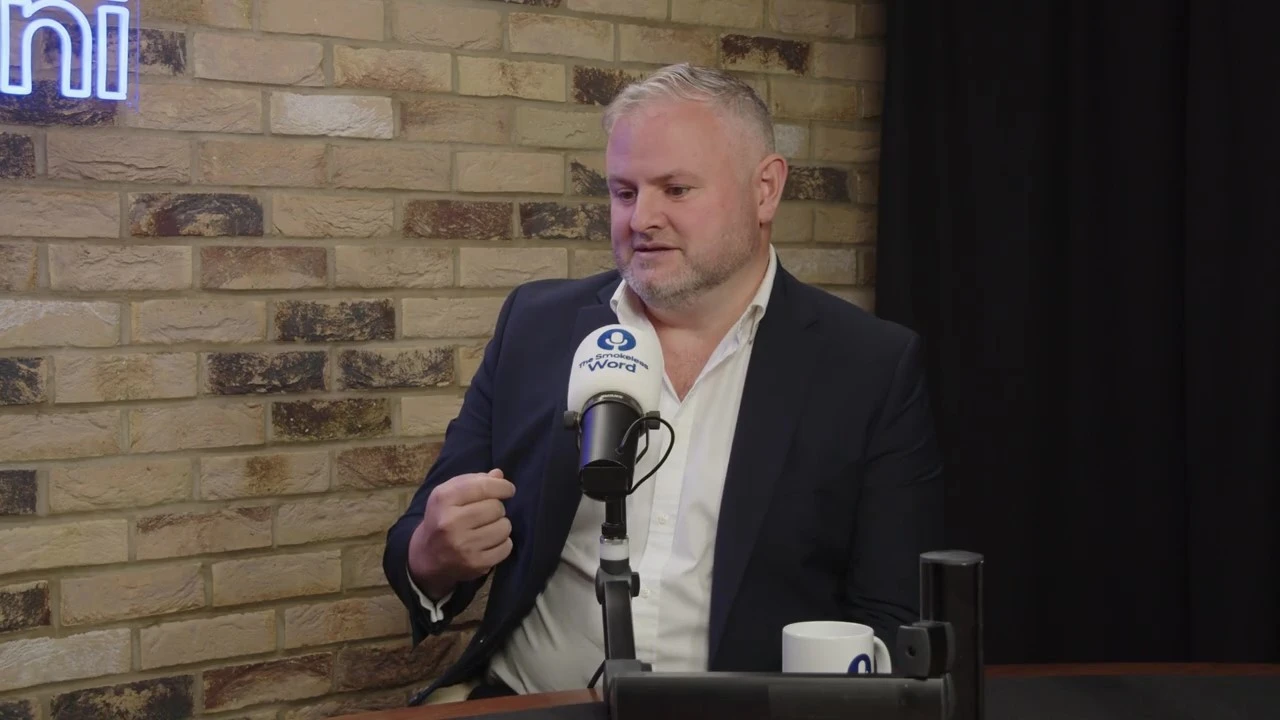

Episode 5: Rt Hon Andrew Stephenson CBE
Kingsley Wheaton
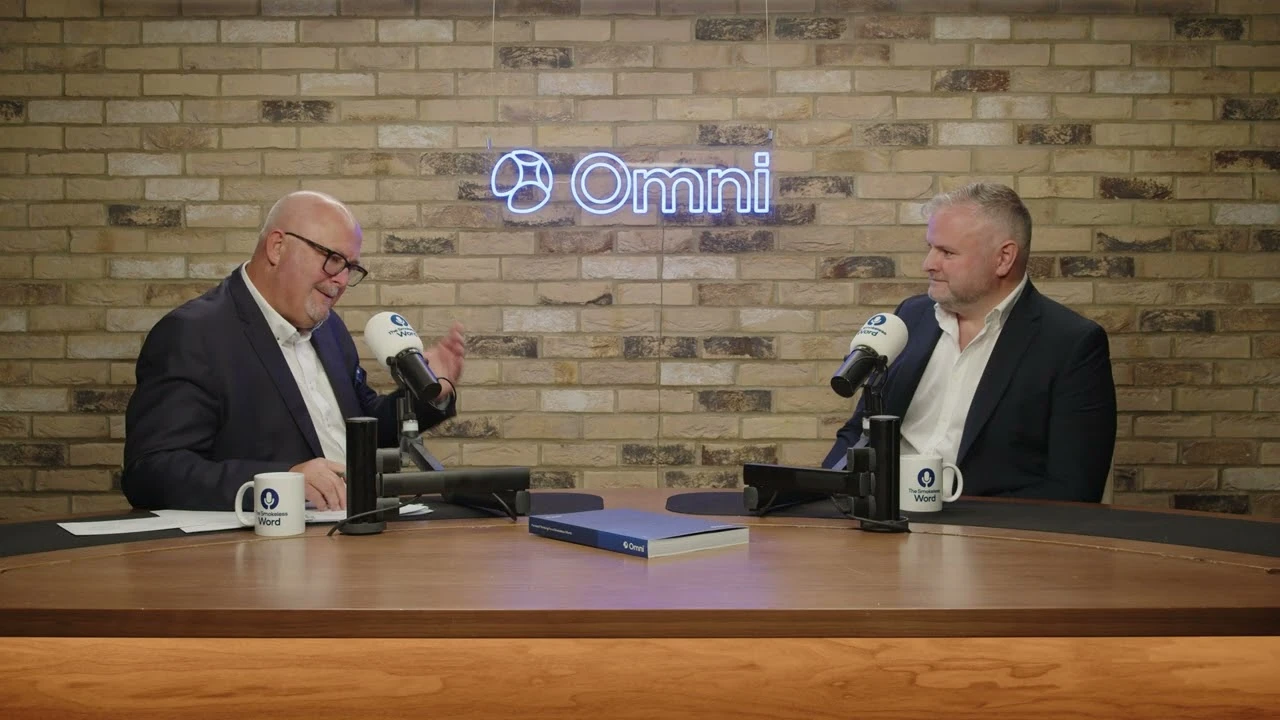
This podcast is intended for regulators, scientists, policymakers and investors. Only the views expressed in this podcast are the personal opinions of the speaker. Only any references to products having a reduced risk or reduced harm are based on the weight of evidence and assume no continued smoking. This material is not intended for us audiences. Thank you for joining me on the smokeless word in today's episode. I'm joined by Andrew Stevenson, who spent 14 years as the Conservative MP for Pendle and seven years as a minister, including as co chair of the Conservative Party and Minister of State for Health and secondary care. Andrew and I will talk about his political career as a councilor and his career in parliament the illicit trade in tobacco, and how private sector innovation and technology can help to drive meaningful change and transformation. Andrew, thank you for coming into the studio to the smokeless word podcast. You were a Member of Parliament for, I think, about 14 years, half of that time you were a minister. Maybe just talk to me about, let's go back maybe a little bit to the beginning. What brought you into politics. How did you get there, and what sort of saw you end up on that career route?
Andrew Stephenson
So I kind of, when I was growing up, I wasn't I didn't really know much about politics, but I I would get to know things about current affairs by watching anything like news at 10. My grandmother would look after us occasionally, and you know, she was told that we had to be in bed by 10 o'clock, but if we wanted to watch the news, we were allowed to stay up for an extra hour. An extra hour. So I think as a kid, you know, watching current events, thinking there's a lot going on in the world I want to understand more, led to me choosing, as one of my options to do an A level in politics. It turned out my my teachers that time, I felt they were quite left wing, and I thought, what can I do to really upset them? So age 16, I joined the Conservative Party. I think my mother would have preferred that I got a tattoo or Pearson. She was slightly horrified, but the kind of rest is history. I started going along to meetings, joining discussions. I decided that that's where my kind of views were. Got involved in student politics at university, and then, you know, became a councilor age 22 and I suppose I just for me, it was that kind of, it came naturally. And it was only when I became a local councilor and started thinking, I wish I could affect this, but I can't, because that's decided in Westminster, that I actually decided that I was going to put myself forward for parliament, and I, I stood in age 29 elected to the House commons, 14 years, 15 years later, and sat here,
Kingsley Wheaton
Fantastic. I read somewhere. I think Did you? Were you the youngest ever leader of a council or something at 25 position,
Andrew Stephenson
I was the youngest chairman of an association. So I was George Osborne's Association chairman. So when he was a backbencher, when nobody knew his name, I was his association chairman. So it was, it was myself who was supposed to be keeping him in line. I think at the time, I knew he was destined for great things, but obviously, the time he had moved on to great things, I had moved on as well. I'd become an MP elsewhere, and then obviously was able to work with him closely post 2010 when we formed the coalition government,
Kingsley Wheaton
yes. And so fast forward. Then 29 years old, was that the first seat you contested? Yes, and I mean daunting or not daunting, or, you know, take it in your stride. How did that feel? Must be quite a quite a campaign, quite a night when the voting happens.
Andrew Stephenson
So I was selected as the Conservative candidate for Pendle in 2006 so I kind of had a three and a half year run into to get to know the issues, to campaign, to knock on doors. So I felt I had a good feel for the issues, a good understanding of the challenges, what my priorities would be if I was elected. But you suddenly go from kind of knocking on doors in shorts and T shirt to them being elected to the House Commons. And literally, the following Monday, sat on the green benches. And of course, because the election outcome was unclear in 2010 we then ended up, actually, I think it wasn't even on the Monday. We all came down on the Saturday, Sunday after the election, on Thursday, we were all down over the weekend to take part in the kind of coalition negotiations between the Liberal Democrats and the conservatives. And you know, David Cameron as party leader, had to make sure he could do a deal with our blessing in order for him to become prime minister and Nick Clegg to become deputy prime minister.
Kingsley Wheaton
Of course, that's going back. And you know, for those listeners, and I wouldn't know, you know that after, after the election, presumably a Thursday the election night, isn't it? You know what happens? You get your papers. You know who tells you what to do. How do you know where to go and what happens?
Andrew Stephenson
So you're absolutely exhausted. My result came in pretty early, so about half one in the morning on the Friday morning. So the result is read out on stage, declared the victor. You say you're. Your remarks. You thank the voters, you thank the returning officer and various other people. And then, literally, the returning officer hands you an envelope which basically says, turn up at parliament on Monday morning and bring some form of ID and perhaps an election leaflet to prove who you are. And it was as simple as that. And you then, obviously, just go to the pub, have a few pints and think you're going to get some sleep. But as that was the early hours of Friday morning, the kind of drinking continued through the night into the day, but time I had time to think about going to bed, I'd got the message from the chief whip to say, congratulations on your victory. By the way, we need you in Westminster on Saturday, so I don't think I got much sleep at all between being declared the new member of parliament and suddenly having to go down and decide how the new government will be structured,
Kingsley Wheaton
and how long was it before you felt sort of comfortable and at home. I mean, presumably, even, you know, the House of Commons is a bit of a maze. You know, is it a year later you sort of feel like you fit your straps, or
Andrew Stephenson
for me, it took about two or three years. I initially didn't like the job. Found it very stressful. I felt I had been elected in order to affect positive change, and I wasn't able to affect that positive change. There were lots of frustrations about being in coalition, having to jettison some of the manifesto commitments we had made to people. So for me, it was a really frustrating first couple of years. I then pushed for a private member's bill to change the bail laws in this country following the murder of a nurse in my constituency, and fighting that battle to get that through Parliament, when that eventually got through Parliament and changed the bail laws in the country, and I thought that will protect the victims of domestic violence and women across this country who I will never meet and will never know that I've done this, and People far beyond my own constituency, that's when I got it. That's when for me, but that's what it's all about. And for me, it was the kind of light bulb moment I thought, You know what? For all the kind of ups and downs, this is a brilliant job to have. This is a real privilege to have a job like this. And I'm going to stand for re election, and I'm going to do it as long as the public allow me to do it.
Kingsley Wheaton
The bail story is, I read about it, you know, almost like that has real meaning, right? Real tangibility.
Andrew Stephenson
It has real meaning. I think it's that ability to to make change. So as a as a politician, you've got to work with fellow parliamentarians. It's quite hard to affect change as an individual. You know, I worked with various kind of charities, the parents John and Penny Clough of the murdered nurse. We worked, and we built an effective campaign, and eventually we got there. And it was, it was hard going. It was, was about a year to try and effect this change and get it into legislation. But for me, it was the point when I thought I've been able to navigate this, through all the challenges, all the obstacles, I've been able to get something to happen which wouldn't have happened if I hadn't have been there. And I think therefore, you know, you take a level of personal ownership of that and say, if I've done it once, I can do it again. And the longer I'm here, the better I will become at doing this and taking on these challenges, and, you know, being able to affect positive change.
Kingsley Wheaton
Just want to talk about, I want to come back to that Andrew, for me, because of the world that we face and collaborative solutions, often we're, we're sort of slightly ostracized from the debate in our industry. And I think having met you briefly, you know, the level of sort of bipartisanship and working across the aisle, I suspect that might have been quite important to get things done. I mean, you were in a coalition government initially, I suppose so it's a given, but how, how much of that was at play to make things happen?
Andrew Stephenson
So it's always an important part. I think, you know, you can champion things just within your own party, but if you think about the way Parliament works, we have all party parliamentary groups, we have select committees, we have a range of things that require cross party working. And therefore you form cross party friendships, you get on with people on the other side. And it may be that you know, you passionately disagree about certain things, but there are lots of things we can agree about. And ultimately, even if it was somebody on the hard left of the Labor Party, where you could still talk to them about football or something else. So there was always something, there was always some common ground that you would have in conversations, but, but generally, working cross party to push for for change. I did quite a lot of that through as a back bench MP, I did quite a lot of that through all party parliamentary groups. And then when I became a minister, I tried to continue that. Continued to work with my shadow ministers opposite me, but also work across the house just to try and get cross party support for whatever the government was trying to advance.
Kingsley Wheaton
Fascinating. And you know, we'll come on to your ministerial career in a moment. But how many prime ministers were you? Were you? Were you active under? Is it 5? Prime Ministers? You must have been there in the most turbulent era of British politics that anyone can remember. How was that?
Andrew Stephenson
So this is the they always say events are politician the greatest enemy. With the Conservatives had spent 13 years in opposition. We'd thought long and hard about what we would do when we next got into government. And then 2010 we arrived after the global financial crisis, huge problems, obviously, nationalization of banks and various other things. And literally, we then were fighting fires and dealing with a poison Chalice of an economic legacy. But time we were kind of heading through that, and you know, we'd had the 2015 general election and got an overall conservative majority government. Great. We could do what we wanted. At 2016 we get Brexit, all the complications of that. As soon as Brexit is kind of almost out of the way. We're into a global pandemic, and then the war in Ukraine. So it feels like my 14 years, five different prime ministers, probably sums up how turbulent it was. But those 14 years, we were just buffeted by event after event after event, and that's just thinking of the big global events, you know, without thinking about Grenfell tower and various other kind of massive events at the time, which, again, kind of had to change the direction of the government, and some of the thinking within government,
Kingsley Wheaton
yeah, and across the answer, doesn't have to be a prime minister, but you know, in that whole political life sphere, you know best, best leader that you ever worked for operated under
Andrew Stephenson
the best Prime Minister, kind of as an all rounder, I would say, was David Cameron. I think he was a great leader of the opposition. I think he steadied the ship, and he took us in through very turbulent times. Was able to negotiate the coalition years which required a huge amount of skill in order to be able to do that without doubt, the most fun leader to work for was Boris Johnson. But if I had to single one out for the best kind of all round, and for delivery and lots of things that we actually achieved in those kind of first six years under David Cameron, he, you know, he was a good Prime Minister, and I'm sure the history books, even though, at the moment, lots of people blame him for saying he shouldn't have walked away after Brexit. But I actually think when you look at some of the things he achieved, and achieved, legislation around equal marriage and things now 10 years on from from Equal Marriage passing through the house, commons, you know, he was quite a progressive Prime Minister. And also, at the same time, economic reforms pioneered by George Osborne really helped steady the ship and get the country moving back in the right direction.
Kingsley Wheaton
Yeah, it was interesting. You talked about the history books. I often wondered whether his tenure will be, you know, as fairly reflected as it might, but I suppose time is a great healer, isn't it, and things will move on. If we turn to your ministerial career. I can't do the maths, Andrew, but I reckon you had more ministerial roles pro rata than anyone. I mean, you seem to have done almost everything. Which one was your favorite,
Andrew Stephenson
which I've kind of pinged about here, there and everywhere. I mean, the dream job I was briefly at the tail end of Boris Johnson's tenure as prime minister. I was briefly Conservative Party chairman. And being conservative party chairman is a huge privilege. To be chairman of the party I've been a member of since age 16. So, you know, that was great. But you know, similarly, before that, I was in the Foreign Office for nine months. I was Minister for Africa. So, you know, flying around being able to make real, meaningful difference in a really challenged part of the world. But also, you know, having those negotiations at the United Nations and other places, it was a privilege. All the jobs I had was a huge privilege to do. But I would say Conservative Party chairman. You know, ultimately, that's, yeah, definitely the number one.
Kingsley Wheaton
Some of the listeners may be, may be thinking, you know this podcast, you know a former health minister, that's kind of interesting. So maybe if we just go into that a little bit, I don't know if I'd say you're pro vaping, I'm not sure, but perhaps just help the listeners understand your position on sort of smoking and health and the role of smokeless alternatives as you see it.
Andrew Stephenson
So I think vaping is one of those things that if you smoke, it's far better to give up smoking and start vaping. If you don't smoke, don't vape, don't start, exactly, don't start. But for me, I've seen lots of friends. I had lots of friends who were smokers. I've seen the vast majority transfer to vaping. So we've seen that kind of organically happen, without any sort of kind of big government drive. This is just something that's happened. And I think it's, you know, it's a real force for good. And before, you know, people trying patches and various other forms of kind of kind of nicotine replacement never got the same sort of traction or take up. So, you know, vaping is one of those things that, you know, there's many people who you know, and there's, you know, there are negative impacts of vaping, and we have concerns about young people vaping and various other issues. But generally speaking, you know, for my friends, for a lot of people I see, for a lot of people in my constituency, the the introduction of vapes and the easy accessibility of vapes has been a positive, yeah. And as you,
Kingsley Wheaton
you know, Rory Sutherland was on this podcast not that long ago, and he sort of, I think he posited a bit what you were saying, that it's interesting that almost consumer power and availability has made this happen. And maybe as a Tory, the fact that it wasn't really regulation that made this happen is quite interesting. It's almost sort of free market forces.
Andrew Stephenson
Yeah, well, so and so often we see this. If we look at kind of some of the environmental change and decarbonization we've seen in the country, you know, the the creation of low energy light bulbs and things, it wasn't, you know, government didn't fund those things. Those things just happened by the market, and then, you know, the transition naturally occurred. And we've seen that across a range of things, private sector driving forward innovation. And it's why it's really important for government to engage with the private sector, to engage with stakeholders across the board, and to see, you know what change is going to occur naturally, what the government then needs to do in order to help stimulate that that change or drive that innovation. But sometimes, yeah, the government just needs to get out of the way and allow things to happen organically.
Kingsley Wheaton
Yeah, allow things to happen. I'll come back to vaping, but I know an issue that's quite that you're focusing on is illicit trade. You know, I've been in this business a long time. As you know, latest numbers I heard is that the UK Exchequer loses somewhere around three and a half billion pounds, you know, I sort of get the impression we might need three and a half billion pounds. Why is that not taken more seriously? Is it perceived as a sort of victimless crime? Is it, you know, it's written off on that, on that auspice?
Andrew Stephenson
I think there's a combination of factors. So I represented a part of East Lancashire, Pendle for 14 years. Quite a lot of former Mill Towns, quite deprived communities, rates of smoking, rates of vaping, all these things are quite high in my area, and rates of illegal, illicit cigarettes being sold, either out of the back of car boots or under the counter sales is prevalent, and Trading Standards just never seem to have the resources and the ability to be able to properly clamp down on this. Now I don't blame Trading Standards for that. I was involved in a range of projects with Trading Standards over the years, and just we live in a consumer society. There's more and more products coming out every year. The ability for them to keep on top of, you know, new products coming to market is incredibly hard. But I think, you know, if we genuinely want to get to a smoke free society, that I think we all want to get there, you're not going to get to a smoke free society unless you tackle the illegal trade.
Kingsley Wheaton
Yeah, no, it's a big issue. You know, I think people are always surprised by the numbers in the UK. They're by no means the worst. I think Australia is the world's worst offender at the moment. And, yeah, it would be nice to see some action. Do you think it's interesting, you know, as you know, people talk about the Brexit dividend, don't they or not, as the case may be, I think largely, you know, our tobacco and nicotine environment is still regulated. You know, per EU law. Just wondering whether it was more of an opportunity to frame, you know, leading and progressive British law in terms of illicit and vapor products.
Andrew Stephenson
Well, I'm the kind of person who believes that we know we should be seizing all these benefits, but, you know, we have this ability now to do things differently, and we are missing out on an opportunity unless we think about what is best done differently. And in terms of regulation, there's a lot of regulation that we should revisit, we should look at and say, Can we do things differently? Can we do things innovatively? Can we lead the world on some of these things? So, you know, I'm a walkthrough. I think whoever is in power should look at these things and embrace the flexibilities that we've now got. Sure,
Kingsley Wheaton
you mentioned regulation. I'm going to turn to the tobacco and vapes bill, which seems to be somewhere bouncing around the house of lords, as I understand it at the moment, interesting because, you know, brought to us through a Tory Prime Minister. You know, we put our thinking out there, I think, and try to be very cogent and evidence based generational sales ban. You know, the fact that, you know, in 20 years time, a 45 year old and a 44 year old would be next to each other, and one could buy cigarettes and one not. You know, you know what's your views on that and the logic that lies behind it.
Andrew Stephenson
So it's difficult, and there were many in my party who were were very much against this and saying that, you know, it was an unconserved thing to do, and we shouldn't be restricting the freedom of choice of adults and but I think that's what drove the Prime Minister to bring it forward. Was I mean, there were external factors we have to think post pandemic, the ever increasing kind of life expectancy in this country had not just plateau, but actually for men, had started to fall. There were genuine concerns about health inequalities having been highlighted in the pandemic, the different death rates across the country between different groups and particularly among socio economic groups. So there was a real feel that the government needed to do more on kind of health inequalities and public health and needed to take steps forward. So you can understand the thinking behind the Prime Minister kind of coming forward with this. There are no simple solutions. He clearly felt that, you know, having a situation where nobody who can legally smoke now was ever banned from smoking by, you know, lifting the age range was the sensible way to go. It poses huge challenges for for retailers and for others. And, you know, the minister at the time, so Victoria Atkins, was the Secretary, Secretary for Health, acknowledged that there were challenges in this. But despite the challenges, on balance, the government felt it was the right approach. And of course, labor at the time gave the whole hearted support, and have now enthusiastically pushed forward with it. It's gone through its compensation. As you say, it's with the House of Lords.
Kingsley Wheaton
Is it prohibition? Partial prohibition?
Andrew Stephenson
I think you always have to get a balance. You know, the government has, if you talk about illegal drugs and harmful drugs and heroin and things, there are limits on what we allow adults to do. Whether this, I think the key question is, is this going to get us to the smoke free society quicker or not? And that's the key test of any public policy, what is going to deliver the best outcomes? And the problem is, as we all know, quite often, what governments do have unintended consequences and have perverse outcomes. And there is a real risk with any legislation that this can have unintended consequences. On balance, you know, I was a health minister at the time. I wasn't the time. I wasn't the minister behind the bill. The public health minister was Andrea Leadsom, who was taking the bill through. But on balance, I chose to support the bill, despite the very vocal criticism from many conservative back benchers and many leading libertarians in the party who said that this was wrong and we had got the balance wrong, I still thought that if we got the detail, right? This could make a meaningful difference,
Kingsley Wheaton
yeah. And I, you know, I often get asked the most typical question when the tables are turned is, you know, why don't you just stop selling cigarettes, which, you know, sounds like a really obvious question, until you think about, you know, the illicit market. Do you think finally, you know, I think there was a hint in your last answer, that sort of, eventually, sort of innovation, technology and markets sort of eventually solve the world's problems.
Andrew Stephenson
Yeah, so I'm a great believer in the private sector driving forward innovation. That's not to say, you know, the government doesn't have a role to play, but when we look at lots of change that's happening in the world, it's, it's driven by the private sector. You know, lots of people have solar panels on the houses now, because the cost has gone through the floor, because the private sector has innovated and made them a lot cheaper, not because the government rolled out additional grants or incentives for them to do it. Actually, you know, the take up increase when most of the government grants were withdrawn, because, you know, the private sector had, through innovation, had just made the product cheaper, and you see this time and time again. So you know, when governments are thinking about the way forward, they need to speak to everybody, and they also need to be prepared to be agile and to respond to what the evidence is saying and respond to the data. And all too often, unfortunately, politics and politicians can get tied up in emotional reactions to thing, rather than thinking about the evidence base.
Kingsley Wheaton
You're right. We've got to keep pushing the the evidence. And eventually, I think that will, that will that will win out. And you know, if that underpins tobacco harm reduction, it's interesting. You know, BAT is 125 years old. I don't know if you knew that. I think we're the only company on the FTSE that's the same company that you know. So in some ways, FTSE, top 10 listed on the footsie. You know, there's some, there's something to be let's be happy about there. Were we around for another 125 years? Maybe people will, will, will remember, will forget that we sold cigarettes once upon a time. And, you know, do you think, therefore, I suppose it's about intent and that transformation journey. Do you think the further we go with that journey, the more sort of, if you like, the more we can be readmitted into societal think, if you like.
Andrew Stephenson
So you know the difference between kind of like, I think, when you look at companies, the difference between those that kind of perform for the long term and those who don't is that ability to adapt and change. You know, you and I will remember when, like, Kodak, absolutely dominated everything in the world of photography. And then, you know, digital cameras came out, smartphones came out, and Kodak just died because it didn't change. It didn't it didn't see the future coming. It just, it was so wedded to one technology that it couldn't transition to a new technology. I think for bat to do, you know, have a focus on harm reduction, to have a focus on a smoke free world, to have a focus on the transition away and how you can play a part in that is absolutely essential, because that's where the future of the business lies. And the business could, of course, you know, in many years, could 125 years, could go down a completely different tack. But at the moment, you know, certainly delivering those vape products and various other products, I think, is exactly the thing the company should be doing.
Kingsley Wheaton
Well, that was Andrew. That was a great way to win. I love the idea of adaption and change. I suppose that's what we're trying to do through transformation. Just as a little vignette, we have a huge supply chain service and R and D center in Southampton, which used to be a tobacco factory. It's built in Southampton, probably to service a port city. We have more people there today working on transformation than we had when we were making cigarettes there. So that's a nice little story. So I think that adaptability and change is at the heart of our story. Andrew, I wanted to thank you for coming, I think, utmost respect for you being here and having this discussion, and hopefully through through better dialog and these sort of conversations. So you know, we can step forward trying to solve this particular problem, which is creating a smoke free world. Thank you very, very much indeed, everybody. Thank you for joining this podcast that was me, joined by Andrew Stevenson, 14 year MP, seven year government minister. And I just want to thank you all for listening, and please tune in to the next one. You can get the podcast as usual on your all your usual podcast channels. Thank you very much.
These transcripts are AI-generated and may contain errors or inaccuracies and should not be relied upon.
Kingsley explores British politics with Andrew Stephenson, former Minister of State for Health, in Episode 5 of The Smokeless Word. From joining the Conservative Party at 16 to serving seven years as a minister, Andrew offers his insider perspective on political change and how private sector innovation can help drive meaningful change.
Join Kingsley and Andrew as they discuss Andrew’s political career, the role of vaping in public health, and the illicit trade. Tune in for an insightful discussion you won't find anywhere else.
Exclusive access to the Omni™ Newsletter
Join the conversation shaping A Better Tomorrow™. Sign up to receive exclusive access to the Omni™ Newsletter and future Omni™ updates.
Signing up to the Omni™ Newsletter does not constitute consent to receive marketing communications.