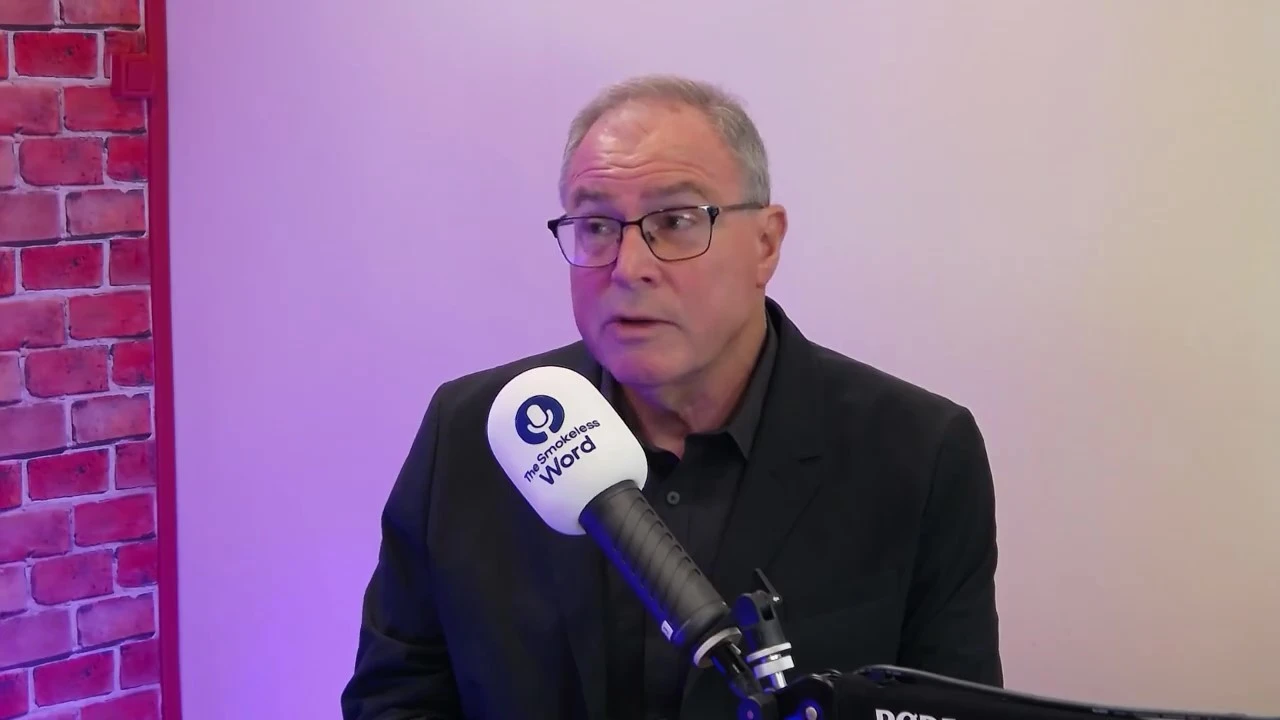

Episode 8: Derek Yach
Kingsley Wheaton
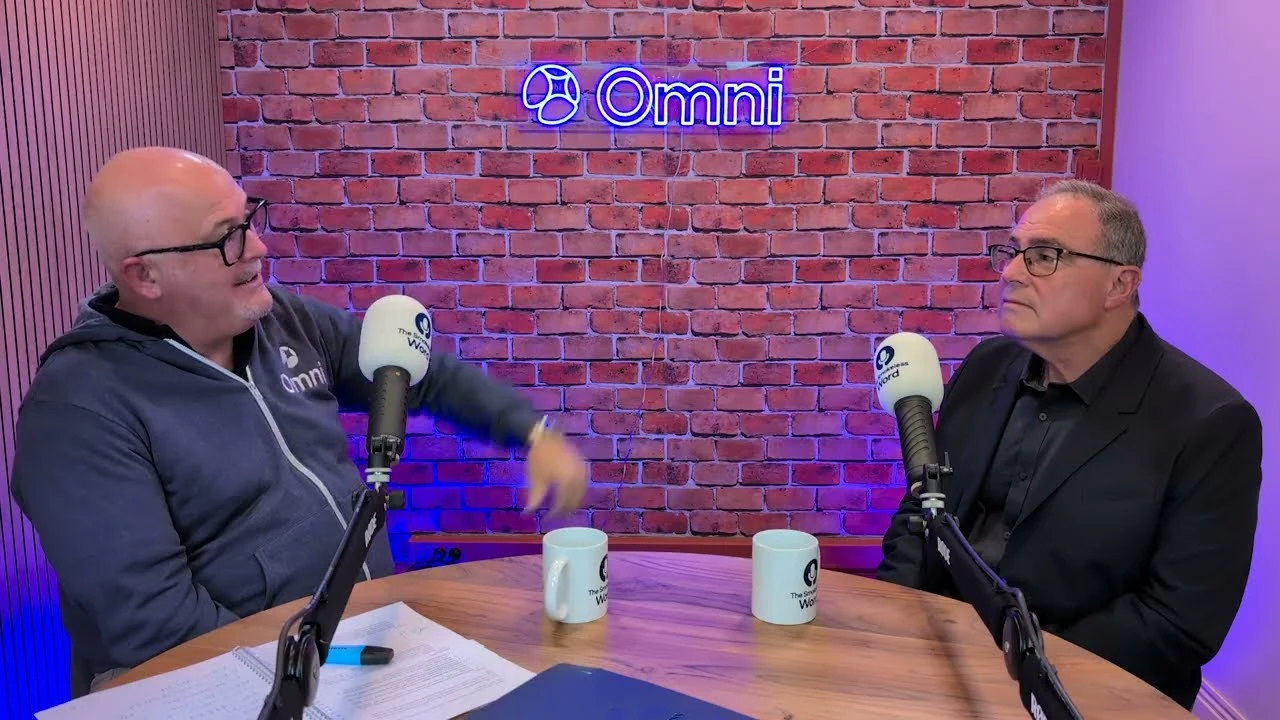
Hello and Welcome to Season Two of the smokeless word. I'm Kingsley Wheaton, chief corporate officer at British American Tobacco. After the incredible response to our first season, we're thrilled to be back. Season One was an incredible journey with six inspiring guests who shared stories of transformation, collaboration and bold decision making, and now we're kicking off season two with a new lineup of leaders and disruptors from business politics and beyond, each challenging conventions and offering fresh perspectives on what it takes to drive real change. Welcome to the latest episode of the smokeless word, which we're bringing to you from Brussels today. I'm thrilled to be joined by Derek Yak, global health expert and former World Health Organization Executive Director, Derek and I will talk about his time at the WHO failure of policy making over the past decades, and the role of the messenger in communications. Stay tuned and enjoy this latest episode of the smokeless word. This podcast is intended for regulators, scientists, policy makers and investors. Only the views expressed in this podcast are the personal opinions of the speaker. Only any references to products having a reduced risk or reduced harm are based on the weight of evidence and assume no continued smoking. This material is not intended for us audiences. Derek, welcome to the smokeless word studio. Thanks for joining us.
Derek Yach
Well, real pleasure to be with you, Kingsley.
Kingsley Wheaton
Global health expert, long, multi decade career in public health and advancing public health. What? What was it that inspired you and took you down that that pathway all those years ago?
Derek Yach
Well, when I started, it wasn't thinking global. It was really thinking local. And, you know, I grew up and did medicine medical school in apartheid South Africa, and many of my friends and colleagues were asking the simple question, how can we make a difference, even during the period of apartheid? And for me, it seemed that a career in public health, in medicine, would bring the biggest impact. And we had a number of people who inspired us from around the world, who came out once started a revolutionary medical school in Ben Gurion University in Israel that integrated the community with the doctors, prevention with cure, which took me back to the roots of the very purpose of public health and preventive medicine. And I decided there and then this was where I wanted to go.
Kingsley Wheaton
I know that you work across different sectors. But tell me about getting, you know that interest in tobacco specifically, before we get on to sort of tobacco harm reduction, you know, because that's something that you've dedicated a lot of your life to, can you just talk everyone through what why that is, and what motivates you, you know, with that in particular?
Derek Yach
Well, I think probably there's, you know, I grew up in a family where my mother was a chain smoker, almost a chain smoker. I was also always passionate interested in epidemiology, and particularly the epidemiology of big numbers. And there then was no other bigger number in terms of the preventive potential than smoking. And I used to have these real concerns that when I was doing medical school, we were going to see a tobacco epidemic and its impact unfold in the way we saw across Europe and the US. I landed up having meetings very early on in my career with Sir Richard dore, Sir Richard Peter Ernst winder, many people who did some of the foundational work, and it really inspired me to realize that you can make a difference if you stick with this. And so while I was doing many other things in public health, this took up a lot more of my time, a deep passion continued, and some of the early work we did in South Africa, first publication early 80s, looking at the economic and health effects of smoking and starting to project it forward. We went further over the years, and the first World No Tobacco Day was held in 1988 South Africa was still not a member of the World Health Organization, but the President of the South African Medical Research Council, Andris Brunk, a very noted cardiologist who, even though he was very close to government, was totally passionate about trying to do something about smoking. And so the whole edition of the South African medical journal came out that year on World No Tobacco Day, the only example in the world of it doing it where we documented the epidemiological impact, the unique issues in South Africa, the combination of infections and smoking.
Kingsley Wheaton
So Zimbabwe, 1993didn't think that you'd end up at the World Health Organization. Still quite Africa, South Africa focused. So how did that? Who want?
Derek Yach
Opportunity come up? Well, it was extraordinary. I landed up actually going to the World Conference in Argentina a couple of years must have been around 94 so, and sitting next to me, the one on two sides of me were two very interesting people. On the one side was a woman called Claire Charlotte chaque, who was the advisor to the director general of who at the time, who was Hiroshi Nakajima, and she was looking for any South African she could get her hands on, because South Africa was going to be readmitted back, and they had to do the politically correct things and find a South African to come. And I think by chance, we landed up having a great discussion. And within weeks, I landed up being asked whether I'd come for a year to be part of a new policy process.
Kingsley Wheaton
You know, if you had your time again, and it's very easy with hindsight, would anything you'd have done differently with the FCTC?
Derek Yach
I think if we had taken a I think two things. First of all, I think if we'd looked a lot more to the other treaty bodies in the world of environment, in the world of disarmament, even human rights, we would have seen that successful treaties really depend upon multi stakeholder support, and that any effort to ban or restrict or constrain any party who has a material interest would in the long term, be the undoing of the treaty. So for example, if we're going to address climate change, if you don't have the oil and gas companies on board, the answers that they're bringing in terms of research and development about new forms of energy, or the motor vehicle manufacturers or the Law of the Sea dealing with the advances in technology, or the pharmaceutical industry, if they're not on board in an open way, even though you may disagree on policy, it would be an undoing of those treaties. But what did we do? We put in place a very restrictive, the most restrictive access to engagement through the so called clause 5.3 of three, yes, and the justification for it at the time, though, I think, was perfectly understandable. We had this line that said that there is an irreconcilable difference between the interests of public health and the interests of the tobacco industry, which in 1998 was pretty much the case. We couldn't see what the con what the joint interests would be. But as time went on and you started seeing harm reduction products, suddenly the irreconcilable difference becomes a lot more murky, and there are reasons why you should be engaging with industry if you want the solution to move forward. That was the one deep thing. And international legal scholars have written about this and the exceptional clauses and the way they've been turned into guidelines as being the long term undoing of what otherwise was thought to be a science based treaty.
Kingsley Wheaton
Let us go back to five, three, because I thought it was a a, I thought it was a fabulously honest and authentic narration of that storyline. Why would it be so difficult for who? If that's what it took to sort of actually issue, you know, slightly new, more nuanced guidance of what we think is the misinterpretation of five three, you know, as I was saying when we discussed this morning, you know, can we, can we at least agree on what we agree on? You know, slightly more bipartisan. Why would that engagement not be possible in 2025
Derek Yach
I think the debts. I mean, what has happened over the last few years, probably over the last decade, I think there's been a hardening by many of the senior people in public health, not just against any engagement the tobacco industry, but I think against many industry. And it's it all comes out in some of the work called the commercial determinants of health. So there's now a formal unit in who called the commercial determinants of health unit led by the European office, where at its philosophical base there's the view that industry led research science or activities related to health cannot be trusted. They should be separated. We should make sure that there's no engagement. And that applies to not just the tobacco industry, the tobacco the food, to some extent, the pharmaceutical industry, the IT sector, certainly the whole of the infant formula and the alcohol industry.
Kingsley Wheaton
Let me take you back to another FCTC article. 1d Yes, you know it's interesting because your reflections on technology, IP and innovation, yes, but there it is, you know, you know, embracing all sorts of tobacco control measures, including harm reduction. Why? Why? Why is f5, three so elevated and 1d, so buried?
Derek Yach
It's a great question, and I hadn't really thought about it in those terms before, but I can tell you the origins of 1d because I was sitting there. Must remember that again. One has to understand what else was happening in who at the time. HIV AIDS was roaring ahead. Needle exchanges were on. List of being tested in Zurich, there was a great awareness of the value of harm reduction, and who were the chairs of the Framework Convention, seltzer Amarin, who eventually became the foreign minister, Defense Minister of Brazil, followed by satis Korea, also from Brazil. Brazil was leading the charge on HIV AIDS, on harm reduction, on needle exchanges. They were the world leaders, and so it was not surprising that his team played an important role in making sure the text actually reflected what they were seeing in other realms. The activation of it, though, happened after the Treaty was accepted, and one would have thought then the Secretariat other member states would pick it up and actually say, Okay, we're going clause by clause to make sure we operationalize it. We haven't used this clause. What can we do about it? Nothing happened, and in fact, they've turned against the harm reduction clause. It's an important point because it means that you don't need a change to the who's framework convention text to implement harm reduction, you simply need to add the harm reduction components to the current advice on taxes, marketing, innovation, research and whatever. So to be an easy shift to do, not very difficult.
Kingsley Wheaton
Do you think that's how it might transpire? Do you think if we were to fast forward, all right, optimistically, five, let's say 10 years is that. Is that the way, you know, shifting the weight more towards a 1d focus? Do you think that's how it might be done?
Derek Yach
I think that it's going to happen for two or three reasons. First, I think the pressure of finance and who is going to mean that they will have to relook at their relationships with all industry. And you could argue that the science of harm reduction that you rely on, that PMI, all the companies rely on, isn't just the tobacco industry science. It's the work of those involved in complex biological markers, those involved in the complexity of clinical change and early changes in the effects of these products on human health. So the whole of Biosciences and the relationship between Biosciences and digital technologies. So I suspect that the having a rigid approach to not engaging those very scientists eventually will crumble, because the benefits will be so big, the question is whether, who wants to retain its relevance? And to your question, yes, eventually they will have to. But I think the way one does it does require a lot of careful thought.
Kingsley Wheaton
So I want to take you back Derek. I want to quote you this. I believe that the opportunities now of using reduced risk tobacco products offer us unique opportunities to cut the death rate among adult smokers faster than we'd ever been able to do before. In fact, I would go further and say it's unacceptable that we aren't getting behind these new reduced risk tobacco products faster. That was nine years ago. What's gone wrong? Why is it? Why is it so slow? Why? Why? Why is this not being embraced?
Derek Yach
I must say it when I started returning to re look at the evidence. And this is when I was at vitality, which many of the people UK will know is attachment, running around and the great advert, inspiring healthy behaviors and long lives. But I was working for them when I was asked, What is going on in this vape market 10 12, years ago? Is it something we should be thinking of? And then the spectator teamed up with us and said, write a piece on take a re look at the evidence and Mayor culpa I had missed the fact that this was one of the fastest growing consumer good areas. The evidence was clear. I did my due diligence. I visited the companies. I was PMI, I visited your folk. I tried to speak to everybody. I went back to last ramps on then in his 90s, and said, I'm really sorry you told me this 20 years ago, that this was going to be the thing, and that's why Sweden's rates were so low. I'd like to re understand where we're at. So the evidence was very clear, and you have this chilling feeling, because you know that this is an intervention that would save many millions of lives.
Kingsley Wheaton
Over the last few months, we've been reviewing the evidence, and we know that there are very few public health interventions with the potential and the figures are staggering. If we have the current rate of tobacco control, we're going to save a lot of lives, but we'll save at least three to 4 million additional lives annually every year from now to 2060 and maybe even more. We have EU commissioners coming out in headlines. How does that make you? How does that make you feel? What's your, what's your what's your reaction to that?
Derek Yach
I never thought that we would actually see such a regression from what is sensible science by such high level officials. I worked with the EU commissioner for health, Bern, where. Back when he was here, and sensible public policy, they were known for not being out there with ridiculous statements. The statement, the most recent statement by the EC, is incredibly damaging, basically equating smoking to harm reduction, nicotine and cancer causing issues. This is deeply troubling. What is more troubling is why the member states, who know better, haven't spoken up. Many in academia have spoken up, but they are fearful. And the question is, so what's, what's the source of the fear? I think what people haven't forgotten, may have forgotten, may have forgotten, or may not even be aware of, is that $1.6 billion funded by Bloomberg Philanthropies over more than a decade, there's a network now of academics dependent upon this, but it's a massive network includes the media, the journalists, and of course, sitting at the top, you have Michael Bloomberg, who, in every realm of public health that I've understood, is somebody I deeply admire, supporter of my own school of public health. Hopkins, his work in everything from climate change to cardiovascular disease to violence, is exemplary, but there's a blind spot around this issue. I wonder. Derek, you know, something that started off being, you know, anti combustible tobacco. Let me even say that, you know, has now become erroneously anti nicotine, you know, you talk about, you know, nicotine literacy. So I think that one needs to think strategically about the role of the messenger and not just the message. And when I read through the Omni work, there's nothing I can disagree with in terms of the content and the message and the direction. The question is, how we actually build a stronger group of independent voices who take that literature and say they actually endorse it, or they can change it, but least talk about it, that would make a far bigger difference. Now the good news is it's happening organically. Tough as it is. Remember that often the best intentions of a messenger can be distorted against you. Build up the independent science collaboration, more voices from around the world, more voices of consumers, which is happening anyway. I don't think we have to worry too much about that. And then re look at the product and how you could design products to reach these people. I would say this that, you know, when I, when I look at the the bulk of the research coming out of the leading companies, and clearly, BAT and PMI are way out there. A lot of the science is beyond the capacity of people in tobacco control research to appreciate, I think the sophistication of biomarkers. Work is revolutionizing two big questions. One is, do we really know what people are exposed to in terms of different nicotine products? Or we now know that the biomarkers of exposure help you to distinguish Are you smoking a cigarette? Are you vaping? Are you using a pouch? Are you using? What are you using? The fantastic work that's being done there now allows us to have that answer that is not just important for public health. It's important for the insurance industry, because they can start really assessing properly, are people on clean or on classical tobacco, dry up nicotine. Secondly, the work on biomarkers of outcome, and what are these? These are ways of predicting whether people will go on to death and disease prematurely. No. And I think your your points on communication and messenger are are fascinating. I also think there's something about, you know, the style, the tone, the manner, it also matters. You know,
Kingsley Wheaton
I said to you earlier that, you know, I never thought this would be propaganda. Yeah, you know this, this, this format is about getting interesting views from the guests, who, who, who sit here. And the other thing I think I would say, just to finish before one final question, if I may, is that whatever we were or weren't doing, whatever the messenger was or wasn't, over the last 20 years that didn't work very well either. You know, I think the consumer power has definitely, has definitely been evident. But you know, here we are, nine years later, still not living up to your hopes and dreams and with hopes and dreams in mind. Do you think we look forward to a day? Do you think you know, 5, 10, 15 years. You know, is there a who shifted position? Is there a Bloomberg shift of position? What can we look forward to? And how does that? How does that sort of thr dam bust eventually?
Derek Yach
I think the driving force of innovation generally doesn't go backward. It goes forward. And the innovation is at the benefit of the consumers. The consumers are going to pick it up and they're going to use it, and so it doesn't matter as much what who does going forward. I think that the era of a treaty, which was born in an era where we had global cooperation, global solidarity, global funding, has gone we're turning more to what. World of localization, more complex politics, but where the rights and interests of consumers seem to be emerging at a great extent. And that gives me a lot of hope.
Kingsley Wheaton
Derek, yeah, thank you so much. A lot of hope the consumer. At the heart of your final answer, I love that. Thank you so much for coming along and being so candid, so open and taking part in this focus world. Thank you, Derek, real pleasure. Thank you.
These transcripts are AI-generated and may contain errors or inaccuracies and should not be relied upon.
The Smokeless Word returns with a timely conversation from Brussels as COP11 takes place this week. On this episode, Kingsley sits down with global health expert and former WHO Executive Director, Derek Yach.
As one of the architects behind the modern global approach to tobacco control, Derek offers rare insight into the origins of the FCTC, sharing untold stories from its early negotiations, and explains why some of its most important clauses, including harm reduction, were never activated.
Their conversation spans the failure of policymaking over the past decade, the nature of the messenger in communications and the WHO’s evolving role. Derek offers a frank assessment of where global tobacco control has faltered and where he sees hope for rapid change.
Join Kingsley and Derek for an episode rich in history, insight, and forward-looking perspective.
Exclusive access to the Omni™ Newsletter
Join the conversation shaping A Better Tomorrow™. Sign up to receive exclusive access to the Omni™ Newsletter and future Omni™ updates.
Signing up to the Omni™ Newsletter does not constitute consent to receive marketing communications.