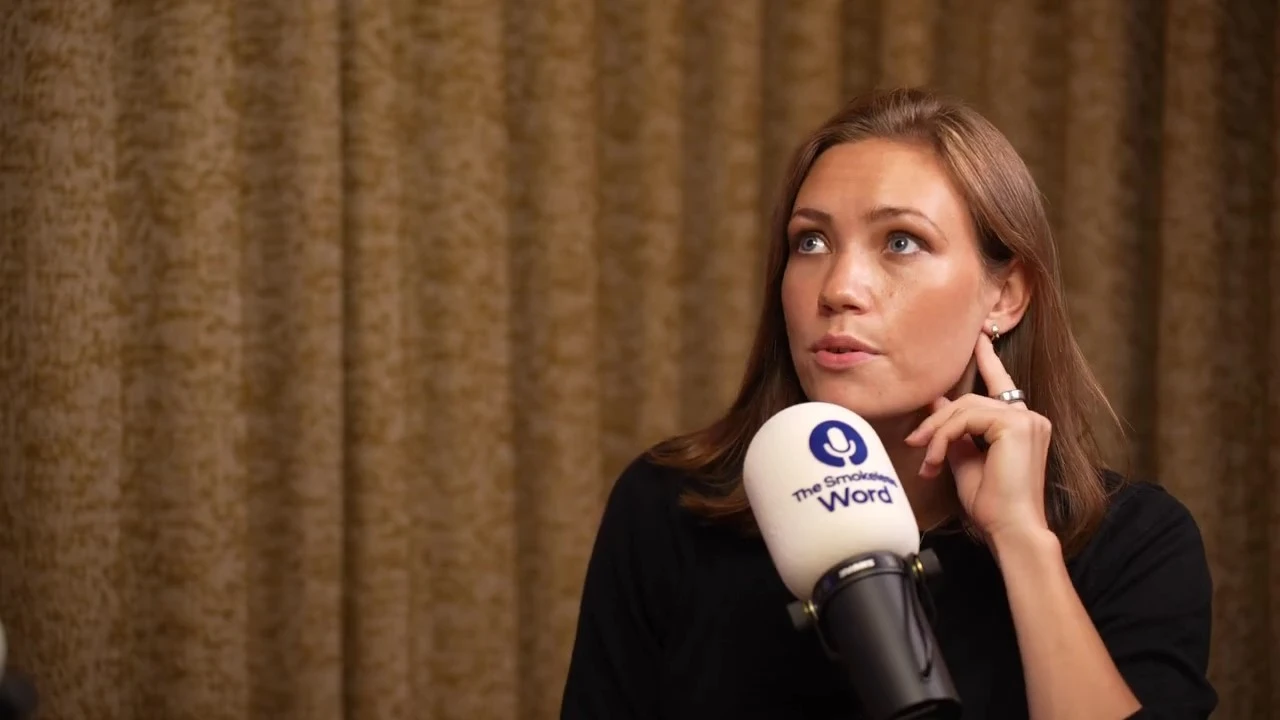

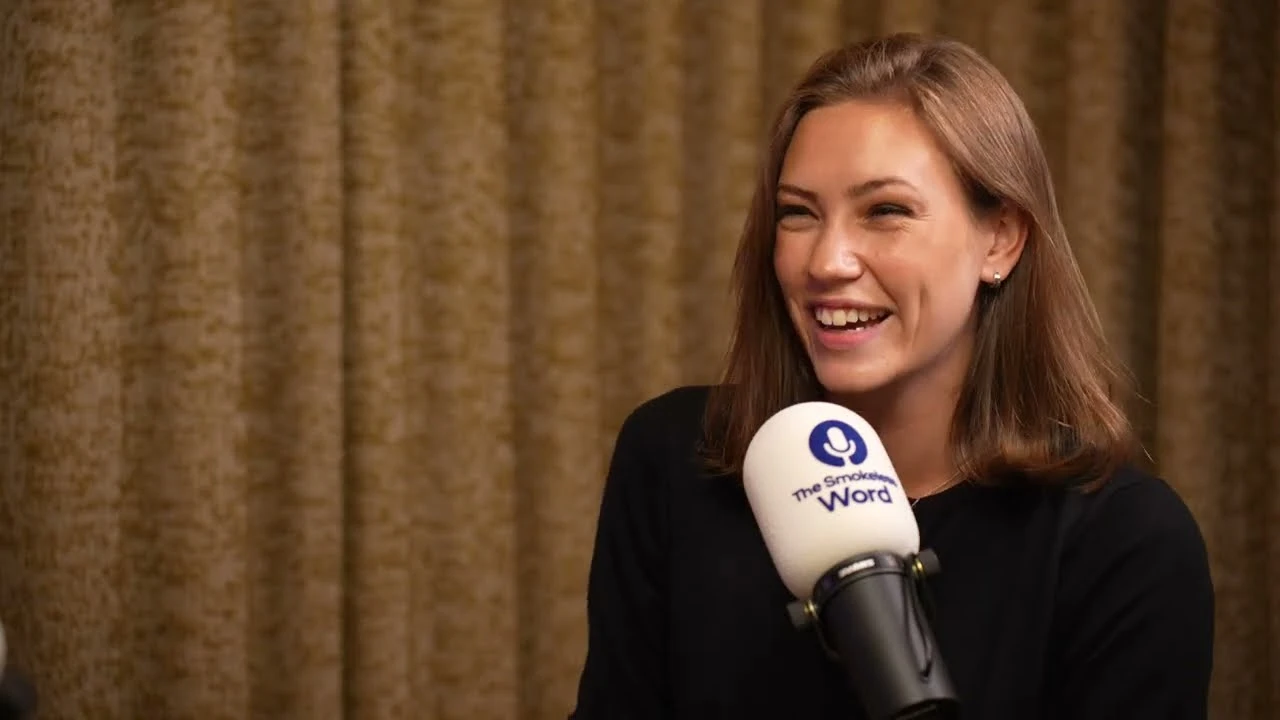
Episode 9: Nike Örbrink
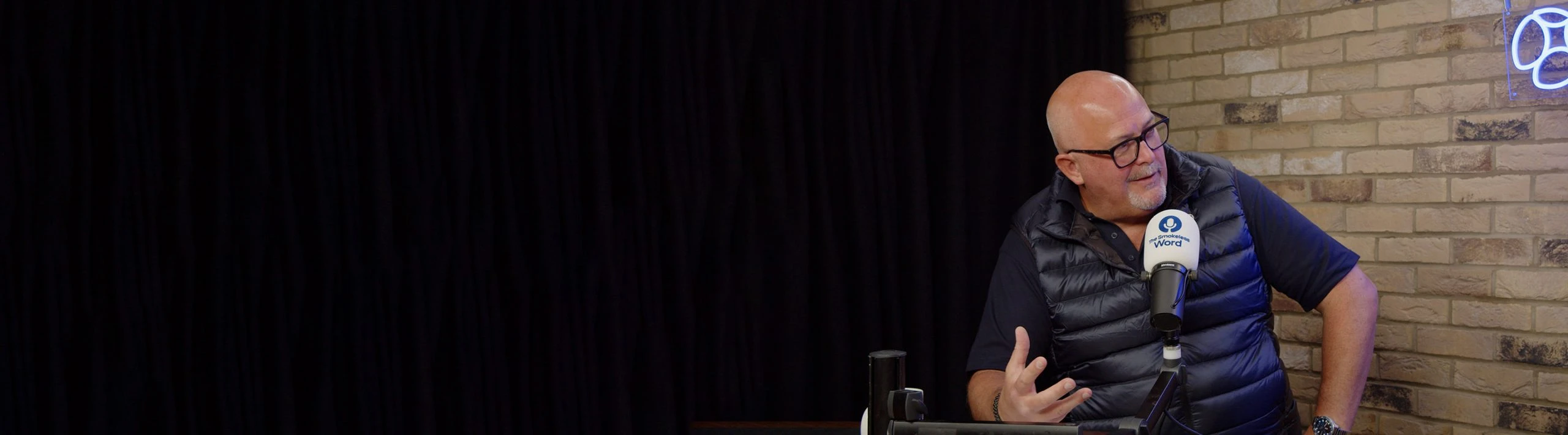
Kingsley Wheaton
This podcast is intended for regulators, scientists, policy makers and investors. Only the views expressed in this podcast are the personal opinions of the speaker. Only any references to products having a reduced risk or reduced harm are based on the weight of evidence and assume no continued smoking. This material is not intended for us audiences. Hello and Welcome to Season Two of the smokeless word. I'm Kingsley Wheaton, chief corporate officer at British American Tobacco. After the incredible response to our first season, we're thrilled to be back. Season One was an incredible journey with six inspiring guests who shared stories of transformation, collaboration and bold decision making, and now we're kicking off season two with a new lineup of leaders and disruptors from business, politics and beyond, each challenging conventions and offering fresh perspectives on what it takes to drive real change. And today, we're kicking off the season in Stockholm with Nika obrink, group leader of Stockholm city council, from the Christian Democratic Party. Nika and I will talk about her journey into politics Sweden's smoke free story, and the lessons European policy makers could take from the Swedish model. So Nika, welcome to the studio. Thank you ever so much for joining us on the smokeless word. It's a pleasure for me to be in Stockholm doing the smokeless word here in Sweden. So we were talking beforehand, I think you described your current position as deputy mayor in opposition. Could for our listeners, could you just tell everyone what you do and how you're active politically?
Nike Örbrink
Yeah, so it's the first time I'm doing a podcast in English. Is it? Yes, I'm a bit nervous. I can't do it in Swedish, I'm sorry. So I'm the group leader of the Christian Democratic Party. We're eight parties in Stockholm, and I'm leading one of them, so I'm kind of in charge of our elected group here and and the work we do in Stockholm.
Kingsley Wheaton
And how many people? How many people is that? Who? How many? How many political appointees are the Christian Democrats in in Stockholm? Too few. I think
Nike Örbrink
we're the smallest party. So we have four elected members and four replacements, basically, but there's election next year. So are you hopeful about that? Yes, I am. It's going to be my first time being in charge of the party here in Stockholm, running an election. If I get elected by my party, we'll see. But I'm hoping for good results, and
Kingsley Wheaton
then you would lose what the in opposition tax. So then you would be sort of Deputy Mayor of Stockholm, if
Nike Örbrink
I get thrown out of the party, but
Kingsley Wheaton
if you were elected Deputy Mayor of Stockholm, yes. So, you know, your, your, your journey into politics, let's, let's go there, the formative years. You know, how did it all start? How did this, shall I say, love of politics, or political being politically active. How did it develop?
Nike Örbrink
So I was 18 years old when I became a member of the party and the youth organization. So the youth organizations to each party political party is very big. In Sweden is big thing, and I think it came from other discussions we had at home around the dining table. My dad was politically involved as young, and my mom is a teacher in in history and society. And my brother, older brother, was very politically interested. So we talked a lot about my about politics. I wanted to talk even more. My friends in high school got tired of me talking about it, so I kind of just joined the party because I wanted to have a platform to discuss, to learn more. And I had no idea at all that I was going to work with this at some point of my life, full time, I was going to do lots of other things, but you're laughing. But the years went by and I was engaged with the youth organization, and then I started working for the party, and then I got elected to be a full time politician. So we'll see how long I'll be doing this.
Kingsley Wheaton
And what is the current what would you assess the current popular vote share of the Christian Democrats in Sweden, what would be the
Nike Örbrink
so we have a we have a 4% limit to so we have proportional election in Sweden. So there's eight parties in the in the national parliament, and there's a 4% limit. So you have to get over 4% of them of the votes to be represented. My party is currently around 3.5 I think we're used to that, yeah, so, but we're going up and down. You know, a couple of years ago, we were up at 12% I think we got around five or six in the last election. So we kind of used to use the fighting a lot, yeah, but we'll see. And.
Kingsley Wheaton
And Sweden's always had proportional representation. Has that been the political system for for a long time,
Nike Örbrink
but there's been more parties, I think, the past 2030, no, 3040, years. So back in, like the founding years of our democracy, it was basically two parties, then three parties, and then kind of evolved. And the last party to become members of the parliament was the Swedish Democrats. It's back in, I think, 2010 okay, they came above the 4% limit, and now they're currently Sweden's third biggest party. Okay, bit
Kingsley Wheaton
of a journey. Tell me about your first you know, what would what would be what would you regard as your first big, I don't know, political engagement, a debate, a speech. When was the first time you ever, sort of, you know, voiced an opinion in front of more than, you know, just the family?
Nike Örbrink
It was, I think it was the first political debate I took. So in Sweden, i As mentioned, the youth organizations are very, very big. They have kind of a strong position within their parties, within the politics in general. And there's very, very common for schools to, especially high schools, to have invite the different organizations to have, like, big political debates. You have one represented from representative from each organization, and we're sitting up on a stage and we're debating on each other, I think. And so I've done a lot of those throughout my my years, and I was so nervous, right? Yeah, I mean scary talking about politics. I don't know anything. And here I've received, like, a little paper on what we think and our some numbers to mention from time to time, but it was also kind of an adrenaline rush. And I think it's it's a very good thing in Sweden that schools are doing this, because we can see the political interests amongst young people are going down, especially the trust in political parties. This is a way of discussing topics that are especially concerned to young people and to open up the the way into politics for young people. So yeah, and
Kingsley Wheaton
what about those nerves? Are they? Are they still there when you, when you, when you take the political stage?
Nike Örbrink
That is crazy, because the I kind of like they went down through throughout the years, but then when I shifted to my current position, I started represented, representing the party. Yeah, I got back. I got them back. I felt like, now I can say stupid things anymore.
Kingsley Wheaton
Maybe the Jeopardy is,
Nike Örbrink
yeah, I need to tell the truth. Yeah. Well, it's
Kingsley Wheaton
interesting, because I talk quite a lot about this in terms of communication. I get very nervous. And I've always thought, well, if you're not nervous, you probably don't care.
Nike Örbrink
But then I also think, I mean, it's a very it's very tough. It's very tough climate to be a politician, especially with all the social media today. Absolutely, if you say one thing wrong you Yeah.
Kingsley Wheaton
Do you think that's changed things? Do you think I have this sort of theory that social media the 24 hour news cycle and sort of the rise of populism are sort of somehow related. Would you, would you, would you
Nike Örbrink
100% I think it's a combination of the much more shortened media cycle so many more media platforms today. So if you want to really break through that, like blur and all the noise, you kind of need to be a little bit provocative to get the headlines and especially to make the headlines stick. But that's that's also big balance, because if you say something too, too provocative or too bad, it can really backlash. So navigating that, as when communicating politics, is quite difficult.
Kingsley Wheaton
Yeah, let's maybe, if we, if we sort of come back to politics and some of your beliefs, I wanted to talk to you about some of your of the things that you're also passionate about. A big Chelsea fan, I believe, yes, yeah. How did, how did that come about?
Nike Örbrink
So my dad used to work part time in London back in the 90s, so we had an apartment in Chelsea so my family, we flew out. I mean, I was, what, like, one years old at the time, but we used to live there from time to time, and that's how we became Chelsea fans. So as I told you before it's it's we were Chelsea fans before Chelsea got rich and good.
Kingsley Wheaton
Yeah, that's true. The other thing that I thought was interesting is that you're big pub Quizzer. Yes, it was fantastic. I love Yeah. And can you just give you told me the name of the team that you're part of? Yes, yeah,
Nike Örbrink
tough guys with honest emotions. I was actually in the rivalry team before. Okay, Merry quiz must.
Kingsley Wheaton
Okay, Merry Christmas. Oh, very good, very good, very good.
Nike Örbrink
And then during the transfer window two years ago, I transfer it to tough guys with honest emotions. My brother is on the same team as well. Yeah, and yeah, it's, but it's, it's at a Scottish pub here in Stockholm. The quiz is in English. Are you warmly welcome to join?
Kingsley Wheaton
Yeah. Well, that great. Yeah, why not? Let's, let's turn to Sweden and smokeless tobacco, nicotine pouches. I just wanted to read something that I think you said, actually. So let's see which I thought. You know, it says, achieve completely tobacco free Sweden, the aim of health policy should not be to moralize people's freedom of choice, but rather to facilitate harm reduction. A new government should address tobacco policy from precisely this perspective.
Nike Örbrink
Have I said that? I believe so. It sounds wise, not like the idea of
Kingsley Wheaton
moralizing go on to say that, you know, guide regulation. So talk to me about that.
Nike Örbrink
Okay, so for a long time in Sweden, the focus in in tobacco policies has been to reduce the use of tobacco. I think that's a wrong way of looking at it. I think people will always use tobacco in the same way as people will always drink alcohol, for example. So the Yeah, the aim of the policies should be to reduce the harm of it. So in Sweden, we have the Swedish snooze, nicotine pouches.
Kingsley Wheaton
Nicotine pouches. Yeah, nicotine pouches. That will the absolutely right, yeah.
Nike Örbrink
So it's very strong. It's a very strong cultural signal for Sweden. We've used it for, I don't know, 100 years, long, long time. It's a way. It's a it's rooted in our tradition and culture, and it's better than smoking. It's not good, but it's better than smoking, relative, relative risk. Yes, yes. So I think a good way of forming policies should be differing tobacco depending on the harm it causes the person in for example, how to tax it, how to regulate advertising. And from a personal perspective, I mentioned my parents. They were big, both big smokers. My dad think, I think he smoked two package of cigarettes a day for like, 40 years, and his only way of stop smoking was to start using snoops instead. And I think that's, that's a good way of looking at it.
Kingsley Wheaton
Christian, who also took part in the podcast here in Stockholm was saying that, and I was less aware of this. But over over time, snus and their nicotine pouches have become more and more acceptable, so they've sort of moved through societal acceptance, notably with with women More more recently. Is that indeed the case?
Nike Örbrink
Yeah, I show that image a lot, and I think a big shift for especially amongst women, because men has always used it is from our point of view. But I think a big, big shift for women was the development on the market, basically, all of a sudden you had without the tobacco, with the white snooze, different flavors. I think also that correlates a little bit with with other things that happen in Sweden, you made a ban. You can't smoke outside of restaurants anymore. You have to, like, go, if you're at the nightclub and you want to take a smoke, you basically need to walk five minutes to be able to use that cigarette. It wasn't very practical to smoke. It is very practical to smoke in Sweden, and then you have this that is accessible.
Kingsley Wheaton
I mean, it's fascinating for me, because you bring together, you know, being a politician, being Swedish, being being a user. So I just like to sort of go with some some facts that you probably know, Sweden would be held up as the poster child for, let's say, tobacco control or smoking control policy. Very, very close. And in fact, I think among Swedes, below the who smoke free, targets of 5% lowest lung cancer rates, I believe, in Europe. So I'm looking at all of this through an evidential lens and thinking, well, this is this. This makes sense. You know, the evidence is there. You have epidemiology, you have multi decades experience, and yet snus is banned in Europe. How would I think about that sort of policy making dichotomy?
Nike Örbrink
I think what's most frustrating for me, because I've attended a lot of EU meetings, especially when I was in the youth organization, was I had big frustration that a lot of politicians in EU from other countries made legislations and bans about something they they didn't know what it was, basically. So when Sweden joined EU, it was a condition, from, from our point of view, we want to be able to maintain selling selling this because the ban was already there. So I think for for a lot of Europe. And politicians made, made a ban and a legislation on something that they didn't know what it was. And from my point of view, if Belgians, or if the Netherlands or Spain wants to make a ban on it, it should be up to them, but it shouldn't be EU matter to decide sure on your and that goes with a lot of EU policy politics as well. And up until today, if you're talking about the Swedish news and you're trying to put put these numbers forward, there's still few, few politicians in EU that are open to it, and I think they are afraid of introducing something else or something new to their markets.
Kingsley Wheaton
I did notice that you said here, I'm going to quote again, allow the principle of harm reduction to guide the regulation of tobacco products. This may involve differences in the types of marketing permitted, as well as how products are displayed and sold, which I thought was one of the most progressive political statements on tobacco harm reduction. I've read it because I think that's right.
Nike Örbrink
I can give you another one. Okay? I even think that doctors in Sweden should be allowed to recommend someone who is smoking and who have difficulties in stopping smoking to say, oh, maybe you can try snoops. Sure, yeah,
Kingsley Wheaton
which they probably could, if it was a nicotine, if it was an approved pharmaceutical nicotine replacement product, they probably could. So let me talk about, let me go back to policy making and evidence. You know you're you're a politician. I suspect you deal in as best as you can, with with with facts, with evidence based policymaking, consultative policy making. Why is it so difficult to take something that feels so evidential and impact policy change in other jurisdictions, or indeed in the Europe in the European Union?
Nike Örbrink
I think a lot of politicians lack ability to be prestigious they have if they made one stand at one point, they you don't really want to admit that you're wrong. And that goes for people in general. I think we're bad. We can as humans. We're bad at admitting when we're wrong, and we it's a kind of a sense of being defeated when you when you have to accept that you maybe had the wrong the wrong ideas or the wrong position, and I think more policymakers should be, should be open to changing their mind and just kind of agreeing with the fact that we don't always had the right fact or the proper fact, or at the table when we once made this legislation, yeah, yeah.
Kingsley Wheaton
And do you think that will you know if you were to, if you were to try and think about fast forwarding? Do you think generational change might might aid that, or do you think it won't change much? Do you see what I mean if we were to fast forward a 20 years? Do you think you might have more enlightenment, you might have more progressive policy making? Or do you think the pattern just repeats itself?
Nike Örbrink
I'm kind of afraid that it will go the opposite way, that we will be less open to changing our mind. Also, if I can go back to the media climate that we talked about, it's so easy now to track down what everyone has said at some point, and that makes it even more difficult to changing your mind, because I can see that just in other topics, in Swedish politics, every time someone is trying to try new, new position, and you know, the first question they get is, but you thought this and this 10 years ago, and you have to, like, it's kind of a defeat to say that, well, I've changed my mind, or I've been, I've been convinced something else. So due to this media climate, and especially that it's kind of harsh on that, I think maybe in worst case, we will have less politicians that can admit that they change position. Well, it goes back as well. I don't What do you think?
Kingsley Wheaton
I I think there is something today about the speed of the news cycle and social media. I totally agree with you. I think it's, I think it's prevented, you know, ideology based politics, because the new cycle was slow enough that you could, you could make decisions and not be, not be prosecuted in social media within, within minutes, you know, go back to the political it's a political point. But the leaders I grew up with, you know, the Reagans, the Thatchers of this world, they didn't have to deal with that, no, you know. And then I, you know, then I think about the sheer numbers I was, I was looking at the other day. I think there are something like, just off meta, so Facebook, Insta, I think there are something like 4 billion regular users of that platform. That's half of the world's population, the circulation, I believe. The printed copy of the Financial Times today is something like 120,000 you know, it just puts it into perspective, doesn't it? And therefore, I think to have kind of beliefs and belief, I mean, what's your what you must worry about this? You must worry about saying something which is captured and then, you know, it comes back a few years later. Or do you just not worry about that. Do you just? Do you just? You've got thicker skin than that.
Nike Örbrink
Of course, I try to think twice when I talk, but I have. I try to keep myself quite distant from the political life. I mean, I'm working politics. It's my full time occupation. But my friends, majority of my friends, are not in politics. I don't celebrate New Year's with other politicians or mid summer, but it's quite rare in Sweden in general, and that's that's my way. I actually when I was 19, when I'd been in politics, one year, I made up Nike arbings, my name 80, 20% rule no more than 20% of my close friends can be in politics because I always want to feel the distance to saying what I think is right, and standing for my opinions, and not having to worry about losing all of my friends at the same time. So it kind of gives me this, this distance towards, I mean, for me, it's not a goal to work in politics. I do it at the time right now, yeah, but I can easily leave it if people don't agree with my ideas and what I think, then I leave it. I don't lose all my friends and my invitation to next year's
Kingsley Wheaton
New Year's party sounds good. Sounds very grounded, right, right, right, and
Nike Örbrink
that's why I will be canceled in two years.
Kingsley Wheaton
So help me now with a with a bit of used to play football, actually,
Nike Örbrink
yes, right wing, yeah, like in politics,
Kingsley Wheaton
thank goodness it was right wing and not left back or something.
Nike Örbrink
But I think right wing is the most boring position, because you have Yeah, you have to run the most, yeah, and you have the ball the least, yeah,
Kingsley Wheaton
that's right. And you're just crossing all the time, just permanently crossing and then setting one up, still playing
Nike Örbrink
strikers, you know? Yeah,
Kingsley Wheaton
they're in the limelight, superstars, yeah, yeah. Very, very interesting. So let's, let's, let's bring this sort of together and sort of wrap it up. You know, we've done the Omni you were there for the Swedish launch yesterday. We, you know, we've, we're doing this podcast. We're trying to be more transparent, more authentic in our communication. You know, I was in Brussels recently. You know, you probably know this as a Europe tobacco free plan by 2040 which means below 5% smoking incidents. I think the smoking instance in Europe is something like 20. Something like 23% it's declined 1% in the last 10 years. So it's nowhere near glide path. Probably the only way to unlock glide path is to have more like a Swedish model and smokeless alternatives. How do we beyond the evidence, the science. So what's your advice for us in terms of, sort of getting our voice heard and participating in that debate?
Nike Örbrink
Yeah, so I think the Swedish numbers are too it's isn't shown enough. I mean the fact that I think the average high school, person in high school, young person in high school, it's only 2% who smoke cigarettes in EU, it's 15% I think it
Speaker 2 23:26
was seven and a half times.
Nike Örbrink
I also said yesterday, I also have an advice because one time when I please attended an EU meeting as a young, young politician in KDU, Sweden, or youth organization, me and my colleague, colleague Martin, had written a resolution to Yep, which is the youth organization, to EPP, our parliamentarian group in EU about allowing snows on the single market. And we were advocating this. And he held a beautiful speech, and we were talking about called different countries, cultural signums. We mentioned the Belgians, the beers Germans. They are the sausage. We didn't say Greek have Greece, have the depths, but, you know, and Sweden, we have the Swedish snus, and it's our cultural thing that should belong in the single market. The only bad thing I did was that I also mentioned France have champagne, and they were so offended that I had compared the Swedish gross snooze, as they considered it with the French champagne. So it kind of backfired. So maybe, don't, maybe don't compare French champagne to Swedish snooze. If you're talking to French
Kingsley Wheaton
speaking people, they didn't like that. And, you know, French people
Nike Örbrink
quite my boyfriend is French.
Kingsley Wheaton
So is this, is this? Is this sort of, you know, intro, and he used
Nike Örbrink
it was his way of stop smoking when he moved to Sweden.
Kingsley Wheaton
Okay, so, you know, I think, you know, one of the, just the final sort of thought, you know, we, we get a little frustrated. We want, we want more regulation. You know, you go all the way back to the first ever plain packaging. Cigarettes in Australia in 2012 and we framed a thing about smart regulation. And we said, you know, smart regulation would be, you know, evidence based. It would be consultative. It would achieve its policy aims, and it wouldn't backfire, you know. And obviously one way of backfiring would be, you know, counterfeit tobacco, illicit trade or whatever the case. And so it sounds like a really simple, four step test, only it strikes me, policymakers find it really, really hard to achieve. And one of the things I just wanted your thoughts on a little bit is, you know, as we try and get our voice across, one of the things I hear a lot when people come and perhaps come to the office for an interview. They sort of go, Well, you're not, you're not what I expected. I'm not quite sure what they expected, you know, but we've, we've got 47,000 people around the world from, you know, recently joined us all the way through to, you know, generations beyond, who are all bound by that kind of transformation purpose. And it's just a question of, how do we, how do we kind of, how do we start to get our voice heard more authentically? And do you think anybody actually wants to listen?
Nike Örbrink
Yes, I think they wants to listen. But I think showing how the I mean, once again, people will always use tobacco, according to me. I think so, at least. But there are the markets has changed so much, and it's really a part of a lot of people's especially here in Sweden, daily, ordinary life and and showing how that could be made in a better or a worse way, I think, is the way forward,
Kingsley Wheaton
yeah, so factual. So sort of keep doing what we're doing,
Nike Örbrink
capturing this short media cycle.
Kingsley Wheaton
Absolutely, that's the purpose of the podcast. I filmed a few now.
Nike Örbrink
Do you like it?
Kingsley Wheaton
I do. It's, it's quite intense. You know, that's probably, if you prior to the podcast, I tended to be the one being interviewed. If anything, I actually find it harder on this side, really, right? Yeah, because you have to do a lot of preparation. Yes, you know, you can't just walk in and meet you and then just go, Oh, what am I going to ask you? So you do quite a lot of preparation, quite intense, a lot of concentration, because you're listening to someone speaking and trying to have and also working very, very hard to build rapport. But, you know, I like the outcome, and I think, you know, one of the things we were really determined to do with the smokeless word was that it wasn't going to be propaganda, you know, it was going to be more thought provoking discussion, just to demonstrate that there is always a debate to be had and there is a conversation to be joined. So look, I want to thank you enormously for for well, allowing me to join you in Stockholm, I think it's very courageous, I must say, to come on. Come on this come on this podcast, and thank you for your time yesterday as well. And I wish you all the very best with all of your political ambitions, but also personal
Nike Örbrink
ones as well. Thank you, and we might see each other on the Chelsea Man United game. Why not?
Kingsley Wheaton
Let's do that. Thank you so much.
These transcripts are AI-generated and may contain errors or inaccuracies and should not be relied upon.
The Smokeless Word is back! Join Kingsley in Sweden as he sits down with Nike Örbrink, Head of the Christian Democrats (KD) in Stockholm City Hall. From her early political awakening at 18 to leading her party in Sweden’s capital, Nike shares her journey into public life, the challenges of representing a smaller party, and the unique pressures of modern politics.
They also explore Sweden’s progress toward smoke-free status, the cultural role of snus, and how tobacco harm reduction policies could guide European regulation - all while touching on Nike’s life beyond politics, from football to pub quizzes.
Exclusive access to the Omni™ Newsletter
Join the conversation shaping A Better Tomorrow™. Sign up to receive exclusive access to the Omni™ Newsletter and future Omni™ updates.
Signing up to the Omni™ Newsletter does not constitute consent to receive marketing communications.