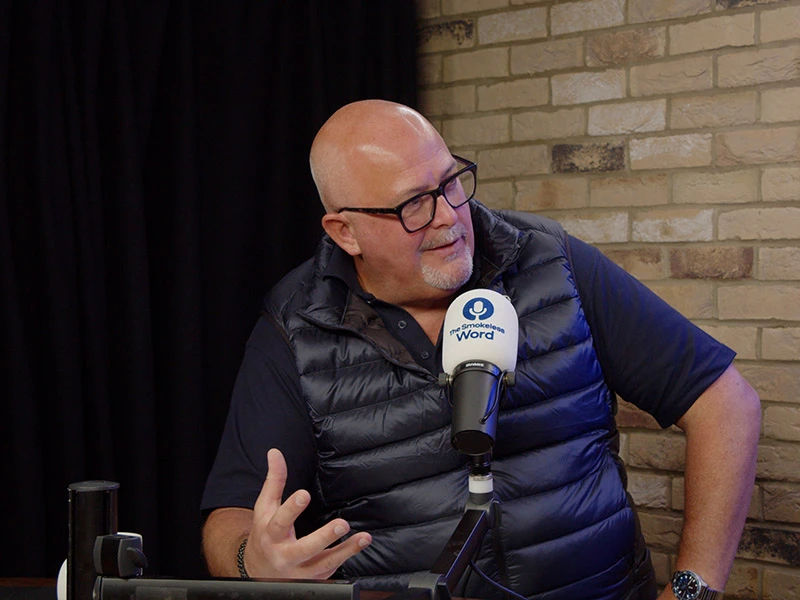

New podcast explores new perspectives on Building a Smokeless World
From the nuances of smart regulation to the cultural and political forces driving public health change, a new podcast invites listeners to consider what it truly means to build A Smokeless World.
The Smokeless Word is a thought-provoking new series hosted by Kingsley Wheaton, opening up reflective and unfiltered conversations with a wide range of guests – including cultural commentators, policy thinkers and creative minds.
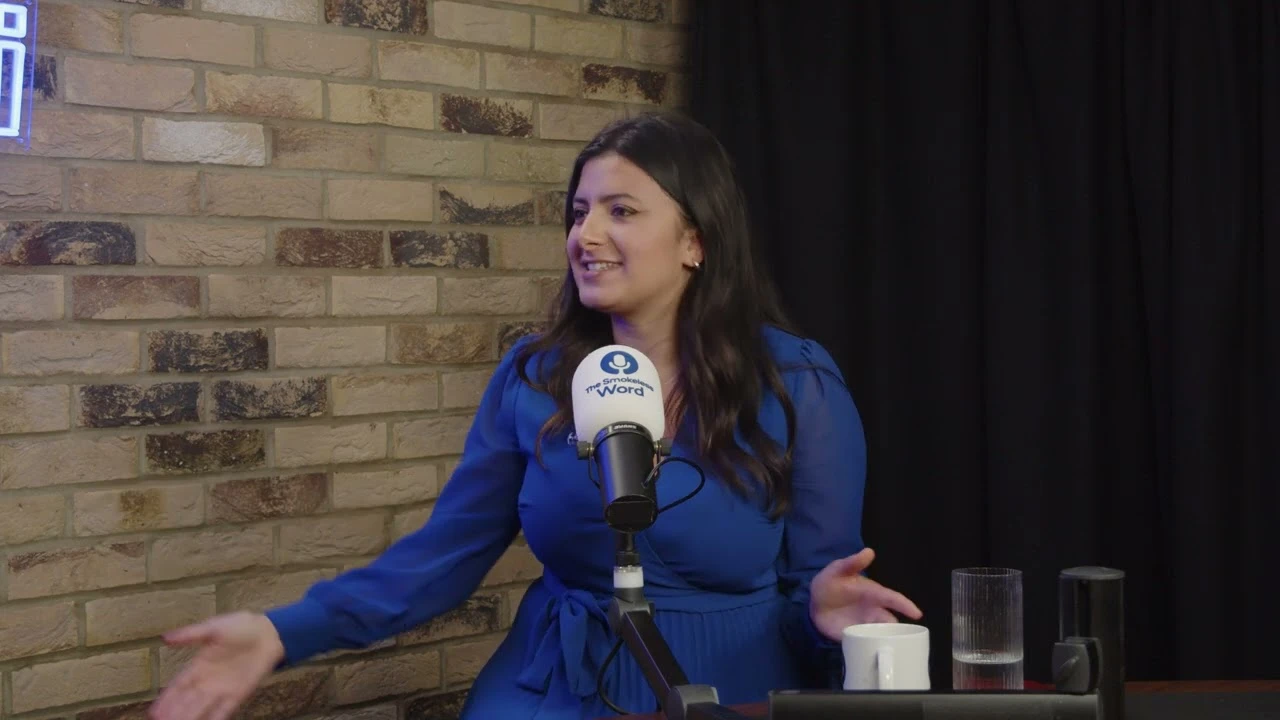
Season one brings together diverse voices including advertising legend Rory Sutherland and political commentator Reem Ibrahim. Each episode seeks out the metaphors, parallels and personal insights that connect their worlds with the broader journey towards harm reduction.
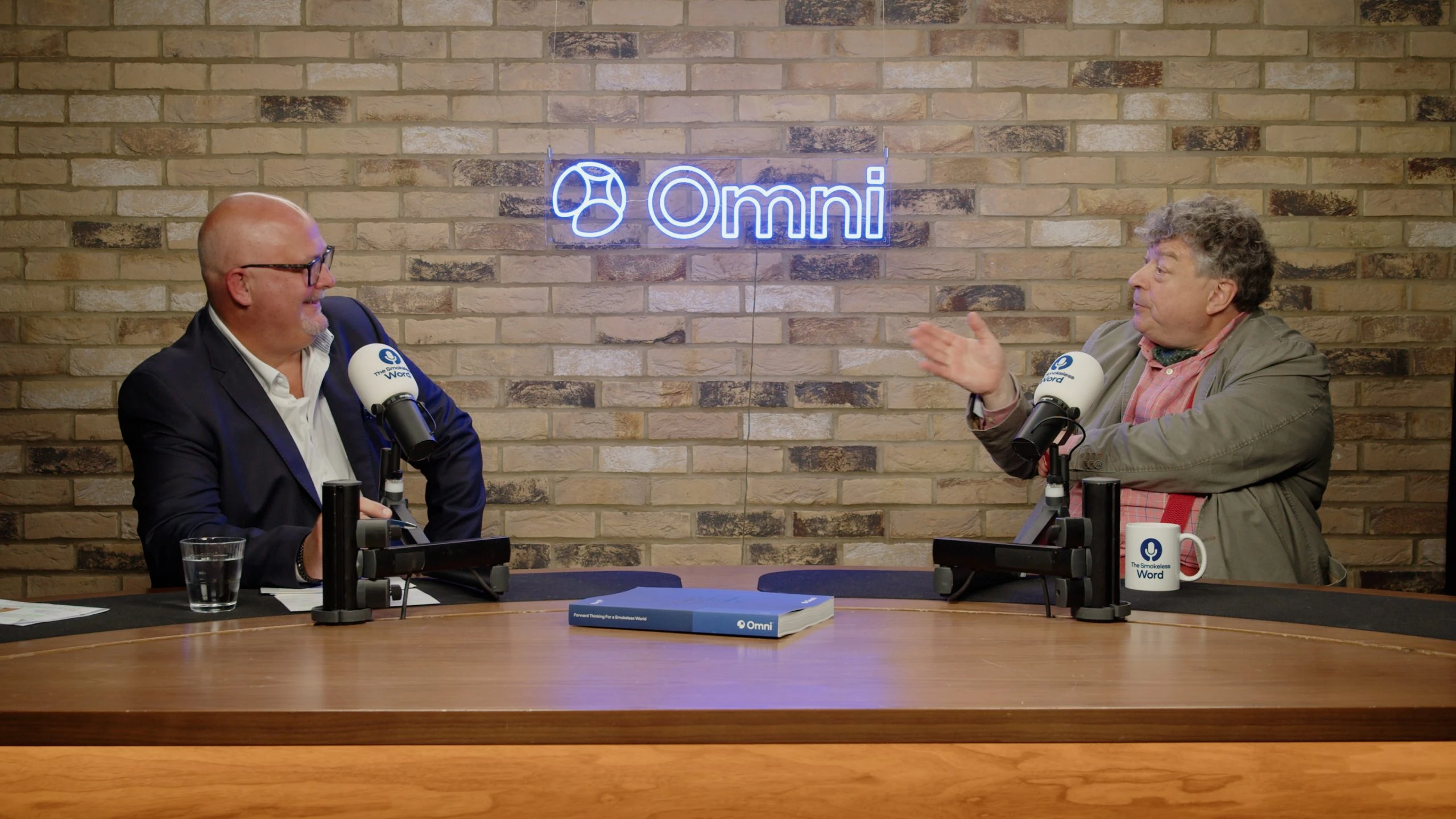
BAT’s Chief Corporate Officer Kingsley Wheaton said:
“Too often, we rush to conclusions. The Smokeless Word invites a different approach: take in the evidence, consider the nuance and join in open, informed conversations about the path ahead.”
Inspired by themes from Omni™ – BAT’s evidence-based platform focused on accelerating the shift to A Smokeless World – the podcast offers a broader take on issues at the intersection of science, regulation, culture and innovation.
Omni™ was launched in September 2024 and is aimed at informing scientists, public health authorities, regulators policymakers and investors about Tobacco Harm Reduction and building A Smokeless World.
The Smokeless Word is available on major streaming platforms:
- Episode 3
- Episode 2
- Episode 1
Kingsley Wheaton
This podcast is intended for regulators, scientists, policymakers, public health, media and investors. Exclusively. The views expressed in this podcast are the personal opinions of the speaker. Only any references to having reduced risk or reduced harm are based on the weight of the evidence and assume no continued smoking. This material is not intended for us audiences. Hello everyone, and welcome to the latest edition of the smokeless word Podcast. I'm delighted to be joined today by Reem Ibrahim in the studio. Reem is Head of Communications at the Institute of Economic Affairs, and she's with me today, and we're going to have a chat about all sorts of things. Reem, welcome. Hello.
Reem Ibrahim
Kingsley, thank you for having me on. How are you doing? Very, very good. It's very lovely weather outside. I'm very happy.
Kingsley Wheaton
Can I take you back a little bit? I think, let's come back to the LSE days in a moment. I think at 16, you started tiktoking. I did free market, you know, liberal stuff. Unusual to take to Tiktok for that sort of thing, you know. How did that go? How did that come about? Talk to me a bit about that. Yes.
Reem Ibrahim
So when I was at school and secondary school, I was at a state comprehensive in the suburb of London, and it was one of those areas that, you know, really were taken up by. I mean, I suppose all young people were by the Corbyn era. You know, this was 22 now, so this was sort of 2016 2017 Corbyn was leader of the Labor Party and incredibly popular amongst the grassroots. This is, you know, really, where momentum was incredibly popular, and I found myself sort of getting engaged and involved. And I thought, You know what, I quite like this Jeremy Corbyn. You know this? Jeremy Corbyn, sounds great. You know, he made one speech about Palestine. I thought, You know what, this guy's absolutely brilliant. And then I in my A levels, sort of studying politics and a bit of economics and history, and really understanding the woes of the Soviet Union and understanding how pernicious a authoritarian regime really can be. And I thought, You know what? Maybe this market stuff isn't too bad. And so I started reading and researching a lot more about it, and that's when I started my Tiktok account. So I realized that all of my peers that were interested in politics were either interested in an incredibly shallow perspective, and that's what I was when I first became interested, or they were just not interested at all. They thought politics didn't affect them, that it wasn't of interest to them, but primarily I was interested in the relationship between the government and the individual. You know, what is it that you can do every day? You can make different decisions every day, and those decisions aren't being made by essential authority. They're being made by you. But there are other decisions that are made by essential authority and are made on your behalf, and you have no say in those perspectives, especially if you don't vote, you have absolutely no say. So I really wanted, it was sort of driven by a desire for my friends to become more interested in politics and at least have an understanding of how much it affected them. I sort of felt, in some ways, a bit of a social justice warrior, you know, kind of, oh, I'm 1617, but I can make a few videos for fun, and they all went really, really viral on Tiktok. You know, I had one that got 4 million views, a couple million, 4 million, a couple of others that got, you know, a couple 100,000 views. And a lot of them, you know, these are pretty young people that were commenting. A lot of it was hate, but about 20% of it was, I've never heard somebody espouse that perspective. And when I first heard the word libertarian, I was in my first year at university, and I felt as though it was sort of a come to Jesus moment, because I had discovered a word that absolutely accurately described what I believed. And I started reading more libertarian literature, especially with, you know, the Austrian School of Economics, people like Frederick Hayek really understanding the fact that the government can never really understand exactly why individuals make different decisions, and therefore the government can never have the knowledge to centrally plan. And so from a moral perspective, I began to believe, well, individuals should absolutely have the freedom to choose to do what they want with their own lives and their own bodies, and fundamentally choose their own path towards freedom and flourishing. But also the outcomes of that are absolutely obvious. I mean, you look at comparisons between different governments, you look at the way in which the Soviet Union harmed so many people. I mean, literally millions of people died at the hands of those regimes, and yet I saw my peers at university glorifying those regimes. And so what I really wanted to do at that point was tackle that, and I realized I created a bit of a platform by that point, very small, only a couple 1000 followers, but the views were there. And in the UK, I realized. There were actually a lot of people, young people my age and younger, some teenagers, that were really understanding a lot of these perspectives. And for the first time in their lives, hearing an alternative to the bureaucratic, large state. They're hearing an alternative to the solution to all of your problems is the government, the government should be doing more. They're, for the first time hearing an alternative to that. And I was glad to somehow have had this fall on my lap and that be able to be me.
Kingsley Wheaton
Let me just quickly go back to your LSE days, you know, not necessarily known as a hotbed for perhaps, how you think, you know, how was that? How was that for you?
Reem Ibrahim
Yes, well, when I started making Tiktok videos, and, you know, the first one that went viral, or sort of particularly viral, 4 million view few. One was when I was in my second year of university, and I remember I had somebody come up to me and say, I really hate you, and just sort of walk off, okay, fair enough, you know. But one thing about about me is that I've always been, you know, quite thick skinned. Probably something to do with my childhood in which you're able to kind of be, you know, my family Moroccan, right? My mum's like, they're very, very strong people that don't care about what other people think. And I think that that principle was instilled in me. And so at university, you know, we hear people talk about the free speech crisis at universities, people being canceled, left, right and center. Really, it's about being principled in what you say, you know, believing what you say. If everything I say, I believe, I'm more than happy to back it up with information, with evidence and with facts and with an emotional narrative that really does prove these ideas. Because I believe this right? I believe that the ideas that I espouse will make the world a better place. And if you believe that wholeheartedly, I believe with every fire break exactly, you might as well go for it, and all of the hate and the distrust and the dislike is water for dogs back of a duck's back, because I don't care what they think. I know what I believe, and I think I've got the evidence and the arguments to prove
Kingsley Wheaton
it very good. Okay, let's turn to tobacco harm reduction. Let's turn to the Omni we put that out last year, forward thinking for a smokeless world. Let's think about that smokeless world. We've got the tobacco and vapes bill. It's going to do things like usher in a generational sales ban. Why is it so difficult to get policy makers to implement what I might call sensible or smart regulation?
Reem Ibrahim
It's really interesting. The UK used to be one of the best countries in the world for tobacco harm reduction. You know, the fact that vaping was so readily available, it was relatively cheap in comparison to to tobacco products, and the government embraced that. And really it's about those the products of combustion. You know, the products of combustion are what are incredibly harmful to the body. It's basically when you sit, when you let when you lit a cigarette on fire, when you lit, when you put on fire tobacco products. And really what this is is talking about whether or not we want to live in a nicotine free world, and that's what a lot of policymakers seem to want, is just looking at the evidence, really, that the UK have shifted, the only country in Europe that actually counts as smoke free, Sweden, they've got a smoking rate of less than 5% they've not achieved that by banning products, by taxing them to the oblivion. They've achieved it by allowing adults to choose up until very recently, the UK understood this, and it seemed to me a political narrative that stopped that one thing that I'm particularly worried about in the tobacco and vapes bill, other than the generational tobacco ban, which I think is a liberal but the fact that ministers will have so much power to regulate the advertisement and packaging, there is so much misinformation out there, and by doing this, the government would then completely rule out The idea that a lot of these companies would even be able to advertise those products.
Kingsley Wheaton
I was in Europe recently. I was in Brussels. You know, the EU's got a smoke free ban by 2040 I think the current smoking rate is 24% it's dropped by 1% in the last decade. They're not going to get there. So my argument was, how do you create the regulatory conditions? And what I find difficult, and I think we find difficult, I think, as a responsible player, is, I think we would understand how to frame that in a really sensible way, to drive that, and yet we're excluded, you know? So there's again, we get back into words like prohibition, exclusion, you know what? Why is why our industry voice is not heard? And how could we, how can we make our industry voice better heard, beyond things like the Omni
Reem Ibrahim
it's so interesting. Actually, the IEA published a paper called not invented here by my colleague, Dr Christopher Snowden, and it kind of gets into this. Why is it that these solutions to these problems are being ignored and in many ways, hated by activists in a green energy. Why is it that, you know, the Green Party and extinction rebellion are all anti nuclear? Why is it that anti obesity campaigners are all anti ozempic And you know, GLP one weight loss jobs, even though it's clearly a fantastic solution to the problem, why is it that loads of you know, how. Housing advocates, or low cost housing advocates, are against housing deregulation and house building. You know, they're against the very solution. It's because it's a solution that wasn't invented here. It wasn't a solution they come up came up with. It was a solution that often came from the industry, purely because they are created by or often created by tobacco industry players. They are disliked. And I think that we really have to take away that emotional argument just looking at the evidence. And fundamentally, these people, these activists, are playing with people's lives. And I really think we need to discuss that a lot more.
Kingsley Wheaton
Well, there was a study, an external study done that, if, I think it said that if Europe, I don't know if UK, was in it, from a sort of geographical point of view, could achieve the smoking rates of Sweden that would save three and a half million lives in the next decade. You know that that feel, and it seems to me, just to sort of wrap it up before a quick bit of quick fire that going back to where we started, that somehow, you know, innovation, liberty, technology, consumer choice, does eventually solve these problems, and rather than intervening, maybe, you know, if tobacco harm reduction could be embraced, actually standing back. I think that's what the Nudge Unit did, yeah, in the first place, studying what Rory was telling me in one of the previous episodes. But the reason
Reem Ibrahim
for it, I would just give an answer to that, is it's rooted in public choice theory. Politicians have an incentive to be seen to be doing good things, and regulation is the perfect way to do that. Doesn't really matter what the outcomes are. If mums net are happy that, you know, the government are banning vapes and restricting and regulating and taxing all of these products they deem as sinful, they look great. You know, Rishi Sunak has a legacy as the prime minister that introduced the legislation that would ban smoking, despite the fact that the black market is opening up, despite the fact that it may not have a real impact on any of those particular individuals, despite the fact that, you know, countries like Australia have had literally fire bombs. People have died over the war, over vapes. Despite all of this, the narrative is that Rishi Sunak is the prime minister that banned all of these things, and a Tory Prime Minister and a Tory Prime Minister, and so he's able to look great from it. That the reason for the answer to your question, why is this even happening? Why are they not following the evidence? It's because they can shift the narrative and make themselves look good, yeah.
Kingsley Wheaton
And of course, that's before we even get on to enforcement. Never mind regulation, you know, which is probably a topic, if you if you'd come on again, quick fire round, is there a belief you've changed your mind on in the last year or two,
Reem Ibrahim
the royal family?
Kingsley Wheaton
Really?
Reem Ibrahim
I love the royal family. Love the royal I sort of instinctively, as you know, when I sort of started getting into libertarianism, was like, no, sorry, these aren't very quick fire answers, but, but I have changed my mind, and I am. I do love the royal family.
Kingsley Wheaton
Okay, very good. And one thing you think people should do more of every day in their daily lives,
Reem Ibrahim
tweet opinions, yeah, well,
Kingsley Wheaton
it's funny because I call it social and new media. You just call it media, right? Yeah. We have to give these oldies. Have to give this label to the new stuff, you know, when it just is the stuff you know. Okay, that was one of them. Okay, here's David Cameron or Margaret Thatcher. Margaret Thatcher, certainly cornflakes or rice krispies, something else wee to mix. Do your cereal really? Eat breakfast? All right, okay, no breakfast coffee, that's very good. And if you could give me one piece of advice going forward, give BAT one piece of advice. What would
Reem Ibrahim
Margaret Thatcher, it be? Give BAT Okay, well, Kingsley, yourself, continue speaking. I think you're an absolutely brilliant communicator. Continue opening your mouth. That's great. You're a great advocate of tobacco harm reduction. But as a whole, I think talking about freedom is really important good. I would say, Yeah, focusing on liberty and JS mill
Kingsley Wheaton
and JS mill. Any questions for me? Quick, quick fire and response from me.
Reem Ibrahim
Well, you obviously have worked in BAT for a very, very long time. I'm not calling you old, but you have worked there a very long time. What would you do if you know when you when you or if you ever leave BAT? What's your alternative career path.
Kingsley Wheaton
It's a great question. I think the more I think about this, and I'm not, you know, I'm not planning on leaving anytime soon, and I hope, you know, bat thinks the same. I'm certainly persuaded by purpose, and I love working with people, so I think it might well be a portfolio blending. You know, I'd love to be advisory in some businesses. I could see myself working for a charity, you know, for not for profit, possibly a governor at a school, yeah? So sort of mixed portfolio of things that have purpose and people at their center.
Reem Ibrahim
I love that. Can I ask you a follow up question? Yeah? Please do, what's your favorite drink?
Kingsley Wheaton
Red wine. Probably red wine, probably red wine or a gin and tonic in the summer. Probably tells you a lot about a person. Reem, thank you so much. Thanks for joining me. Thank you, everybody. That's the latest episode of the smokeless word. Delighted to be joined by Reem Ibrahim, and I look forward to seeing you at the next episode. Please review the evidence and join our Omni conversation. Thank you very much.
These transcripts are AI-generated and may contain errors or inaccuracies and should not be relied upon.
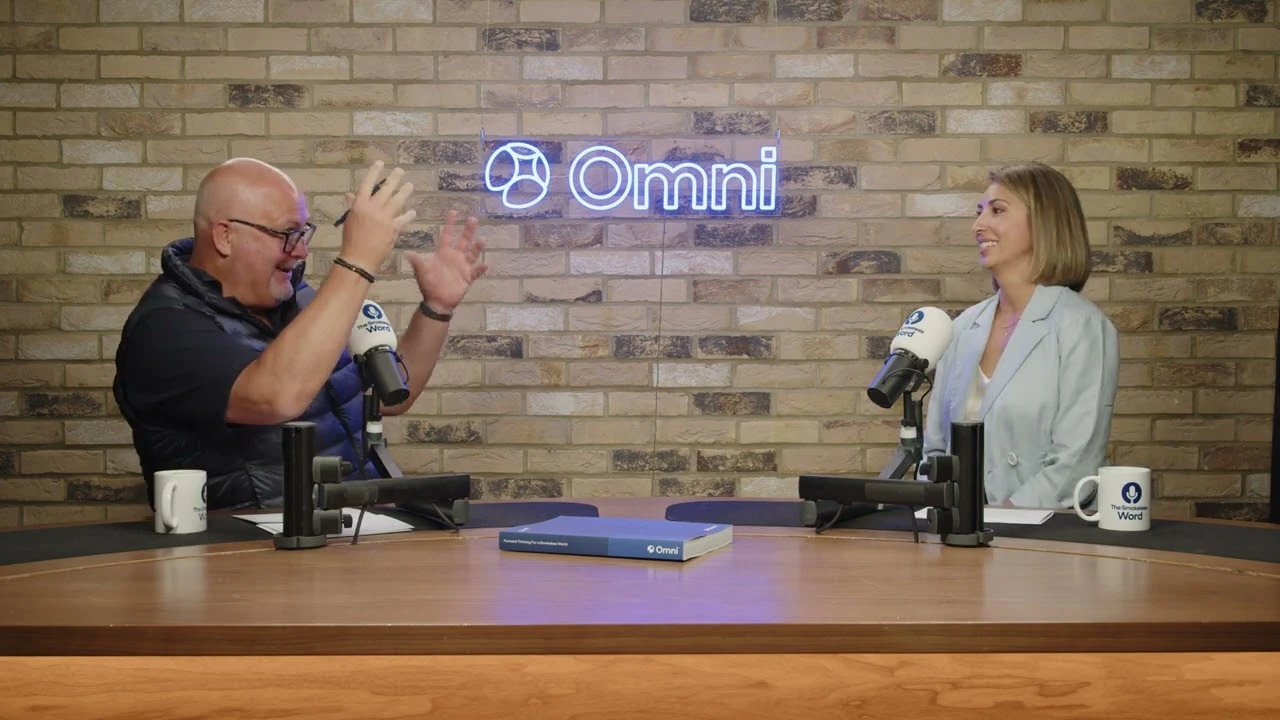
Kingsley Wheaton
This podcast is intended for regulators, scientists, policymakers, public health, media and investors. Exclusively. The views expressed in this podcast are the personal opinions of the speaker. Only any references to having reduced risk or reduced harm are based on the weight of the evidence and assume no continued smoking. This material is not intended for us audiences. Hello everyone, and welcome to this episode of the smokeless word. I'm delighted to be joined today by Val morrice, the senior vice president for our vapor business at Reynolds. That's bats, American subsidiary business who's come all the way over from Winston Salem to be here today. Val a huge, warm welcome to you.
Valerie Mras
Thank you so much for having me here today. I'm so excited. No, not always
Kingsley Wheaton
great to have you here. How was the trip over?
Valerie Mras
Everything? All right, all good. It's always good to come back to London. I'm you know, lived here for a few years.
Kingsley Wheaton
You joined Reynolds, I think, in 2008 October, 2008 etched in your in your memory, you joined, I think, as a sales rep, for those who are watching this and don't know, that sort of entry level rung of Reynolds, 17 years later, Senior Vice President for vapor, just tell me about how you, you know, cross the Rubicon, if you like, and made the decision to join Reynolds at that time. Yeah.
Valerie Mras
I mean, at that time, I was fresh out of undergrad, so I was trying to make a decision on where I wanted to go. My mom, super successful sales woman, you know, I thought this, I can do this. I can let me jump into the sales side. And I really wanted to look for an established organization that had some powerful brands behind it. I already had a love of marketing prior to joining the organization. When I was in college, I worked for an ad agency and a production studio, so I knew that I loved the idea of marketing. I just never worked on the sales side, so I wanted to enter into there. And I, you know, took my first step with Reynolds. I never joined the organization thinking that I would be here 17 years later. That is not something that you start, right? And every all of your career advice that you see out there today says you need to leave organizations to move up, you need to be able to do all of those things. But I think what my career proves is that you don't have to do that. You can actually progress in your career in one place, so long as the the organization is set up right, and that you work hard and stay curious and continue to move on. I've been afforded some amazing opportunities here, for sure.
Kingsley Wheaton
And how long did you spend in that, in that first, I mean, I know a little bit about, you know, those, those roles, you know, you're going in and out of retail outlets, sort of customer management, a lot of drive time. You're on your own a lot. How long were you in the role? And it must have been quite challenging for a first job.
Valerie Mras
It it was, and I think some of the things that I learned in that I carry on today. So I started in the Phoenix area. So thankfully, it was a little bit more of an urban center, and I wasn't necessarily out in the rural areas, but it is literally opening doors in and out of convenience stores, building relationships with people who may not necessarily want to talk to you every single day that you walk through those doors. And in that time, I also was able to speak to adult nicotine users. So part of my job was building relationships, not only with customers, but with consumers as well, one conversation at a time over time, I was able to also learn more about the brands and be able to become an expert in them, which is really what drove my love for the brands that we have today. But it's not easy, right? You get a lot of rejection, not only from customers, but from consumers. I got it as well. You have to learn to be resilient and be able to overcome that and grow a little bit of some thick skin. So that's those are some hard lessons to learn when you're, you know, 23 years old, starting with the organization, and there was a lot of thinking time on the road, a lot of driving in between, and learning to be a self starter.
Kingsley Wheaton
Yeah. And how long were you in the field? How long before you got the sort of call to head office? So it's
Valerie Mras
about two and a half years in the entry level sales job, and then I did about a year in the kind of more national account sales side, 2008
Kingsley Wheaton
that was, that was before any smokeless products in the Reynolds portfolio. There would have been some oral products, probably the more traditional oral products. So over those four or five years, as Reynolds built up to launch views, I suppose view solar, for the first time, you saw a lot of change in those early few years. How did that feel when you were, you know, down at the sort of customer management end of things?
Valerie Mras
Yeah, I mean, I think so on the Vuse solo. I'll come back to that, because I was actually part of that first launch, which was really exciting. It's a full circle moment for me. But, you know, the beginning, transforming tobacco was essentially what Reynolds was anchoring to and and we all believed it right. We all knew that this was what we were doing. And so these are legacy brands that we've had. These are the brands that carry so much history and heritage. But we know that this isn't where it ends. And so from the very beginning of my career, it's been about transforming tobacco. Camel crush was actually launched the year that I joined. And so I got to come in on the heels of that, which is also just a proof point for innovation, even if it was within the FMC category,
Kingsley Wheaton
you know, I know you're a, you know, a massive love, lover of marketing, before we get into sort of marketing at Reynolds, and some of the challenges just talking about marketing, your sort of, you know, beliefs, your your ideology, your philosophy, how do you how do you think about marketing as a as an overarching theme?
Valerie Mras
I mean, I it's, it's tough to categorize as one thing, right? So what are the things that I love most about marketing? I think it's that sometimes, when you feel like you found the answer, it's not the answer for long, right? It's always moving. It's always evolving. And it really is where strategy and creativity come together to try to solve problems. And then on top of that, I get to layer on some creative storytelling, which is really exciting. Who doesn't love solving a puzzle and then having to rebuild it all over again? And I think that's what makes it most exciting, excuse me, is that we don't ever have the answer for long we have, we have a good strategy that we land, but there's consumers are always evolving, right? As a human species, we've always evolved, and so having to keep up with where consumers are, and meeting them where they are, and trying to find the right balance of staying true to who you are yet evolving with consumers, I think, is one of the ultimate challenges. That's super exciting. Yeah, I
Kingsley Wheaton
love that definition. What did you say? Where strategy and creativity meet to solve problems? One of the best definitions of marketing. I think I've heard particular moments in your career that you're super proud of where strategy and creativity has come together in that way. Any any particular highlights?
Valerie Mras
Yeah, I mean, I've had quite a few highlights. I think I've had a lot of roles, and every single one of them defines you a little bit along the way, there was this one kind of product category that I worked on. It didn't necessarily see the light of day. We didn't necessarily launch it, but it was probably one of the moments where I was able to define the strategy that we had for that specific product. I was able to drive the creative direction of that. And I was, you know, I was a pretty Junior individual at that time, kind of leading this one specific category. Now it wasn't the right time to launch that product, and it never saw the light of day, but being able to do those two things. And then on top of that was lead my very first cross functional team, which is a very intimidating thing to do when you're very early on in your career. And I remember stepping into a room telling an entire group of very seasoned professionals, and I said to them, I have no idea how to bring this product to market. The only thing I know is that I need to trust you to help me get there. And what I can promise to do is to be the largest advocate that you have within the marketing function to push this forward. And that team was incredible. I mean, so that was also one of the lessons in empowerment, because there's no way I could have done it on my own.
Kingsley Wheaton
Yeah, incredible, incredible. I just want to go back to that. You said something that really interested me just now. You were talking about transforming tobacco, and I think you said we just knew that that was the right thing to do, or we just knew that that's what we had to do. Can you just just talk about that? Because that hints at purpose, I think, rather than strategy, if you like,
Valerie Mras
Yeah, I think we've always been an organization that believes in tobacco harm reduction. This has been kind of one of the key pillars of the organization, which is why we tested so many of these different products. And you know, you think back to some of the history of the Reynolds organization, and, you know, things like Eclipse and Premiere, right? This is always like back in the 80s, yeah, but it's always been innovation is always Innovation, Science, purpose LED. Innovation has always been at the core of the Reynolds organization. And we knew that coming in, right? We felt it, and we've always, I think, as an organization, stood behind what that means.
Kingsley Wheaton
Now, you know, Senior Vice President for vapor, well over a billion dollars of net sales revenue. You know, that's a that's a big brand in anyone's book. I think thanks for reminding me of the pressure. No, no, that's fine. That's fine. I mean, some of our CPG peers talk about billion dollar brands, don't I mean, we ours is ours is below excise, right? So that's a net industry take. But I wanted to think about the responsibilities that that go with that. And how do you think about responsibly leading views forward, and particularly the responsible marketing of vuse in a in an industry that's sometimes perceived as controversial.
Valerie Mras
You know, I think responsible marketing has to be at the core. So many times we see within these spaces, within these categories, that there are these fly by night, opportunistic brands and products that come in, but we're not in it for the short haul, right? We're in it for the long haul. You know that we've been building the views brand for a very long time, and so at its very core, it's about sustainability of the business moving forward, and ensuring that we can continue to provide this portfolio of potentially reduce risk products to. Consumers, because if we can't do that, if that gets cut short, because we are doing things irresponsibly, then we've done a complete disservice and have not delivered on what we said as a foundation of transforming tobacco before and building a smokeless world now.
Kingsley Wheaton
Yeah, I was again taken talking about team leadership when you moved into that role. I don't know how you described it. Was it the other thing you said scary, did you but it was kind of like, you know, it was quite, quite quite a nervy moment. How do you think about leadership? What is, what does great leadership look like to you?
Valerie Mras
Yeah, I think leadership. I mean, at least my leadership. So I've had a lot of tests of leadership, a few of them, I think probably one of my more defining was when I moved into this role in London, because I had to take on a team in a global environment. And in that moment, by the way, I had to work with cultures, individuals from very different backgrounds that I'd never worked with before. Here I was thinking, I'm this very diverse individual. I'm a Mexican American woman, I'm a Latina. I do all of these things, and I move here, and I am just American, just an American. I am nothing else, but I take on this team, and it's from all corners of the world. I've never met them in person. I have to try to build a culture and relationships with people in a virtual environment. And that was really a test of, how do I motivate and really help to drive people to be their best in a place when I can't rely on the things that I've relied on every single day, which is to build these relationships face to face. So really learning how to foster team culture, a positive team culture, where everyone feels motivated, right? And that was some lessons in empowerment and trust. I think people need to feel like they have the space to be able to thrive but also fail safely. And that's one of the things that I think I hold very near and dear to my heart, is making sure that there is an empowerment, there is a sense of of I can do this, I can drive it. And with that comes great responsibility, right? Either people are going to fly really high or they're going to fall really hard, and you have to be ready as a leader to pick up the pieces when someone falls, to be able to drive.
Kingsley Wheaton
And how do you, how do you, how do you resist that, what you know, I call that sort of stepping in moment, you know,
Valerie Mras
you can, I don't resist it all the time.
Kingsley Wheaton
You can sort of see that you know, the plates metaphorically falling to the floor, you know. And yet you want them to learn, you know. So how do you calibrate that kind of step in, step out,
Valerie Mras
really difficult balance. And like I said, I don't get it right all the time, but I really try to steer a little bit right. Less, less oversight helicopter, more of steers. Certainly, there are intervention points that come in, and anyone who's reported to me probably says that I did it maybe a little bit more than I like to think. Little bit more than I like to think that I've done it, but it's a really fine balance. And I think the other thing that helps to really give people the environment to thrive is inspiring a culture of curiosity. Because without curiosity, without the hunger, without the drive, you know, no one's going to be able to fly high, right? Everyone's going to kind of just stay where they are. And I think that's one of the things that, you know, if I could give any advice to anyone who's coming in the organization and wants to be successful, it's, you have to stay curious. You have to stay hungry. No one's going to give you all the answers. No one's going to tell you everything you need to be doing. If I had a roadmap for my job? Yeah.
Kingsley Wheaton
I mean, we hand it over to AI, yeah.
Valerie Mras
Now let's go over to kind of your career, some other defining moments on getting to tobacco harm reduction. So this, your career now is completely intertwined and really leading our tobacco harm reduction agenda. How did you get here? How did you know? How do you crystallize that belief in tobacco harm reduction over the course of your career?
Kingsley Wheaton
Yeah, it's been a very interesting journey, you know, for me, 29 years later, you know, we started to take smokeless products, you know, more and more seriously around the turn of the last decade, I suppose so, the sort of first half of my career. I think we all understood that, you know, but as you were saying, We all wanted those ways to enjoy tobacco and nicotine, you know, with potentially less of the harm. I think innovation and technology has sort of caught up with that challenge. I was very fortunate to lead the next generation products division from 2015 that was a jaw droppingly, sort of, you know, nervous moment for me, you know, zero revenue, 100% of bat, you know, in combustible products. I remember the then CEO said something to me, and I don't, I don't know if he was trying to motivate me, you know, or worry me. He says, you know, Kingsley, the thing about bat is it doesn't do small things very well, you know. And I think the message was scale this, you know, give me some give me something to work with, you know. And we were a few people around at the time, Fred Montero, Donato Marina, tranny, were on that journey together, and we had a plan in three years go from zero to. 500 million revenue. And you know, what I learned then was, you know, you sometimes have to win a bit ugly, you know. But it set the stage for what is now 17 and a half percent, three and a half billion pounds of, you know, bat smokeless revenue. So that was exciting. And for me, it just crystallized, you know, to your more sort of ideological part of your question. It crystallized what I always believed in, and that is, you know, I mean, and that is, you know, I'm a libertarian at heart. I believe in the adult freedom to choose. But I understood finally that if we could find a way to transform this industry and leave an enterprise which may well sell its last cigarette one day, you know, that's a real purposeful journey as well, and I think you have to stay, as you were saying, in terms of responsible marketing, you have to stay very true north on these things. You know, we have a vision, build a smokeless world, encourage consumers to switch to better, you know, a better tomorrow. We have to say true north. That's what we're trying to do. And that journey won't be a linear path, you know, we'll have setbacks, and we'll have good days. We have to stay focused on that, on that ambition, and we're an
Valerie Mras
organization, is taking big swings. So thank you for taking a big swing with new categories. I mean, that's, that's, that's one of the key things is, yeah, yeah. You know, it's taking big risks.
Kingsley Wheaton
Well, I didn't want it to be what, you know, what is it? Is it three balls and out or something? Is that in baseball? I'm not sure. So swing big three strikes and you're out. Is it three to strike? Strike three, ball two or something like that? No, you're right, and I think we've got to approach things with some ambition. And you know, if we want to achieve a predominantly smokeless business by 2035 we've got 10 years to go from what, nearly 20% to 50% so we're gonna have to figure out how to do that.
Valerie Mras
You've either hired someone to write your book, or you're writing your book, yeah, and it's about your career, yeah, intertwined with a few personal details, yes. What's the name of the book?
Kingsley Wheaton
Name of my book? Sort of semi autobiographical. Started writing a book a few years ago. Yeah, I've got the chapter outline. It's lying in, probably in a file somewhere. I'm going to call it 5 million miles later. 5 million miles later. And that rough, rough. That's about the amount of miles I've covered traveling the world with bat. So, you know, if you add up, you know, all the plane journeys in what is it, three decades? It's about five. 5 million miles of the earth. We could probably work out how many times around the world that is, or something. So, yeah, for five, well, I might have to change it. It might be six by the time I write it, or five and a half. But something like that. That was quite an interesting take on. Yeah, I'll share the chapter outline with you at some stage. It needs writing. I need some time to write it. Is there something you know that you you've changed your belief, where you've changed your mind, something that you believed in, and something's happened, perhaps, you know, quite recently, in the last few years, where you've changed your mind on that belief.
Valerie Mras
Look, I one of the things that I kind of believed, and I think helped define who I am as a person, was, you know, you work hard, you get there. You work hard, you you get there. But I also have learned over over time that it's not just about the working hard. It's about self advocating for yourself, right? You need to advocate for yourself to continue to grow. And the work without a purpose means nothing. So hard work alone doesn't get you where you need to be going. Doesn't get you where you want to go. And I think I started out my career thinking, if I just go in and I do the work, I'll continue to be able to grow but it takes more than that, so I think, I think that's one of the key things, and I think the other is just, you know, growing up and in a highly Hispanic home sometimes you don't advocate for yourself very much, and that's been a very uncomfortable space to lean into, but it's one of the things that's critical for success, I think,
Kingsley Wheaton
yeah, so sort of shape your own destiny. Yeah, absolutely. Do you believe that we make our own life luck in life? Is that? Is that an attitude?
Valerie Mras
The most part, I do. I think some people may be a little bit more lucky than others, like those who actually won the lottery might be a little bit more lucky than others, but for the most part, I think we create the opportunities in front of us, and it's our job to take them.
Kingsley Wheaton
Yeah, capitalize on Yeah, absolutely, Val.
Valerie Mras
Thank you very, very much. It was so fun. It
Kingsley Wheaton
was great fun, wasn't it? Yeah, and I just want to thank you from coming all the way over from the US. I know you're over for a few other meetings, but taking the time to join us in the smokeless word studio. So that was the latest podcast of the smokeless word with Val morrice, our senior vice president responsible for our entire vapor business in the US and I look forward to seeing you all with our next guest at the next podcast. Take care.
These transcripts are AI-generated and may contain errors or inaccuracies and should not be relied upon.
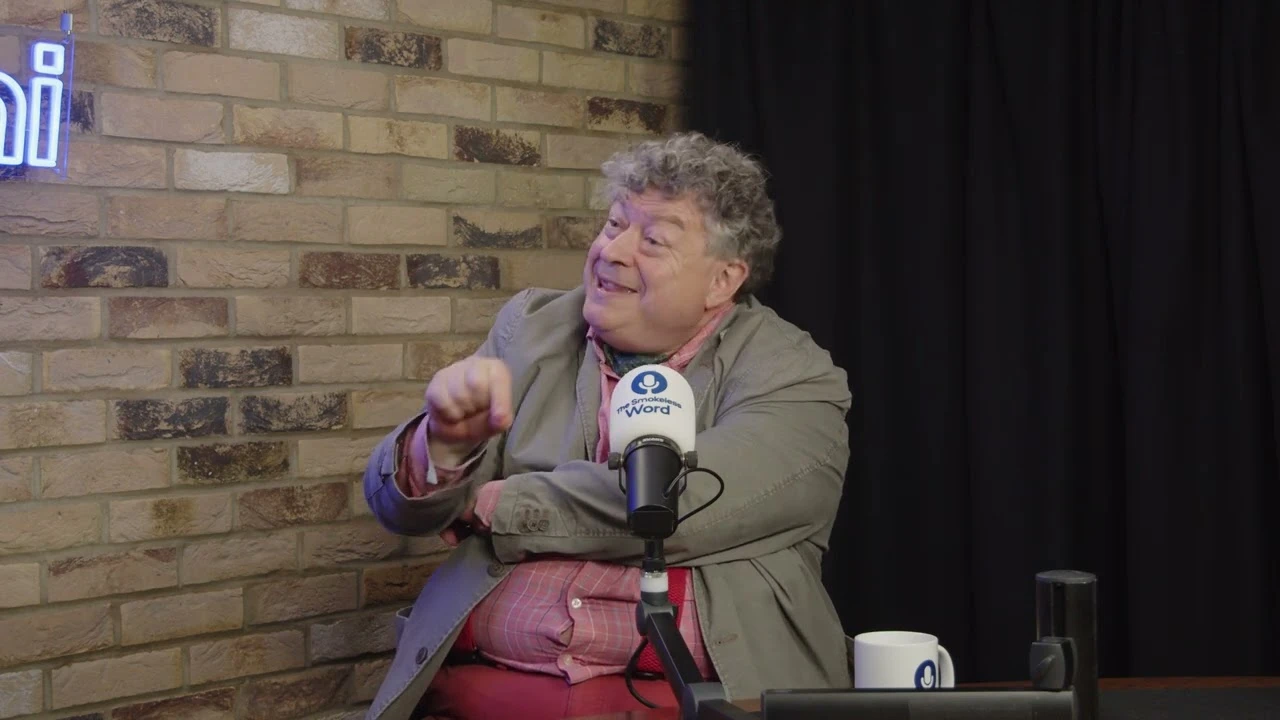
Kingsley Wheaton
Hello and welcome everyone to the smokeless word with me. Kingsley Wheaton, chief corporate officer at BAT. This is the very first episode of our new podcast inspired by bats transition to a smokeless world. You may have heard of the Omni. Our ambition is for it to be a platform for thoughtful conversation rooted in evidence, a kind of manifesto, if you like, for change and a mandate for action. We launched the Omni in September last year, and I've got a copy of it here. It's a robust scientific resource that holds 260 independent peer reviewed studies all in one place, and this podcast will explore a lot of the themes that are in Omni with leaders from the worlds of business and politics and also some familiar faces. All of our guests will explore themes of transformation, collaboration, bold action and bold decision making. Hopefully it will inspire you to make your own bold decisions in your own personal transformation journey. Today, Rory and I will talk about marketing electric cars and why he's grateful to have the option to vape. Please note that comments by guests do not necessarily reflect the views of bat. A full disclaimer is in the podcast description. This podcast is intended for regulators, scientists, policymakers, public health, media and investors. Exclusively. The views expressed in this podcast are the personal opinions of the speaker. Only any references to having reduced risk or reduced harm are based on the weight of the evidence and assume no continued smoking. This material is not intended for us audiences. And I'm delighted to welcome to a smokeless word podcast. Rory Sutherland, deputy chairman of Ogilvy, spectator columnist, and I think now social media star, Rory, welcome and thank you for joining us.
Rory Sutherland
Pleasure. I wouldn't have missed this for the world. It's an area that really intrigues me.
Kingsley Wheaton
Wonderful to have you here. Just, can I just talk about Tiktok? Because that's going to be a new phenomenon for you. 250,000 followers. Talk to me about how that started and how it's going.
Rory Sutherland
To be honest. I think it's one of those cases where, because you're not expecting to see a fat, 59 year old man on the platform, I think that's partly what contributes to the success. It's that element of optimize for surprise. It happened actually thanks to a young film student during covid. I obviously recorded a lot of podcasts. There was quite a lot of material of me speaking previously online, and this young aspiring film student, very talented guy, just started taking clips of me and basically tiktokizing them, adding subtitles that so the kids can watch them at school with the volume turned down. And the first thing I knew about it really was when I started getting mobbed by school children on the street. And my children, my own children, didn't really know how to react. I think they were half gratified, half horrified, to be absolutely honest. But it's, it's actually a interesting demonstration of the power of the medium, because I'm literally, you know, I will get, you know, selfie requests if I'm in a San Antonio supermarket.
Kingsley Wheaton
Rory I wanted to ask you, you wrote a story about, I think it was a spectator column. You talked about turning up. You said to the person in question, Why are the lights out?
Rory Sutherland
This was actually on, I think the A 40 or the a 449, right? It interested me as a marketer, because it suddenly illustrated to me the fact that as businesses, we get absolutely paranoid about costs, but you don't suffer the same punishment for opportunity costs and marketing, I think, which is generally about opportunities, not about costs, by definition, generally, then gets poorly served. So the example was, it was about eight o'clock in the evening. It was dark, and we're driving along the A 40, and there's the place, I mean, it looked, you know, looked less welcoming than the Bates Motel. Okay? All the lights were off. The shell sign was off, you know, the petrol prices were off, completely shrouded in darkness, and we wanted to buy milk, because my wife annoyingly has this lactose nonsense anyway. But I said, Look, it can't be closed. My wife said, Look, this is closed. It can't be closed because, if you think about it, I've been here on Christmas Day, there's no way that a place that's open on Christmas Day would be shut at eight o'clock in the evening. So let's drive in anyway. So we went down the off ramp. Sure enough, the whole place was open. We were the only customers, unsurprisingly, because everybody else on the road would have assumed it was shut. And by the way, the last words of, I think, William Sainsbury, who founded Sainsbury's. The last dying words were, make sure the stores remain well. Are kept well lit. Okay? And so I go up to the guy, and as I said, we're the only customers. We've got a whole service station to ourselves, practically, because the road is the signage is often the last. Lights are off on the road, it looks as if you're closed. Now, I was expecting, you know, with a marketer's instinct, the guy to go, we haven't turned the lights on. And I expected him to run over to some sort of Frankenstein, like, switch on the back wall and turn it all on. And he went, Yeah, I think, I think the guy who ended the last shift probably forgot to turn them on when he left. And I was there going, Well, go on, turn them okay. So literally, this was costing them at least in fuel sales. It was probably costing them 1000 pounds an hour. Okay. It lost revenue, okay, but there was no particular sense of urgency around this. Now, if that same guy had been caught on CCTV nicking a lion bar at two o'clock in the morning, okay, they would have been hell to pay, because that's a cost, okay. He would have lost his job. The whole thing would have been considered deeply serious, you know. You know, cost reduction is, of course, quantifiable and immediate, whereas what was so strange to me was that this guy who was effectively costing them, you know, a few 100 pounds an hour in lost revenue, the failure to market yourself never causes as much pain and angst and urgency as an unnecessary item of expense, but actually they should be treated as equivalent.
Kingsley Wheaton
And do you think is there something about incentive and reward in that story? Do you think, yeah,
Rory Sutherland
if you think about it, it's the difference, I suppose, between the concept of sins of commission and sins of omission, okay, which is doing something bad is considered much, much more severe and much more career damaging than failing to do something good. So fundamentally, I think you have a bias in business decision making, which is that you get into huge trouble for incurring any kind of unnecessary cost, whereas no one gets bollocked for missing an opportunity, and therefore no one gets bollocked for a failure to experiment. No one gets bollocked for not trying something different, and there's a natural trade off between efficiency and innovation. There's wonderful Canadian writer called Blair ens who coined the phrase inoficiency, which is a phrase, a kind of portmanteau word that captures the fact that at some level, in any properly organized organization, the urge to pursue efficiency at all costs comes with a hidden cost, which is that it not only becomes impossible to innovate, because innovation generally, in the short term, will incur some sort of additional cost. There's that also, I don't think you can get lucky. I mean, I talk occasionally in my talks about the bees, the fact that there's a trade off in animal foraging, in algorithm design, in insect behavior, between explore and exploit and the modern corporation dominated it is by finance, overweights exploit and underweights explore. In other words, the bees that don't obey the waggle dance, of which there seem to be about 20% although it varies enormously, okay, if you're just doing very narrow double entry bookkeeping, most of their journeys appear to be a waste of time. The value of those bees is one time in 101 time in a 500 they come back with something much more valuable than pollen, which is information about where a lot more pollen is to be found. And so the natural tendency to, I mean, by the way, it's wrong even to consider that a trade off. It's not a trade off. They're two complementary parts of the same benign system in effect. So yeah, I would argue that modern business, with its preoccupation with short term returns. There's, you know, at some level, you know, initially it's very, very good for the people doing exploits to become better at it. I'm not disputing that. But eventually you run out of road, and you become trapped in a local maximum. And you also become less resilient, because you never discover anything new. You become over optimized on the past.
Kingsley Wheaton
I shall take the idea Rory of waggle dancing bees back to the BAT ranch. I was also, I think it was part of your mad fest stuff. You were talking about an easy jet pilot, where the plane came to one of those, you know, infernal bus gates, as I call them, and then you twisted that, I think, in a good way.
Rory Sutherland
This was a glorious bit of alchemy in that the pilot lands. I think we're at Gatwick. And he says, very clever phrase. I've got some bad news and some good news. The bad news is, there's a plane blocking our gate, so we won't be able to get you an air bridge today, but the good news is the bus will take you all the way to the passport control so you won't have far to walk with your bags, and suddenly the bus journey was inordinately less painful than it would have been without that information, because we was comparing bus with air bridge and. And we see the bus as the poor man's air bridge. A lot of these false comparisons really fascinate me. It always fascinated me when people said, Yeah, I don't think zoom calls as good as a face to face meeting. And you kind of go, yeah. I mean, obviously in the moment, it's not going to be quite as good. Okay. On the other hand, what percentage of your zoom calls would have really happened in the real world anyway, yeah, okay, it's not an apples for apples comparison, because, you know, you have a zoom call with three people on three continents, where, in the pre zoom age, that meeting would have taken six months to arrange and would have involved sort of 12,000 pounds in travel costs and hotel stays. Okay, as it happens. It happens immediately over. Zoom, so this, this kind of very, very false comparison thing, always fascinates me. Electric cars fascinate me, by the way, but yes, yes, in every respect, really, the electric motor is better than the petrol engine, except for range and refueling time. Yeah. And yet, we've become fixated on one relatively trivial negative. Okay, now the way I reframe that it's just actually in this week's spectator, is, let's imagine, and there's a great mental trick, which is just always invert. Warren Buffett and Charlie Munger used to obsess about this. Okay, let's imagine we had a world in which all cars were electric, okay? And we were all familiar with it. We charged at home, and sometimes we charged on the road, and we drove around electric cars, and then a rogue German engineer just develops the internal combustion engine. Okay, now imagine him trying to sell that concept. Okay, so you have to go, Okay, so let me get this right. You know, Jurgen, you fill the car with about 20 gallons of an extraordinary inflammable and explosive substance, then you pipe it into a load of cylinders, and then you have a series of controlled explosions which drive a crankshaft. What's this thing? It's a gearbox. Why do you need a gearbox? Well, it only really works at a certain range of revs. You only get proper torque, so we need a gear box. Okay, so that's another 47 moving parts that we didn't have with the electric motor. Okay, so you can presumably refuel this car at home. It can be ridiculous. No one's gonna keep 20,000 gallons of gasoline under their house. Be an absolute disaster. Okay, so it's quieter, no, the electric car, no. Acceleration is better. No. Okay, it's smoother. No, it's simpler. No, okay, right, okay, so let's get this straight. Where actually is the benefit to this insanely complicated device? Well, you can go a bit further without recharging. Okay, now framed like that, if you went, if you had an all electric car world and you tried to sell people on gasoline, okay, the guy with the gasoline engine would have basically be sectioned, okay. And yet, we have this kind of status quo bias, which is when we compare new with old, we will sometimes fixate massively on the negative range, okay? And completely blind ourselves to the fact that actually, I mean the electric motor, okay, the electric motor is basically 80% efficient. Okay, a gasoline engine is 20% efficient, right? Okay. You notice this, by the way, very funny. When you have an electric car and it snows because you drive around and there's still snow on your bonnet, okay? Whereas, of course, in any petrol engine car, it melts as soon as you drive sort of 10 miles, massively efficient.
Also an electric car, if you think about it, can run on fuel generated energy generated in any way, coal, oil, okay, nuclear, solar, wind, anything you can use to generate electricity, you can basically drive an electric car with. By contrast, you'd have to say to this guy who's designed the petrol engine, so, so we can actually produce petrol out of wind power? Can we? No, no. But it is, in fairness, it is readily available in dangerous offshore locations and in totalitarian regimes. You know, don't worry, we'll have no trouble getting the oil. Okay. Do you think that the failure to create more enforced charging solutions has slowed down EV transfer, or should we just allow the free market to do its own thing? There's a mischievous thought I've occasionally had, which is that you might have had faster EV adoption if the government had tried to ban them rather than trying to encourage because if you look at it, there are two, two things which interest me, are vaping Okay, and non alcohol or low alcohol beer. And they both happen from the bottom up. Okay. Now, in a sense, you know, the low alcohol, no alcohol, beer thing was almost like a fantasy for both Public Health England, as then was, and for the Department of Transport, okay, it partly solves the problem, I think, of drunk driving to a degree, and it all Undoubtedly, it probably has health benefits because. Particularly to people in the British round system, where you were kind of forced to drink at the rate of the fastest drinker in the group, which was never a great thing. And what's so fascinating about it is the fact that it actually was without any government encouragement. It just suddenly happened spontaneously. The same goes for vaping. The really valuable role of government, I think is, in some cases, not all. I'm not a fanatical libertarian nutter. Just okay, but it's sometimes it's just to stand back and get out of the way. Yeah, because what fascinated me about vaping was the incredibly strong instinct to ban it. And I was kind of going look, the healthiest instinct here is the very least is wait and see okay? Because the balance of probabilities is that this is harm reduction, at least Okay. Therefore, if this is the biggest news in smoking cessation in 20, 3040, years, if you know, by the way, like electric vehicles, partly driven by battery technology? Yes, absolutely, absolutely, partly made possible by battery technology. We should at least give it a fair watching brief trial and see what happens. And you know, I took up vaping because it stopped me lapsing after seven years as being a non smoker, it stopped me lapsing back into becoming a smoker again. And to me, it was a sort of salvation, really. And it struck me as absolutely extraordinary that people who were, you know, basically well intentioned, I think not always. Sometimes there was money at stake, but some people who are well intentioned, combined with some other people who probably had a degree of financial self interest. Because it's worth noting, by the way, that charities have a degree of financial self interest along with commercial organizations. You know, it's not a it's not an entirely white and white blameless field in that in that way. So the other important thing about vaping was that it probably provided a rescue financially for a group of people, as well as medically or in terms of health. Sure, it just struck me, by the way, I was totally open minded. I was prepared for people to come and tell me, No, actually, it's more dangerous. But my argument was the fact that people would have a knee jerk reaction to this with so little evidence to the contrary, kind of worried me, and that was my one little influential thing, which was going to David Halpin, who, at the time, led the government's behavioral insights team, and saying the Nudge Unit, The Nudge Unit, it was always known. This is potentially okay, yes, it's harm reduction, not perfection, okay, I'll acknowledge that. Okay. That's assuming there aren't benefits to nicotine consumption, which we can take up separately. There might be okay. You know, alcohol is undoubtedly a question where you have to do a cost benefit analysis. Benefit Analysis. I mean, the costs are immense, okay, but a lot of people seem to enjoy it. It aids sociability. There are some benefits to drug consumption, okay? Paul Dolan is great on this, but is harm reduction, I accepted the fact that it was, it was, you know, sub optimal, in the sense that everybody quitting spontaneously would have been preferable. But, I mean, you have to deal with the law of the possible, and quite often the great is the enemy of the good. You know that the idea of complete perfection and willpower and so forth is, you know? Yes, okay, your fantasy of what people should be doing, usually, by the way, formulated by people who not only were non smokers, but probably had never smoked. My dad, okay, you know, because that was getting more as fewer and fewer middle class people had ever smoked. Okay, you at least had people who are ex smokers, who some sometimes fanatical, sometimes sympathetic, but they had at least had experienced what it was like to quit. You ended up with a kind of new breed of people who had generally no, no concept of the difficulty of quitting. And so persuading David Halpin, I simply said, look, I mean, I'm open minded on this. I'm prepared to listen to good scientific evidence that there are significant downsides, but if you can encourage the government to effectively adopt light touch for the first few years, we can at least discover what the benefits and costs are and what the potential this has to help, particularly poorer people quit. And occasionally, you go outside, I was in a poor part of South Wales the other day, and you go outside the local shop, and there, you know, about 500 of those little stickers from the bottom of disposable vapes that are stuck on the bin outside. And I suddenly looked at those, my first reaction was, gosh, this is a bit of a blight. And I realized every one of those stickers was a packet of combustible cigarettes, not smoked. Yeah, yeah. Okay, yeah, yeah.
Kingsley Wheaton
And not cigarette butts.
Rory Sutherland
I mean. My view was I wasn't, I know. I mean, I suppose, as a vaper myself, and as someone who is very grateful for the option to vape, I was a little bit, you know, I wasn't completely impartial. But what struck me that the complete knee jerk reaction against it, the idea that this was a setback, actually, probably also came from a lot of middle class people who didn't have many smokers in their milieu. I might also add that okay, because the people involved, the chattering classes tend to, you know, generally, would tend to have a fairly sort of middle class milieu who'd all quit smoking 10 years ago or never smoked. And so they probably saw vaping, because their own particular social set tended to be non smokers. They possibly saw it as a kind of reversal, okay, whereas, if you'd actually been in any culture where there were still a significant number of smokers, you really could see the potential benefits, but you were reflecting on, you know, so we then ask, you know, we asked the vapors to go outside and enjoy their vape with the smokers who they're trying to get away from. I think, yeah, I had a row with Ogilvy about that, which is they said, no, no, we're going to ban vaping. I said, why can you have a vaping room in the office? Actually, there's no legal prevention on this. It's bullshit. Okay? People say it's illegal. It's not just thought I make that point. Okay? But I said, Look, by forcing the vapors to go outside and stand with the smokers. You're exposing people to temptation. It's, as I said, it's like holding a meeting of Alcoholics Anonymous in a pub. Okay, you wouldn't do that, would you? You know, my name is Rory, and I'm an alcoholic. Part of the usual is it, you can't do that, right? I said, forcing the vapors to go and stand outside next to the smokers strikes me as totally barbaric.
Kingsley Wheaton
Doesn't seem logical. So, you know, I think you said, you know, what was the quote logic, logic gets in the way of magic or something in alchemy. I mean, I'm just trying to understand, you know, we think
Rory Sutherland
We take that example of the of the ride in the bus from the plane to the airport, that is, in a sense, indistinguishable from magic. Why is it so hard for the evidential logic to make its way into regulation and policy making. In defense, if you worked in the you know, effectively tobacco, anti smoking industry lobby, whatever it is, for a length of time, your natural tendency would be to resist doing a 90 degree pivot. Okay? It also probably, if you'd spent years and years promoting self control and self discipline, the idea that a completely different solution arrives, effectively from left field, and worse still, arguably, from a series of private companies, profit making companies probably didn't cheer you up that much, I mean, but it is, you know, very similar to low alcohol, no alcohol, beer, and that it seemed to be a kind of bottom up movement which and behavioral change, which happened slowly but spontaneously, without any particular government encouragement. The really important thing was that there wasn't government complete discouragement, least of all a bam, okay. Weirdly, it always interests me. But let's say you'd made them available on prescription, and the packaging would have been medicalized, which nearly happened. I don't think that would have worked. I personally defend the flavors, by the way, which I'm a little bit suspicious when people always resort to the argument about, think about the kids. Okay? Because it's a kind of. It's a little bit of a kind of, let's, let's play that usual trump card again. Okay, and so that was the argument against flavors. My argument in favor of flavors is that, if you're used to vaping raspberry, it achieved something quite miraculous, which is, if you tried a real cigarette, you didn't like the taste. Okay, so actually, the flavor thing was quite decisive in effectively weaning people off, you know, the appeal of combustible cigarettes.
Kingsley Wheaton
And you have to, you know, you raise a fascinating point. I talk about narrowing the compromise bridge. You know were diet coke to taste awful, I guess no one would use it. So yes, our job is to make satisfaction as proximate to smoking, but because you're not burning it, you might have to add something back through flow.
Rory Sutherland
A lot of companies had invested, okay, billions in non electronic smoking cessation technologies like patches, and they effectively saw the whole thing, basically their whole investment going up in smoke, ironically, okay, and it's worth noting that some of the antipathy, and I always notice the times appears to occasionally get on its high horse, I suspect from the tone of the articles, not entirely of its own spontaneous volition, okay, without getting any further on a kind of anti vaping campaign. I was, I was quite influenced and encouraged by, for example, people like Matt Ridley, who was a big pro vaping enthusiast, partly because he's an evolutionary scientist by background and understands the kind of evolutionary nature of innovation that things, combinations, technologies have sex, in this case, the battery and the liquid, right? You get a kind of weird, kind of genetic combination of two technologies which produce something altogether new and wonderful. And I think Matt's background in evolutionary biology, he's always very kind to me, always credits me as the guy behind the vaping revolution. I don't deserve that, that degree of credit, but I did do my little bit in saying, Please, can we just wait and see? Because this knee jerk reaction is simply ridiculous, but the spectator, actually, my, you know, which I write for, was resolutely pro vaping. Yes, you know, I'm proud of that. It was actually the only publication to support the north in the American Civil War. Interestingly, interesting little detail, The Guardian supported the Confederates. Well, there we go. There we go.
Kingsley Wheaton
You heard it here first, everybody, I want to talk about, you know, you talk about the knowing and doing gap, knowing and doing, you know,
Rory Sutherland
That was a peculiar thing, which is a thing here we react to stories, not statistics, in a kind of way. And it was always fascinating that I think the statistic was that for a long time, as a French doctor, you are no less likely to smoke than any other random member of the population, right? Okay, so even though you presumably knew the statistics and you knew the facts, it is amazing how information doesn't necessarily translate into behavior for all kinds of reasons, and how we present information fundamentally changes how people react to it. So I find it just really, really intriguing. So part of the battle for any kind of adoption of a new technology is probably marketing is just as kind of fat tailed as innovation is, in other words, 10 20% of what you do makes 80% of the difference. And I think that just as we accept that innovation should be a process which is funded in advance, where we accept a certain degree of failure and a certain degree of iteration, okay, I think we should, we should basically accord the same indulgence to marketing, yeah? Because, to some level, it's fine. It's finding the magical thing. Yeah, that just changes the game.
Kingsley Wheaton
But it's interesting, isn't it? I'm taken Rory by, you know, back to the logic and magic, you know, one, one side of what you you put across is, you know, the facts, the logic, you know. You know, if the facts change, my opinion changes, you know. And the other side is the magic, you know. It somehow seems to me to get this story across. We've got to, we've got to fuse those two, those two worlds.
Rory Sutherland
I mean, if you medicalized vapes, okay? Or logically, there would be nothing wrong with doing that. It all works. Yes, you know, you can get access to vaping, but it's not the same as going into your local corner shop and going, I'll have a strawberry razz or whatever it is, okay? And, you know the I mean, by the way, I mean, this is why you have to work with large companies. You know, just as you know, McDonald's could be instrumental in getting people to eat more healthily, okay? You know, tobacco firms have cracked the distribution, and without the distribution, it fundamentally doesn't quite work, because it's not something which people tend to buy in advance. You know, if your battery runs out, if you run out, the danger of lapsing back to combustibles is quite high. So actually, you know, I absolutely, you know, I work in advertising, but I'm absolutely not blind to the vital importance of distribution, physical availability of products. And then, of course, you know. So, so we see the tension again, don't we greater availability potential of youth, access problems, you know, packaging and labeling, you know. So how do we I had a great idea, by the way, which is, you should sell vapes in pubs, right? Pubs? Okay, there's, there's a big problem with pubs, which is they can't make any money. Pubs have a very, very strong incentive not to sell to people under age, because you lose your license. Okay? So you've taken care of that whole youth access thing, and you've built extra traffic for pubs because you're a beleaguered business.
Kingsley Wheaton
I mean, we're on more than public records saying that we would absolutely support retail licensing. You know, my 17 year old son can't walk in and buy a bottle of whiskey. And we've known for a long time that, you know, I'm just just wondering why ideas like, you know, this is my point about smart regulation. I think, why don't these ideas get better traction?
Rory Sutherland
The problem you have is that and Paul Dolan, who I quoted earlier, has written a brilliant book called beliefism, which is about how people tend to effectively take sides based on opinions, which then makes those opinions more polarized and more bifurcated. Okay, so basically, instead of going my view on vaping, I like to think, although, let's face it, we're never this objective was, for crying out loud, let's at least see what happens. Okay? You know, perfectly reasonable empirical position people tended to always fall on one side or the other. Okay? And you know that extent to which we signal certain things about ourselves by our opinions. We use our opinions as kind of ornaments, almost in sort of, you know, social signaling is quite often actually quite deleterious to good decision making. And what then happens is, you frame things as neither or
Kingsley Wheaton
Look, I've got one final question on, on the industry, you know, I have a view one day, you know, BAT, 125 years old, you know, we might just sell our last, our last cigarette. That, of course, that wouldn't be the end of nicotine. Would it? We were talking earlier, weren't we about, you know, nicotine and its presence and insecticide. And
Rory Sutherland
it's natural, of course, because plants produce it as an insecticide. So we would have been ingesting nicotine in some shape or form in broccoli or vegetable above ground plants, I think,
Kingsley Wheaton
tomatoes, for 1000s of years. And of course, the combustible cigarette in there is a reasonably modern invention.
Rory Sutherland
If you think about it, if you forced the entire population to give up coffee overnight, you'd see some consequences, both positive and negative. People might have higher quality sleep. People might also fall asleep at the wheel and crash their cars. I don't know what. Yeah, there are all kinds of consequences that would result. We have had a world which, in 50 years, has gone from fairly heavy nicotine consumption to very low nicotine consumption, almost certainly the vast majority of consequences of that are positive. But it wouldn't strike me as implausible that it's slightly changed. So it was Terence Conran, I think, Terence Conran who always argued that you used to have, if you had a dinner party, you had a dinner with load of people, even if only three of the eight people around the table smoked in the 1980s basically, after the meal had finished, people would bring out those cafeteria things, and the smokers would carry on smoking, and the conversation would go on for another hour. I noticed now that when a dinner party ends, the stuffs in the dishwasher and people are getting their coats within about 20 minutes of, you know, 20 minutes of finishing their coffee. Now, okay, you know, I would love it if there's a totally benign way of actually substituting for that hour of kind of French style conversation sit there with a gallows crap on about philosophy and a swipey sweater. Okay, all I'm saying is, I'm sure that, on balance, this is a great thing, yes, but there's usually a price.
Kingsley Wheaton
Yeah, there's usually a price, all right. Final one, best idea you've had, but wrong timing.
Rory Sutherland
Yeah, I'll tell you a funny story. The best idea I had that never happened, wrong time. Okay, when I was about 14 at school, we got a computer, which, at the time, cost about 5000 pounds. Okay, it was probably less powerful than the remote control in your was it? Do you remember research machine, research, machine research, machine ZX, something around, yeah, probably machine code, and it was weird and wonderful stuff. Me, I couldn't code, but I had a mate who could, okay, in let me get this year right. This would have been 1982
Kingsley Wheaton
very early.
Rory Sutherland
No, no, 1981
Kingsley Wheaton
Yeah, I was gonna say 81
Rory Sutherland
We invented the game snake. Wow. Okay, wow, so we came up with this idea of basically a snake that are longer and longer, and two of you had to drive around each other and try and track each other. In what was fascinating, this is almost impossible to realize is that it became an absolute school craze, okay, this game, not for one millisecond did it occur to any of us that you could make any money out of that. Not for one we done it. It was fun. We built it ourselves. It was this whole kind of home brew culture in computing, which is, you make, made your own stuff for your own amusement, of course. And what was so strange, literally, it was on every Nokia phone for about five years. So literally, this mate of mine and my brother basically came with snake spontaeously.
Kingsley Wheaton
And never monetized it.
Rory Sutherland
It started as a way of just writing on the screen. And of course, what we did is we started writing in big type on the screen. So you'd write, piss, okay, and then run out of the classroom. And it was really, really funny, because the school teacher would come in and it said, we actually got, we actually got discovered. Halfway through doing this, the math teacher came in and said, I think it's called MI5, not PI5. And then we realized, with this drawing thing, you could then, effectively, you know, pimp it a bit. Yeah. So it was actually the game snake, not for one, I think millisecond. No, did it occur to anybody that that might be patentable, protectable, or anything of the kind?
Kingsley Wheaton
Well, there we go.
Rory Sutherland
Never mind.
Kingsley Wheaton
Rory Sutherland, thank you ever so
Rory Sutherland
Always a pleasure.
Kingsley Wheaton
Thank you very much indeed. Absolutely brilliant that was the first episode of the smokeless word podcast. Thank you all for listening. I hope you've enjoyed this conversation with Rory, which has been absolutely fantastic, and look forward to seeing you at the next podcast of a smokeless word Thank you very much.
These transcripts are AI-generated and may contain errors or inaccuracies and should not be relied upon.
You may also be interested in
-
 Read more >
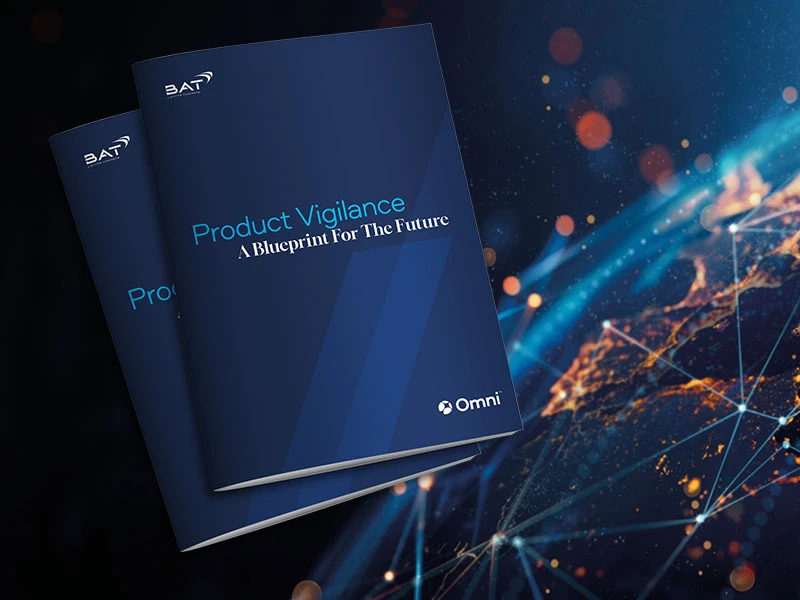
Product Vigilance - A Blueprint For The Future
We have published our first Product Vigilance report, providing an introduction of our Product Vigilance programme. Product Vigilance encompasses the science and activities involved in detecting, assessing, understanding, and preventing adverse events associated with our Smokeless Product portfolio.
-
 Read more >
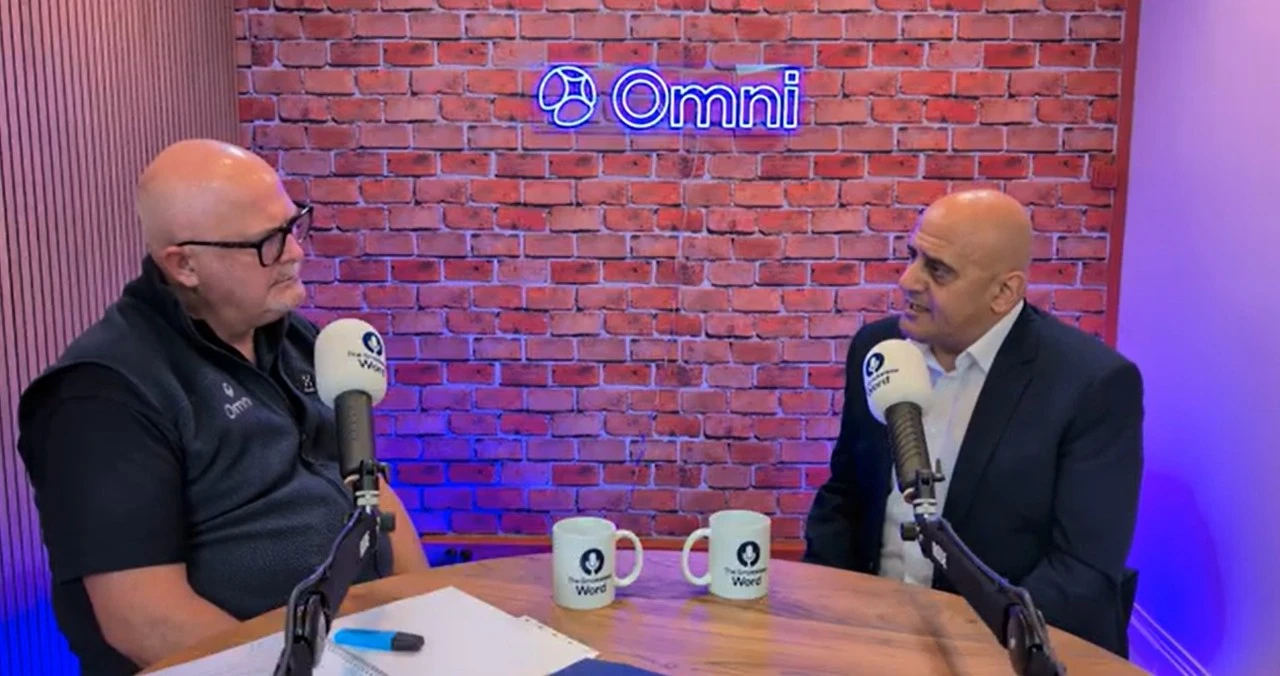
The Smokeless Word – Australia's Illicit Trade Crisis
Kingsley got back behind the mic in his recent trip to the Global Tobacco & Nicotine Forum in Brussels for a bonus episode of The Smokeless Word.
-
 Read more >
OMNI Recognised for Global Award
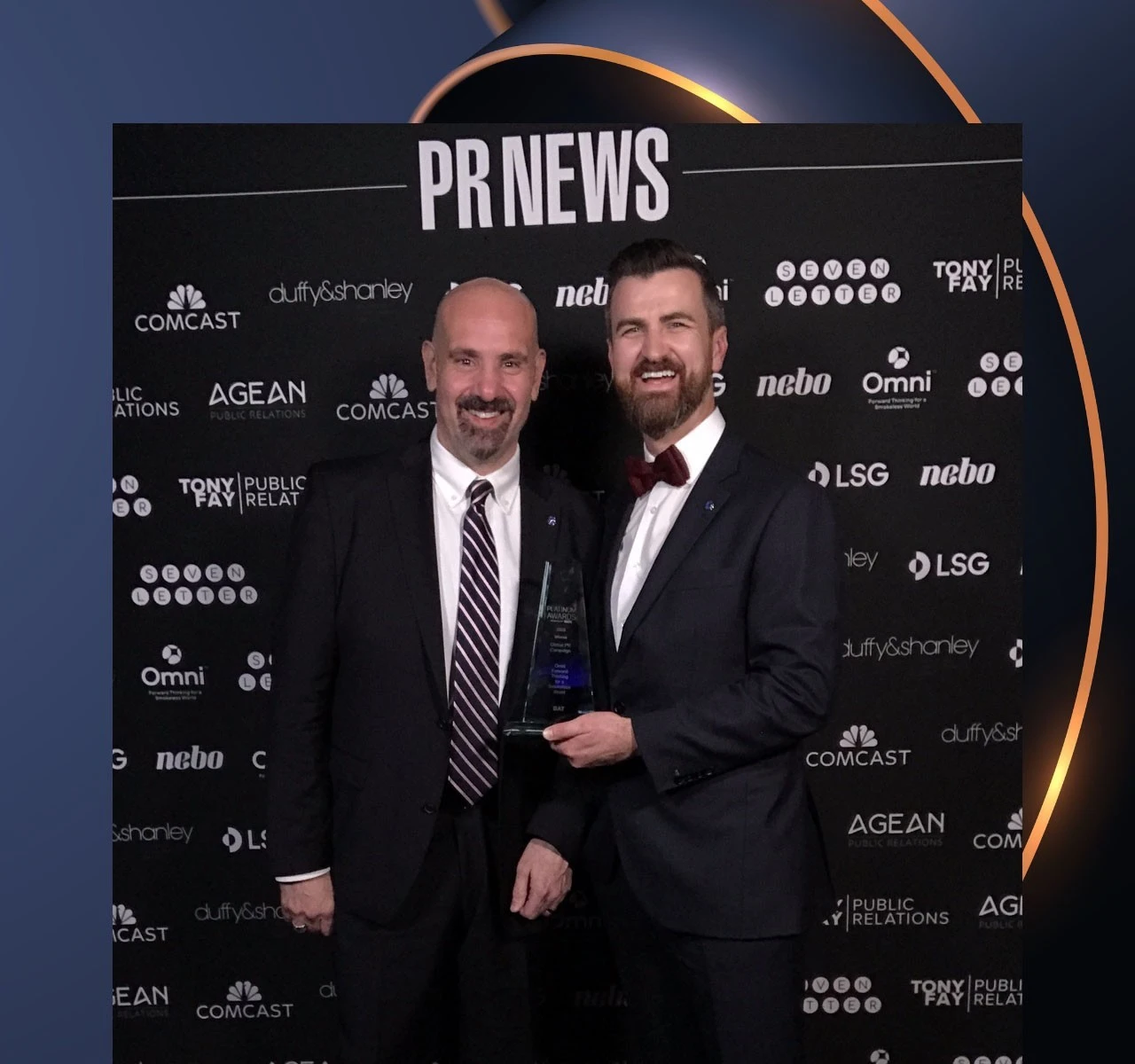
Our global, dynamic knowledge-sharing resource, Omni™, has officially been recognised as the Global PR Campaign of the Year at the prestigious 2025 Platinum PR Awards in New York City.